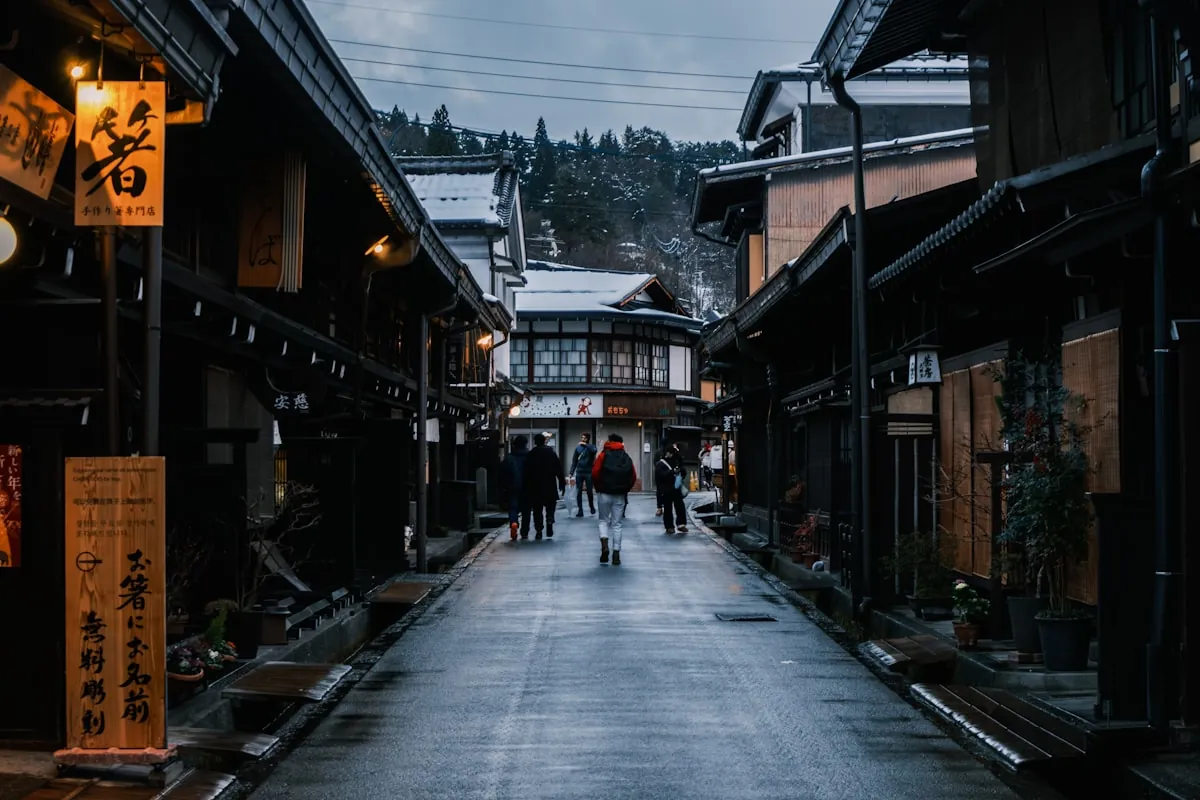
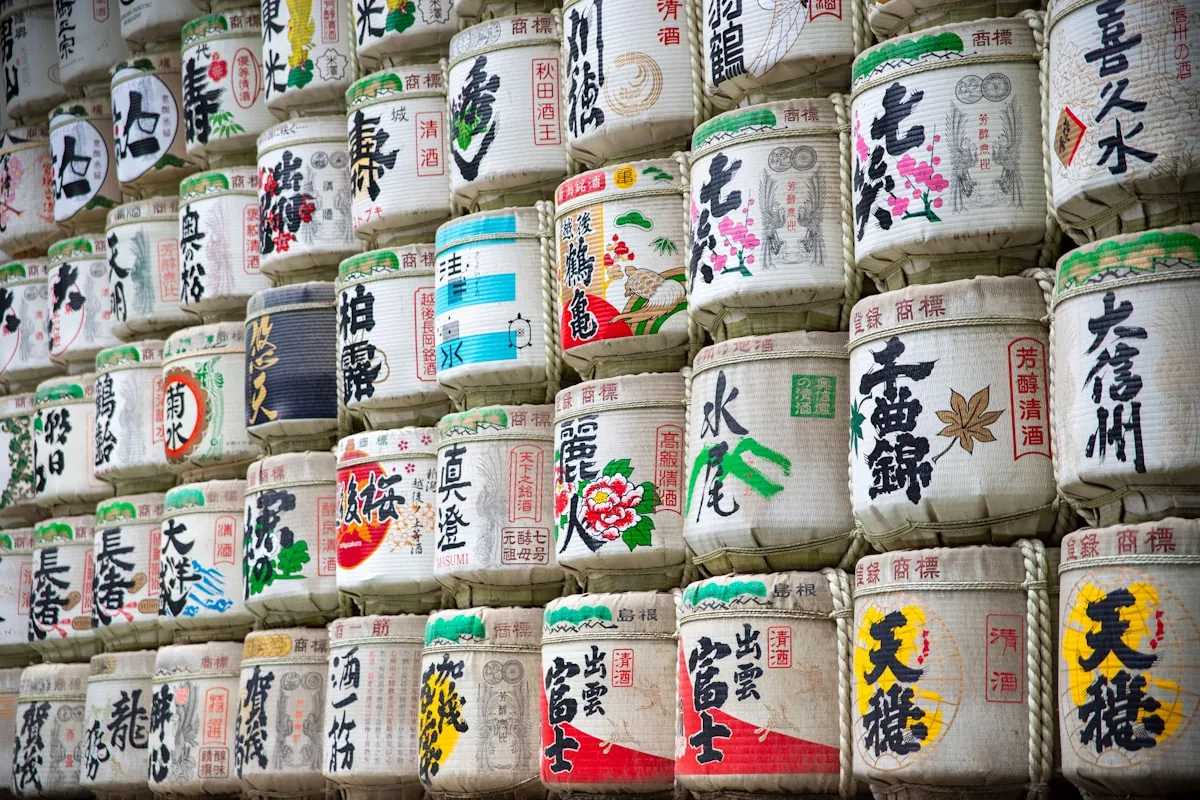

Japan in January costs less, crowds less, and delivers cultural experiences no other month can match. Hotel rates in Tokyo and Kyoto fall 25–40% compared to the October–November peak, Shinkansen early-bird fares open up, and queues at major temples drop to a fraction of their spring lengths.
Most travel guides skip January entirely or file it under "too cold, nothing happening." That framing is wrong. January has two distinct phases, each worth understanding, and the traveller who books mid-January often has the best-value week of their entire Japan trip.
What you need to know
January runs on two separate rhythms, and the transition between them, around January 5 or 6, is sharp.
The two phases of January
| Phase | Dates | Atmosphere | Accommodation | Best for |
|---|---|---|---|---|
| New Year window | 1–5 Jan | Festive, culturally peak | High (book 6–8 weeks ahead) | Hatsumode, osechi food, New Year atmosphere |
| Deep winter | 6–31 Jan | Quiet, budget-friendly | Annual low: 25–40% below October peak | Skiing, onsens, temple visits, budget city breaks |
January weather by region
The Pacific coast (Tokyo, Kyoto, Osaka) is cold but dry; the Sea of Japan coast (Kanazawa, Niigata) and Hokkaido get heavy snow.
- SapporoHeavy snow guaranteed-8 to -2°C
- KanazawaRegular snowfall2–7°C
- TokyoMostly dry, rare flurries4–10°C
- KyotoLight snow possible3–8°C
- OsakaSimilar to Kyoto4–9°C
- OkinawaMild, not beach weather16–19°C
The budget case for January
Mid-January (January 6–25) is the single cheapest window in the Japanese travel year for international visitors: mid-week flights from London Heathrow typically run £100–200 below equivalent April dates.
- ¥18,000–28,000Hotel per night, mid-Januaryvs ¥30,000–50,000 in October
- £100–200Cheaper flightsMid-week from London Heathrow, vs equivalent April dates
- 6–25 JanCheapest window of the yearDomestic holidays over, spring tour groups not yet booking
How to plan your January trip
Choose your phase, or bridge both
Decide whether you want the New Year cultural window (1–5 Jan), the quiet deep-winter stretch (6–31 Jan), or a trip that covers both. A classic combination: arrive December 30, experience hatsumode on January 1–2, then head to your ski or cultural destination from January 4 onwards once prices drop.
Pick your base by travel priority
Skiers: Sapporo works as a base for Hokkaido powder (Niseko, Furano, Kiroro). Culture seekers: Kyoto in January is meditative; spring tour groups are entirely absent. Budget city break: Tokyo in mid-January offers ryokan rates at their annual low, with full museum access and thin queues.
Book accommodation in two tiers
For January 1–4: book 6–8 weeks ahead. Popular ryokan and centrally located hotels in Tokyo and Kyoto fill for this window early. For January 5 onwards: last-minute availability is normal. Booking 1–2 weeks out is fine and sometimes gives better rates than advance booking.
Secure hayatoku Shinkansen fares
JR's hayatoku early-bird discount fares open approximately 28 days before departure and sell quickly on popular routes. Calendar your booking date for any January 4+ Shinkansen travel. The discount does not apply to January 1–3 travel dates, which are sold at full price. Hayatoku fares apply to reserved seats only; non-reserved cars do not carry the discount.
Build around fixed cultural dates
Coming-of-Age Day (Seijin-no-hi) is the second Monday of January (in 2027, January 11). It is the best street photography day of the year in any Japanese city, with young adults in furisode kimono and hakama for official ceremonies. The Dosojin Fire Festival at Nozawa Onsen runs on January 15. Wakakusayama Burning in Nara falls on the third Saturday of January (January 16 in 2027).
January festivals and cultural events
Use this calendar to plan around the New Year peak, cultural events, and the cheapest window of the year.
1–3 Jan
Closed
Oshogatsu: hatsumode, most shops closed. Highest crowds Jan 1–2; queues halve by Jan 3 evening.
4 Jan
Partial
National museums reopen. Shinkansen hayatoku fares not yet available on this date.
6 Jan
Open
Deep-winter phase begins. Hotels at annual low (25–40% below October–November peak).
11 Jan
Partial
Seijin-no-hi: adults in furisode kimono and hakama at city halls. Best street photography day of the year.
15 Jan
Partial
Dosojin fire festival, Nozawa Onsen.
16 Jan
Partial
Mount Wakakusa fire ceremony, Nara. Hillside ignition with fireworks at dusk.
25–31 Jan
Open
Sapporo Snow Festival construction: sculptures viewable free before February opening.
January's events are as distinctly Japanese as any spring festival, with a fraction of the international visitors.
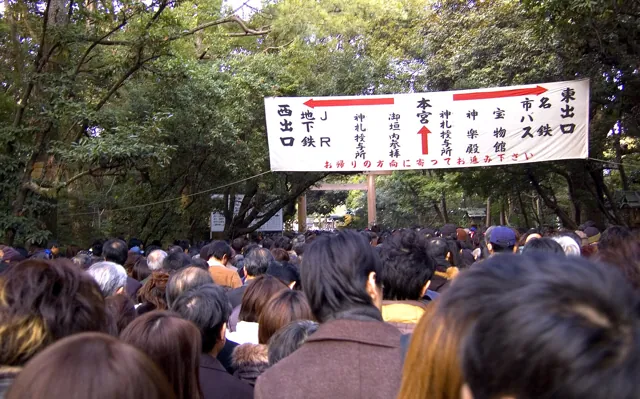 Photo: Paul Davidson, CC BY 2.0
1–3 Jan
Hatsumode: the first shrine visit
Shrines and temples nationwide
Over 100 million first visits of the year in three days, peaking on 1–2 January. By the evening of 3 January queues are half the length and the shimekazari decorations are still up; a city shrine before 8am on 1 January, or a regional shrine with mainly domestic visitors, skips the hour-long lines.
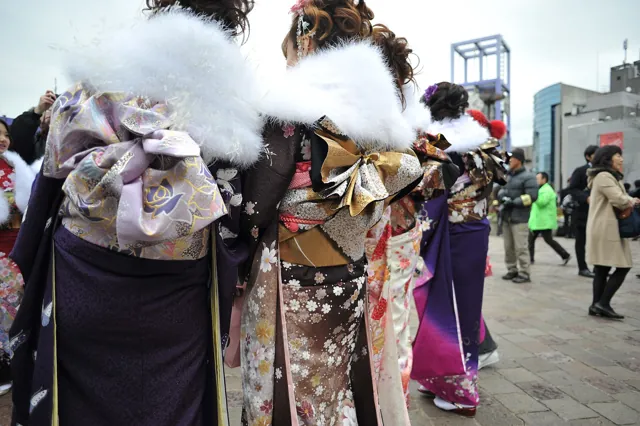 Photo: Kyle Hasegawa, CC BY 2.0
11 Jan 2027
Seijin-no-hi: coming-of-age day
City halls and local shrines, every city
Second Monday of January. Adults turning 20 (or 18 under the revised law) wear furisode kimono and hakama to official ceremonies, which makes it the best free street photography day of the year: city hall precincts, station forecourts and nearby parks fill from mid-morning to early afternoon.
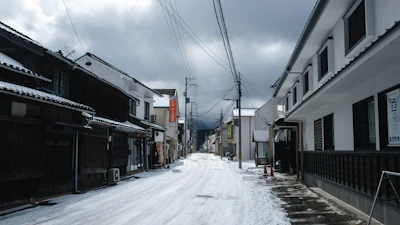 Photo: Tk, Unsplash
15 Jan
Dosojin fire festival
Nozawa Onsen, Nagano prefecture
Villagers, divided into age groups, set a large wooden shrine structure alight. Nozawa Onsen has fewer international visitors than Niseko, so powder skiing plus the festival is a strong double reason to go; its free public baths (soto-yu) are among the most authentic onsen experiences in Nagano.
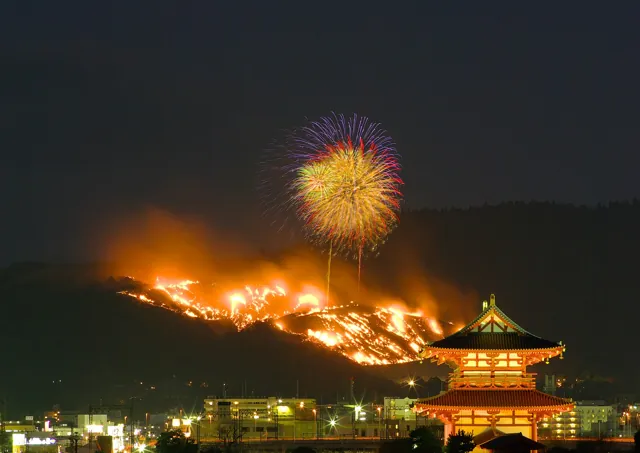 Photo: 名古屋太郎, CC BY-SA 3.0
16 Jan 2027
Mount Wakakusa fire ceremony
Mount Wakakusa, Nara
Third Saturday of January: fireworks at dusk, then the whole grass hillside above Nara is set alight. Free to watch from the deer park, which is quiet in January and, on a snowy day, one of the most photographed scenes in the country.
25–31 Jan
Sapporo Snow Festival: the preview window
Odori Park, Sapporo
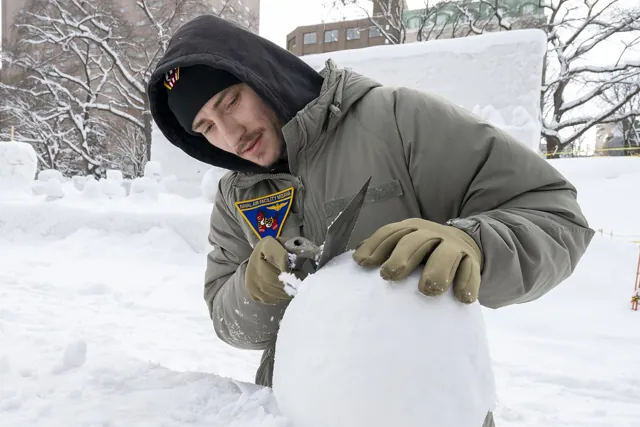
The Sapporo Snow Festival runs in early February (2027 dates confirmed by the city in autumn 2026), but sculpture construction goes public from about 25–31 January. The site is free, uncrowded and the works are nearly complete, before two million visitors arrive; Hokkaido ski conditions also peak in late January.
Where to go in Japan in January
Four ways to spend a January trip, and the two places to leave off the list.
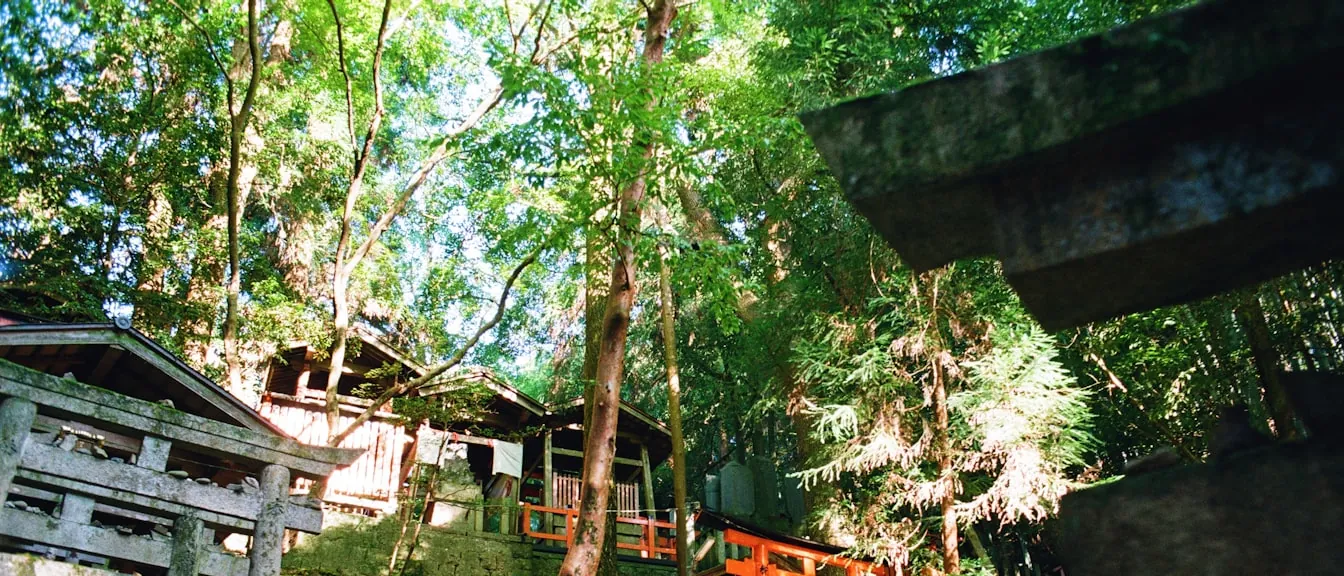
Tokyo and Kyoto: first-timers on a budget
The best-value itinerary of the year: hotels at their annual low, hayatoku Shinkansen fares on the return, and the main sights genuinely accessible.
The best-value itinerary of the year: hotels at their annual low, hayatoku Shinkansen fares on the return, and the main sights genuinely accessible.
- Fushimi Inari: far shorter queues than spring; the torii tunnel in early-morning winter mist
- National museums close 1–3 January, then reopen 4 January with new-year exhibitions
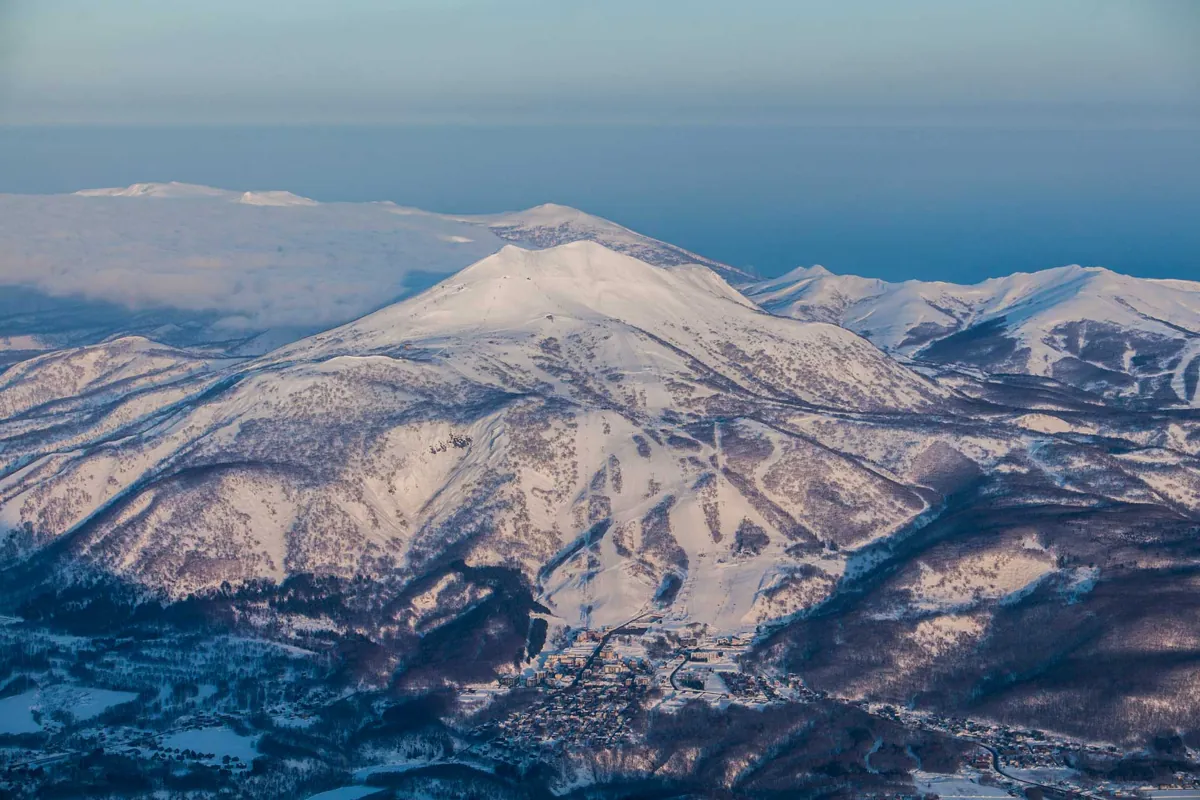 Photo: Alisterio1010, CC BY-SA 4.0
Hokkaido: ski and snow
Statistically the peak powder month. Niseko records Japan's highest snowfall; Furano and Kiroro match the snow with lower lift-ticket prices and fewer international visitors.
Statistically the peak powder month. Niseko records Japan's highest snowfall; Furano and Kiroro match the snow with lower lift-ticket prices and fewer international visitors.
- Base: Sapporo, with its own skiing at Sapporo Teine
- Sapporo to Niseko: about 2 hours 30 minutes by direct highway bus
- Resort comparisons and access: ski and snow guide
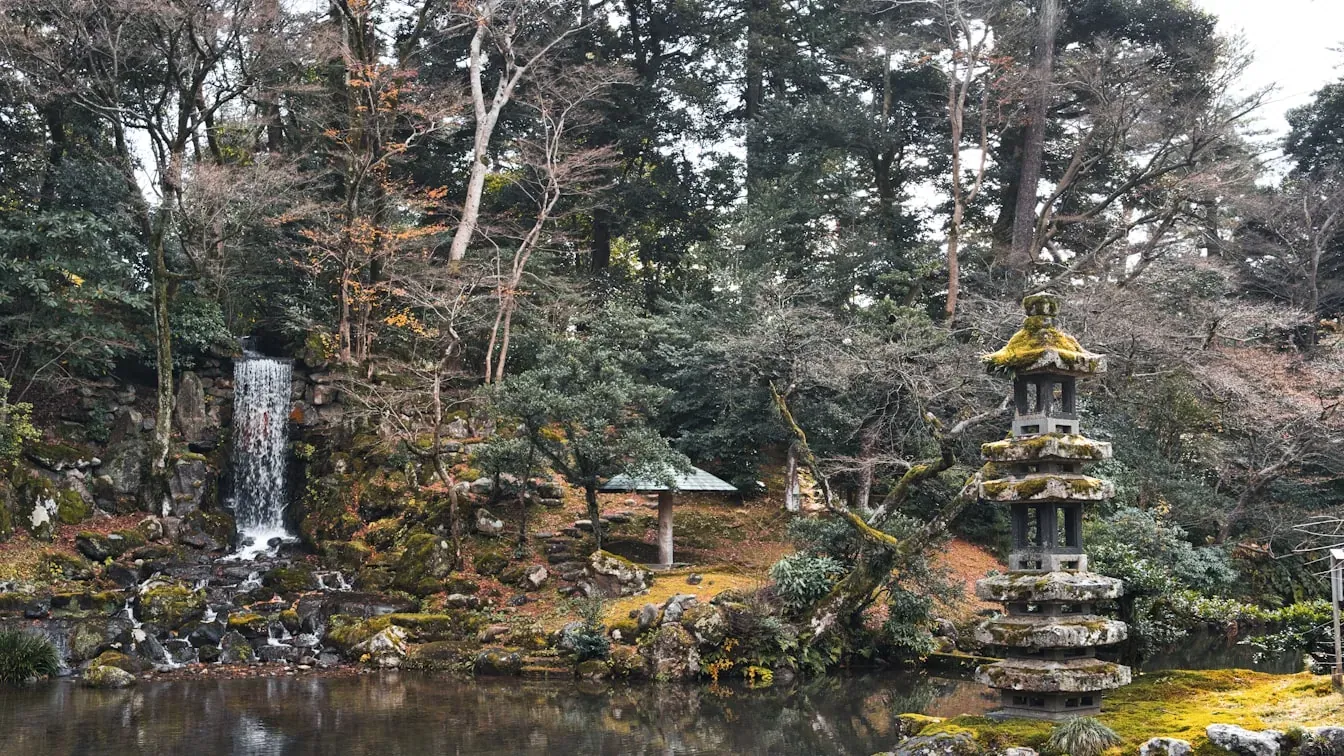
Kyoto and Kanazawa: culture and onsen
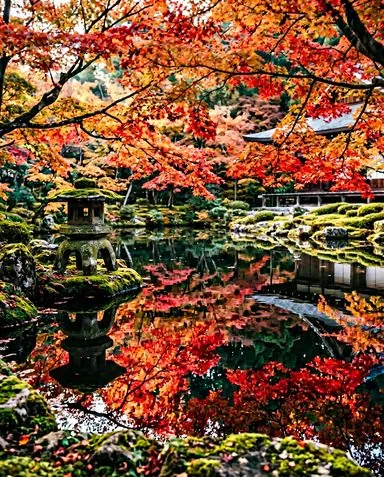
Kyoto's Zen gardens are largely empty: the autumn tour groups have left and the cherry blossom itineraries have not yet begun.
Kyoto's Zen gardens are largely empty: the autumn tour groups have left and the cherry blossom itineraries have not yet begun.
- Kanazawa: 75 minutes from Kyoto on the Thunderbird; Kenrokuen in snow, Higashi Chaya's covered arcades active all month
- Hot spring towns in Tohoku and the Niigata valley at their best: outdoor rotenburo in sub-zero air
 Skip in this season
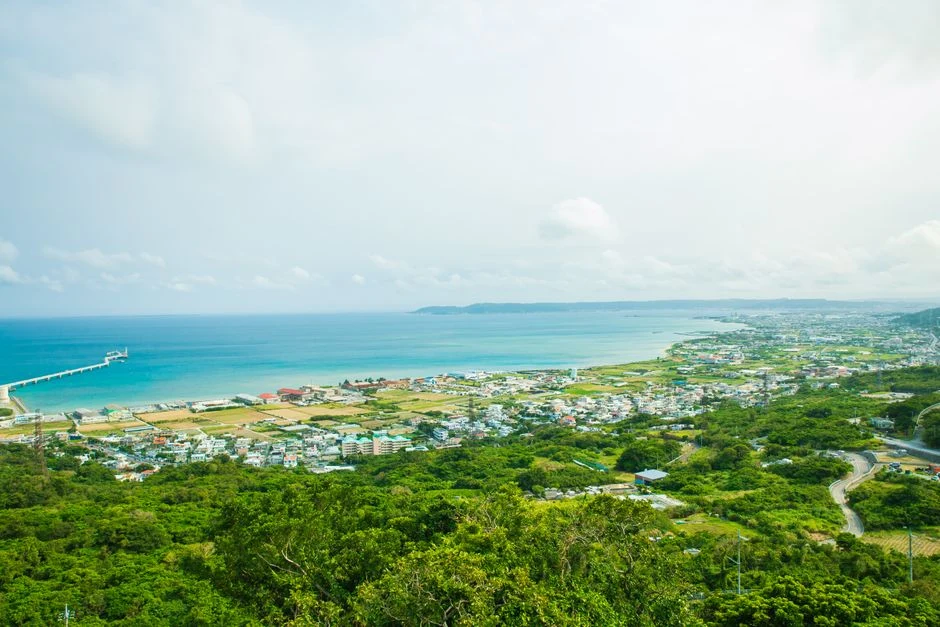
What to skip: Okinawa and Kamikochi
Two destinations general Japan itineraries get wrong in January.
Two destinations general Japan itineraries get wrong in January.
- Okinawa: 16–19°C, sea swimming is cold and beach facilities are largely closed. Fine for subtropical hiking or Ryukyuan cultural sites, not for sun
- Kamikochi: closed from about 15 November to 27 April, inaccessible in January whatever the conditions
January vs. December: which is better?
Both months are uncrowded; they differ in what you prioritise.
| December | January | |
|---|---|---|
| Atmosphere | Year-end energy, Christmas illuminations, lively urban feel | New Year calm, meditative after Jan 5, uniquely Japanese |
| Accommodation prices | Moderate; premium on Dec 28–Jan 3 | Annual low from Jan 6 onwards |
| Cultural highlights | Winter illuminations, year-end markets, year-end kabuki | Hatsumode, Seijin-no-hi, fire festivals, ski season peak |
| Skiing | Early season; good but not peak powder | Peak powder in Hokkaido, excellent on Honshu |
| Crowds | Low outside Dec 28–Jan 3 | Very low after Jan 5; lowest tourist month of the year |
The decision rule:
- Cultural depth and budget: January.
- A lively urban Christmas atmosphere: December.
- Both: December 28 through January 5 straddles both phases and gives you Christmas illuminations, New Year hatsumode, and the transition to deep-winter calm all in one trip.
See the Japan in December guide for the full picture.
Tips and common mistakes
- Kamikochi is closed. The valley road shuts every year from approximately November 15 to April 27. Any January itinerary that includes Kamikochi needs revising before it gets used.
- Book New Year accommodation early. January 1–4 stays in Tokyo, Kyoto, and Osaka fill 6–8 weeks out. After January 5, last-minute bookings are often fine and sometimes cheaper than advance rates.
- Calendar your Shinkansen booking date. Hayatoku fares open approximately 28 days before travel and sell quickly on the Tokyo–Kyoto corridor. January 4 travel (the first date after New Year when discounts apply) has a booking window that opens around December 7.
- National museums reopen January 4. Tokyo National Museum, Kyoto National Museum, and major prefectural museums close January 1–3. From January 4 they run new-year exhibitions and are significantly less crowded than any spring equivalent.
- Layer for the indoor-outdoor contrast. Hokkaido streets at −5°C and a Tokyo department store at 22°C are on the same trip. Japanese indoor heating is powerful; dress for the cold outside and plan to shed layers constantly inside.
- Hayatoku fares apply to reserved seats only. Trying to save money with a non-reserved car eliminates the discount. Book reserved seats and the discount is built in automatically.
FAQ
Is January a good time to visit Japan?
Yes, for the right trip. January is Japan's best-value month for international visitors: hotel rates are at their annual low, flights are cheaper, and the major sights have genuinely thin crowds after January 5.
The trade-off is cold temperatures (3–10°C in most cities). For skiers, budget travellers, and culture seekers comfortable with winter conditions, January is one of Japan's best months. See also: best time to visit Japan.
How cold is Japan in January?
It depends on where you go. Tokyo and Osaka sit around 4–10°C: cold by the standards of a Mediterranean city, manageable with winter layers. Kyoto is similar.
Hokkaido (Sapporo, Niseko) is proper winter: −2 to −8°C with heavy snowfall. Okinawa stays mild at 16–19°C. The Pacific coast cities rarely see snow; the Sea of Japan coast (Kanazawa, Niigata) gets regular snowfall throughout January.
Is it cheap to visit Japan in January?
Mid-January (January 6–25) is the cheapest stretch in the Japanese travel year. Hotels in Tokyo and Kyoto that cost ¥30,000–50,000 per night during October–November peak can be found for ¥18,000–28,000. Shinkansen hayatoku fares reduce bullet train costs by 10–30% for seats booked in advance. The exception is the New Year window (January 1–5): accommodation during this period commands a premium similar to the spring peak and availability is limited.
What is hatsumode?
Hatsumode is the tradition of making the first shrine or temple visit of the new year, usually in the first three days of January. Most Japanese people visit to pray for health, fortune, and success, buy omamori amulets, burn old ones from the previous year, and draw omikuji fortune slips. Major shrines see very long queues on January 1; by January 3 evening, queues shorten significantly at all but the biggest national sites.
Can you ski in Japan in January?
January is statistically the best month for powder skiing in Japan. Hokkaido (Niseko, Furano, Kiroro) receives the most consistent snowfall and peaks in January.
On Honshu, Nozawa Onsen and other resorts in Nagano prefecture offer good conditions with fewer international visitors than Hokkaido. The Dosojin fire festival at Nozawa Onsen on January 15 is a compelling reason to visit that resort specifically. See the ski and snow guide for resort comparisons.
What should I pack for Japan in January?
For Tokyo, Kyoto, and Osaka: a winter coat, thermal underlayers, and waterproof shoes. Temperatures drop to 3–5°C at night. For Hokkaido: full winter gear rated to at least −10°C, waterproof ski trousers if skiing, insulated waterproof boots, and hand warmers. For all regions: pack a day bag to shed layers, as Japanese indoor spaces are well heated and you cycle rapidly between cold streets and warm interiors throughout the day.
Is Kamikochi open in January?
No. Kamikochi closes every year from approximately November 15 through April 27. The access road through the Azusagawa valley is barricaded for winter and no vehicles or pedestrians are permitted past the closure point.
This is a source of confusion in general Japan itineraries that mention Kamikochi without noting the seasonal closure. Plan for late April at the earliest if Kamikochi is on your itinerary.
How does January compare to February for visiting Japan?
January is cheaper, quieter, and culturally distinct. February brings the Sapporo Snow Festival (early February, roughly February 4–11 for the 2027 edition), which is the specific reason many winter visitors choose that month. Cherry blossoms begin in southern Japan in late February in warm years.
If powder skiing is the priority, January has statistically better conditions in Hokkaido. If Sapporo Snow Festival is the goal, February is the obvious choice. See the Japan in February travel guide for the full comparison.