

Fushimi-Inari Taisha sits 5 minutes south of Kyoto Station. It is the head shrine of all 30,000 Inari shrines in Japan, dedicated to the kami of rice, sake and business prosperity. The pilgrimage is the Senbon Torii: a path of more than 10,000 vermilion gates donated by businesses since 711 AD, climbing 233m up Mt Inari. Free, no closing time, and the only Kyoto must-see where dawn fixes everything.
What to Expect
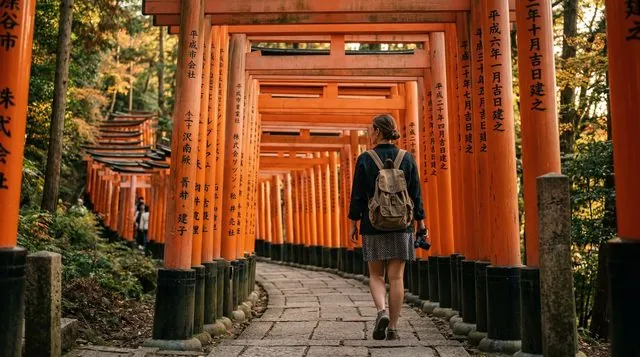
Pass under the Romon (1589, donated by Toyotomi Hideyoshi when his mother fell ill) into the main shrine, then turn right behind the haiden, where the start of the Senbon Torii splits into two parallel tunnels. Each gate has the donor’s name in black on the back; the smallest start at ¥400,000, the biggest cost millions of yen. After 30 minutes you reach the Yotsutsuji intersection, with its Kyoto skyline view; half the visitors stop here. The summit (Ichinomine, 233m) is another hour through quieter, sparser torii. Allow 2-3h for the full loop.
How to Get There
Getting There
- 1Take JR Nara Line → Inari Station
- 2Walk to torii → Fushimi-Inari Taisha
- 1Take Keihan Main Line south → Fushimi-Inari Station
- 2Walk to shrine → Fushimi-Inari Taisha
Tips
- Dawn (05:30–07:00) is the only empty slot. By 09:00 the Senbon Torii is shoulder-to-shoulder; by 11:00 it’s a queue. Sunset is also calmer but lighting is awkward inside the tunnels.
- Don’t turn back at Yotsutsuji. The lookout is where most tour groups end. Pushing on to the summit (another hour, less spectacular individually but blissfully empty) is the difference between ‘visited’ and ‘walked it’.
- Try inari-zushi at the foot of the mountain. Sweet-soy fried tofu pouches stuffed with sushi rice: the local specialty, served at every tea-house on the approach. ¥600–800 for four pieces.
- Bring water on hot days. Vending machines disappear after Yotsutsuji. The full loop is 4km with 233m elevation; in summer the humidity is brutal under the dense canopy.
Consider Kifune Shrine Instead

- Where
- 180 Kuramakibune-cho, Sakyo-ku, Kyoto 601-1112
- Hours
- 6:00 – 20:00 (May–Nov); reception 9:00 – 17:00
- Price
- Free entry
- Map
- Open in Google Maps →
Kifune Shrine offers a comparable shrine experience within Kyoto, 17 km north of Fushimi Inari, accessible by train and cable car in under an hour. Both are free-entry sacred sites with atmospheric approaches—Kifune's stone staircase and mountain setting provide the same sense of pilgrimage without the crowds. The trade-off is architectural style: Kifune emphasizes natural setting and seasonal features like red lanterns, while Fushimi is known for its iconic torii tunnels, making them distinct rather than interchangeable, though equally rewarding for shrine visitors.

- Where
- 1-28-9 Nezu, Bunkyo-ku, Tokyo 113-0031
- Hours
- Shrine grounds open 24 hours; reception 9:00–16:30
- Price
- Free entry
- Map
- Open in Google Maps →
If you're stopping in Tokyo, you can walk a vermilion torii tunnel without ever boarding a shinkansen — Nezu Jinja's Otome Inari sub-shrine has the same uphill-tunnel aesthetic in compact form. Founded long before Tokyo became Tokyo, the grounds also hold the city's most famous azalea festival (Tsutsuji Matsuri, late April through early May). Quiet outside azalea season, 5 minutes walk from Nezu metro station.
FAQ
Is the full hike to the summit worth it?
If you have 2-3 hours and any interest in the actual pilgrimage, yes. The summit views are modest, but the upper 70% of the trail has a fraction of the visitors and is closer to what the shrine actually feels like as a place of worship.
Can I visit at night?
Yes. The trail is technically open 24/7 and partially lantern-lit, especially near the main shrine. Far up the mountain it’s genuinely dark; bring a phone torch and don’t go alone if you’re uncomfortable. The atmosphere is unique but eerie.
Are the orange gates really 10,000?
Roughly. The official count fluctuates because gates are added and replaced. Estimates range 10,000–32,000 depending on what you count (only the path-tunnels, or every torii on the mountain). The Senbon Torii (‘thousand torii’) section alone has ~800–1,000.
Where to bathe in Kyoto
Onsen
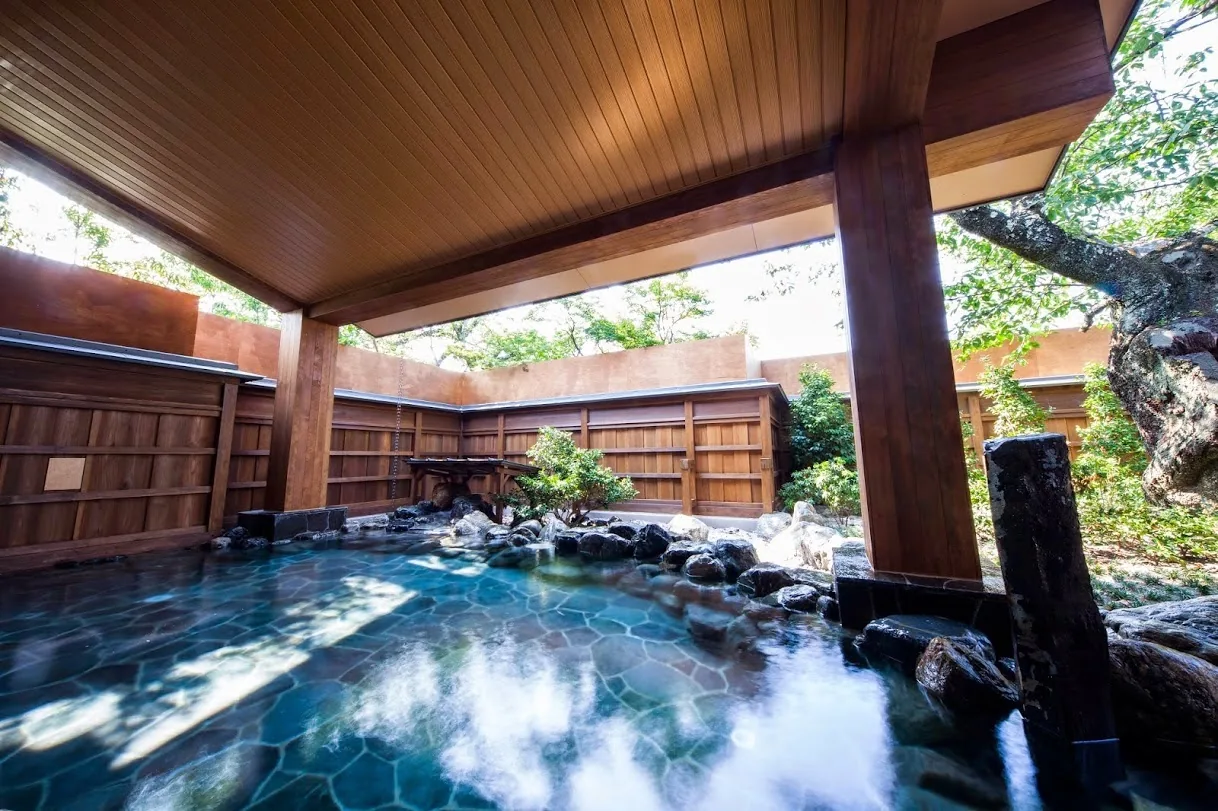
Fu Fu No Yu Onsen
public4.11.8k
Klook-bookable; iconic experience
Day-use onsen in Kyoto: 1,816 Google reviews, 4.1★ average.
Hours, address
- Hours
- Monday: 12:00 – 10:00 PM / Tuesday: 12:00 – 10:00 PM / Wednesday: 12:00 – 10:00 PM / Thursday: 12:00 – 10:00 PM / Friday: 12:00 – 10:00 PM / Saturday: 12:00 – 10:00 PM / Sunday: 12:00 – 10:00 PM
- Address
- 1 Arashiyama Kamikawaracho, Nishikyo Ward, Kyoto, 616-0001, Japan