

Kyoto has fewer Michelin stars than Tokyo (93 starred restaurants in the 2025 Kyoto/Osaka Guide, split into 5 three-star, 16 two-star and 72 one-star, vs Tokyo’s 170), but the density per cuisine is higher. About 70% of the Kyoto stars are awarded to Japanese cuisine: kaiseki dominates, kappo and sushi follow, French is a small minority. Where Tokyo’s guide spreads across global cooking, Kyoto’s is closer to a kaiseki ranking with side categories. That matters for trip-planning: if you’re booking Michelin Kyoto, you’re mostly booking kaiseki tatami rooms, mostly in Higashiyama or Arashiyama, mostly weeks in advance.
Below: seven picks across the spectrum. Three 3-Michelin tables (the kaiseki temples that have held the rating for over a decade), two accessible 2-Michelin counters (where you can actually walk in with a week’s lead time), and two 1-Michelin specialists in cuisines outside kaiseki (a tempura counter, a sushi counter). Plus the Bib Gourmand alternative and the how-to-book section. For the kaiseki-only deeper dive (Hyotei eggs, Murata’s technique, the lunch trick) see our Best Kaiseki in Kyoto guide.
The 3-star tier: the kaiseki temples
Kyoto has 5 3-Michelin-star restaurants in the 2025 guide. The three picks below have held the rating since the Kyoto Michelin Guide opened in 2010 (or close to it) and define what Kyoto kaiseki means internationally.
1. Hyotei: the 3-star, 400-year heritage
 ★ Author's Pick
Hyotei (瓢亭)
Three Michelin stars since the Kyoto guide opened. Sister: Hyotei Bekkan (annexe) serves the famous ‘asagayu’ morning rice-porridge breakfast from ¥6,000, the accessible entry. Dinner ¥30,000+, book 4-6 weeks ahead via concierge or website.
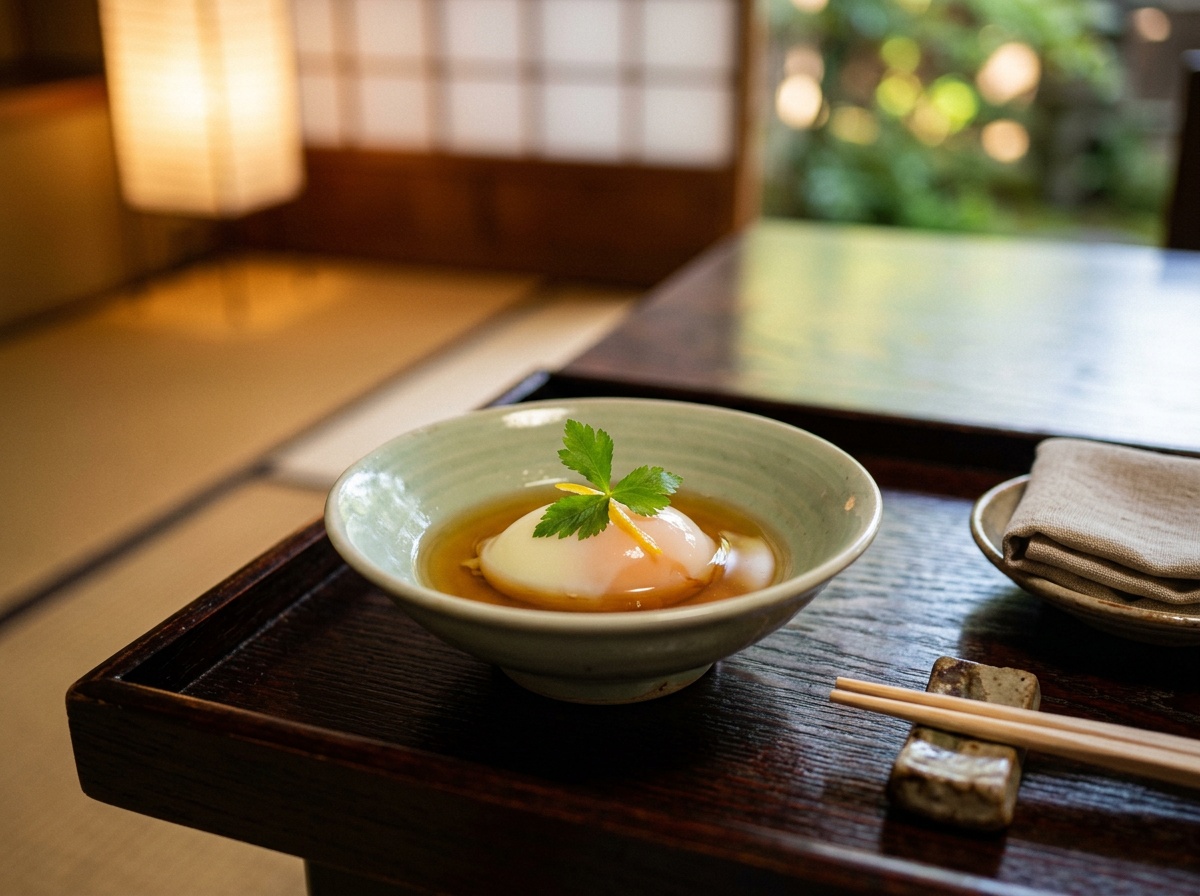
35 Kusakawacho, Sakyo-ku, on the Nanzenji Temple grounds, 10 min from Keage subwayView on Google Maps →Hyotei has held three Michelin stars since the Kyoto Guide opened in 2010, but the documented history of the restaurant goes back over 400 years — possibly the oldest continuously operating restaurant in Japan, started as a teahouse for pilgrims to the adjacent Nanzenji Temple in the early 1600s, currently run by the fourteenth generation of the Takahashi family. The signature is the Hyotei egg, a soft-boiled egg soaked in dashi until the white absorbs the broth, served as one course among twelve in the kaiseki progression. The same dish has been on the menu for four centuries.
The accessible move is the Hyotei Bekkan annexe next door, where the morning asagayu rice-porridge breakfast runs from around ¥6,000 — same kitchen, less expensive, fewer courses, but the four-hundred-year-old hospitality is identical. Dinner at the main shop is ¥30,000+ and books 4–6 weeks ahead. Full booking and ordering breakdown in our Best Kaiseki in Kyoto guide.
2. Kikunoi Honten: the 3-star technical benchmark
 ★ Author's Pick
Kikunoi Honten (菊乃井 本店)
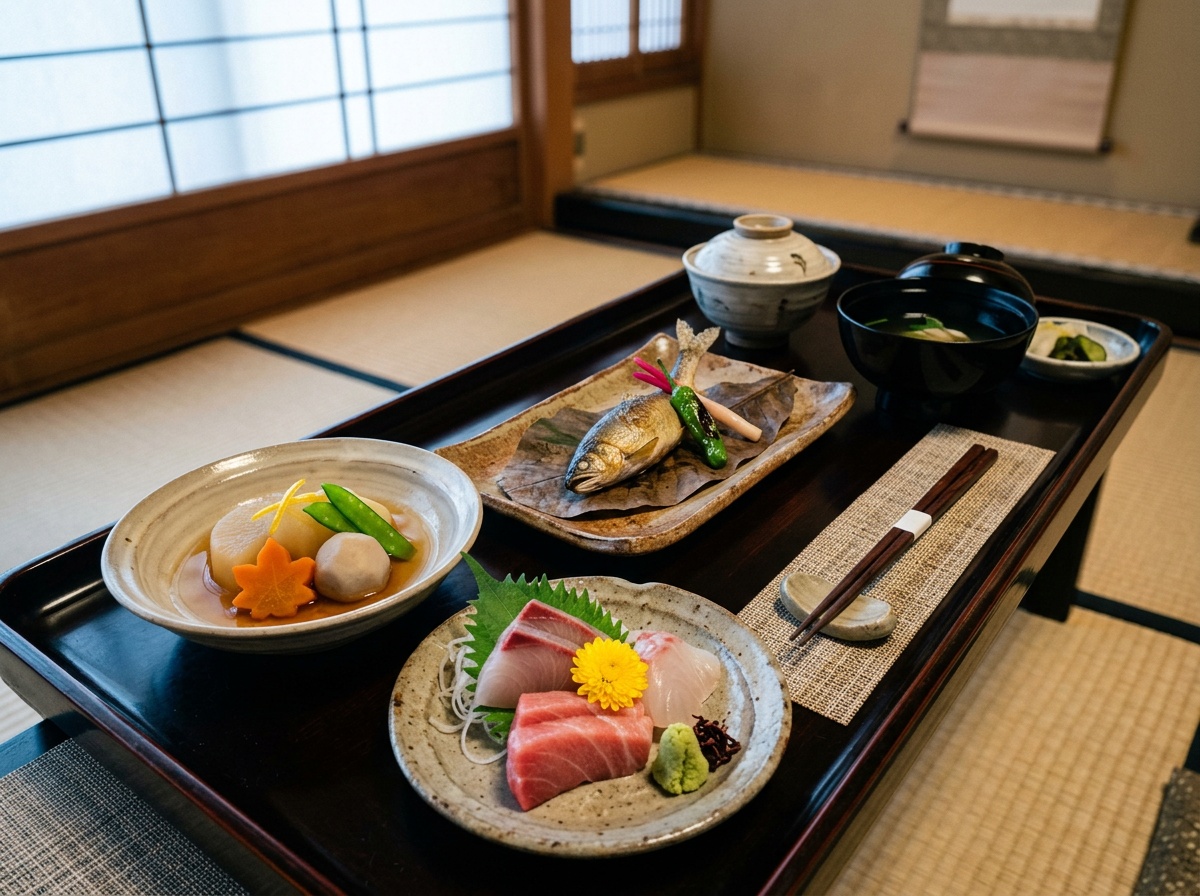
Founded 1912, three Michelin stars since 2010. Traditional ryotei: low gate, raked-gravel courtyard, tatami private rooms with garden views. Each course in a season-specific bowl. Lunch ¥7,000-10,000, dinner ¥20,000-30,000. Book 3-4 weeks ahead.
566-27 Komatsucho, Higashiyama-ku, a 15 min walk from Gion-Shijo StationView on Google Maps →Kikunoi Honten is the technical benchmark of contemporary kaiseki, run by chef Yoshihiro Murata — arguably the most internationally known kaiseki chef alive, the man who wrote the kaiseki textbook the rest of the industry uses, and the consultant who designed the Olympic banquet menus. Three Michelin stars since the Kyoto Guide opened in 2010, founded 1912, located in a traditional Higashiyama ryotei with raked-gravel courtyard and tatami private rooms.
Lunch is the best-value 3-Michelin meal in Japan: ¥7,000–¥10,000 for a kaiseki course that runs ¥20,000–¥30,000 at dinner. Same chef, same fish, same progression. Sister-shop Roan Kikunoi in Pontocho is the 2-star counter version (covered below).
3. Kitcho Arashiyama: the 3-star riverside
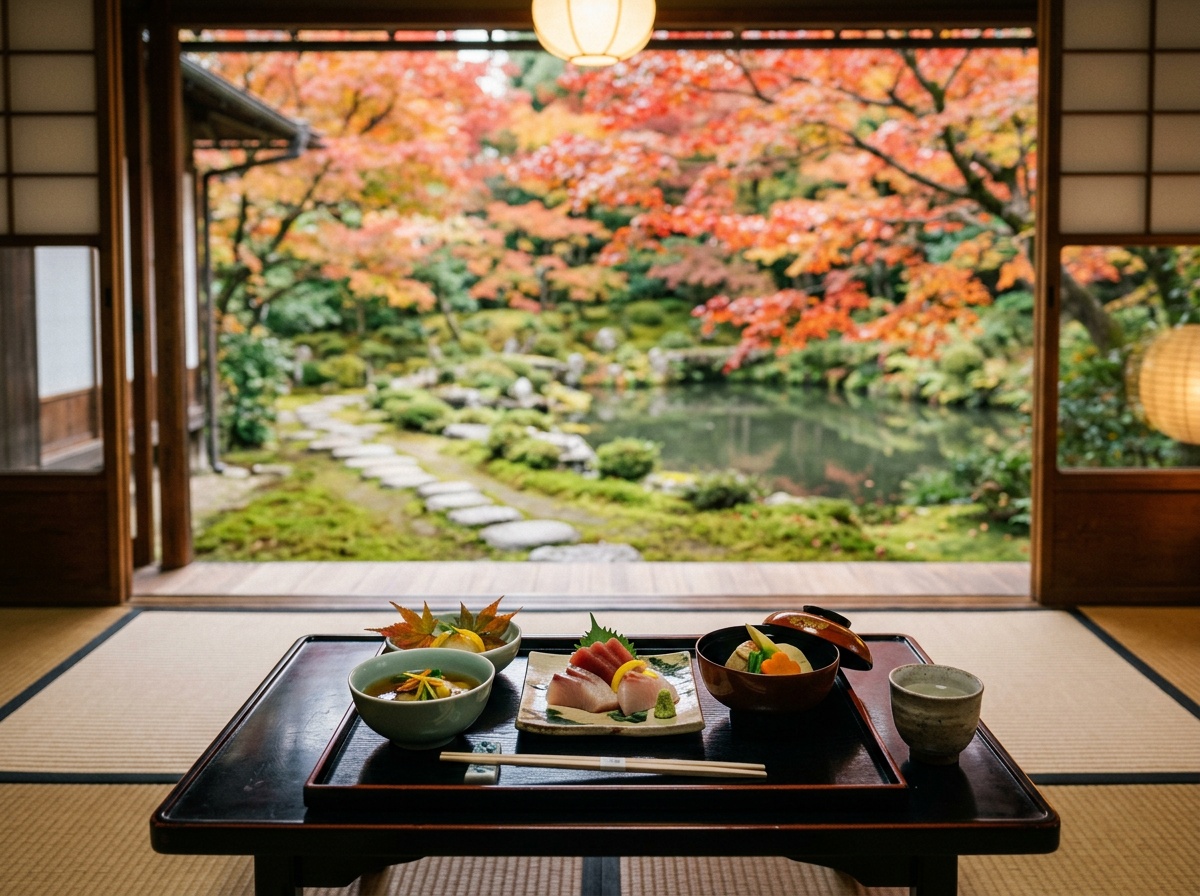
Kitcho Arashiyama (京都吉兆 嵐山本店)
Three Michelin stars since the Kyoto guide opened. Garden-villa setting on the Hozugawa river in west Kyoto. Tatami private rooms with river views. Lunch ¥35,000+, dinner higher. Reservations weeks ahead, concierge-only at peak season (October maples, April cherry blossoms).
58 Saga-Tenryuji-Susukinobabacho, Ukyo-ku, an 8 min walk from Arashiyama StationView on Google Maps →Kitcho Arashiyama is the splurge pick of the Kyoto Michelin tier. Three Michelin stars since the Kyoto Guide opened, garden-villa setting on the Hozugawa river in Arashiyama (west Kyoto, the bamboo-grove temple district), tatami rooms with river views, chef Kunio Tokuoka commanding one of the most decorated kaiseki kitchens in Japan. Even lunch starts at ¥35,000 — this is the tier above the Higashiyama 3-Michelins, not a parallel to them, and it’s priced to keep tourist volume out.
Use as: the once-a-decade dinner that anchors a Kyoto anniversary trip. Pair with the morning at Tenryuji and the afternoon at the bamboo grove for a one-day Arashiyama programme. Reservations are concierge-only at peak season (maple leaves October, cherry blossom April); off-peak you can book directly 4–6 weeks ahead.
The 2-star tier: the accessible counters
The Kyoto 2-Michelin list (16 restaurants in the 2025 guide) is where the actually-bookable Michelin Kyoto eating happens. Reservation lead times drop from months to weeks, prices halve, and the cooking is at the same technical level. The two picks below are sub-restaurants of the 3-star houses above — same kitchen lineage, easier to book.
4. Roan Kikunoi: the Pontocho 2-star counter
 ★ Author's Pick
Roan Kikunoi (露庵 菊乃井)
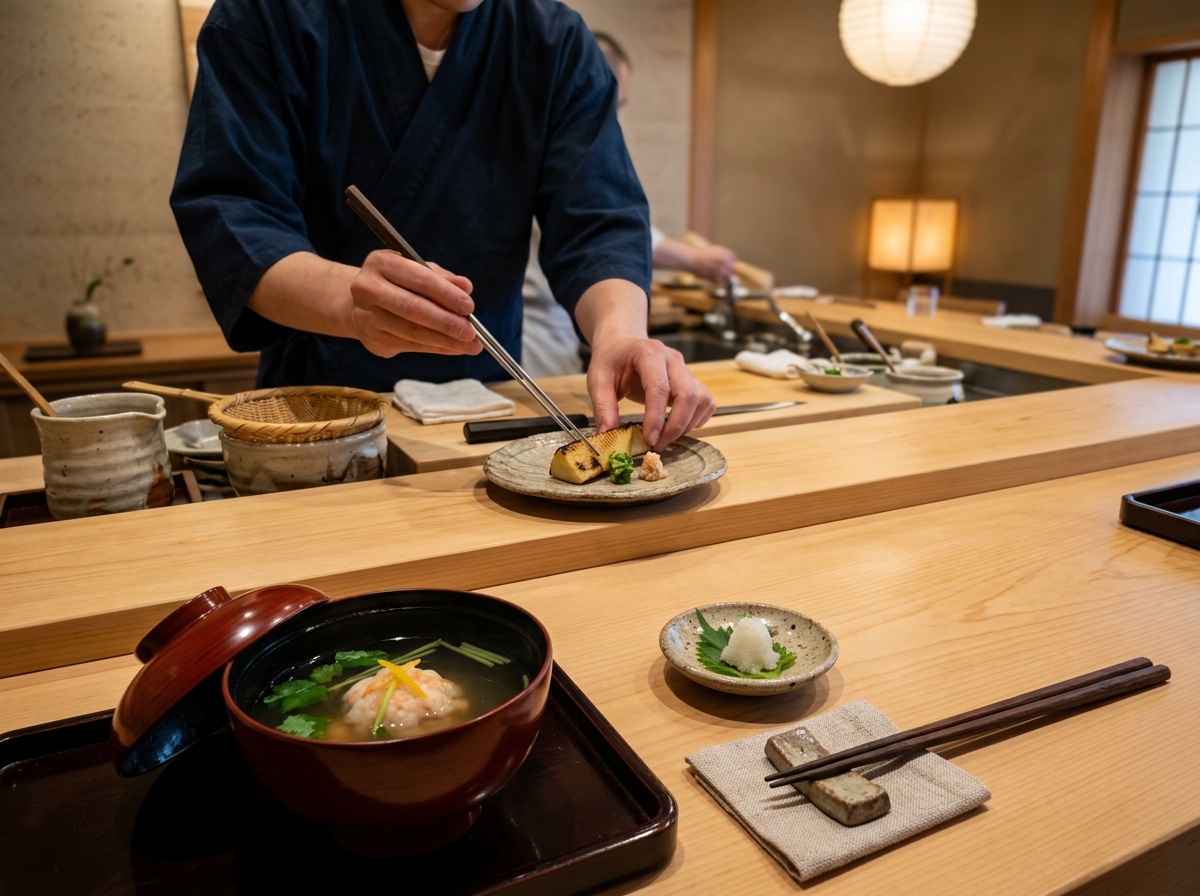
Pontocho-alley branch of Kikunoi, two Michelin stars. Counter seating (8 seats) instead of tatami private rooms. Lunch from ¥7,500, dinner ¥20,000-25,000. Easier to book than Kikunoi Honten by about a factor of two.
Shijo-agaru Pontocho, Nakagyo-ku, 5 min from Gion-Shijo Station in the heart of Pontocho alleyView on Google Maps →Roan Kikunoi is the Kikunoi family’s Pontocho-alley sub-restaurant: same kitchen lineage as the 3-star honten, two Michelin stars, counter seating instead of tatami private rooms. The counter is the point — eight seats across from the open kitchen, watching the same techniques Kikunoi Honten uses, plated in real time in front of you. Lunch ¥7,500, dinner ¥20,000–¥25,000. If the honten is full for your dates, this is the same family at a counter you can almost walk up to. Pontocho location puts you 30 seconds from the Kamogawa river for the post-meal walk.
5. Gion Sasaki: the 2-star modern counter
Gion Sasaki (祇園 佐々木)
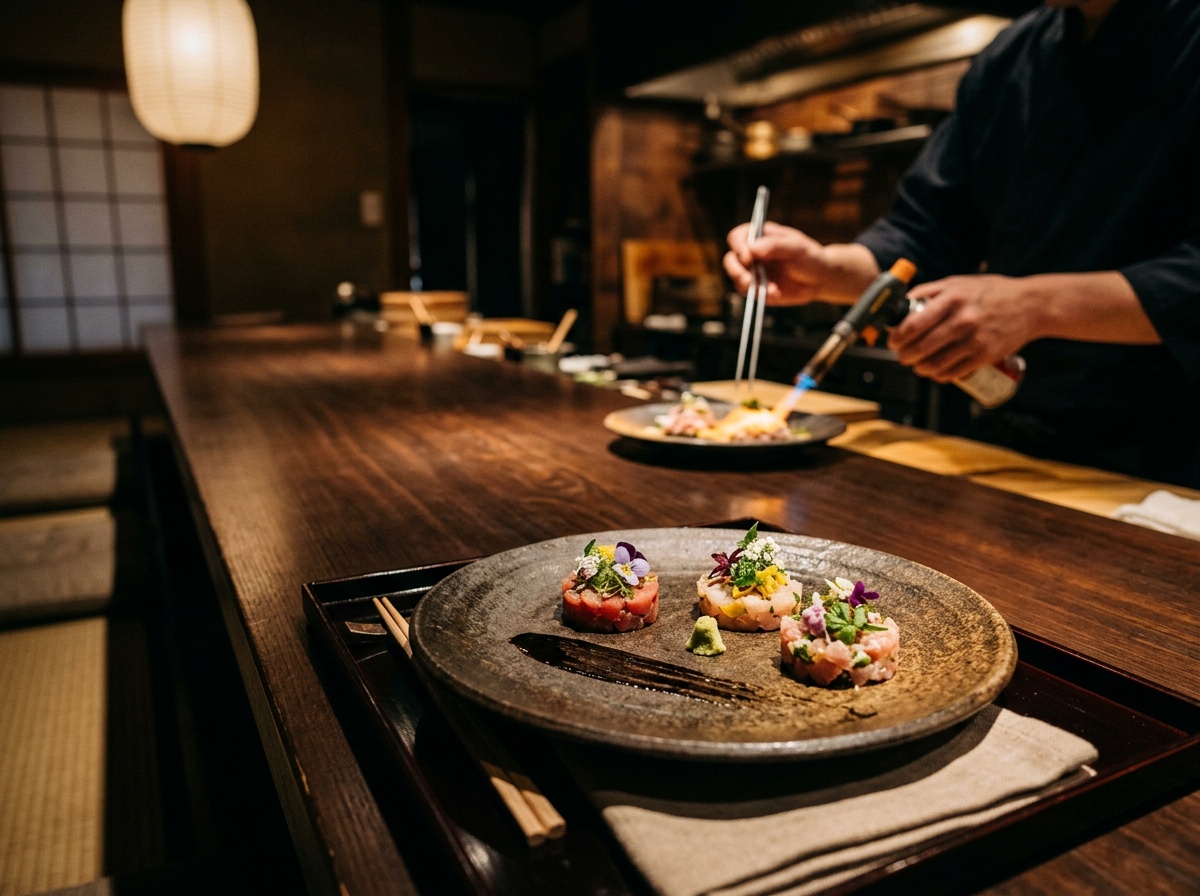
Modern counter kaiseki in the Gion teahouse district. Chef Hiroshi Sasaki held three Michelin stars in earlier editions, currently two. Counter-only (10 seats), open kitchen, the most theatrical of the kaiseki tables on this list. Lunch from ¥15,000, dinner ¥30,000+.
566-27 Gion Yasaka Kamimachi, Higashiyama-ku, a 7 min walk from Gion-Shijo StationView on Google Maps →Gion Sasaki is the modern pick of the Kyoto Michelin tier. Chef Hiroshi Sasaki built his reputation by treating kaiseki as a counter performance rather than a tatami-room ritual — the open kitchen is the centrepiece, the ten counter seats face the chef directly, and each course is plated and explained in front of you. Two Michelin stars currently, three in earlier editions; consensus among Kyoto food critics is that Sasaki’s kitchen is one of the most technically interesting in the city. Lunch from ¥15,000, dinner ¥30,000+. The pick for serious food travellers who’d rather watch the cooking than admire the tatami.
The 1-star tier: outside kaiseki
Kyoto’s 1-Michelin tier is dominated by kaiseki and kappo restaurants (72 entries in the 2025 guide) but the most useful 1-stars for non-kaiseki diners are the cuisine specialists — the tempura counters, sushi counters, and the rare French outpost. Two picks below cover the spectrum.
6. Sushi tier: Gion sushi counters
Kyoto’s Michelin-starred sushi scene is smaller than Tokyo’s but distinct. The local Kyoto sushi tradition (kyo-zushi) historically uses freshwater fish from Lake Biwa and pressed-sushi styles (oshizushi) rather than the raw-Edomae fish that defines Tokyo — Kyoto is hundreds of kilometres from the open ocean, so the cuisine evolved around what could be transported fresh. The Michelin-starred Kyoto sushi shops mostly straddle both traditions: Edomae-style nigiri sourced from Toyosu (the Tokyo wholesale market) with Kyoto-style seasonal vegetable courses and Lake Biwa specialities woven in.
The most prominent Michelin-starred sushi address in Kyoto is in the Gion teahouse district, where 8–10 counter-style sushi shops cluster within walking distance of each other. For first-time Michelin Kyoto sushi, ask your hotel concierge for current bookings — the specific houses that hold a star rotate year-to-year, and the strictly-reservation-only counters change addresses more often than the kaiseki houses do. Reservations 4–6 weeks ahead via concierge; lunch ¥10,000–¥15,000, dinner ¥20,000–¥30,000.
7. Tempura tier: Gion tempura counters
Tempura Michelin in Kyoto is concentrated around Yasaka and Gion, with two to three counters holding 1–2 stars in recent editions. Like the sushi tier, the specific addresses move — tempura houses in Kyoto are smaller operations than the kaiseki ryotei, often run by a single chef, and the star award depends on that chef’s output rather than the building. For current bookings, ask the hotel concierge for a Yasaka-area Michelin tempura counter; reservations 2–3 weeks ahead, lunch from ¥10,000, dinner ¥18,000–¥25,000.
For the deeper tempura context across Tokyo + Kyoto, see our Where to Eat in Tokyo guide which covers Tempura Kondo (2-Michelin Tokyo benchmark) — Kyoto tempura at the Michelin tier follows the same single-chef-single-counter format.
The Bib Gourmand alternative: under ¥6,000
Kyoto’s Bib Gourmand list (49 entries in the 2025 guide) is heavy on tofu kaiseki houses around Nanzenji, obanzai counters in Pontocho, and the historic noodle shops. Three Bib-area picks worth knowing:
- Okutan Nanzenji (yudofu, founded 1635 — the original Nanzenji tofu shop, ~¥3,500 per person, thatched-roof building, tatami garden seating). Covered in our Where to Eat in Kyoto guide.
- Tousuiro (tofu kaiseki, Kiyamachi — multi-course tofu progressions, lunch from ¥3,500).
- Daiichi Asahi Honten (Kyoto-style chukasoba, Shimogyo — the classic post-temple noodle stop, ¥1,000 a bowl).
Kyoto Bib Gourmand is where the actual everyday Kyoto eating happens for budget travellers — tofu, soba, obanzai, all ¥1,500–¥5,000 per person, mostly walk-in. The 1-star sushi/tempura tier is for the once-on-the-trip splurge; the Bib tier is for the everyday lunches between temple visits.
How to book Michelin in Kyoto
- Lead times. 3-star kaiseki: 4–6 weeks minimum, 8 weeks at cherry-blossom / maple-leaf season. 3-star kappo (Mizai-tier closed-list): introduction-only, often not bookable at all without a Japanese-resident sponsor. 2-star: 2–3 weeks. 1-star sushi/tempura: 2–4 weeks. Bib Gourmand: walk-in or same-day booking.
- Hotel concierge is the way in. Aman Kyoto, Hoshinoya Kyoto, the Ritz Carlton, Hyatt Regency Kyoto, and the traditional Tawaraya Ryokan all have direct booking lines to the Kyoto Michelin houses. Concierge calls from a top-tier hotel get answered immediately; cold-email reservations from outside Japan are slow.
- Lunch is the entry tier. Every Michelin Kyoto kaiseki house runs lunch at 40–60% of dinner price — same chef, same kitchen, fewer courses, no wine pairing pressure. Hyotei Bekkan’s ¥6,000 morning porridge is the cheapest 3-star-house meal in Japan; Kikunoi Honten’s ¥7,000 lunch is the best-value 3-Michelin meal in Japan.
- Dress code: tatami-room formal. The kaiseki ryotei expect smart-casual minimum — collared shirt for men, modest dress / blouse-and-trousers for women, no shorts, no flip-flops, no athletic wear. You will remove shoes at the door; check the state of your socks before leaving the hotel. Hyotei + Kitcho hold to this strictly; Gion Sasaki and Roan Kikunoi are more relaxed about it.
- Allergies and diet: declare on booking. The kaiseki menu is fixed and built around what the chef sourced that morning. Pescatarian / vegetarian / no-shellfish / no-dairy can be accommodated if you flag them 7+ days ahead.
- No tipping. Service is included. The kaiseki houses interpret tipping as a misunderstanding of the relationship — bow at the door on departure instead. The chef will return any extra yen left on the table.
- Plan around the season. Kyoto kaiseki is built around seasonal ingredients more rigorously than Tokyo cuisine — spring (bamboo shoots, sea bream), summer (eel, ayu sweetfish), autumn (matsutake mushrooms, persimmon), winter (crab, tuna). The menu changes monthly. Book around the season you want to taste, not the season you happen to be travelling.
What Michelin Kyoto gets right (and what it misses)
The Michelin Kyoto guide is the most cuisine-coherent Michelin city guide in the world — about 70% of its stars are awarded to Japanese cuisine, mostly kaiseki, mostly within walking distance of Higashiyama or Pontocho. If you want the definitive Michelin kaiseki ranking, this guide is it. If you want the broader Kyoto food picture — the tofu shops, the obanzai counters, the udon institutions, the matcha tea houses, the wagashi sweets — the Michelin guide barely touches it. Around 80% of the food that makes a Kyoto trip memorable isn’t in any starred restaurant; it’s in the Bib Gourmand tier or below.
For that wider context see our Where to Eat in Kyoto guide. The Michelin guide tells you where to spend the splurge night; the wider food guide tells you where to spend the other six lunches.
Related reading
- Where to Eat in Kyoto — the wider Kyoto food guide: yudofu, obanzai, tofu kaiseki, Nishiki Market.
- Best Kaiseki in Kyoto — the kaiseki-only deep dive with lunch-trick + booking strategy.
- Michelin Star Restaurants in Tokyo — the Tokyo equivalent across 8 picks and 3 tiers.
- Best Sushi in Tokyo — for the Edomae sushi tier (Kyoto sushi is a sister tradition).
- Japanese Food — interest hub with all our food articles.
Where to bathe in Kyoto
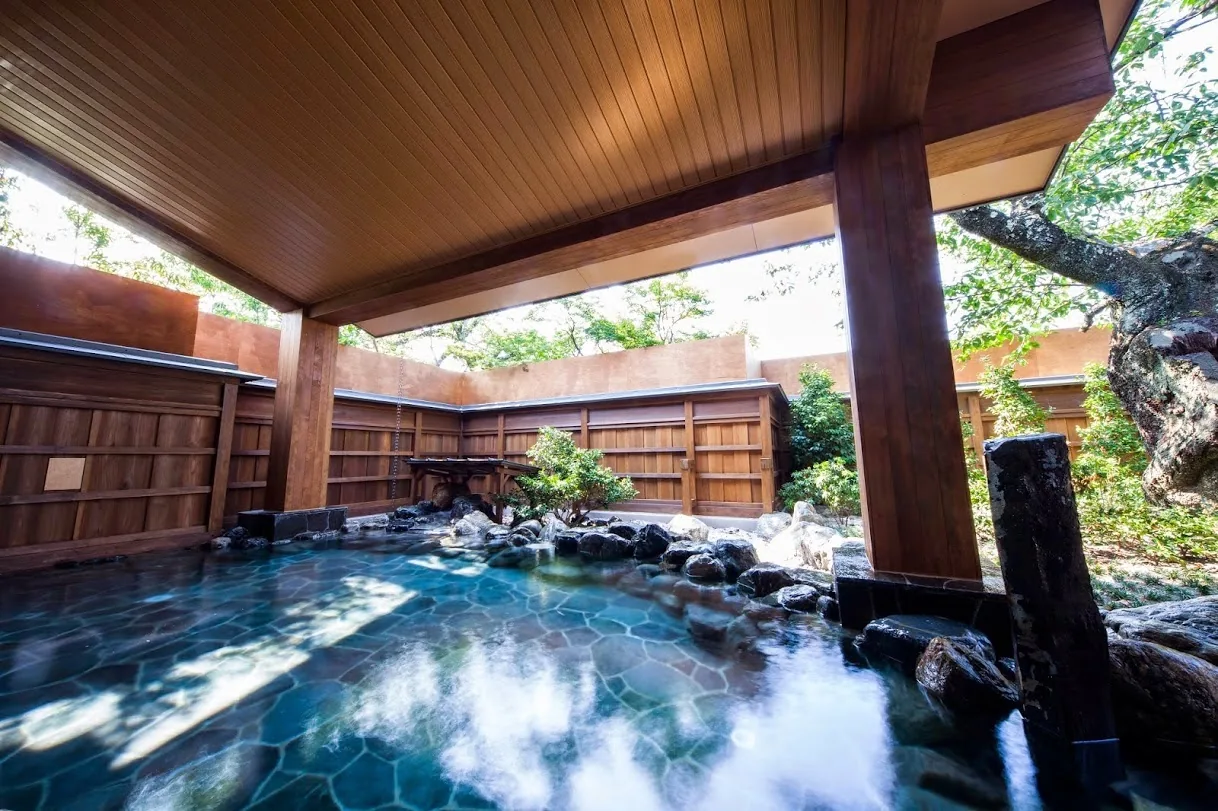
Onsen
Fu Fu No Yu Onsen
public4.11.8k
Klook-bookable; iconic experience
Day-use onsen in Kyoto: 1,816 Google reviews, 4.1★ average.
Hours, address
- Hours
- Monday: 12:00 – 10:00 PM / Tuesday: 12:00 – 10:00 PM / Wednesday: 12:00 – 10:00 PM / Thursday: 12:00 – 10:00 PM / Friday: 12:00 – 10:00 PM / Saturday: 12:00 – 10:00 PM / Sunday: 12:00 – 10:00 PM
- Address
- 1 Arashiyama Kamikawaracho, Nishikyo Ward, Kyoto, 616-0001, Japan