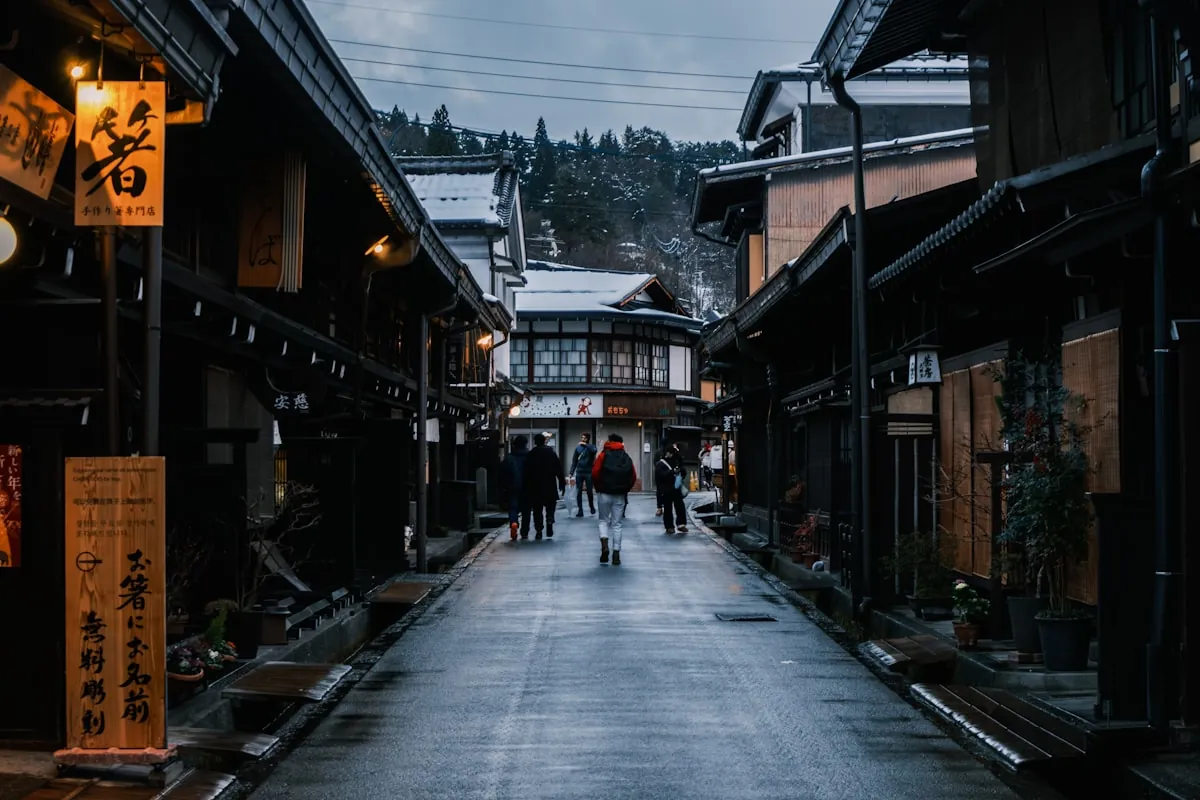
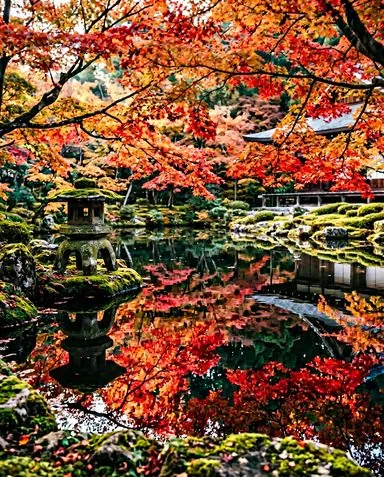

Kyoto invented kaiseki. The eight-to-twelve-course seasonal Japanese fine-dining tradition started here in the Buddhist tea-ceremony culture of the 16th century, matured in the Edo-period ryotei (private dining houses) that served samurai and court, and is still served today by the same families — sometimes the same buildings — that started it. Tokyo has more Michelin stars overall. Kyoto has the kaiseki ones. If you only book one fine-dining experience on your Japan trip, this is where you book it.
The price tag is the part everyone gets wrong. The 3-Michelin flagships look like ¥30,000 dinners on paper, but every single one of them runs a lunch course at 40–60% of dinner price. Same chef. Same fish. Same eight-course progression. Half the bill. Below: five tables across the spectrum — two 3-Michelin originals, two 3-Michelin annexes / Pontocho sub-restaurants for accessibility, and the modern 2-Michelin pick. Each comes with a Tabelog reference where I have a verified one, and Google Maps for the rest. None of them are walk-ins. All of them need 2–4 weeks lead time. Two of them you basically book only through your hotel concierge.
For the wider Kyoto food picture — yudofu around Nanzenji, obanzai in Pontocho, the morning at Nishiki Market — see our full Where to Eat in Kyoto guide.
1. Hyotei (瓢亭): the 400-year-old institution
 ★ Author's Pick
Hyotei (瓢亭)
Possibly the oldest continuously operating restaurant in Japan, 400+ years. Three Michelin stars since the Kyoto Guide opened. Same family for fourteen generations. On the grounds of Nanzenji Temple. Sister: Hyotei Bekkan (annexe) serves the famous ‘asagayu’ morning rice porridge breakfast from ¥6,000.
35 Kusakawacho, Sakyo-ku, on the Nanzenji Temple grounds, 10 min from Keage subwayView on Google Maps →Hyotei is the table I’d book first if I were going to book one. Possibly the oldest continuously operating restaurant in Japan — documented to the early 1600s, started as a teahouse for pilgrims to Nanzenji Temple, currently run by the fourteenth generation of the Takahashi family. The signature is the Hyotei egg: a soft-boiled egg, removed from its shell, soaked in dashi until the white absorbs the broth, presented as one course among twelve. The same dish has been on the menu for four centuries. That’s not a marketing line; it’s documentary fact.
The dinner kaiseki is ¥30,000+ and books weeks ahead. The accessible move is the Hyotei Bekkan annexe next door, where the morning asagayu (rice-porridge breakfast) course runs from around ¥6,000 — same kitchen, less expensive, fewer courses, but the four-hundred-year-old hospitality is identical. The annexe also serves the seasonal uzura-gayu (quail-egg porridge) course in winter. Tatami-room seating, private alcove, kimono-clad service. Book either through your hotel concierge or the website. Reservations 4–6 weeks ahead for dinner; 2–3 for the breakfast course.
2. Kikunoi Honten (菊乃井 本店): the textbook 3-Michelin
 ★ Author's Pick
Kikunoi Honten (菊乃井 本店)
Founded 1912, three Michelin stars. Chef Yoshihiro Murata is internationally known (Kaiseki textbook author, Olympic Games consultant). Tatami seating, traditional ryotei setting. Lunch from ¥7,000 is the accessible entry.
566-27 Komatsucho, Higashiyama-ku, a 15 min walk from Gion-Shijo StationView on Google Maps →If Hyotei is the heritage pick, Kikunoi is the technical one. Founded in 1912, three Michelin stars, run by chef Yoshihiro Murata — arguably the most internationally known kaiseki chef alive, the man who wrote the kaiseki textbook the rest of the industry uses, and the consultant who designed the Olympic banquet menus. The Higashiyama-ku honten (main shop) is a traditional ryotei: low gate, raked-gravel courtyard, tatami private rooms with garden views. Each course is plated in a specific bowl chosen for that single dish — the pottery changes with the season as carefully as the food does.
Lunch is the entry tier and the best-value Michelin meal in Japan: ¥7,000–¥10,000 for a kaiseki course that runs ¥20,000–¥30,000 at dinner. Same chef, same fish, same seven-or-eight progressions. Less wine pairing, shorter evening — but if you’re here for the food, that’s the point. Book 3–4 weeks ahead via concierge or directly. Walking in is impossible.
3. Roan Kikunoi (露庵 菊乃井): the Pontocho accessible Kikunoi

Roan Kikunoi (露庵 菊乃井)
Pontocho alley branch of Kikunoi, two Michelin stars. Counter seating (8 seats) instead of tatami private rooms. Lunch from ¥7,500. Easier to book than the Higashiyama honten, similar quality. Operated by the Murata family.
Shijo-agaru Pontocho, Nakagyo-ku, 5 min from Gion-Shijo Station in the heart of Pontocho alleyView on Google Maps →Roan Kikunoi is the Kikunoi family’s Pontocho-alley sub-restaurant: same kitchen lineage, two Michelin stars (vs the honten’s three), counter seating instead of tatami private rooms. The counter is the point — eight seats across from the open kitchen, watching the same techniques the Higashiyama honten uses, plated in real time in front of you. The lunch course is ¥7,500 and the dinner ¥20,000–¥25,000. Easier to book than the honten by about a factor of two; if Kikunoi Honten is full for your dates, this is the same family at a counter you can almost walk up to.
Practical bonus: Pontocho-alley location puts you 30 seconds from the Kamogawa river — the post-meal walk along the water back toward Sanjo or down to Shijo-dori is part of the experience. Best paired with a stay at a Kiyamachi-side ryokan or hotel so you can stagger home along the water.
4. Kitcho Arashiyama (吉兆 嵐山本店): the riverside 3-Michelin

Kitcho Arashiyama (京都吉兆 嵐山本店)
Three Michelin stars. Garden-villa setting on the Hozugawa river in Arashiyama, west Kyoto. Tatami private rooms with river views. Chef Kunio Tokuoka. Lunch courses from ~¥35,000 (this is the high-end tier even for Kyoto). Reservations weeks ahead, concierge-only at peak season.
58 Saga-Tenryuji-Susukinobabacho, Ukyo-ku, an 8 min walk from Arashiyama StationView on Google Maps →Kitcho Arashiyama is the splurge pick. Three Michelin stars since the Kyoto Guide opened, garden-villa setting on the Hozugawa river in Arashiyama (the western edge of Kyoto, the bamboo-grove temple district), tatami rooms with river views, chef Kunio Tokuoka commanding one of the most decorated kaiseki kitchens in Japan. Even lunch starts at ¥35,000 — this is the tier above the Higashiyama 3-Michelins, not a parallel to them, and it’s priced to keep tourist volume out.
Use it as: the once-a-decade dinner that anchors a Kyoto anniversary trip. Don’t use it as: a casual Tuesday lunch. Reservations are concierge-only at peak season (October maple leaves, April cherry blossoms); off-peak, you can book directly 4–6 weeks ahead. The walk from Arashiyama Station to Kitcho along the river is itself part of the experience. Pair the meal with the morning at Tenryuji and the afternoon at the bamboo grove — a one-day Arashiyama programme that justifies the day trip from central Kyoto.
5. Gion Sasaki (祇園 佐々木): the modern 2-Michelin

Gion Sasaki (祇園 佐々木)
Modern counter kaiseki in the Gion teahouse district. Chef Hiroshi Sasaki held three Michelin stars in earlier editions, currently two. Counter-only (10 seats), open kitchen, the most theatrical of the kaiseki tables on this list. Lunch from ¥15,000, dinner ¥30,000+. Strict reservation policy.
566-27 Gion Yasaka Kamimachi, Higashiyama-ku, a 7 min walk from Gion-Shijo StationView on Google Maps →Gion Sasaki is the modern pick. Chef Hiroshi Sasaki built his reputation by treating kaiseki as a counter performance rather than a tatami-room ritual — the open kitchen is the centrepiece, the ten counter seats face the chef directly, and each course is plated and explained in front of you. Two Michelin stars currently, three in earlier editions; the consensus among Kyoto food critics is that Sasaki’s kitchen is one of the most technically interesting in the city, even if the third star has come and gone.
The lunch course runs from ¥15,000 (vs ¥30,000+ at dinner), which is also the easiest entry. The reservation policy is strict — no group bookings beyond four, no children under twelve, no cancellation within 48 hours — but the upside is that the counter genuinely operates as a chef’s table where you can ask about technique and ingredients. The pick for serious food travellers who’d rather watch the cooking than admire the tatami.
How to book kaiseki in Kyoto
- Lead time: 3–6 weeks. Kikunoi and Hyotei need 4 weeks minimum, 6 at cherry-blossom and maple-leaf seasons. Kitcho Arashiyama at peak season is concierge-only. Gion Sasaki and Roan Kikunoi are 2–3 weeks. Don’t arrive in Kyoto thinking you’ll figure it out on the ground.
- Lunch is half the price. Every kaiseki house here runs lunch at 40–60% of dinner price — same chef, same fish, same progression, fewer courses, no wine pairing pressure. If you’re here for the food and not the evening atmosphere, do lunch and save the equivalent of a ryokan night.
- The hotel concierge is the way in. Aman Kyoto, the Ritz Carlton, the Hyatt Regency, Hoshinoya Kyoto, Tawaraya Ryokan — all five have direct booking lines to the kaiseki flagships that aren’t available to walk-up customers. If you’re staying at one of these and the date is full, ask anyway. The line below the line is real.
- Dress code is ‘clean and respectful’. No jacket required at most. No shorts, no sandals, no athletic wear. Tatami rooms are barefoot from the door — check the state of your socks before you leave the hotel. Hyotei + Kitcho will hold you to this; Gion Sasaki is more relaxed.
- Photos are usually OK, conversation is quieter. Most kaiseki houses don’t mind photographs of the dishes (the plating is the art; they’re proud of it). What they do mind is loud conversation and phones at the table during service. Match the room’s volume.
- Allergies and dietary requirements: declare on booking. The kaiseki menu is fixed and built around what the chef sourced that morning. Pescatarian, vegetarian, no-shellfish, no-dairy — all of these can be accommodated if you flag them 7+ days ahead. Walking in with a restriction on the day rarely works.
- No tipping. Service is included in the bill. Tipping is genuinely confusing for the staff and breaks the room’s register. Bow at the door on the way out instead; it carries.
The accessible alternative: under ¥15,000
If even the lunch tier at the flagships is out of budget, the modern kaiseki under ¥15,000 tier is strong in Kyoto. Kiyama (祇園 木山) consistently leads Tabelog’s Kyoto rankings under that price point — one Michelin star, counter-focused, modern interpretation of the classical progression. Wakuden (和久傳) runs multiple branches across Kyoto with lunch from around ¥6,000 and dinner from ¥15,000. Gion Karyo is the Pontocho-adjacent option for evening kaiseki under ¥15,000 in a counter setting. None of these are 3-Michelin, but they’re built by chefs who came through those kitchens. Book 1–2 weeks ahead.
Related reading
- Where to Eat in Kyoto — the wider Kyoto food guide: yudofu around Nanzenji, obanzai in Pontocho, Nishiki Market.
- Best Sushi in Tokyo — the Tokyo counterpart for high-end Edomae sushi.
- Best Ramen in Tokyo — the cheap end of the Japan food spectrum, for balance.
- Japanese Food — interest hub with all our food articles.