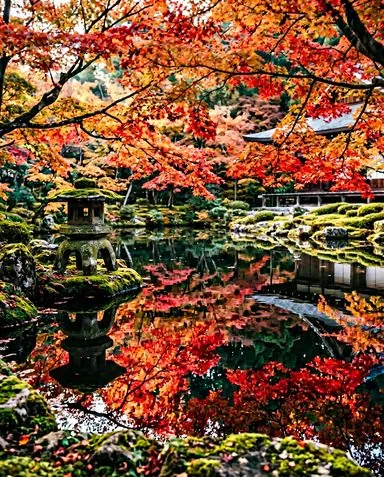

The Kyoto koyo (autumn foliage) forecast for that year predicted peak on November 22nd. We landed on the 18th. By the 20th the maple gardens were already bleeding red. By the 22nd, what the official forecast called “peak,” the trees called “past it.” This is the lesson of every Japanese autumn: the public forecast lags reality by 48–72 hours, because nobody wants to publish “peak” while there's still a chance of more colour. Plan a few days early, not on the dot.
Day 1: Eikan-do at 06:30
The trick at Eikan-do (Kyoto's most-photographed maple temple) is the gate at 06:30. An hour before the official 09:00 opening, the side path through the wooded approach is open and empty. By 09:30 the crowds are wall-to-wall and the photo angle by the pond reflects more selfie sticks than maples. By 06:45 you have it.
We sat at the upper hall in cold blue dawn light. A monk was sweeping the path. The Tahoto pagoda above the maple grove caught the first sun. No-one else was there. Coffee from a vending machine outside the gate. A perfect 90 minutes. Then we moved.
Day 1 afternoon: Tofuku-ji's Tsutenkyo bridge
Tofuku-ji is the other big koyo temple in Kyoto, and the Tsutenkyo bridge over the maple ravine is one of the photographs everyone tries to get. We arrived at 14:00. Mistake. The bridge had a 200-person queue, single-file, photo-then-move-on, three-minute wait per shot. The maples were genuinely spectacular, but the experience felt like Disneyland.
The fix for next time: Tofuku-ji opens at 08:30 in autumn, queue at 08:15. Or skip the famous bridge and walk the lower garden, which has the same trees and one-tenth of the people.
Day 2: Genkoan, the round window
Genkoan is half-hour from central Kyoto by bus, in the northwest. It's a small zen temple with two windows in the main hall: a round “window of enlightenment” and a square “window of confusion.” In autumn both frame burning maple trees outside.
The temple is small enough that they limit visitor numbers; you might queue 15 minutes for a 5-minute slot. We did. It was worth it. Sitting on tatami, the round window framing red maples against grey sky, complete silence except for the occasional click of cameras: this is what people imagine Kyoto autumn to be, and it actually happens here.
Day 3: Nara at sunrise, deer and Kasuga Taisha
The Kasuga Taisha approach is a 1 km walk through cedar forest with hundreds of stone lanterns and roaming deer. We arrived 06:30. Ten deer. No tourists. The lanterns weren't lit (those are festivals only) but the path itself is the photograph. Behind the shrine, Mt. Mikasa was wrapped in mist.
By 09:00 the day-tripper buses from Osaka and Kyoto arrived. The deer became cracker-fed photo props. We were already on the train back, having seen what we came for.
What I'd do differently
- Arrive earlier in November, not later. Mid-November (15–22) is the sweet spot for Kyoto temples. Late November (23–30) the colour starts dropping.
- Pre-dawn at the famous spots, full stop. Eikan-do, Tofuku-ji, Kiyomizu, Kinkaku-ji are all unrecognisable at 06:30 vs. 10:30.
- Off-list temples beat famous ones at noon. Genkoan, Hosen-in, Tenju-an: all within 10 minutes of a famous temple, all with the same maples, all at one-tenth the visitor count.
- Skip Arashiyama in late November. The bamboo grove is unaffected by koyo, but the area is overwhelmed by koyo-day-trippers; visit it in October or early December instead.
For the planning side (when to book, how to forecast koyo, where else to go), see the Autumn Leaves hub. For Kyoto specifically: Kyoto city guide.