





Sushi is not one thing in Japan but a whole spectrum. The same word covers a ¥120 plate gliding past you on a conveyor belt and a ¥30,000 seat at a counter where the chef decides every course. Get the map right and you eat brilliantly at any budget. This guide explains what sushi actually is in Japan, the venue tiers, what to pay, and how to eat it with confidence, then points you to deeper guides for each.
What you need to know
Sushi is defined by one thing: shari, seasoned vinegared rice. The topping matters, but the rice is what makes it sushi. That single fact clears up most of the confusion travellers arrive with.
Nigiri, maki and sashimi in one glance
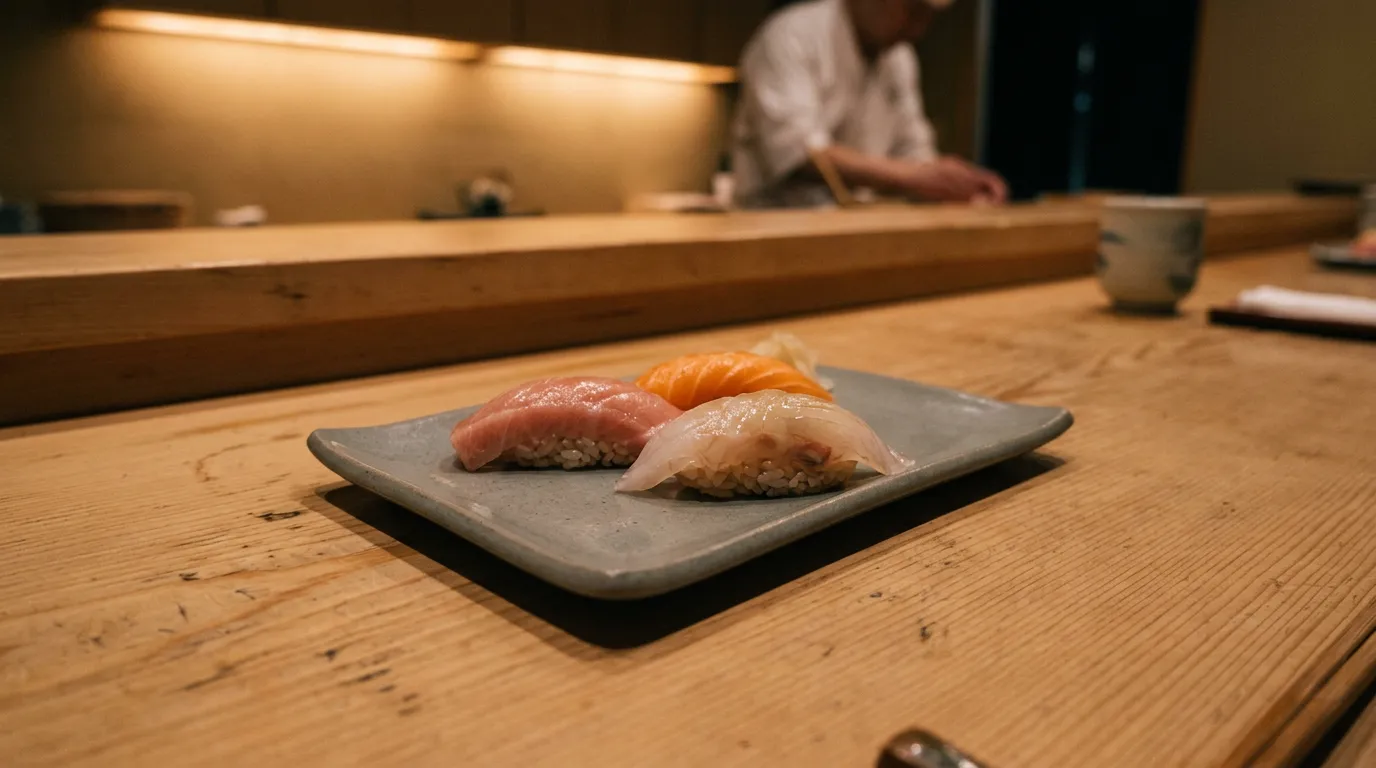
Nigiri is a hand-pressed finger of rice with a slice of fish on top, the purest form. Maki are the rolls, from slim hosomaki to the inside-out rolls the West calls California rolls. Sashimi is sliced raw fish with no rice, so despite sharing the menu it is technically not sushi at all. If you want the full family, gunkan, temaki, chirashi and the rest, read the dedicated guide to the types of sushi.
The everyday sushi Japan eats looks different from the overstuffed rolls common abroad: smaller, cleaner, built around the fish rather than the sauce.
The tiers below intentionally span every budget. Compare them, then pick where you sit.
| Tier | Typical price | What you get | Best for |
|---|---|---|---|
| Conveyor belt (kaitenzushi) | ¥120–500 per plate (~£0.65–2.70) | Fast, fun, order by touch screen; pay by plate colour | First-timers, families, lunch on the move |
| Standing & market sushi | ~¥1,000–3,000 (~£5–16) | Fresh, quick, local; eaten at a counter, often by the market | A great-value step up without a reservation |
| Mid-range counter | ~¥3,000–8,000 (~£16–43) | A trained itamae, seasonal fish, made to order in front of you | The sweet spot for most travellers |
| Omakase | ¥5,000 lunch to ¥30,000+ dinner (~£27–160+) | Chef's choice, course by course, the peak experience | A planned splurge and a memory |
How to eat sushi well in Japan
Pick the tier that fits the meal
Decide before you go. A conveyor belt for a relaxed lunch, a market counter for the freshest breakfast, an omakase for one special evening. Mixing tiers across a trip is the smart move.
Order the way the room works
At a conveyor belt, take from the belt or order fresh on the tablet and watch the express lane. At a counter, let the chef lead, or order two pieces at a time so nothing sits and warms.
Eat it the way it is built
Nigiri is a one-bite food. Dip the fish, not the rice, lightly in soy, the rice falls apart and over-salts if you flip it. Hands are perfectly acceptable for nigiri; chopsticks are fine too.
Use the ginger and wasabi as intended
Pickled ginger cleanses the palate between pieces; it is not a topping. Good nigiri already has wasabi tucked inside, so taste before you add more.
Choose turnover over the tourist queue
A long line of visitors with cameras is not a quality signal. A busy local counter with fish moving fast is. This is the single best rule for eating well in Japan.
Tips and common mistakes
- Lunch omakase is the affordable way in. Many revered counters serve a shorter midday set for a fraction of the dinner price.
- Do not drown it in soy. A light touch on the fish is all it needs; a rice-first dunk marks you instantly.
- Skip the photo-queue traps. The most-photographed sushi spot in a tourist district is rarely the best value two streets back.
- Book the market and famous counters early. The best market sushi means a dawn start, and top counters can fill weeks ahead, a hotel concierge is your friend.
- Leave strong perfume at the hotel. At a serious counter it interferes with the meal, and staff notice.
FAQ
Is conveyor belt sushi real sushi?
Yes. Kaitenzushi is genuine sushi made affordable and casual. The quality varies by chain, but the best conveyor spots serve fresh, well-made pieces at a fraction of counter prices, an ideal first taste. See the full conveyor belt sushi guide.
Is sashimi the same as sushi?
No. Sashimi is sliced raw fish served without rice. Because sushi is defined by its vinegared rice, sashimi is technically a separate dish, even though the two appear side by side on most menus.
How much should I budget for sushi in Japan?
From roughly ¥120 a plate at a conveyor belt to ¥1,000–3,000 for a market or standing meal, ¥3,000–8,000 at a mid-range counter, and ¥5,000 up to ¥30,000 or more for omakase. A memorable trip usually mixes a couple of tiers.
Do I need a reservation?
Not for conveyor belts, standing bars or most market counters, you queue and sit. Mid-range and omakase counters often need booking, sometimes weeks ahead. Lunch service and a hotel concierge open doors that online booking will not.
Can I eat sushi with my hands?
Yes, especially nigiri, which was originally a street food eaten by hand. Chopsticks are equally fine. Either way, dip the fish rather than the rice in soy, and eat nigiri in a single bite.
Where is the best sushi in Japan?
Tokyo is the epicentre, the Toyosu market counters and Ginza between them cover every budget, but superb sushi exists nationwide, from Hokkaido to Kanazawa and Kyushu. Start with the guide to the best sushi in Tokyo, then eat local wherever your route takes you.