
Kyoto's position at the center of the JR Kansai network makes it the best base for day trips in Japan. The same rail lines that connect the city to Osaka and Tokyo also reach a UNESCO deer park, a 400-year-old intact castle, and a fishing village that looks like nowhere else in the country. The eight destinations here are organized by travel time, with the less-visited options given priority within each band. If you have one free day left in your Kyoto itinerary, this is where to start.
Which day trip suits you?
Answer two questions and get the pick that fits your day.
17 min · ¥240Your match
Uji
The main hall of Byodo-in Hoodo — 1,000 years old and on the back of the 10-yen coin. Matcha tea houses on the main street.
Your closest half-morning pick: history, a UNESCO temple, and a matcha stop all inside 3 hours.
35 min · ¥1,280 (Kintetsu)Your match
Nara
Free-roaming sacred deer, Japan's largest bronze Buddha, and a walkable historic park — all within a compact loop from the station.
Families and first-timers who want deer, temples, and a grand Shinto shrine in half a day.
1h40 · ¥10,770 (shinkansen)Your match
Hiroshima and Miyajima
The Peace Memorial Museum plus a ferry to an island where a torii gate stands in the tidal flats.
You want a full day with genuine historical weight — this is Japan's most significant day trip.
~3h from KyotoYour match
Ine
Around 230 wooden boathouses built directly over the sea, unchanged since the 17th century. No entrance fee, no queues.
You want to see a corner of Japan with no tourist infrastructure and nothing to buy at the door.
~2h · ¥4,800–5,200Your match
Amanohashidate
A 3.6 km sandbar across a lagoon — one of Japan's Three Views. Walk through a pine forest with the sea on both sides, then see it from the hillside above.
You want a landscape that looks unlike anything else in Japan.
51 min · ¥1,080 (JR)Your match
Kobe
Old European quarter, Ikuta Shrine, and a Kobe beef lunch near the harbor. A real city with its own character.
Temple fatigue has set in and you want a proper city to walk around.
~2h10 from KyotoYour match
Takeda Castle Ruins
Mountain castle ruins above a sea of morning cloud in October. Original stone foundations, no reconstructed tower, early 5:00 am opening for cloud sea timing.
You are going in October and can leave Kyoto by 5:00 am for sunrise.
38–43 min · ¥4,740 (shinkansen)Your match
Himeji
The only intact original Japanese castle — original 17th-century timber, never reconstructed. One of the most photographed sightlines in the country.
You have not seen a genuine intact Japanese castle yet.
Under 1 hour from Kyoto
1. Uji
UNESCO Temple
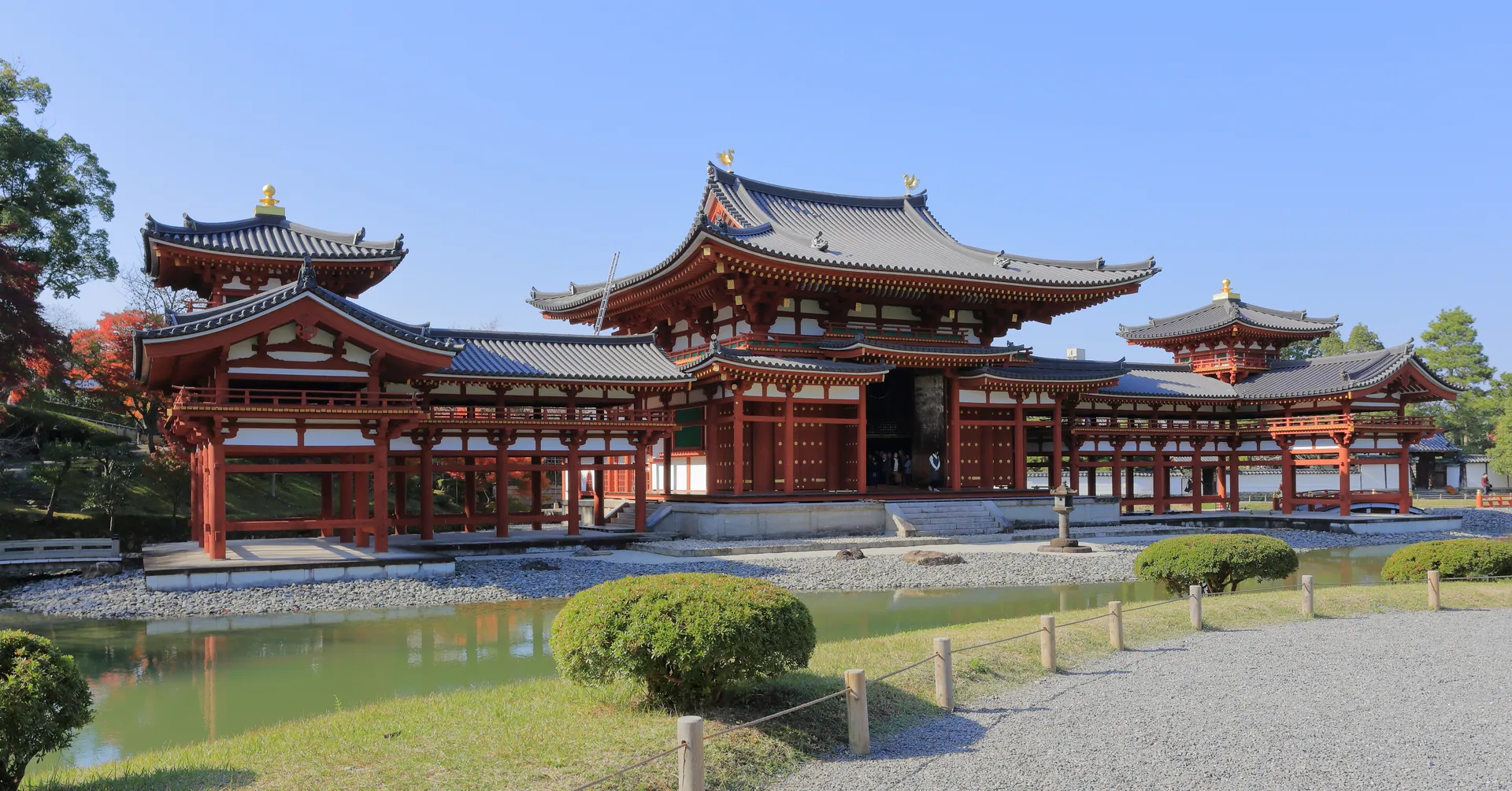
The main hall of Byodo-in Hoodo is one of the best-preserved examples of Heian-period architecture in Japan: a 1,000-year-old building so famous that its image appears on the back of the 10-yen coin. It sits on a small island in the middle of a reflective pond, a layout deliberately designed to suggest the landscape of Buddhist paradise. The surrounding Uji district is also where Japan's matcha culture began, and the main street has tea houses serving ceremonial-grade bowls at accessible prices without needing a reservation.
- Getting there: JR Nara Line Rapid to Uji Station, 17 min from Kyoto Station, ¥240
- Best time: Weekday mornings before 10:00 to beat tour groups; autumn brings color to the riverside walk
- Time needed: 2.5 hours covers the temple garden, the onsite museum, and a tea stop on the main street
A good pick for a manageable half-morning with genuine historic weight. Skip it if temple fatigue has already set in after a few days in Kyoto.
2. Nara
Deer Park
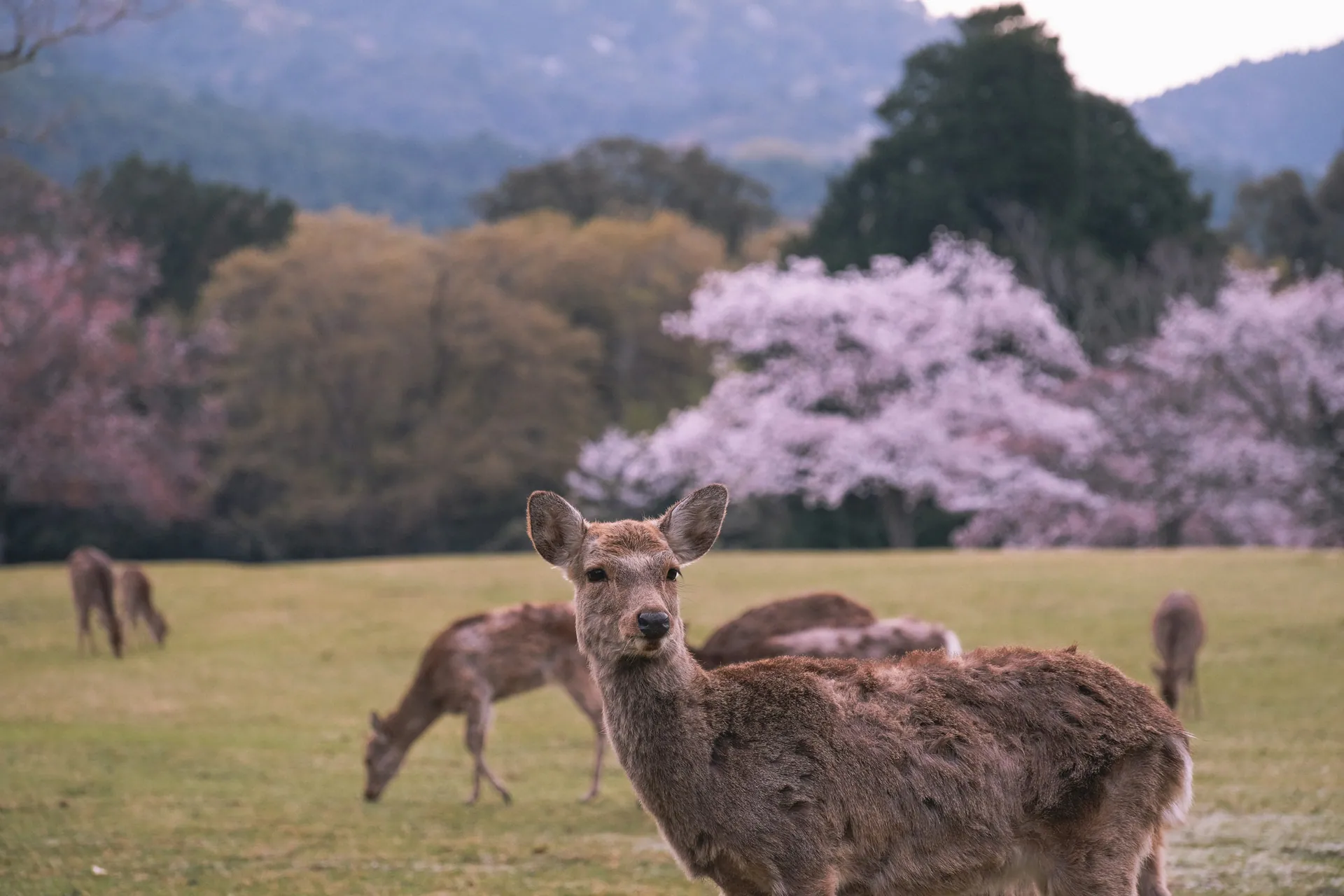
The deer at Deer Park have lived alongside people for over 1,200 years, considered sacred messengers, and they know it: they roam freely through the park, bow for crackers sold at roadside stalls, and occasionally wander into coffee shops if a door is left open. Beyond the deer, the park holds the wooden hall that contains Japan's largest bronze Buddha, a 15-meter casting so significant that it was built before the current building around it, and at the eastern edge of the park a grand Shinto shrine sits at the forest entrance with stone lanterns lining the approach paths. Nara is 45 minutes by Kintetsu from central Kyoto; the entire historic district is walkable from the station.
- Getting there: Kintetsu Limited Express to Kintetsu Nara Station, 35 min, ¥1,280; regular express 45 min, ¥760. JR Nara Line also runs from Kyoto Station (50 min, ¥720, JR Pass valid).
- Best time: Early morning before 9:00, before coaches from Osaka arrive; cherry blossom season in late March is spectacular but extremely crowded
- Time needed: Half a day covers the main park circuit, the great Buddha hall, and the Shinto shrine at the forest edge
The obvious pick for first-timers and families. The Nara region guide and the full Nara Deer Park guide have the detailed itinerary.
1–2 hours from Kyoto
3. Himeji
UNESCO Castle
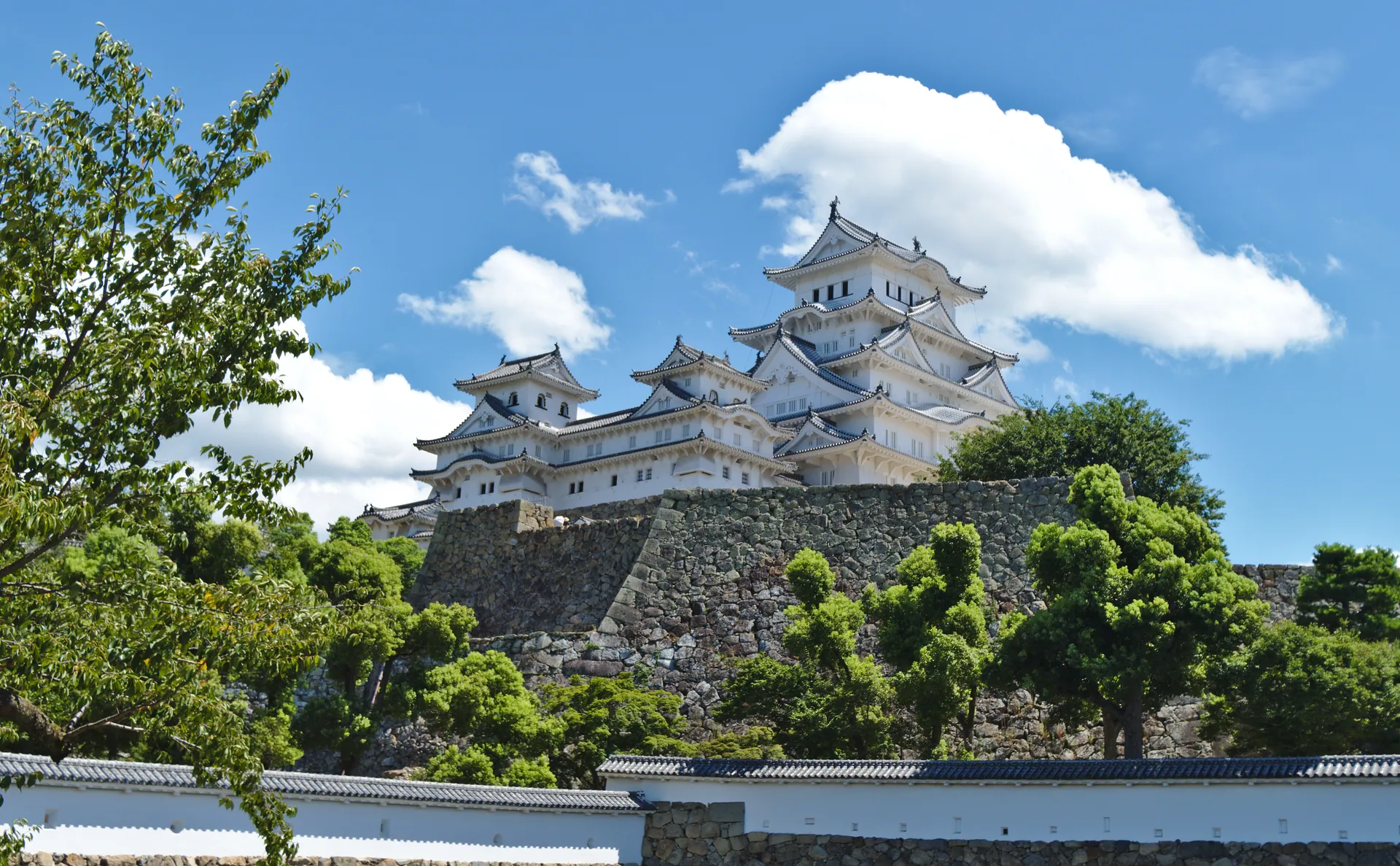
Himeji Castle is the only Japanese castle that has never been destroyed by fire, earthquake, or war. Where most castle visits around Japan are concrete reconstructions, Himeji's six-floor main tower is the original 17th-century timber construction, and climbing it feels different from the fakes. The approach from Himeji Station along the arrow-straight main boulevard, with the white tower rising at the far end, is one of the most photographed sightlines in the country.
- Getting there: JR Hikari shinkansen from Kyoto to Himeji Station, 38–43 min, ¥4,740 unreserved (JR Pass valid on Hikari; do not take Nozomi, which is not covered)
- Best time: Autumn for the surrounding moat gardens; arrive when doors open at 9:00 to beat the midday rush
- Time needed: 2–3 hours covers the main keep, inner grounds, and the garden west of the castle
The essential pick if you have not seen a genuine intact Japanese castle. Note that admission rose to ¥2,500 for international visitors in March 2026; factor that into your budget. The full Himeji city guide covers where to eat and what to do after the castle.
4. Kobe
Shinto Shrine
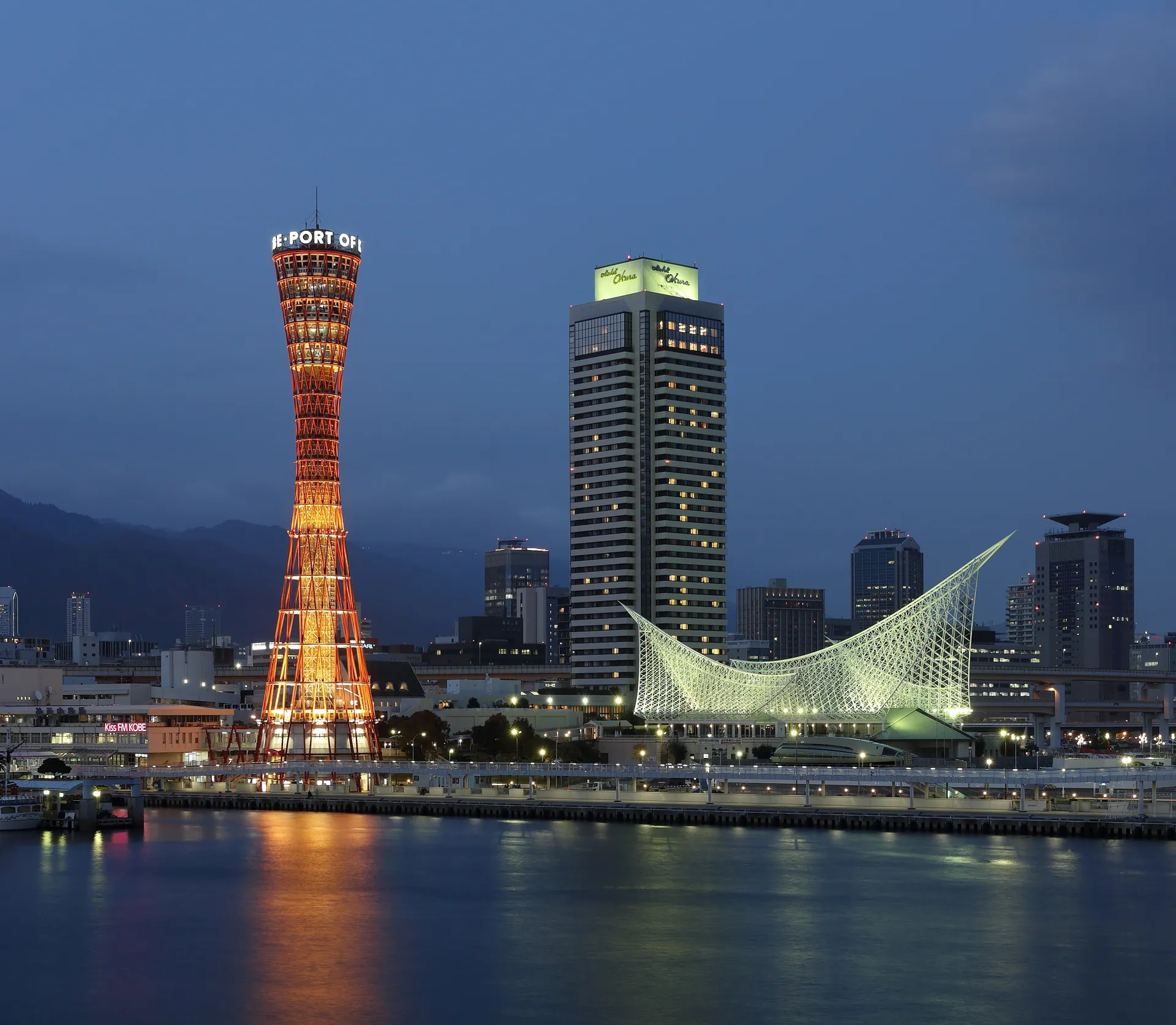
Kobe's tone is different from any other city in the Kansai region. The port opened to foreign trade in 1868, and the old European quarter in the Kitano hill district retains a neighborhood of Victorian-era mansions turned small museums, clustered above the harbor with city and sea views. Ikuta Shrine, tucked behind the main shopping streets in central Kobe, is one of Japan's oldest shrines, its pine grove interrupting the commercial center with an unexpected pocket of quiet. Add a Kobe beef lunch at one of the teppan grills near the harbor and the day covers architecture, history, and one of Japan's most recognized meals.
- Getting there: JR Special Rapid (Shin-Kaisoku) to Sannomiya Station, 51 min, ¥1,080 (JR Pass valid); Hankyu express from Kyoto-Kawaramachi, 44 min, ¥630 (no JR Pass coverage)
- Best time: Autumn and spring; avoid Golden Week when the harbor promenade and Kitano area fill up significantly
- Time needed: Full day if you include a side trip to Japan's oldest hot spring resort (30 min by train from Shin-Kobe)
The best pick if you want a break from temples: a real city with its own character, good food, and a harbor worth walking along. See the full Kobe city guide for the detailed itinerary.
Author's Pick5. Amanohashidate
Sandbar Viewpoint
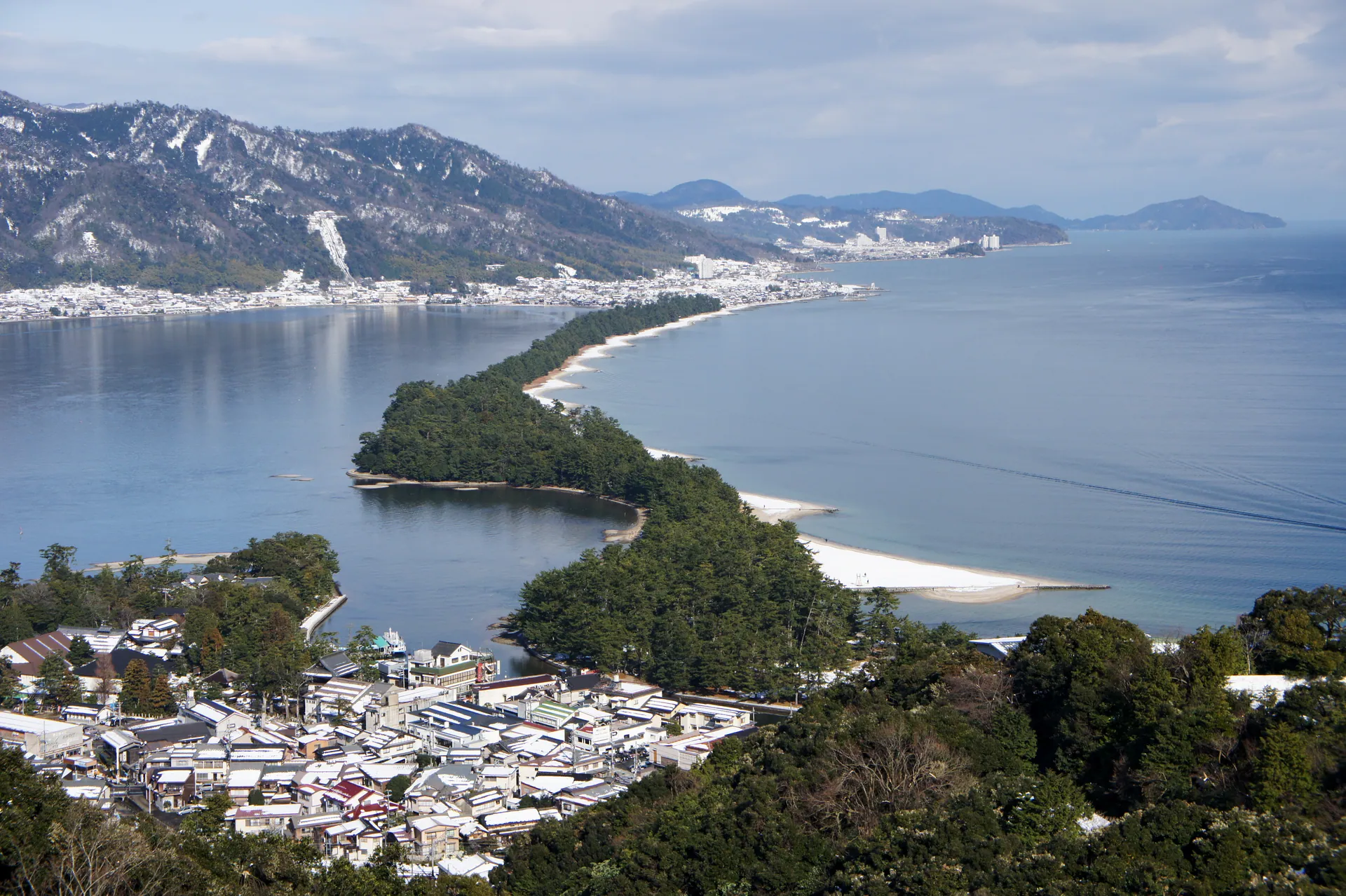
Amanohashidate is one of Japan's officially designated Three Views: a 3.6-kilometer sandbar stretching across the mouth of a lagoon in northern Kyoto Prefecture, covered in more than 8,000 pine trees so densely planted that a walk across feels like passing through a forest that happens to have the sea on both sides. The traditional way to experience it is by cable car to the Kasamatsu viewpoint on the hillside, where you lean forward, put your head between your knees, and look through your legs: the sandbar then appears to float between two bands of sky. It sounds gimmicky; it is genuinely arresting.
- Getting there: Limited express from Kyoto Station to Amanohashidate, approximately 2 hours, ¥4,800–5,200 (Kansai WIDE pass covers this; standard JR Pass does not)
- Best time: Weekdays in early summer or autumn; the sandbar walk is best in cool weather
- Time needed: 4–5 hours allows the walk across the sandbar (30–40 min each way) and the cable car viewpoint. Ine village (see below) is 40 minutes further on the same line.
Worth the longer journey if you want a landscape that looks unlike anything else in Japan. See the full Amanohashidate destination guide for boat cruise options and tide timing.
Author's Pick6. Ine
Observation Deck
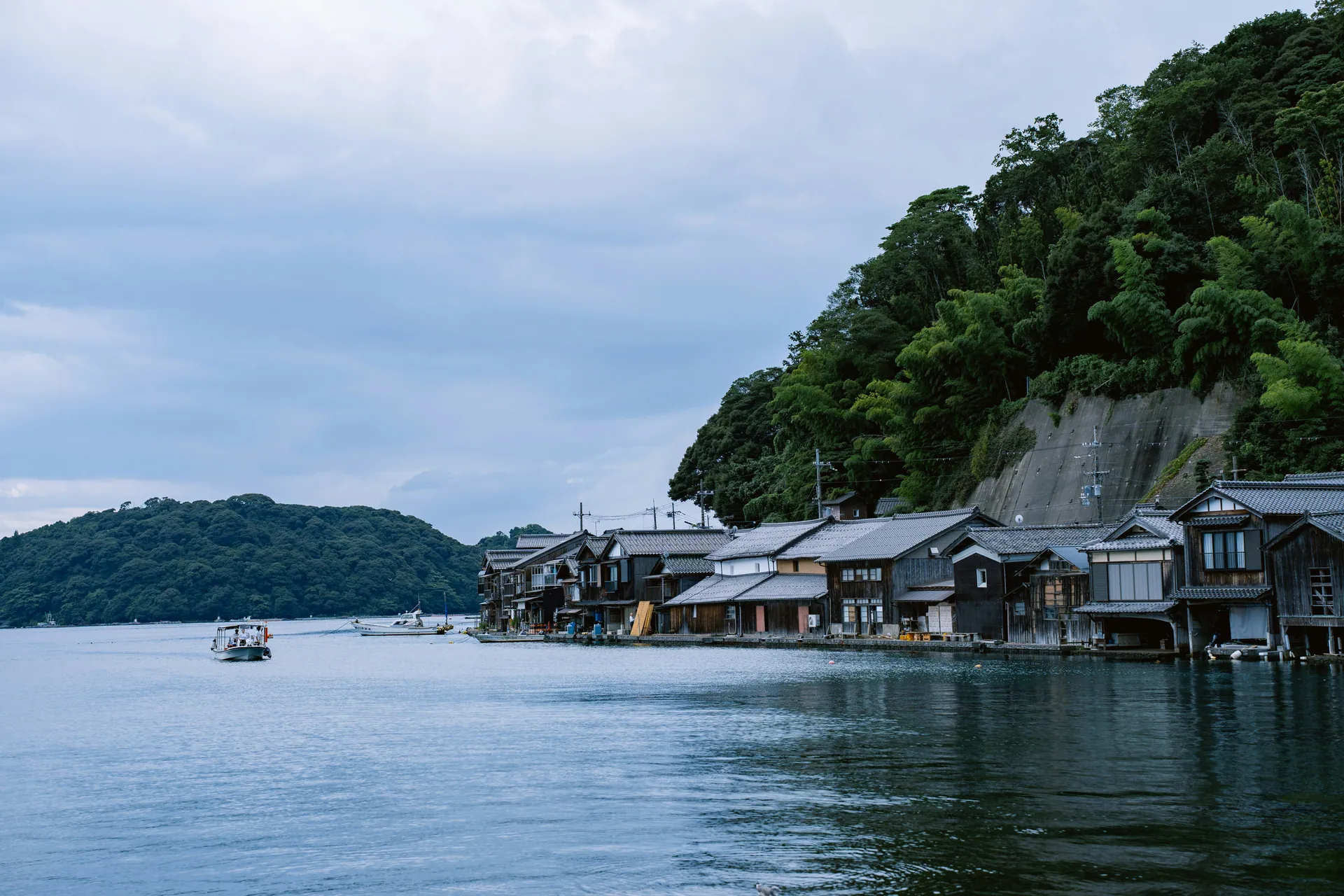
The funaya are a type of building found only along the bay at Ine: wooden boathouses built directly over the water, with the sea as the ground floor and the living quarters above. Fishermen park their boats beneath their homes, an arrangement that has barely changed since the 17th century, and the bay holds around 230 of these structures in a horseshoe formation along the shore. The view from the Funaya no Sato Observation Deck above the bay shows the village from above: a settlement that looks as though it slid into the water and nobody pulled it back.
- Getting there: Limited express to Amanohashidate, then local bus via Miyazu to Ine; total approximately 3 hours from Kyoto Station. Buses are infrequent: check the timetable before departing and plan the return carefully.
- Best time: Combine with Amanohashidate to make the journey worthwhile; morning light gives the best reflections on the bay
- Time needed: 2 hours in the village is enough; the observation deck is a 15-minute walk from the main bus stop
The right pick if you want to see a corner of Japan with no tourist infrastructure, no entrance fee, and no queue. The full Ine destination guide has boat tour details and boat garage stay options.
Half-day trips (2+ hours from Kyoto)
7. Hiroshima and Miyajima
History Museum
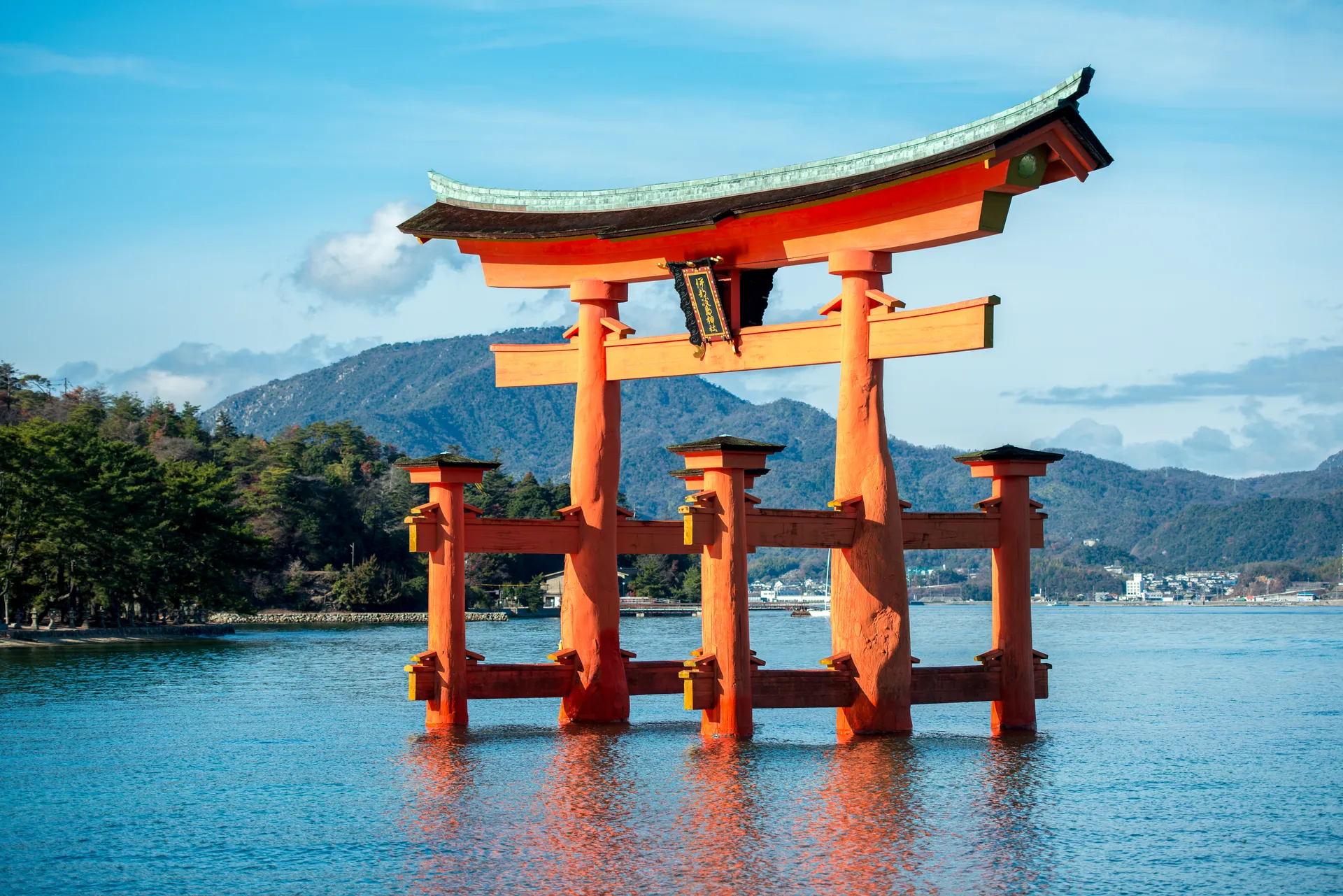
Hiroshima is Japan's most historically significant day trip from Kyoto. The Hiroshima Peace Memorial Museum in the city center covers the events of August 6, 1945 with uncommon care: exhibits focus on individual people and recovered objects rather than statistics, and the effect is genuinely affecting in a way that numbers cannot achieve. A fifteen-minute ferry from the waterfront reaches Miyajima island, where a large torii gate stands in the tidal flats at the entrance to a mountain shrine complex; at high tide the gate appears to float above the water, at low tide you can walk out to it.
- Getting there: JR Hikari shinkansen from Kyoto to Hiroshima, 1h40, ¥10,770 unreserved (JR Pass valid on Hikari; avoid Nozomi, which is not covered). The ferry to Miyajima island is also covered by JR Pass.
- Best time: Spring for cherry trees along the riverside; avoid mid-August when the Peace Memorial ceremony draws large crowds
- Time needed: Full day: museum (2 hours), ferry (15 min), Miyajima including the mountain ropeway (3 hours). Last ferry back to the mainland runs late evening.
The most historically significant choice on this list, and not a light one. Both sites earn more than a rushed afternoon. The Hiroshima city guide and the Miyajima guide have the full itinerary, including where to eat oysters (the island is famous for them).
8. Takeda Castle Ruins
Mountain Ruins
Takeda Castle Ruins sit on the summit of a 353-meter peak above Asago city in northern Hyogo, and in October and November a temperature inversion fills the valley with morning sea cloud while the ruins remain in clear air above. The effect, visible from the castle plateau and from the opposite hillside, is what earned the site its cloud-country reputation: stone ramparts rising above a white sea. The castle fell in 1600 and was never rebuilt, so there are no reconstructed towers or exhibition halls, only the original stone foundations across the summit plateau.
- Getting there: JR limited express to Wadayama Station via Fukuchiyama, approximately 2h10; from Wadayama, a seasonal bus (¥300) or taxi to the trailhead, then a 40-minute ascent on foot
- Best time: October is the peak month for cloud sea: depart Kyoto no later than 5:00 am to arrive for sunrise. Outside October and November the ruins are scenic but the cloud sea effect is rare.
- Time needed: 5–6 hours door-to-door from Kyoto; plan to spend an hour on the summit plateau
The most ambitious pick on this list, and the most rewarding in the right season. Come in October for the cloud sea or set a reasonable hour for your alarm.
FAQ
Which is the best day trip from Kyoto for first-time visitors to Japan?
Nara is the easiest and most versatile choice: 35 minutes by Kintetsu express, free to walk around, and a combination of deer, ancient temples, and a 1,200-year-old shrine in one walkable area. Uji is a good second option if you have already visited Nara on a previous trip or want something quieter and closer.
Which day trips from Kyoto are covered by the JR Pass?
The JR Pass covers Uji (JR Nara Line), Nara (JR Nara Line, not Kintetsu), Himeji and Hiroshima (Hikari shinkansen only, not Nozomi), Kobe (JR Special Rapid to Sannomiya), and the ferry from Hiroshima to Miyajima island. The private railway to Amanohashidate and Ine is not covered; check whether the Kansai WIDE pass is worth adding if you plan those routes.
Can I visit Amanohashidate and Ine in the same day?
Yes, and it is the recommended combination. Ine is 40 minutes further on the same private railway line past Amanohashidate. Take the morning limited express from Kyoto (first departure around 7:15), spend two to three hours at Amanohashidate, continue to Ine for the early afternoon, and return to Kyoto by early evening. Check the bus timetable to Ine before you leave: services are infrequent and the last bus back to the train connection can be earlier than expected.
When is the best time of year for day trips from Kyoto?
Autumn (October to November) is the strongest season overall: Takeda Castle Ruins produces its cloud sea effect in October, Himeji's surrounding gardens turn color, and Hiroshima's riverside ginkgos peak in late November. Spring (late March to early April) is excellent for Nara's cherry trees and the riverside walk in Hiroshima. Summer is viable but hot; Ine and Amanohashidate on the Japan Sea coast are cooler than inland Kyoto in August.
Do any of these day trips require advance booking?
Most work as walk-ups. Byodo-in Hoodo's main hall interior operates timed entry and it is worth booking online in advance during busy spring and autumn weekends. Himeji Castle offers online ticketing that skips the ticket queue. Shinkansen seats to Himeji and Hiroshima can be reserved in advance at no extra charge with a JR Pass, which is useful for early morning departures when trains fill up.