
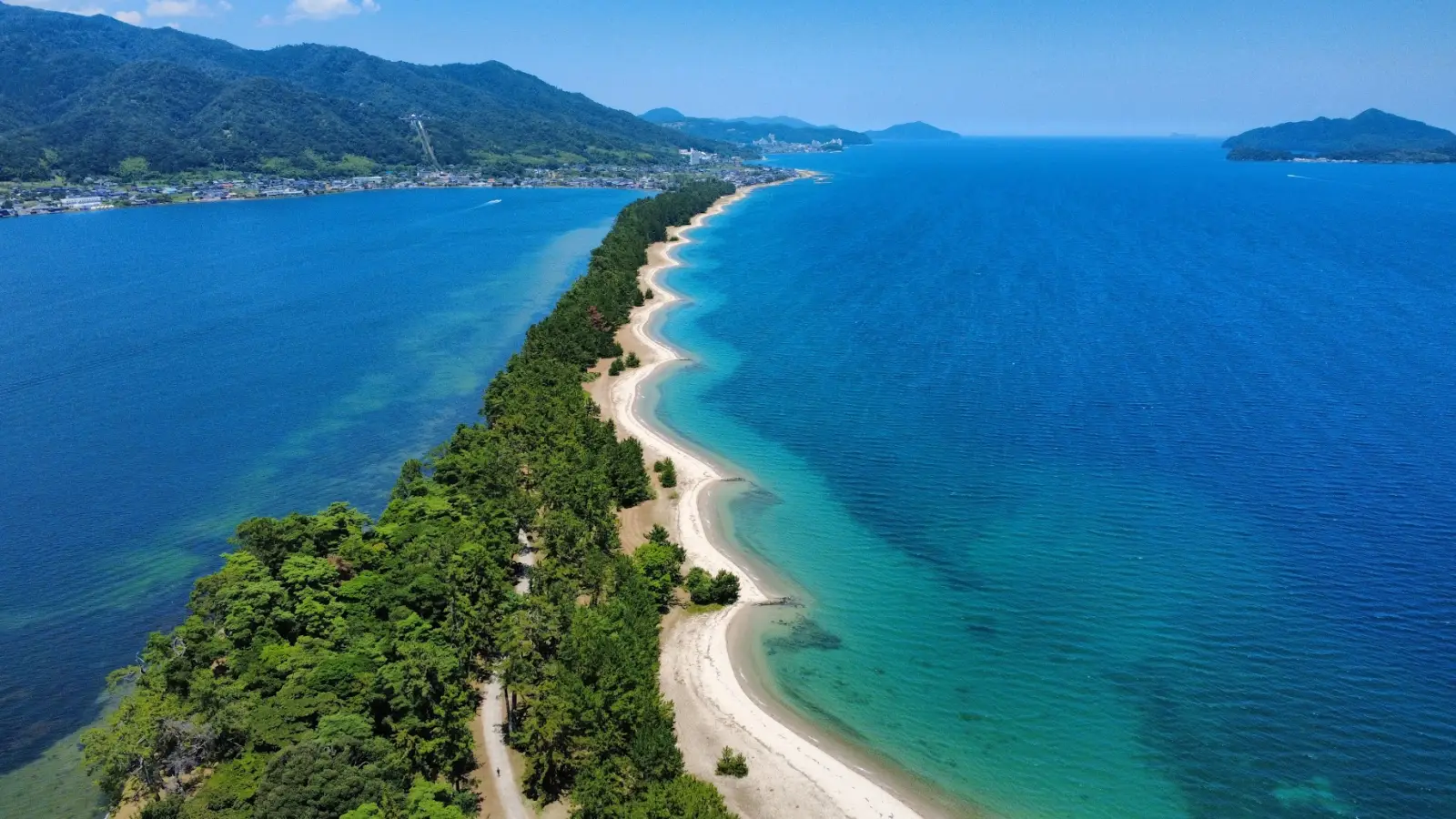
Amanohashidate is a narrow strip of pine-covered sand that cuts straight across the mouth of Miyazu Bay in the far north of Kyoto Prefecture. It's been listed as one of Nihon Sankei, Japan's three most scenic views, since the 17th century, alongside Matsushima and Itsukushima. The sandbar runs about 3.6 kilometres tip to tip and holds roughly 5,000 pine trees, with a footpath and a rental-bike path down its length. You can walk it in 45 minutes, cycle it in 15, or skip the crossing entirely and just take it in from the two hillside viewpoints at either end.
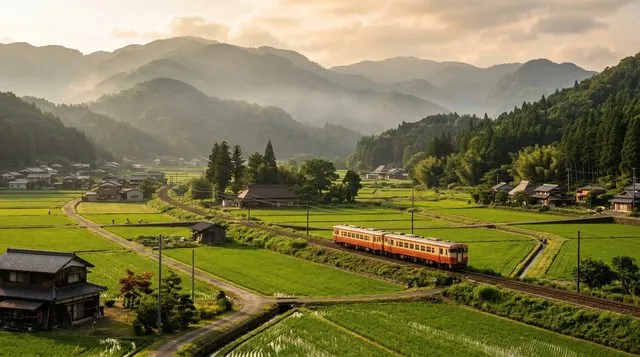
Most visitors treat Amanohashidate as a half-day in-and-out from Kyoto. That's the wrong shape for the trip. The corridor here (the Tango Railway runs along it, Ine fishing village sits 15 km north, the Saigoku pilgrimage route crosses it) rewards two nights, not five hours. Plan it as the anchor for a Kyoto-by-the-Sea loop, with the sandbar as the daytime piece and Ine as the night you'll remember.
When to Visit
Two seasonal peaks: cherry blossoms in early April and clear-air autumn in November. The sandbar itself is comfortable year-round; viewpoint visibility varies more than crowd density does.
Springharu
Mar – May8–22°CHigh crowds
Springharu
- Cherry blossoms along the sandbar early April
- Comfortable temperature for the full walk or cycle
- Golden Week (late April / early May) is the year's busiest stretch: avoid it
Summernatsu
Jun – Aug22–32°CHigh crowds
Summernatsu
- Beach swimming on the sandbar's wider sections
- Tsuyu rains mid-June to mid-July reduce viewpoint visibility
- Local seafood (sea bream, yellowtail) at peak quality
Autumnaki
Sep – Nov12–22°CModerate crowds
Autumnaki
- Clearest visibility of the year from both viewpoints
- Crab season opens in November, and Miyazu kitchens light up
- Comfortable cycling weather
Winterfuyu
Dec – Feb2–9°CLow crowds
Winterfuyu
- Empty sandbar, cold sea wind
- Crab kaiseki season at Seikiro and the local ryokan
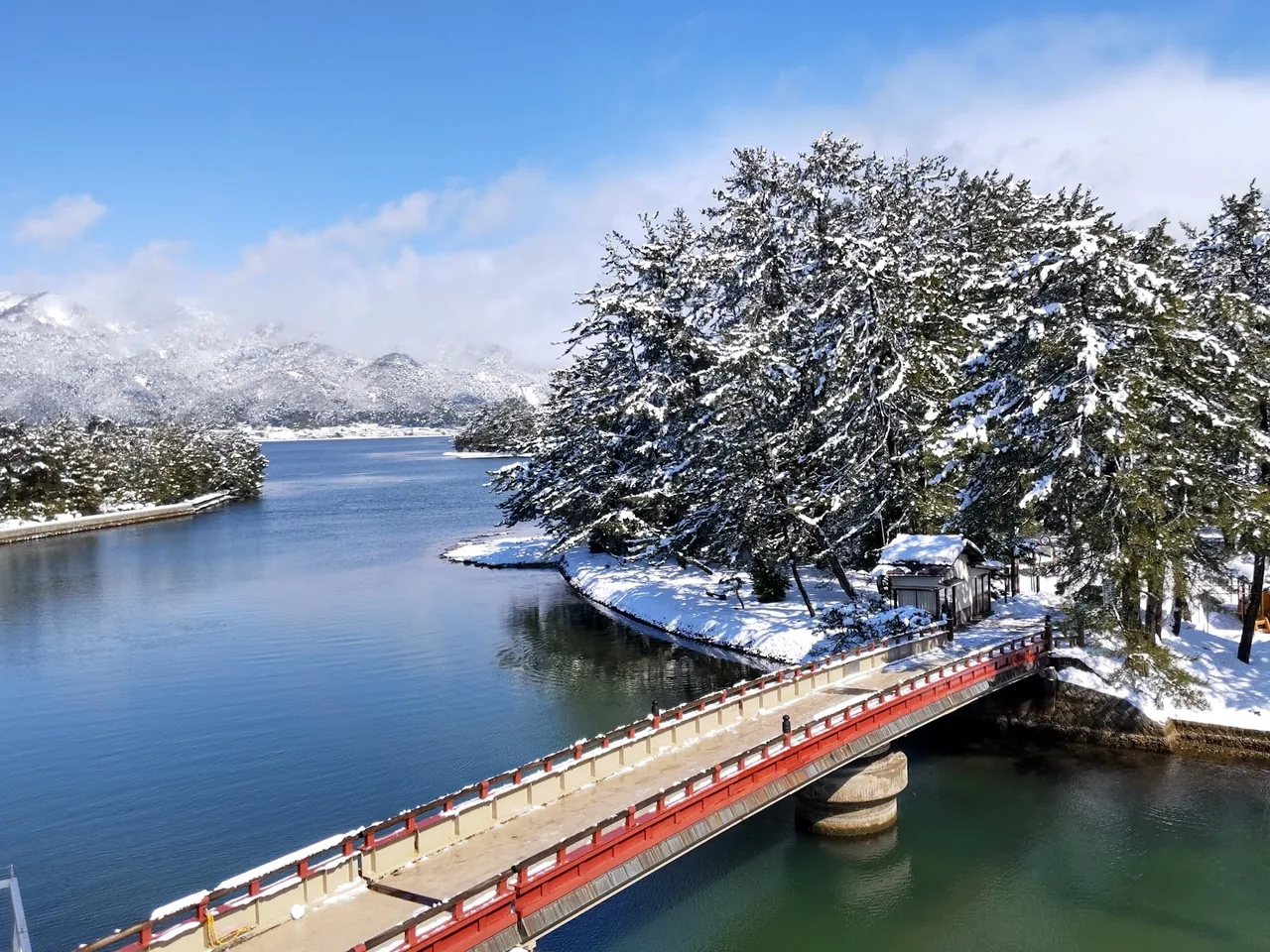
- Occasional snow on the pines: rare but photogenic
What to Expect on the Sandbar
The sandbar itself is the easy part. From the southern end at Chionji Temple, a footpath runs the length under the pines, with the bay on one side and the open sea on the other. Bike rentals around the southern station start at about ¥400 per hour (verify current pricing), and most visitors return the bike on the northern end and take the cable car up to Kasamatsu for the view back. The pine canopy means the walk is shaded even in summer, and there are small swimming sections along the bay side.
The pines are not decorative. The bar is actively maintained against erosion, and a few of the named trees (the "fish-back pine", the "wisdom pine") have low fences and signs explaining the role each plays in the local folklore. You don't need to know any of it to enjoy the crossing, but the placards reward a slow walk over a fast cycle.
The Two Viewpoints
The sandbar is famous because of how it looks from above. Two hillside viewpoints, one at each end, give you the two canonical angles.
Kasamatsu Park sits on the northern slopes of Mount Nariai, accessed by a short cable car or chairlift from Fuchu Station near the bay's north end. This is the viewpoint that invented matanozoki: bend forward, look at the sandbar from between your legs, and the strip of sand and trees looks like a dragon rising into the sky. It is genuinely a different image inverted; the whole point of the pilgrimage to Kasamatsu is to do it. The locals are unsurprised; the tourists alongside you are doing the same thing.
Amanohashidate View Land is the southern counterpart: a small hilltop amusement park reached by a 6-minute chairlift or 7-minute monorail from near Amanohashidate Station. The view is the inverse angle (sandbar pointing north). Round-trip lift plus admission runs about ¥1,000 for adults, half for children; verify current pricing. If your time only allows one viewpoint, Kasamatsu has the more recognisable angle and the matanozoki tradition; View Land is the easier access from the southern hotels.
Nearby Temples and Shrines
Three religious sites at the ends of the bay are worth the short detour off the sandbar.
Rinzai Zen temple at the southern entrance to the sandbar. It houses one of Japan's three important Monju Bosatsu statues, with folding-fan omikuji fortune slips tied around the trees
Wisdom-Bestowing Monju temple
Shinto shrine just north of the sandbar. 'Motoise' means 'Original Ise', as Amaterasu and Toyouke were enshrined here before being moved to the present Ise Grand Shrine
Pre-Ise Shinto shrine
Temple #28 of the 88-temple Saigoku pilgrimage, at ~328 m elevation on Mt Tsuzumigatake. Founded 704; the honzon Sho-Kannon is shown once every 33 years (last shown 2005)
Saigoku pilgrimage #28
Consider Ine Instead
If the bus-tour pulse around Amanohashidate doesn't fit your trip, head 15 kilometres north along the coast to Ine. Same Kyoto-by-the-Sea corridor, completely different rhythm. Ine is a working fishing village where roughly 230 traditional funaya boathouses still line the bay. The boats go in downstairs, the families live above, and the right way to see them is from the 25-minute bay cruise rather than the harbour-road telephoto shot. The Tankai Bus from Amanohashidate Station reaches Ine in about 60 minutes. Most travellers who land both end up rating Ine the better night and Amanohashidate the better daytime view.
Where to Stay
The southern end of the sandbar, around Amanohashidate Station and the Monju district, has the highest hotel density. Three verified options across price tiers below.
Mercure Kyoto Miyazu Resort & Spa$$$
Mid-luxury Accor resort on the Kurita Peninsula overlooking Miyazu Bay, with sea-view rooms, an outdoor pool, hot-spring baths, and a complimentary evening bar. Free shuttle from Miyazu Station. Recently rebranded from Hotel & Resorts KYOTO-MIYAZU.
Kurita PeninsulaCheck availability →Seikiro Ryokan Historical Museum Hotel$$$
320-year-old registered cultural-landmark ryokan with hot-spring baths and a 100-year-old garden, a 5-minute drive from the sandbar. Traditional kaiseki dinner is the reason to choose this over the Mercure.
MiyazuCheck availability →Auberge Amanohashidate$$
Smaller boutique hotel about 9 minutes' walk from the southern end of the sandbar and 500 m from Chionji Temple. 34 rooms, restaurant, sauna. The honest mid-range choice for walking distance to the sandbar.
Monju / Amanohashidate StationCheck availability →Food & Drink
The southern end around Amanohashidate Station has the highest concentration of restaurants. The regional headliners are seasonal Tango catch (sea bream and yellowtail in winter, sea bream rice in spring), chitose-mochi rice cakes associated with Chionji Temple, and the winter matsuba crab season that begins in November. Three Tabelog-listed options worth seeking out: Zuishoen for kaisen-don bowls near the sandbar, umisen yamasen for casual cafeteria-style local dishes in central Miyazu, and Oshokuji Dokoro Seafood Kawasaki for the working-port lunch crowd. Many counters close on Tuesday, so verify hours on the day.
How to Get There
Getting There
- 1JR Sanin Line limited express (Hashidate) direct, or transfer at Fukuchiyama → Amanohashidate Station
- 1JR Thunderbird limited express to Kyoto, then JR Hashidate → Amanohashidate Station
Note: the Kyoto Tango Railway (operated separately from JR between Fukuchiyama and Amanohashidate) is NOT covered by the JR Pass. The Hashidate limited express direct from Kyoto avoids the transfer; verify schedules, as direct services run only a few times per day.
Tips
- Cycle, don't walk. The sandbar is 3.6 km tip to tip. Walking takes 45–60 minutes one way; the rental bikes near the southern station turn it into a 15-minute crossing each way, leaving time for both viewpoints in the same day.
- Matanozoki is the whole point of Kasamatsu. If you're shy about bending over in public, you came to the wrong viewpoint. Everyone does it. The locals are unsurprised; the photo only works inverted.
- Pair both viewpoints in one afternoon. Start at View Land south (chairlift, 30 minutes total), cycle the sandbar (15 min), do Kasamatsu Park north (chairlift + 20 min on top), and cycle back. Three hours, both angles.
- Skip the dragon mythology placards at speed. Each named pine has a small story; you don't need to read them all. Pick three on the way over and three on the way back.
- Photographers: morning light works for View Land, late-afternoon for Kasamatsu. The sandbar faces roughly southwest; the southern viewpoint is best with the sun behind you in the morning, the northern viewpoint catches the light angle in the second half of the day.
- Don't try a Kyoto daytrip. Two hours each way means a 12-hour day for a 4-hour visit, and you'll miss the second viewpoint or the matanozoki entirely. One night at one of the hotels above is the minimum; two nights and an Ine daytrip is the right shape.
FAQ
How do I get to Amanohashidate from Kyoto?
The JR Hashidate limited express runs direct from Kyoto Station to Amanohashidate in about 2 hours, around ¥4,800 each way. Verify current fare and schedule (only a few direct services per day). The alternative is the JR Sanin Line to Fukuchiyama (covered by the JR Pass) and a transfer to the Kyoto Tango Railway (not covered), about 2 hours 30 minutes total. Either way, plan it as an overnight, not a daytrip.
Why is Amanohashidate famous?
It's one of Nihon Sankei, Japan's three iconic views, together with Matsushima in Miyagi and Itsukushima in Hiroshima. The designation dates from the 17th century, but the sandbar itself has been a recognised sight since at least the Heian era. Its fame comes both from the geological oddity (a 3.6 km natural sandbar with about 5,000 pines) and from the matanozoki "upside-down looking" tradition at Kasamatsu Park, which makes the bar resemble a dragon ascending to the sky.
What does Amanohashidate mean?
Literally "bridge to heaven": ama (heaven) + no (of) + hashidate (standing bridge). In Shinto myth the sandbar was a ladder used by the gods to descend to earth, which fell over and froze into its current shape. The matanozoki inverted view is the visual echo of the original mythology: a bridge between sea and sky.
Can you walk across the Amanohashidate sandbar?
Yes. A footpath runs the full 3.6 km length under the pines, with the bay on one side and the open sea on the other. Walking takes 45–60 minutes one way at a steady pace. Most visitors rent a bicycle at the southern end (around ¥400 per hour; verify), cross in 15 minutes, and return either by bike or via the small ferry that runs between the two ends of the bay.
Where is the best view of Amanohashidate?
Kasamatsu Park on the northern slope of Mt Nariai is the canonical angle: it's where the matanozoki tradition originated and where the sandbar most resembles a dragon rising into the sky. Amanohashidate View Land on the southern side gives the inverse angle and is the easier access from the southern hotels. If you can only do one, Kasamatsu is the keeper.
Is Amanohashidate one of Japan's three views?
Yes. Together with Matsushima Bay in Miyagi Prefecture and Itsukushima (Miyajima) in Hiroshima Prefecture, Amanohashidate has been classified as one of Japan's three most scenic views (Nihon Sankei) since 1643, when Confucian scholar Hayashi Gaho documented the three in his Nihon Kokuji Seki Ko.
Where to stay in Miyazu
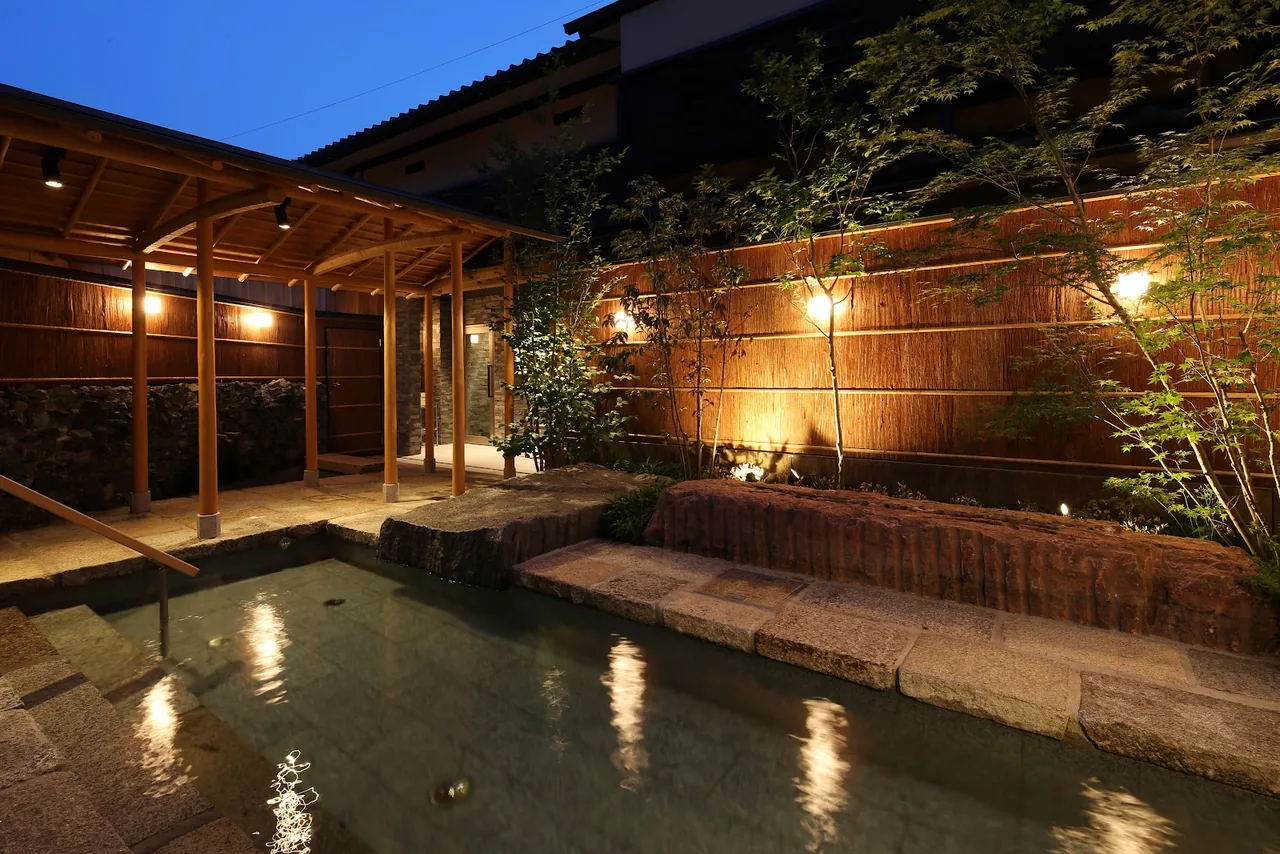
Ryokan
Monjusou Japanese Resort
ryokan4.3628
Notable ryokan
Well-rated ryokan in Miyazu, Kyoto: 628 Google reviews, 4.3★ average.
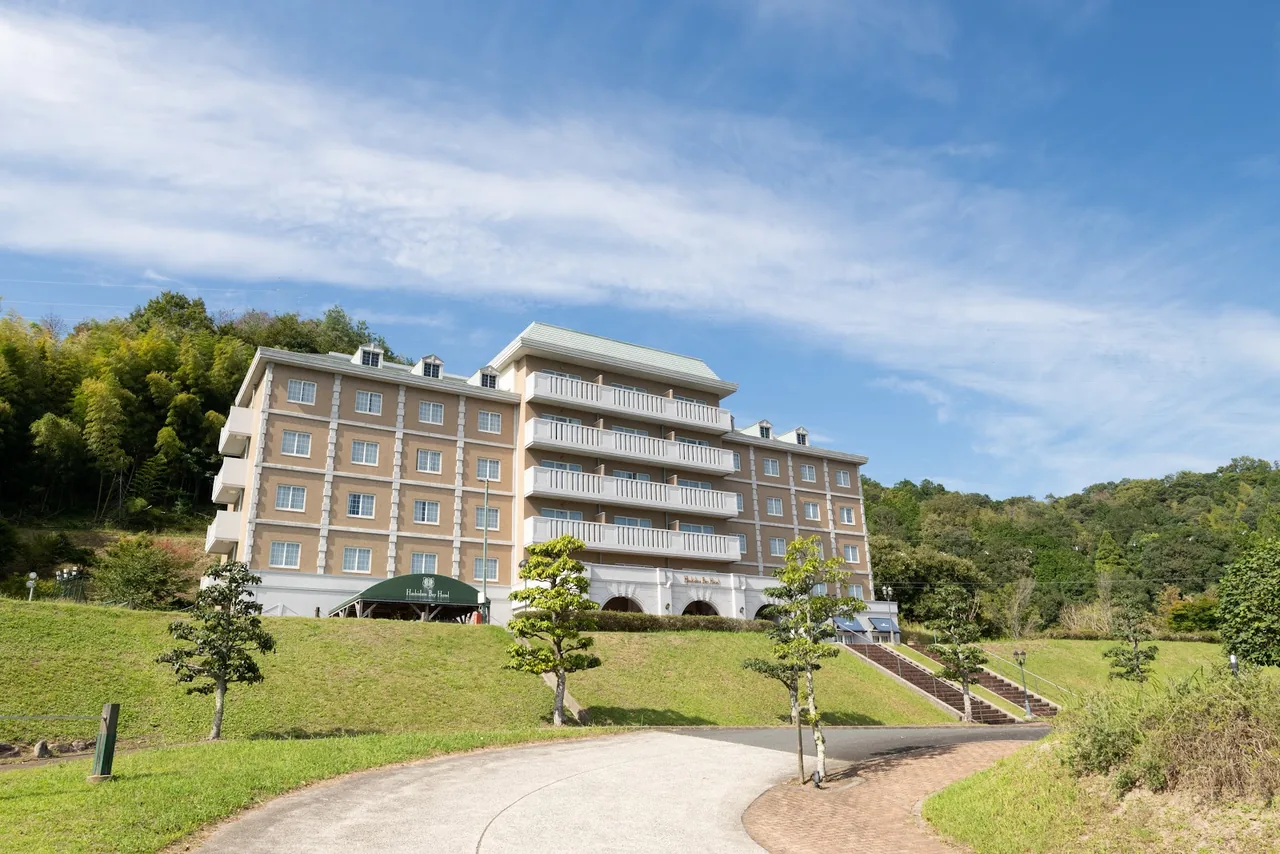
Hotel
Hashidate Bay Hotel
hotel4.0502
Notable hotel
Well-rated hotel in Miyazu, Kyoto: 502 Google reviews, 4★ average.
Ryokan
Taikyōrō
ryokan4.3344
Notable ryokan
Well-rated ryokan in Miyazu, Kyoto: 344 Google reviews, 4.3★ average.
Where to bathe in Miyazu
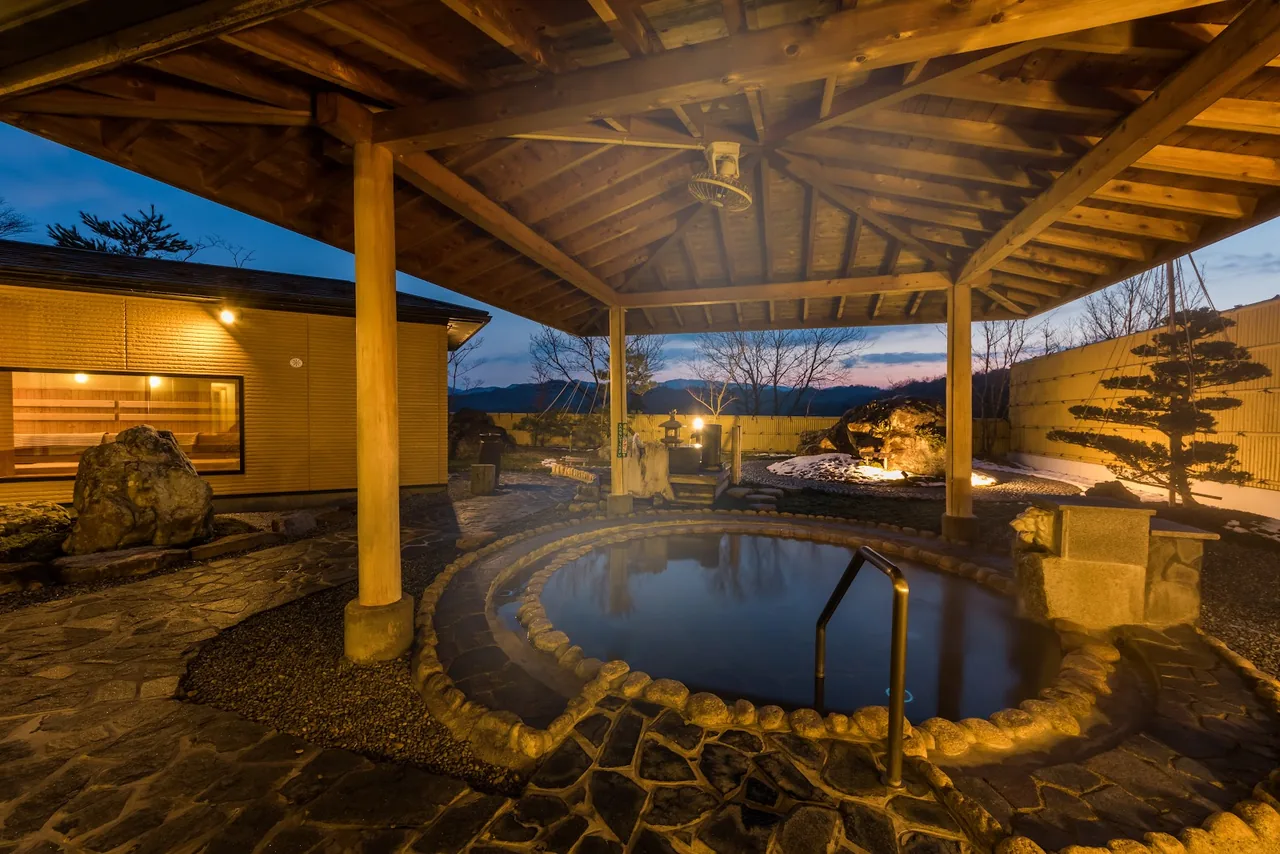
Onsen
Ononokomachi Hot Spring
public3.9376
Notable onsen
Day-use onsen in Miyazu, Kyoto: 376 Google reviews, 3.9★ average.
Hours, address
- Hours
- Monday: 10:00 AM – 9:30 PM / Tuesday: 4:00 – 9:30 PM / Wednesday: 10:00 AM – 9:30 PM / Thursday: 10:00 AM – 9:30 PM / Friday: 10:00 AM – 9:30 PM / Saturday: 10:00 AM – 9:30 PM / Sunday: 10:00 AM – 9:30 PM
- Address
- 105-15 Ōmiyachō Misaka, Kyotango, 京都府 Kyoto 629-2523, Japan