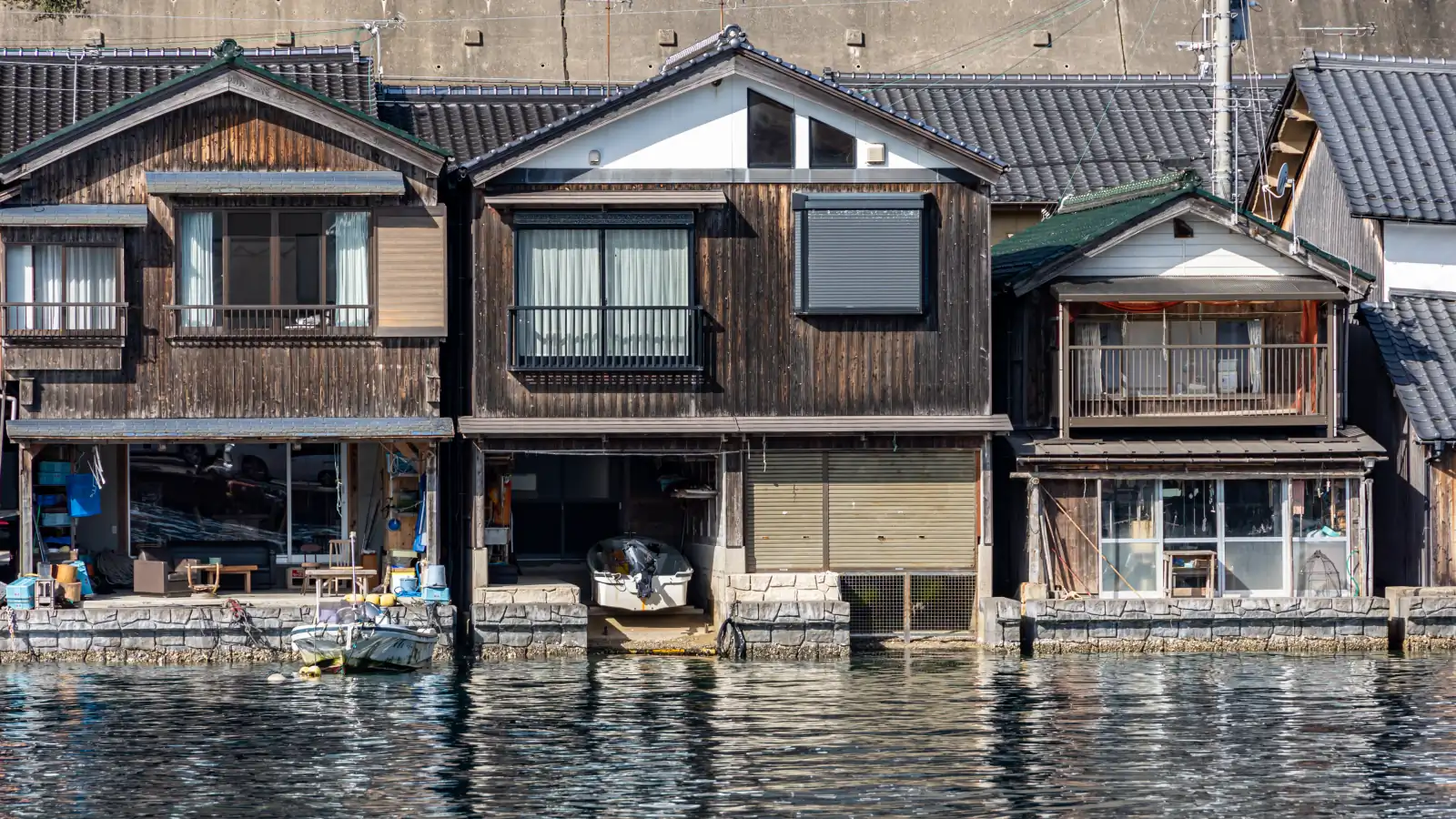
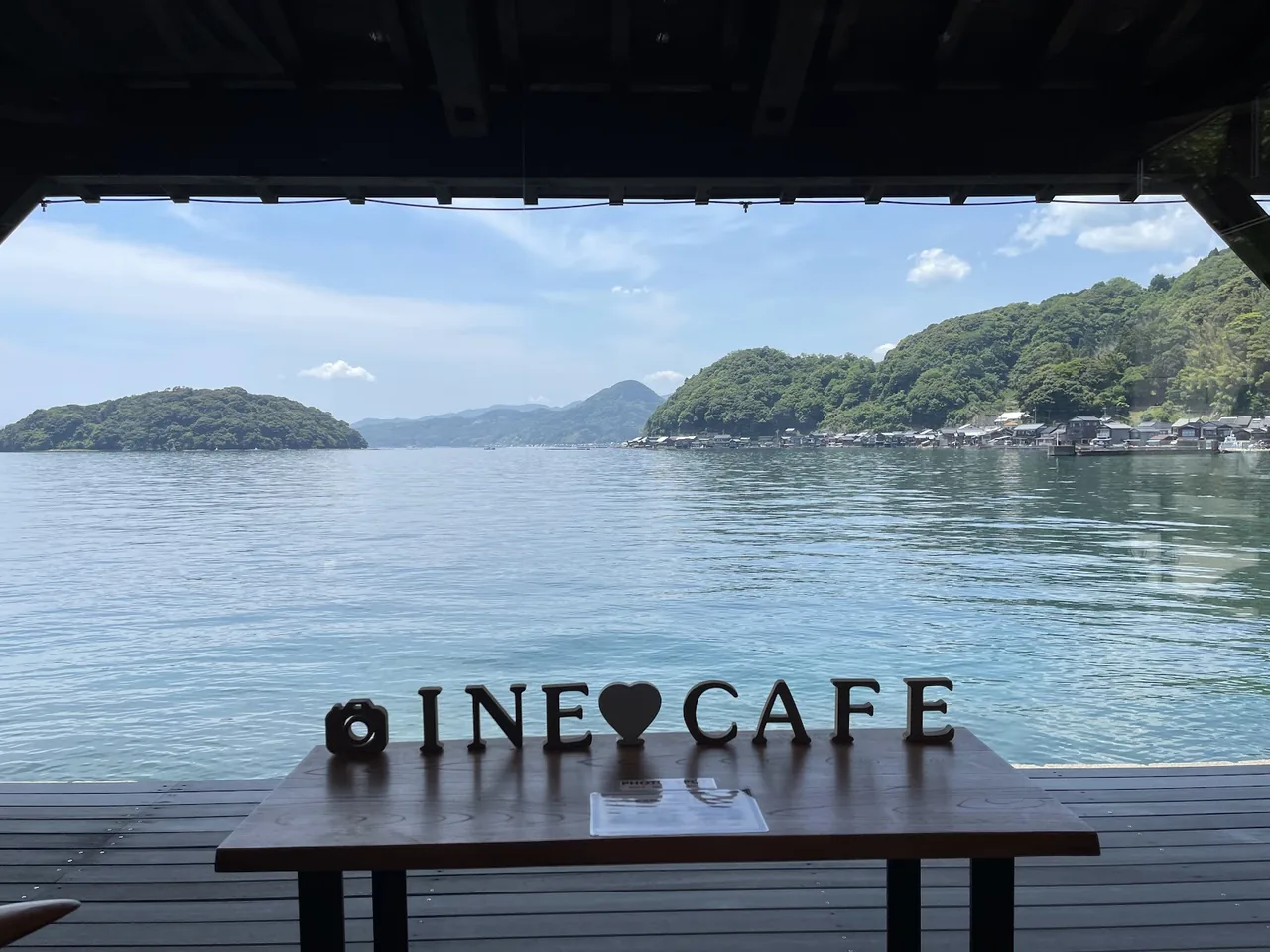
Ine is a small fishing village on the Sea of Japan coast, in the far north of Kyoto Prefecture. Roughly 230 traditional funaya (wooden boathouses with a garage for the boat on the ground floor and family living above) line a five-kilometre curve of bay that faces almost due south, sheltered by Aoshima island. They are not a museum. People still live in the funaya, repair their boats inside them, and dry fish on the upper-floor balconies. That working detail is the whole reason to visit, and the reason the standard photographic angle (a kayak in someone's parking spot, telephoto into their kitchen window) is the wrong way to see Ine.
The right approach is the 25-minute bay cruise, then a slow walk along the harbour road. Getting here from Kyoto takes about two hours each way with a bus transfer, no direct rail to Ine itself. Overnighting in a funaya is genuinely difficult; if a stay matters to you, book three months ahead, or sleep 15 kilometres south at Amanohashidate and visit Ine as a daytrip.
When to Visit
Ine is a working village, not a tourist site that scales up its hours in summer. Plan around bus frequency and Mukai Brewery's lunch closure as much as the weather.
What to Do in Ine
Six things worth doing within the village or a short bus/taxi ride. The cruise and the brewery are the two anchors; the rest fits around them.
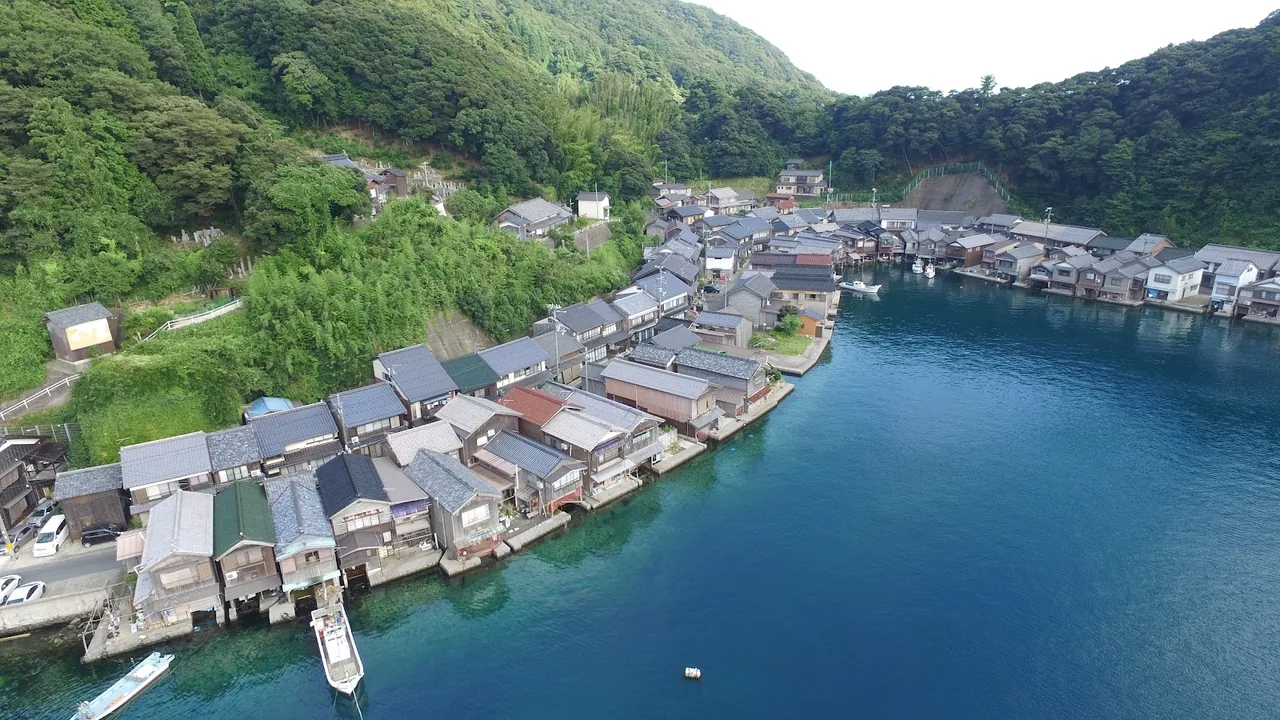
Roughly 230 wooden funaya curve around the bay: boat garage downstairs, family home upstairs, still in working use
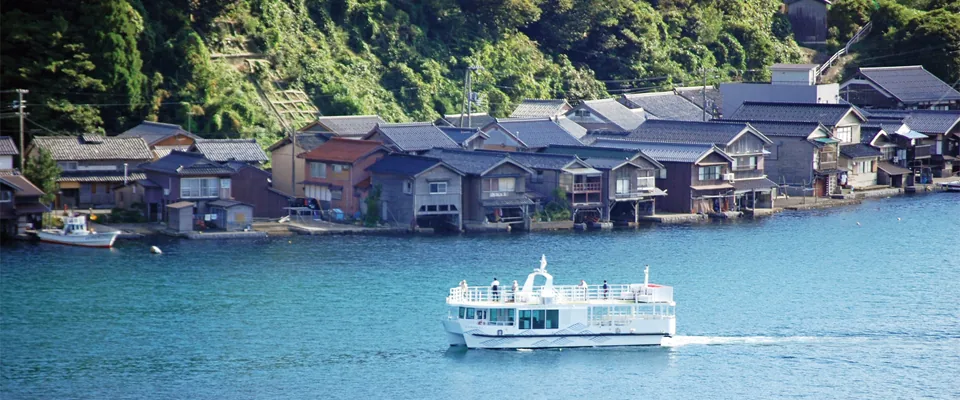
25-minute large-boat loop around the entire bay. The best angle on the funaya is from the water, not from the harbour road
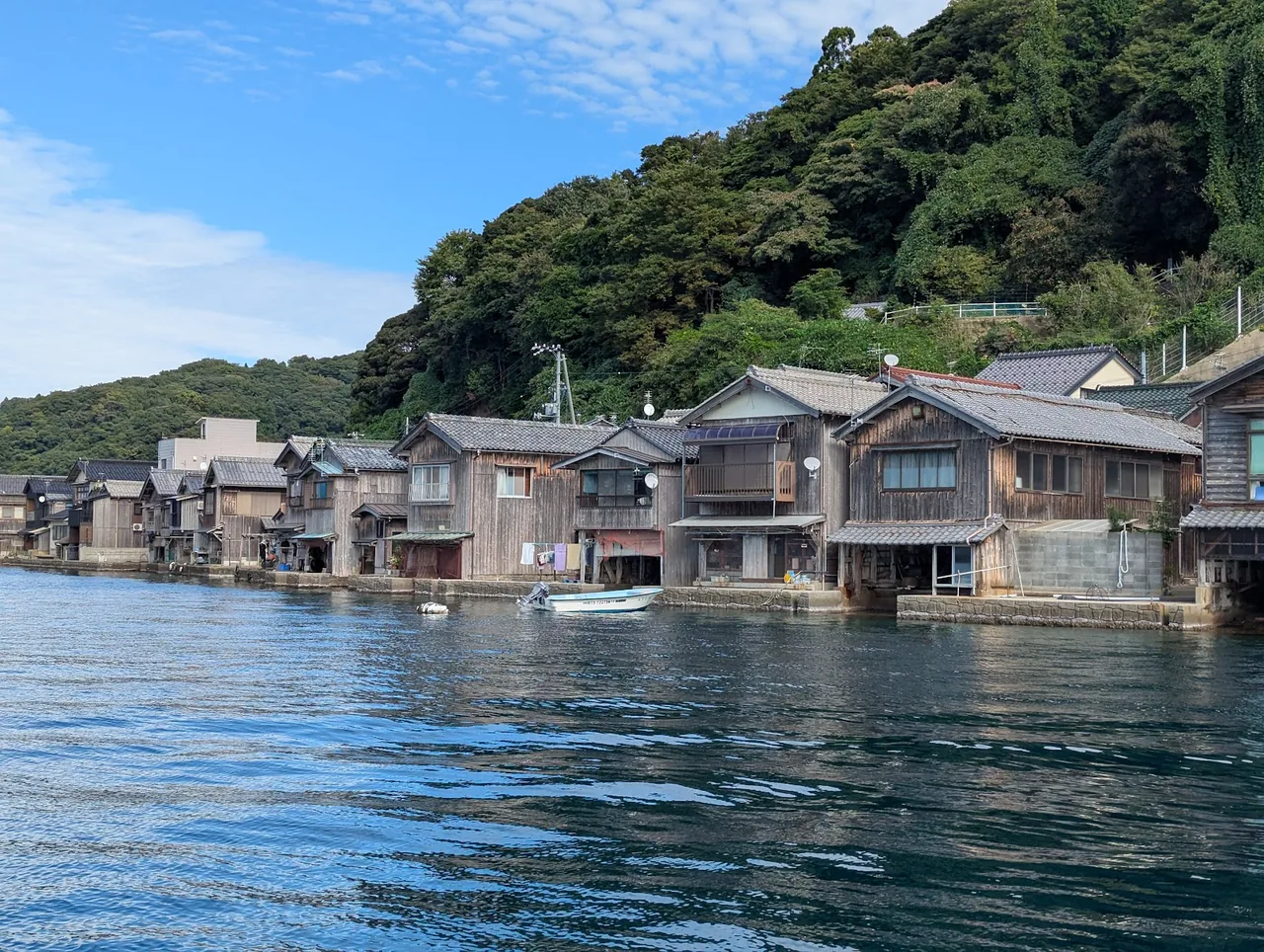 Hidden Gem
Smaller boat run by a local fisherman: slower, more personal, and stops near specific funaya for the right photographic angle
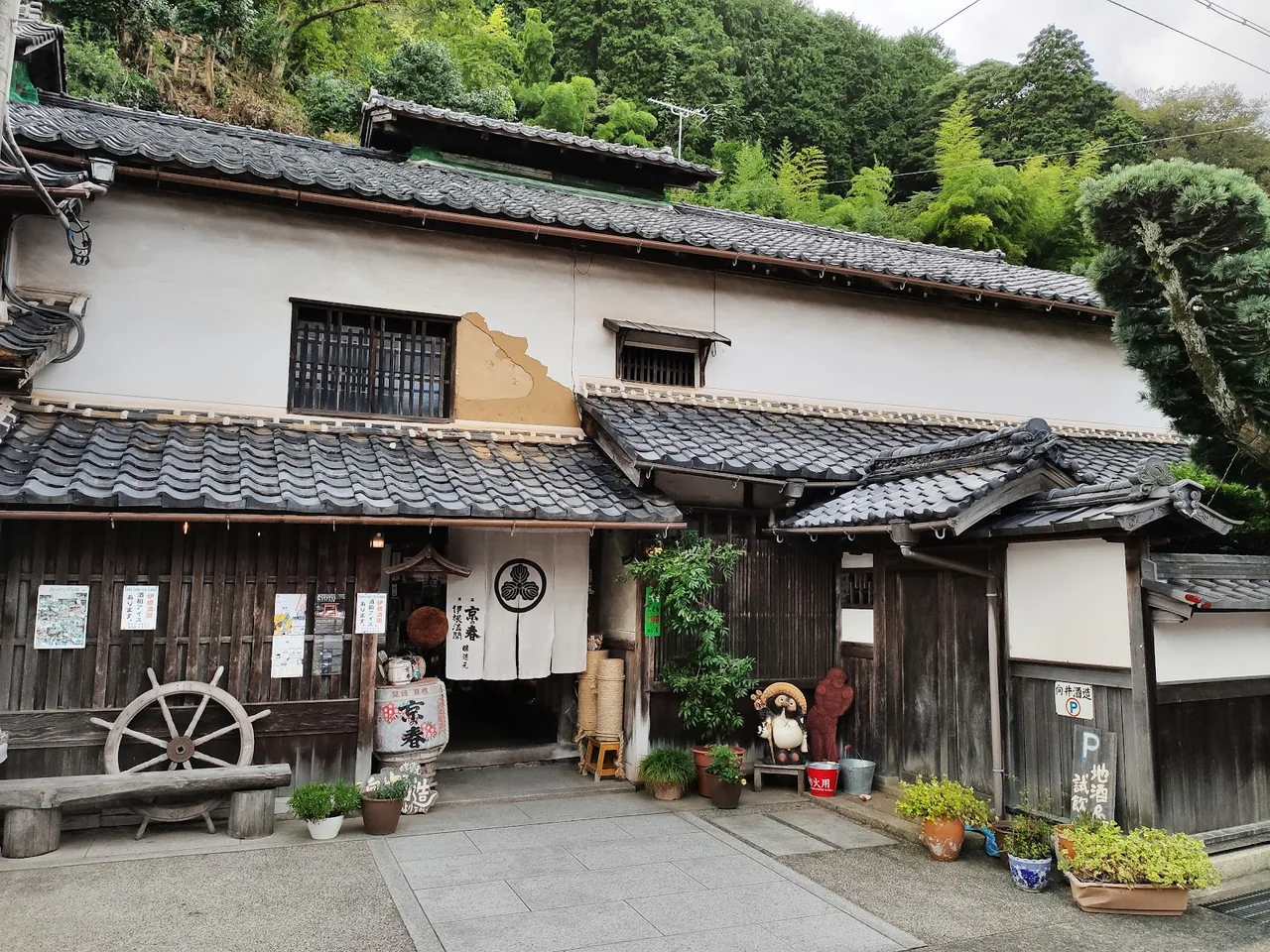 Hidden Gem
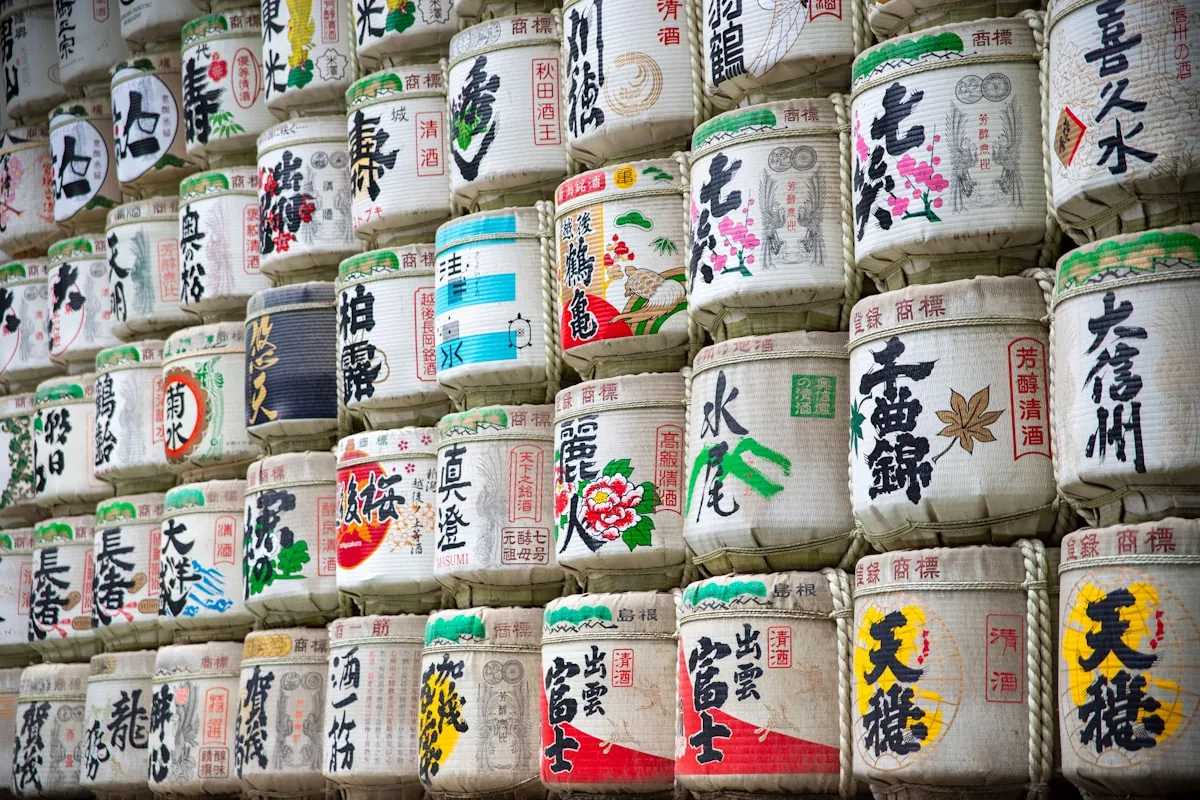
Founded 1754; head brewer Kuniko Mukai is Japan's first female toji. Famous for Ine Mankai red-rice sake, served at the 2019 G20 Osaka summit. Hours 09:00–12:00 and 13:00–17:00
 Hidden Gem
Hilltop roadside station with the only proper aerial view of the bay: observation deck, tourist information, a restaurant, and a souvenir shop
 Hidden Gem
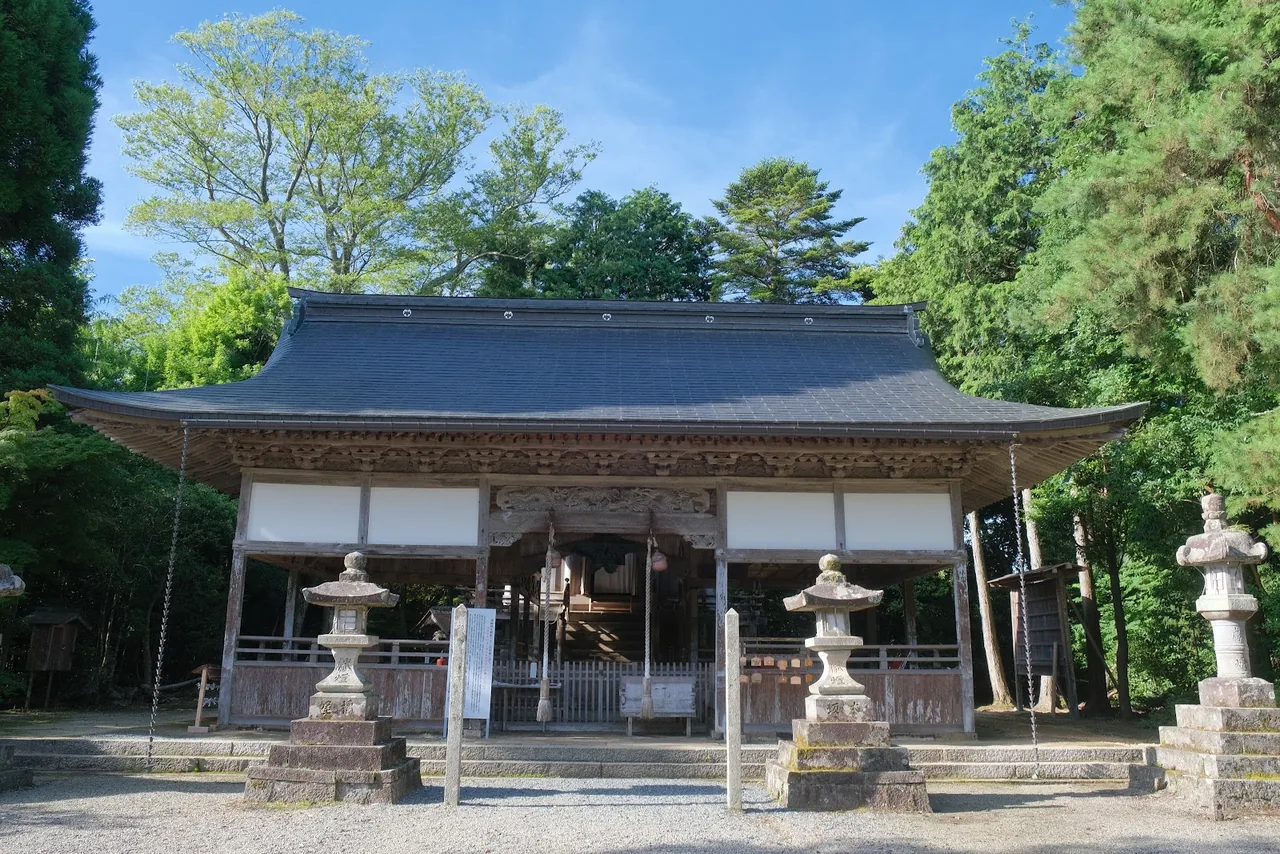
Shinto shrine in the Honjouhama district, traditionally founded in 825 CE. It is tied to the Urashima Taro legend and holds the Muromachi-era Urashima Myojin Engi Emaki (Important Cultural Property)
Skip the Crowds
- See the funaya from the water. The harbour-road walk puts you in residents' kitchens with a telephoto lens. The bay cruise (or sea-taxi) gives you the better angle and respects that the buildings are private homes.
- Skip Golden Week. Late April through the first week of May is the busiest stretch of the year: bus lines back up, cruise queues form. Mid-May, October, or any weekday outside school holidays is empty by comparison.
- Funaya no Sato viewpoint before the tour buses. The hilltop roadside station fills up between 11:00 and 13:00 when coach tours stop for lunch. Arrive before 10:30 or after 14:00 and you'll have the observation deck to yourself.
- The harbour road, not the postcard angle. Most of Ine's character is in the bits the cruise doesn't cover: the small shops along the main road, the local fishing tackle store, the post office. A 30-minute walk between cruise and bus gives you those.
Food & Drink
The handful of restaurants in Ine cluster along the harbour road and the bus stop area. The local catch is the headline: sea bream, yellowtail (peak in winter), and Ine no Funa-zushi, a niche fermented mackerel sushi that not every visitor takes to. Mukai Sake Brewery runs a tasting counter where you can sample the unusual red-rice Ine Mankai alongside their drier table sakes. Beyond those known anchors, Tabelog and Google Maps surface 6–8 currently-operating counters within walking distance of the bus stop, and many close on Wednesday, so plan a backup.
Where to Stay
Honest version: only a handful of funaya appear on foreign-friendly booking platforms, and they sell out three to six months ahead in spring and autumn. The two routes below are the realistic options.
Booking links are affiliate links. They cost nothing extra and support the site.
Day Trips
The Kyoto-by-the-Sea corridor extends 15 km in each direction from Ine; most visitors pair the village with one of the two below.
Amanohashidate
One of Japan's three iconic views: a 3 km pine-covered sandbar across Miyazu Bay, 15 km south of Ine. 30 min by bus.
The three-views sandbar
- Walk or cycle the sandbar (30–45 min)
- Matanozoki view from Kasamatsu Park
- Pair with Ine for a 2-night corridor
Kyoto City
The cultural capital is the obvious counterweight, two hours back south by rail after the coast
Two-hour rail back south
- Eastern temple district
- Nishiki Market and downtown
- Logical anchor city for the corridor
How to Get There
Note: there is no direct rail to Ine. The Tankai Bus from Amanohashidate Station is the only public-transport leg, and frequency drops in winter. A rental car from Amanohashidate cuts the last leg to about 30 minutes.
FAQ
How do I get to Ine from Kyoto?
Take the JR Sanin Line limited express from Kyoto Station to Fukuchiyama (about 80 minutes, covered by the JR Pass), transfer to the Kyoto Tango Railway to Amanohashidate Station (about 40–60 minutes, not covered), then take the Tankai Bus from outside Amanohashidate Station to Ine (about 60 minutes, roughly hourly). The whole trip is around three to three-and-a-half hours each way. Plan for it as an overnight to Amanohashidate at minimum, not a daytrip from Kyoto.
Can you stay in a funaya boathouse?
Yes, but with caveats. A small number of funaya have been renovated as guesthouses; only a handful appear on foreign-friendly booking channels (Booking.com, Klook, Rakuten Travel). They sell out three to six months ahead in peak seasons, and most listings are Japanese-language with limited English support. If a funaya stay matters to you, book early or accept the day-visit alternative and overnight at Amanohashidate.
How long does the Ine bay cruise take?
The standard Tankai bay cruise is about 25 minutes: a single loop around the bay that takes you past most of the funaya. Boats run every 30 minutes from roughly 09:00 to 16:00, with no advance reservation needed for the large boats. A sea-taxi (smaller boat, run by local fishermen) is the slower personal alternative; verify availability on the day at the harbour.
Is Ine worth visiting?
Worth it as part of a 1–2 night Kyoto-by-the-Sea trip, paired with Amanohashidate. Not worth it as a Kyoto daytrip: the access takes three hours each way and the village itself is a half-day. If you have one day and the choice is Ine alone or Amanohashidate alone, Amanohashidate is the easier pick. If you have two days, Ine is the part you'll remember.
How many funaya are there in Ine?
Around 230 funaya remain standing along Ine Bay. Most are still privately owned and lived in; only a small handful operate as accommodation or restaurants. The bay's curve and Aoshima island shelter the buildings from open-sea storms; that protection is the reason the funaya density here is unmatched anywhere in Japan.