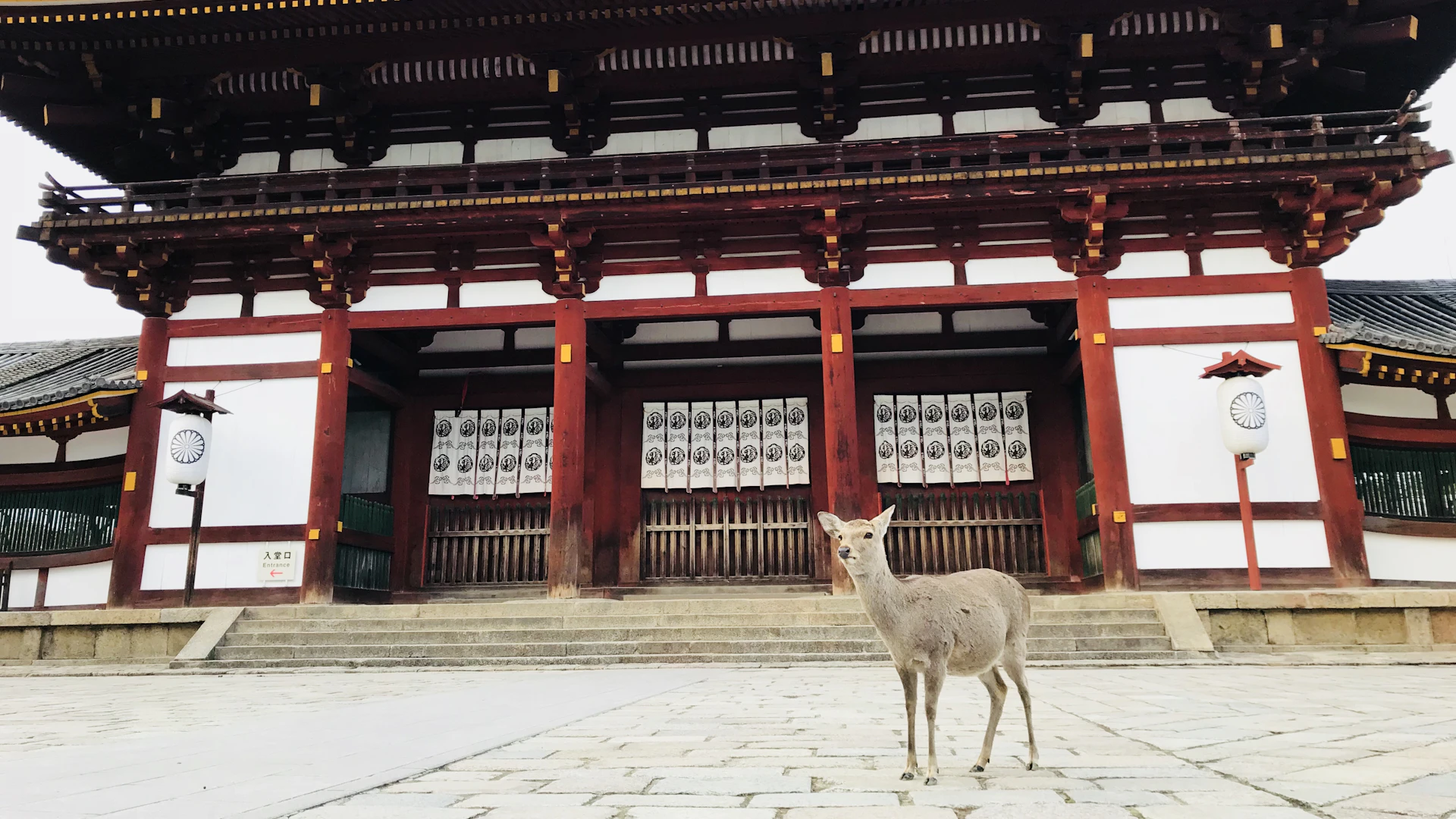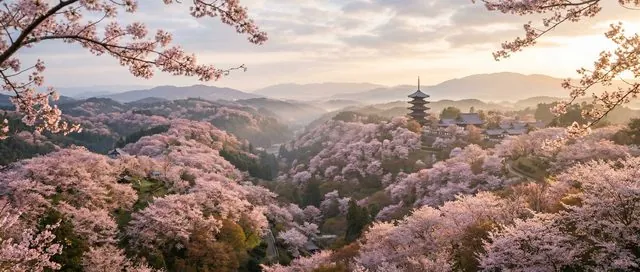
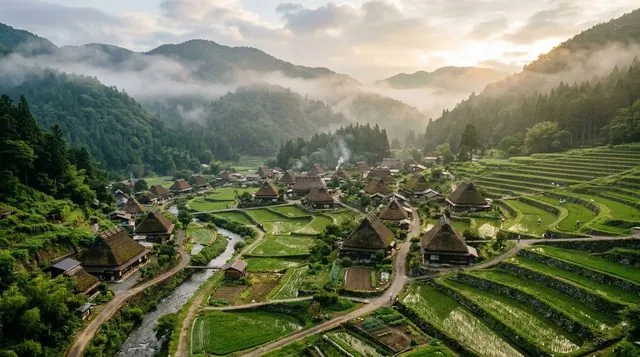

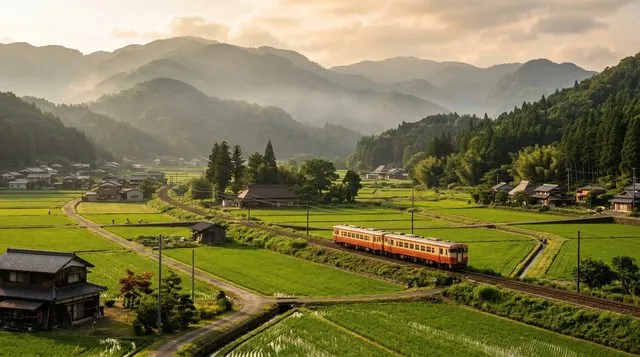
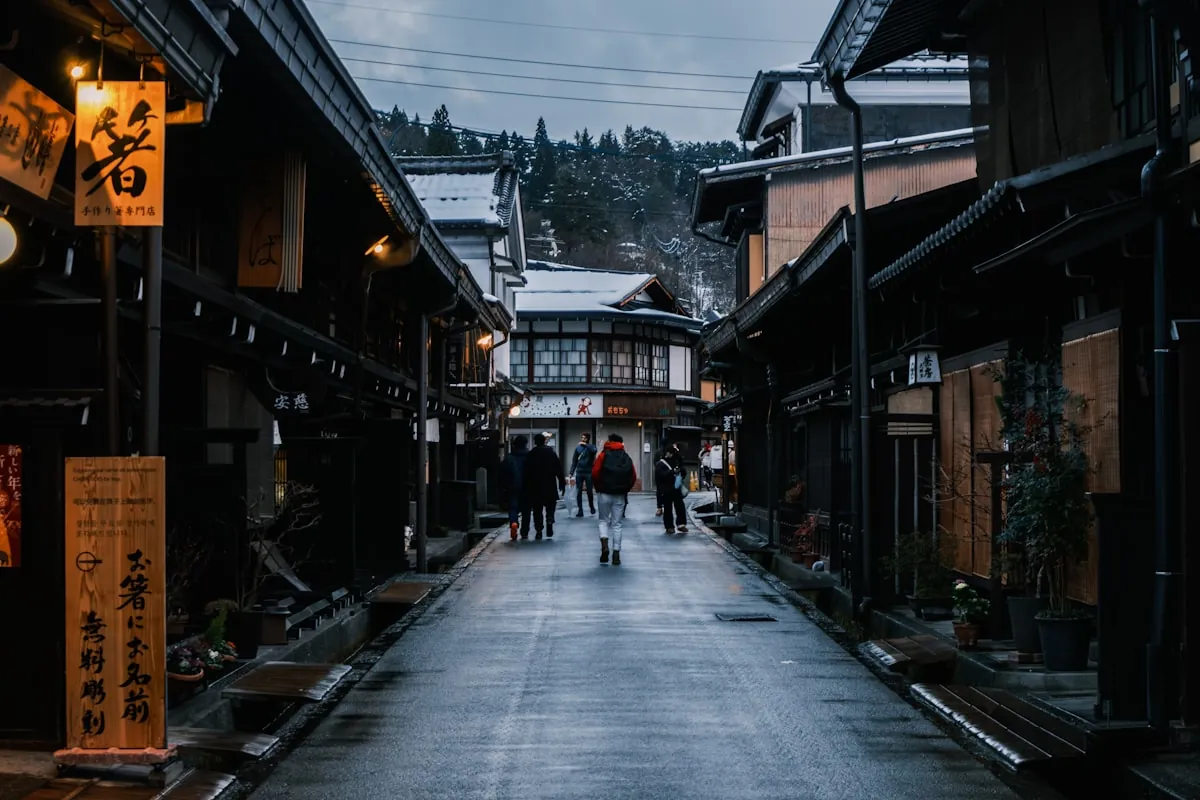
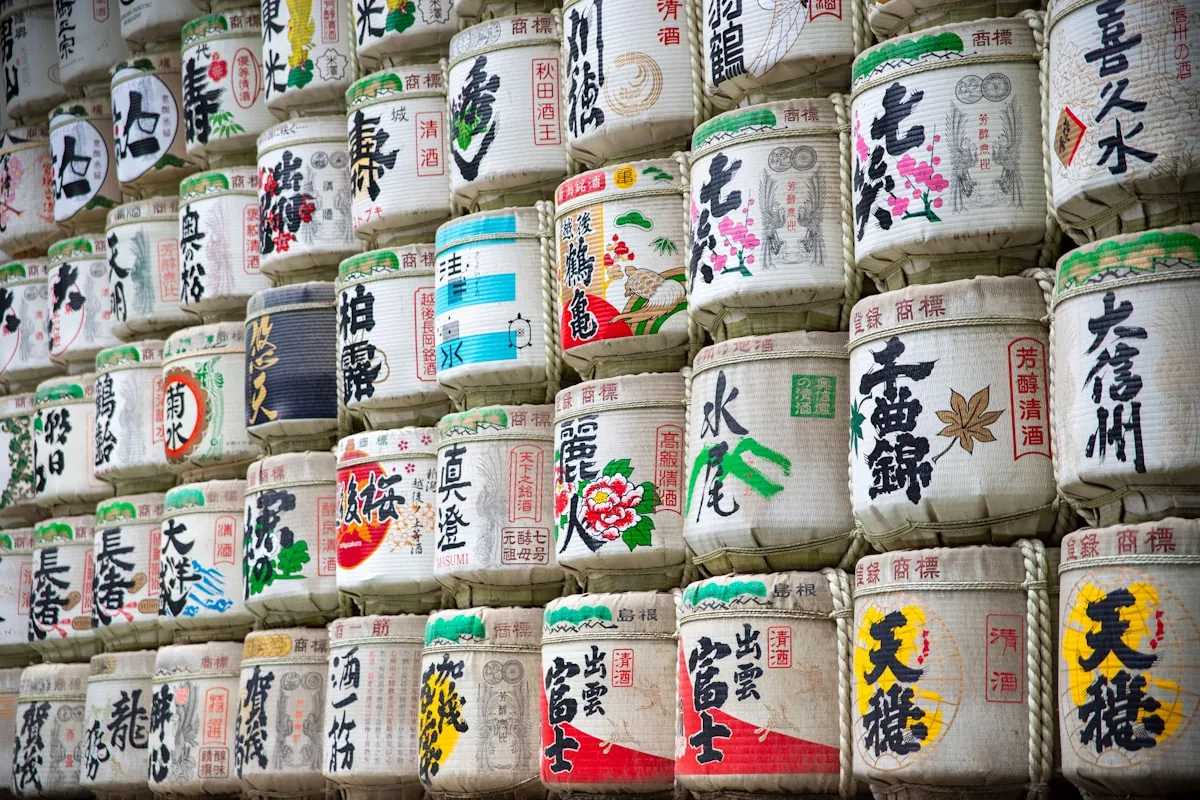

The Nara deer park covers 502 hectares of grass, forest, shrine precincts, and strolling gardens at the edge of one of Japan's oldest cities. Around 1,200 free-roaming sika deer share the space with two UNESCO world heritage sites, a primeval ancient forest, and a Meiji-era garden that borrows the great hall's roofline as its backdrop. Most visitors spend two hours in the western corner, buy deer crackers, photograph the Daibutsu, and leave. The eastern half of the park sees a fraction of that crowd even at peak season.
What to expect
The park sees very different crowd levels depending on when you arrive; timing your visit around the peaks makes a marked difference.
7am
VisitorsQuiet
Deer gather near Kohfuku-ji before the first tour groups arrive; the best window for calm deer interactions9am
VisitorsBusy
Main visitor wave builds through the western circuit; Todai-ji and Nandaimon approach at their busiestdusk
VisitorsQuiet
Deer cracker vendors close; western crowds disperse; the eastern circuit is quiet throughout the day
The deer: what to actually expect
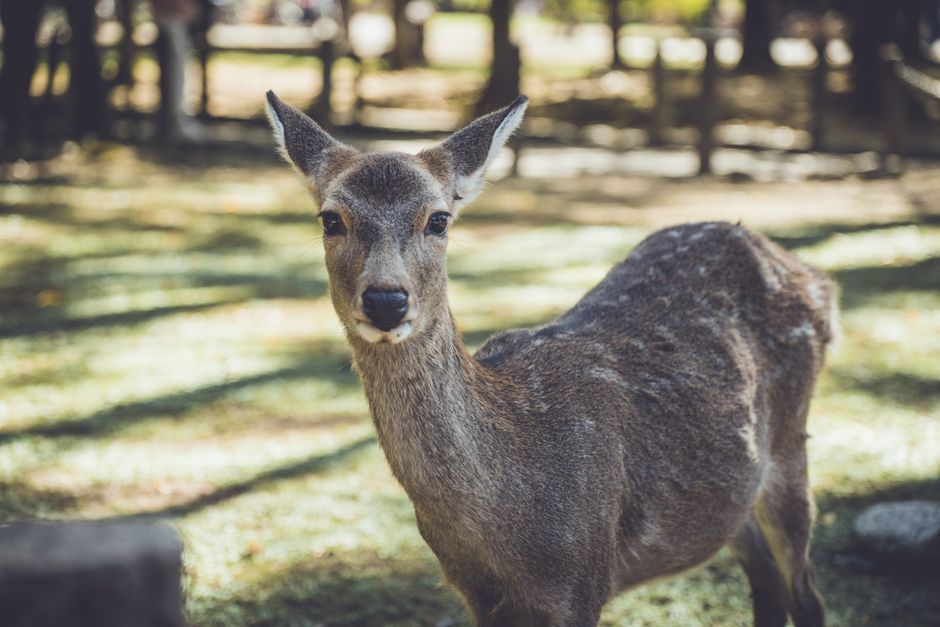
The sika deer of Nara are classified as wild animals, not domesticated ones, and they behave accordingly. Their mood follows the calendar:
- Winter and early spring: calm and approachable, the easiest season for children.
- Late spring to early summer: females guard their fawns and keep their distance.
- Autumn: deer actively chase food before vendors pack up at dusk, and they will nudge and nip at bags and coats.
Shika senbei (deer crackers) are sold near the park entrances for around ¥200 a bundle. Hold the bundle flat, never above your head; raising it signals to every deer in sight that you have food. Feed one deer at a time and step back when the crackers run out. Children who clutch the bundle and freeze attract the most attention, and bags and hats are never safe from investigation, feeding or not.
The best time of day for deer encounters is early morning between 7am and 9am, when a large number of deer congregate on the lawn near Kohfuku-ji before the main visitor wave arrives. By early afternoon in summer, the deer retreat to shade and become less interactive.
The western circuit: Kohfuku-ji and Todai-ji Daibutsuden
Kohfuku-ji is the five-storey pagoda that frames every Nara Park photograph. The temple grounds are open and free to walk through, and the national treasure hall holds some of the finest classical Buddhist sculpture in Japan. The main hall reopened in 2018 after a 300-year absence: the original burned down in 1717, and the rebuilt hall follows the 8th-century design closely.
- Grounds: free, always open.
- Halls: around ¥500 per hall for adults.
- Time needed: 30 minutes for the grounds, an hour with the treasure hall.
Todai-ji Daibutsuden houses the 15-metre bronze Daibutsu, the great Buddha, seated inside what is considered the world's largest wooden structure; the hall measures 57 metres wide and 49 metres deep. The scale remains arresting even for visitors who know exactly what to expect from photographs. Admission is around ¥800 for adults.
Behind the Daibutsu, one of the hall's supporting wooden pillars has a square hole cut through its base. The hole is approximately 37 centimetres wide and 30 centimetres tall: the same dimensions, tradition says, as one of the Daibutsu's nostrils. Crawling through it is said to bring enlightenment in the next life. Children manage it with ease; adults are a tight fit. There is usually a short queue. Whether it is worth the wait is a matter of personal good humour.
The eastern circuit: what most visitors never reach
Walking east from Kohfuku-ji along the main shopping street, the crowds thin at the Ichi no Torii of Kasuga Taisha: a granite torii gate at the road's edge that marks the entrance to the shrine's sacred zone. Most visitors walk past it toward the souvenir shops. Stepping through it, the atmosphere changes immediately.
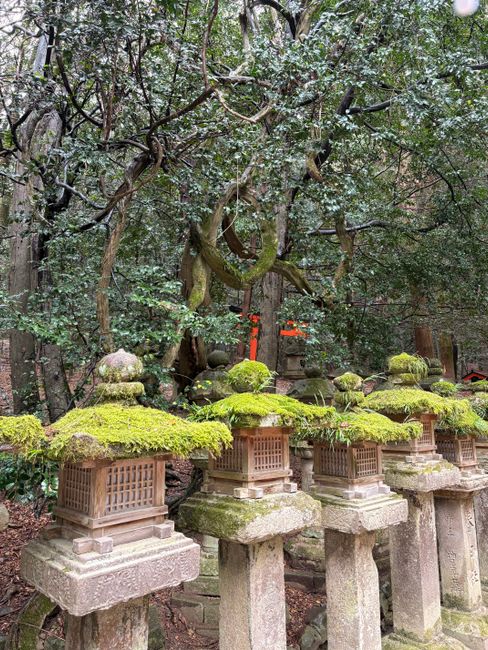
Beyond the torii, a forested path runs between hundreds of stone lanterns toward Kasugataisha Shrine. The shrine dates to 768 CE and has been rebuilt on a 20-year cycle through most of its history; the current structures follow that centuries-old form closely. Around 3,000 stone and bronze lanterns hang and stand across the precinct, and they are lit just twice a year, a tradition kept for over 800 years. For the broader context of shrine and temple culture, see our temples guide.
- Access: outer precincts free; the inner sanctum area charges around ¥700.
- Setsubun mantoro: 3 February, every lantern lit at nightfall to close the winter.
- Chugen mantoro: 14–15 August, during Obon. Confirm details on the shrine's site before planning around either.
The forested land attached to the shrine precinct, known as Kasugayama primeval forest, is a 250-hectare UNESCO-designated ancient woodland where cedar and Japanese cypress canopy the paths. There are no deer cracker vendors here, no cafes, and no crowds. Deer move through the undergrowth in genuine quiet. Designated walking paths thread through the forest from the shrine's east side.
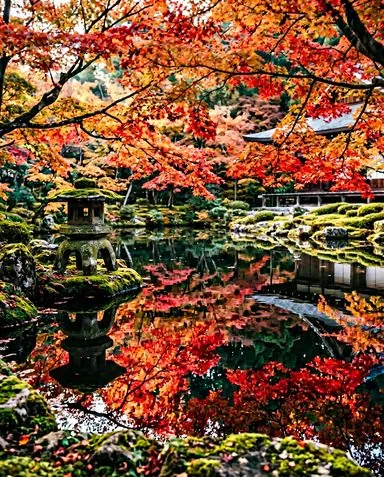
Isuien Garden and Neiraku Museum sits on the northern edge of the eastern circuit, a short walk from Kasugataisha. The garden was composed in the Meiji era around shakkei, borrowed scenery: from the north pond, the great hall's roof and Wakakusa hill fill the backdrop as though they belong to the design. It is one of the best composed views in Kansai, and rarely crowded.
- Admission: around ¥1,200, garden and museum combined.
- Closed: Tuesdays, plus maintenance spells in late September and late December.
On the forested approach between the shrine's first and second torii gates, Manyo Botanical Gardens keeps a collection of the plants and herbs named in the Man'yoshu, Japan's oldest poetry anthology. It is managed by the shrine and consistently overlooked by the park's western visitors. Admission is around ¥500; open daily in April and May, closed Tuesdays the rest of the year.
Beyond the park: Hasedera and the southern valleys
Hasedera in Sakurai city earns a separate half-day rather than a bolt-on to a park visit. A covered wooden staircase of 399 steps climbs past terraced gardens to a main hall that juts out over the hillside on wooden struts, with views across the valley below. In late April and May, around 7,000 peony plants bloom along the staircase, one of Japan's largest displays. Outside peony season, the temple is quiet and the valley approach through the old town has changed very little.
- Admission: around ¥500; the temple is a 15–20-minute walk from Hasedera station.
- From Nara: Kintetsu via Yamato-Saidaiji and Yamato-Yagi, about 1 hour with two easy changes, around ¥640.
- From Osaka: the Kintetsu Osaka line runs direct, which makes it an easy add-on to an Osaka-based trip.
How to get there
Getting There
- 1Take JR Nara Line (Miyakoji Rapid) → JR Nara Station
- 2Walk northeast from JR Nara Station → Kohfuku-ji / park entrance
Covered by the JR Pass.
- 1Take Kintetsu Nara Line (Rapid Express from Kintetsu Namba Station) → Kintetsu Nara Station
- 2Walk east from Kintetsu Nara Station → Kohfuku-ji / park entrance
Not covered by the JR Pass.
Tips
- Arrive at 7am. The deer gather in largest numbers near Kohfuku-ji before the first tour groups arrive. Todai-ji Daibutsuden opens at 7:30 (April–October) or 8:00 (November–March), so you can walk the lawn with the deer before the hall opens.
- Do the eastern circuit after lunch. Walk east from Todai-ji Daibutsuden rather than back toward the station. Kasugataisha, Isuien Garden and Neiraku Museum, and the forested approach are best in the afternoon when tour groups have largely departed. Allow 3–4 hours for the full eastern circuit.
- Isuien Garden and Neiraku Museum is closed on Tuesdays. Confirm opening before going, and check the late-September maintenance closure period if visiting in autumn.
- Avoid Golden Week and early October. Golden Week (late April–early May) and the first week of October (autumn leaf preview season) are the busiest periods. Weekday mornings are quieter than weekends year-round.
- Keep bags fastened when not feeding. Deer have a reliable interest in paper items: maps, flyers, and travel documents sticking out of open bags are common casualties.
- The Kintetsu from Osaka is faster than the JR route. For a day trip from Osaka, the Kintetsu Rapid Express from Namba deposits you 5 minutes from the park; the JR route requires a 15-minute walk from a different station. If your trip is covered by a JR Pass, the JR Nara Line from Kyoto is the efficient choice. See our Osaka and Kyoto guides for base-city context.
Nearby
Nara sits between Kyoto and Osaka, making it a natural extension of any Kansai itinerary. Our Nara guide covers the prefecture beyond the park.
FAQ
Is Nara deer park free to visit?
The park grounds are free to enter and the deer roam freely throughout. Attractions within the park charge separately. Todai-ji Daibutsuden admission is around ¥800 for adults; Kasugataisha's inner precinct is around ¥700; Isuien Garden and Neiraku Museum is around ¥1,200 for the combined admission; Manyo Botanical Gardens is around ¥500.
Are the deer in Nara safe to approach?
The deer are wild animals, not domesticated, and behave accordingly. They are generally calm in winter and early spring. In autumn, when actively seeking food, they will approach and can knock over small children. Keep food secured unless actively feeding, hold crackers flat, and step back when you finish. Bites and head-butts do happen, mainly to visitors who tease deer with food or raise a cracker pack over their head. Children should be watched closely.
How long do you need at Nara deer park?
The western circuit (Kohfuku-ji and Todai-ji Daibutsuden) takes around 2 hours at a comfortable pace. The full eastern circuit, adding Kasugataisha, Isuien Garden and Neiraku Museum, and the forested approach, takes 3–4 more hours. A thorough full-park visit requires 5–6 hours. Hasedera works best as a separate half-day trip; allow a full day if combining it with the park.
Is Nara better as a day trip from Kyoto or Osaka?
Either works comfortably. From Kyoto, the JR Nara Line from Kyoto takes around 45 minutes and is covered by the JR Pass. From Osaka Namba, the Kintetsu Rapid Express takes around 38–40 minutes and deposits you 5 minutes from the park, making it slightly more efficient for a park-focused visit. The JR Pass does not cover the Kintetsu routes.
When are the Kasugataisha lantern festivals?
Kasugataisha holds two annual lantern festivals. The Setsubun mantoro takes place on February 3, when all 3,000 stone and hanging lanterns are lit at nightfall to mark the close of winter. Chugen mantoro runs on August 14 and 15, coinciding with the Obon period. Both festivals have been observed for over 800 years; check the shrine's official site before planning a trip around them.