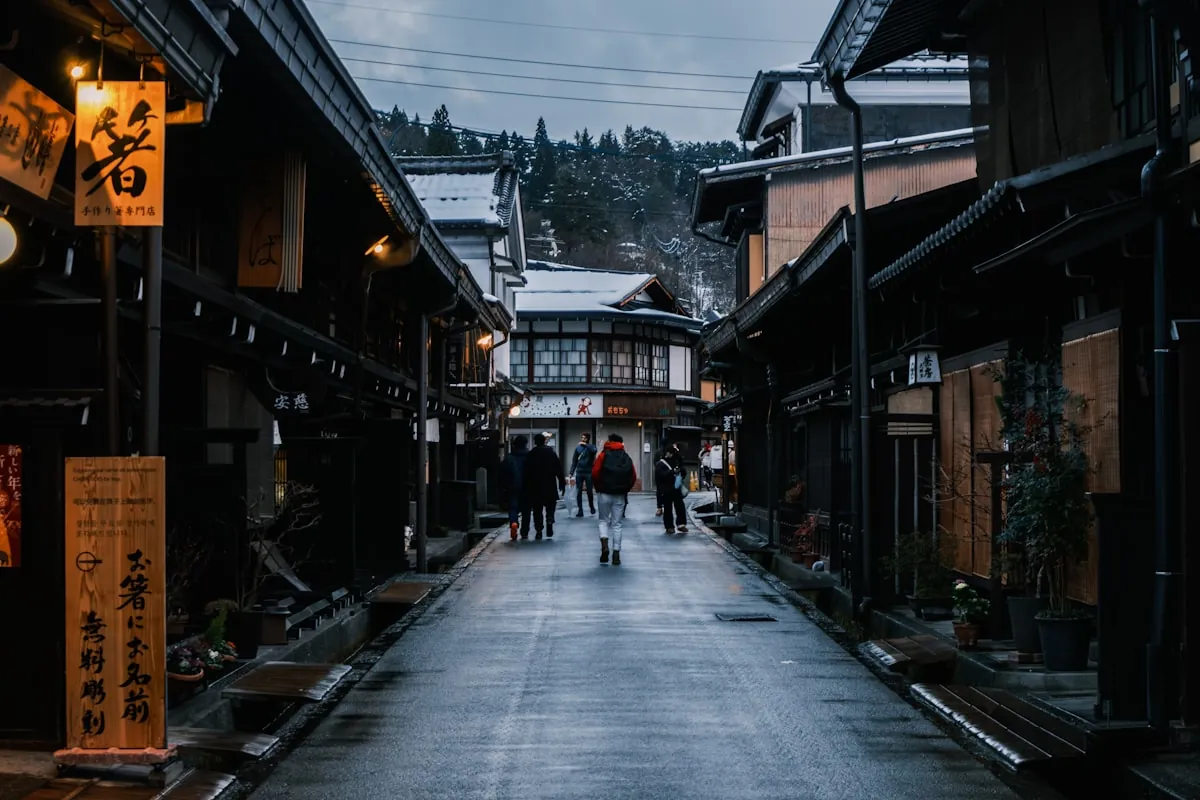
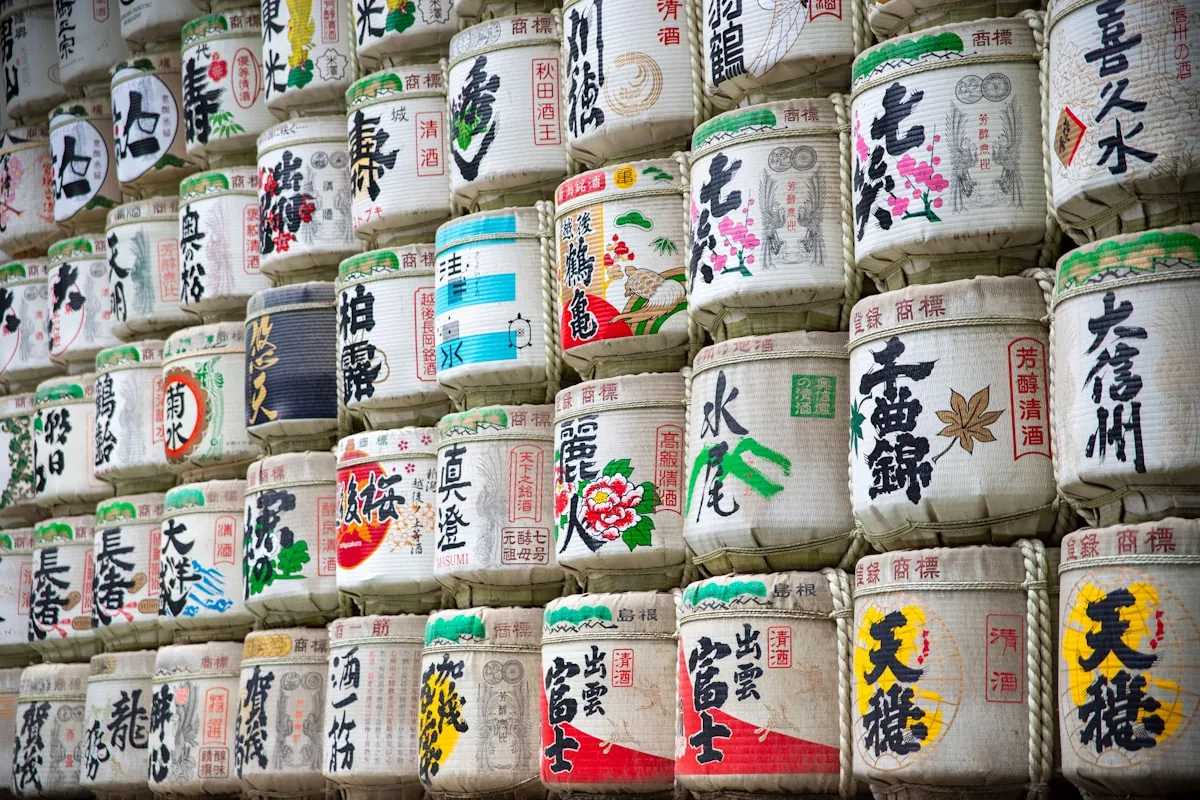
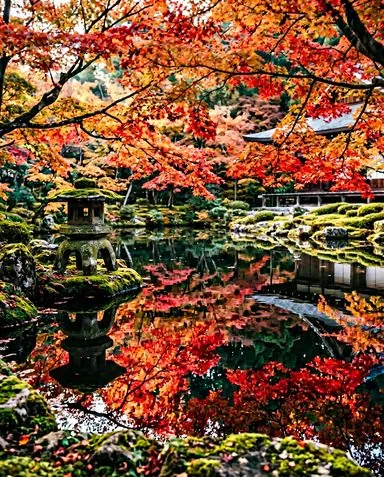

Japan's best beaches rarely make English-language lists, most of which cover Okinawa and stop there. This list of 11 spans the country, from a white-pebble cove in Iwate to a turtle-nesting shore on Yakushima, with only two entries in Okinawa Prefecture, chosen for official recognition and honest access over familiarity.
Most declare an official swimming season, typically eight weeks across July and August, and lifeguards, roped zones and jellyfish nets appear only inside those dates; step outside them and facilities close until the following summer. Getting there varies just as much: a few beaches sit a train ride from a major city, worth weighing when timing a trip around the season, but most need a domestic flight, ferry or rental car, and Okinawa is one region among several.
1. Yonaha Maehama Beach
 Google
White-sand / scenic
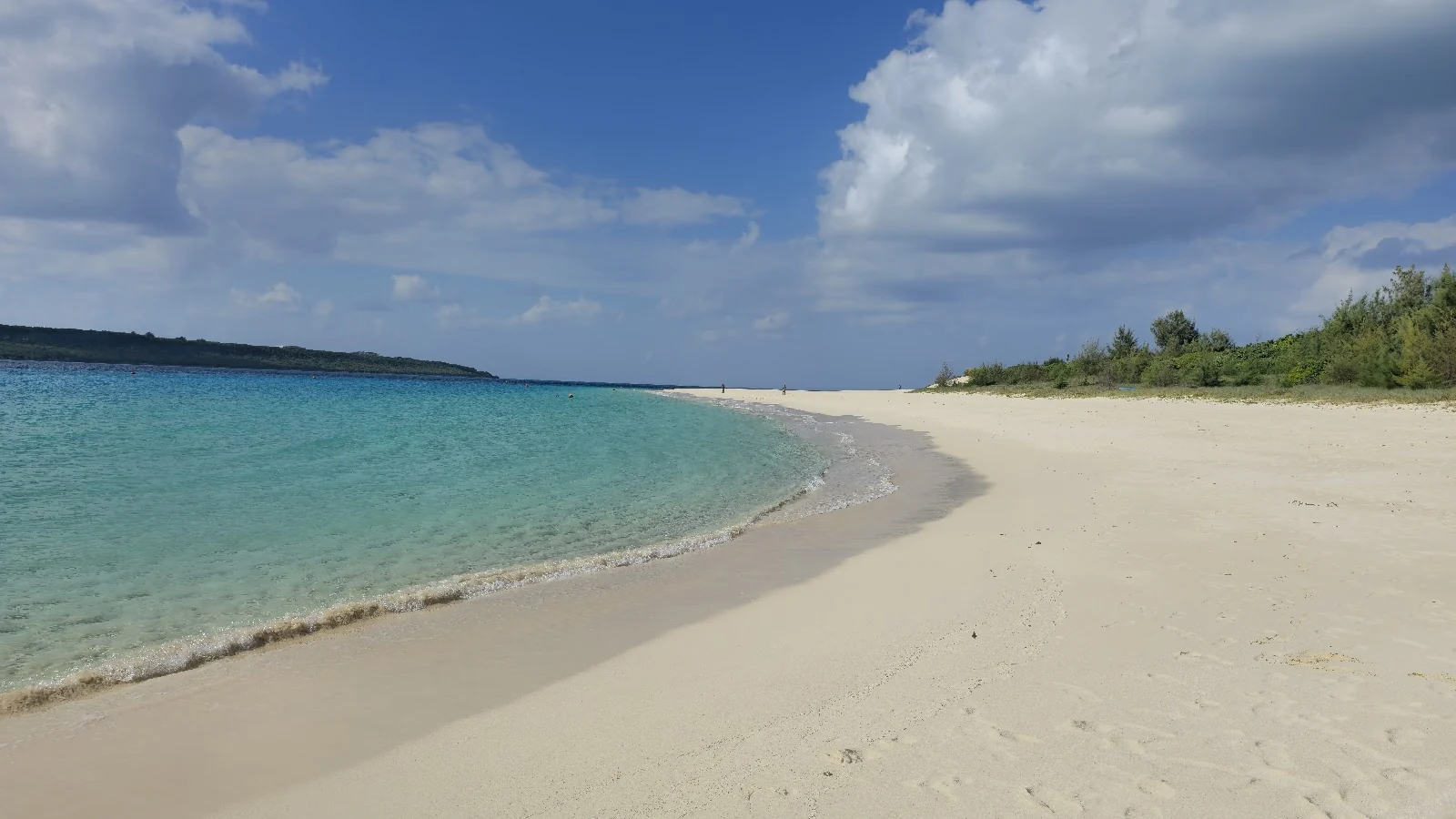
This is the beach most Japanese travellers picture when they say "best beach in Japan." Yonaha Maehama Beach runs seven unbroken kilometres of fine white sand on Miyako Island's west coast, shallow enough to wade a long way out, and the crowd disperses within a few hundred metres of the car park.
- Getting there: Flight only to Miyako Airport, then rental car or taxi; no bus reaches the beach.
- Best time: Spring through autumn; box jellyfish are typically present May to October, so stay inside netted zones.
- Budget: Free to enter; parasols, jet skis and banana boats rent separately.
Go for real space on a famous beach. Skip it without a booked rental car: the island runs out in summer.
2. Takahama Beach
 Google
White-sand / snorkel
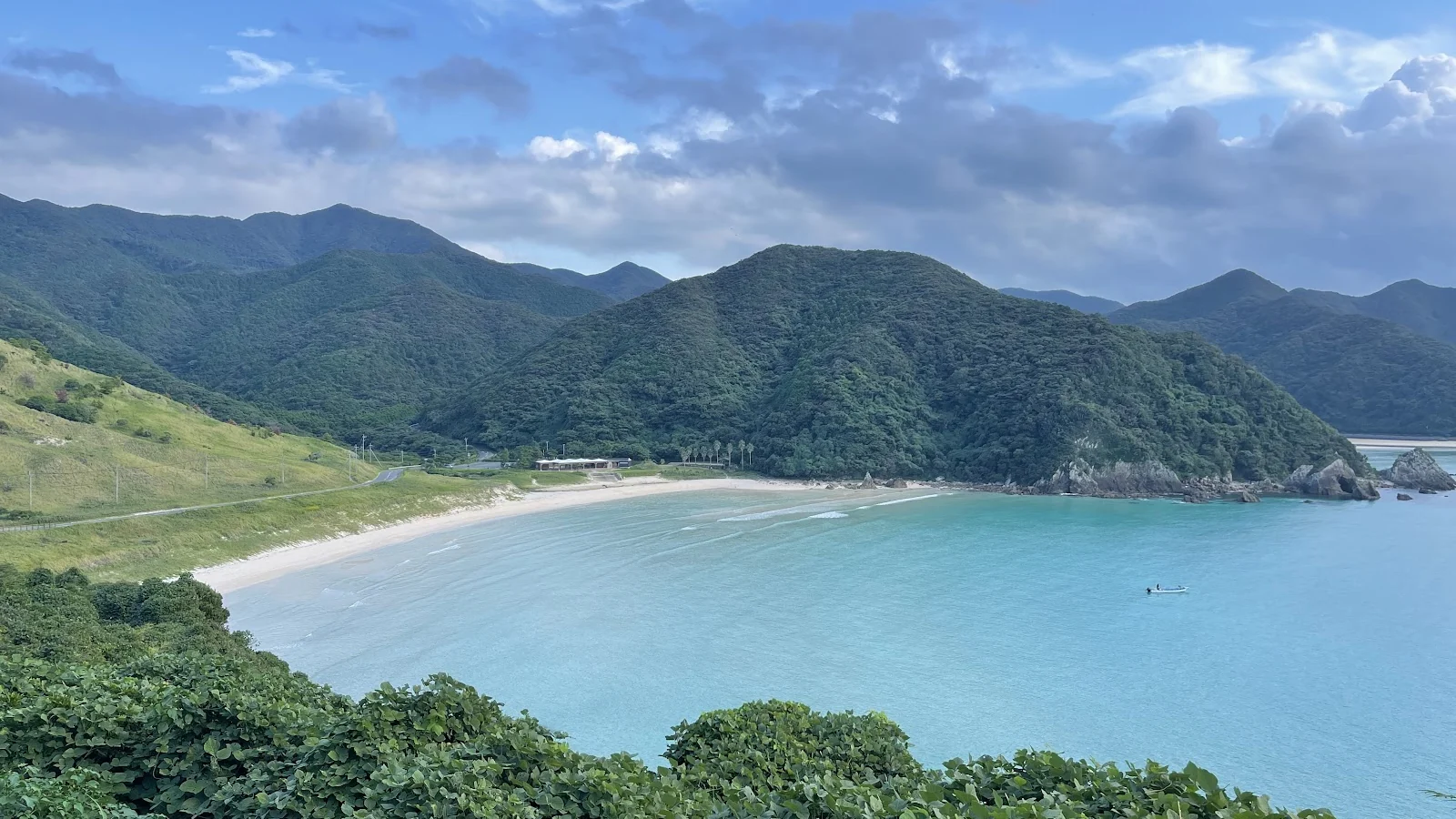
Officially named one of Japan's Top 100 Beaches, Takahama Beach is the image Goto City uses in its own tourism material, and almost no foreign visitor reaches it. The colour is the draw: water clear enough that the sandbar reads as its own band of green from the Gyoran Kannon statue above.
- Getting there: Fly or ferry to Fukue from Nagasaki, then about 40 minutes by car.
- Best time: Marine sports season runs July 18 to August 31; the coast suits surfing and sunset viewing off season.
- Time needed: Half a day, between the viewpoint and the sand.
Go for water that matches the Okinawa resorts without the queue. Skip it if a Goto detour does not fit the trip.
3. Jodogahama Beach
 Google
Scenic / white-pebble swimming cove
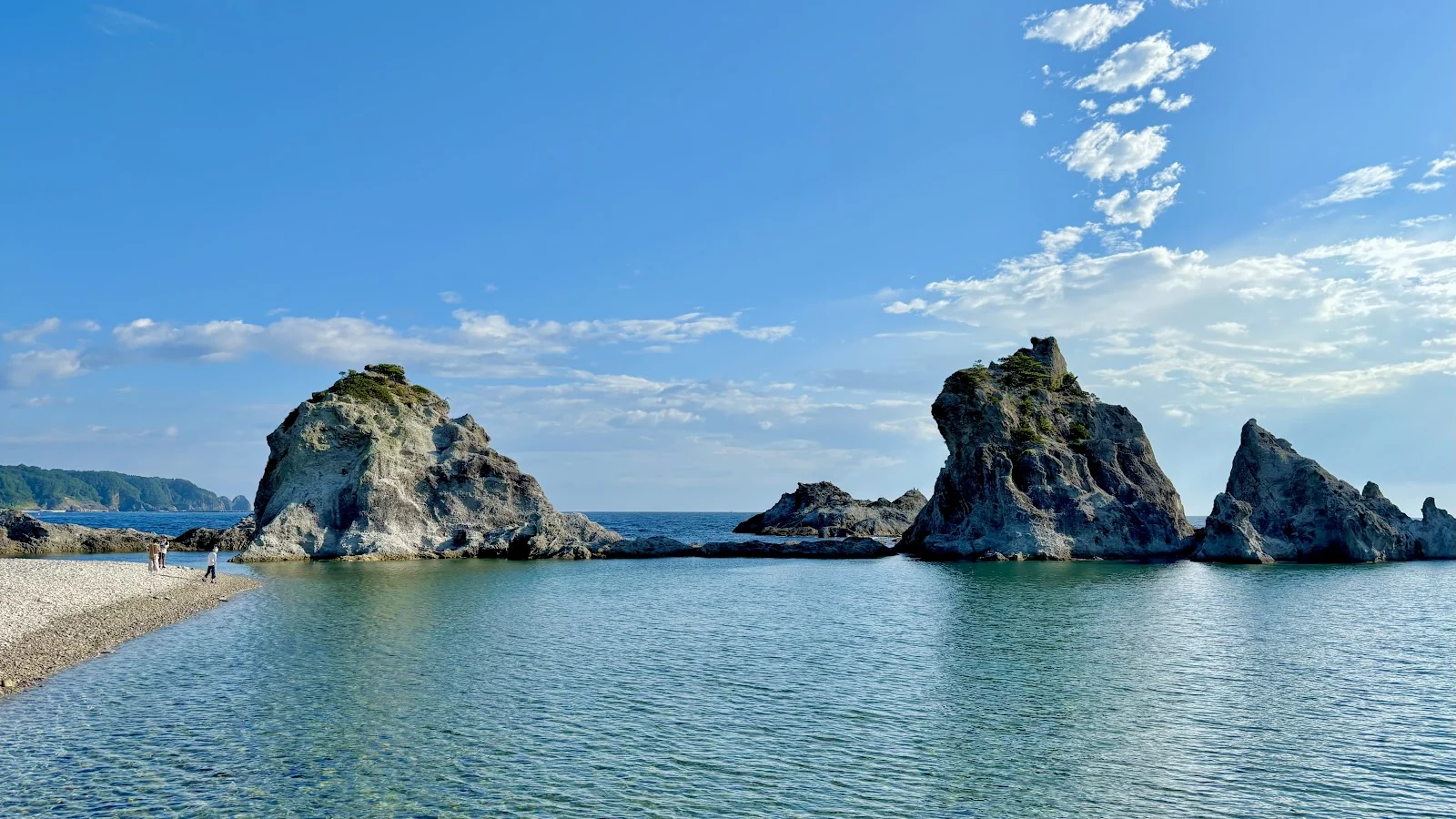
Jodogahama means "pure land beach," and jagged white rhyolite spires rising straight from the water make the cove look nothing like the rest of Japan's coast. Selected among Japan's 100 best beaches in 1996 and again in 2000 and 2001 for water quality, the spires keep enough swell out that the water stays unusually flat.
- Getting there: Shinkansen to Morioka, then the JR Yamada Line or bus to Miyako Station, and 20 minutes by bus.
- Best time: The 2023 season ran July 22 to August 15; outside it there are no lifeguards.
- Budget: Free to enter; showers cost 300 yen for three minutes, coins only.
Go for a swimming cove with real geology. Skip the Blue Cave boat in winter: it closes December to February.
4. Shirarahama Beach
 Google
White-sand / family
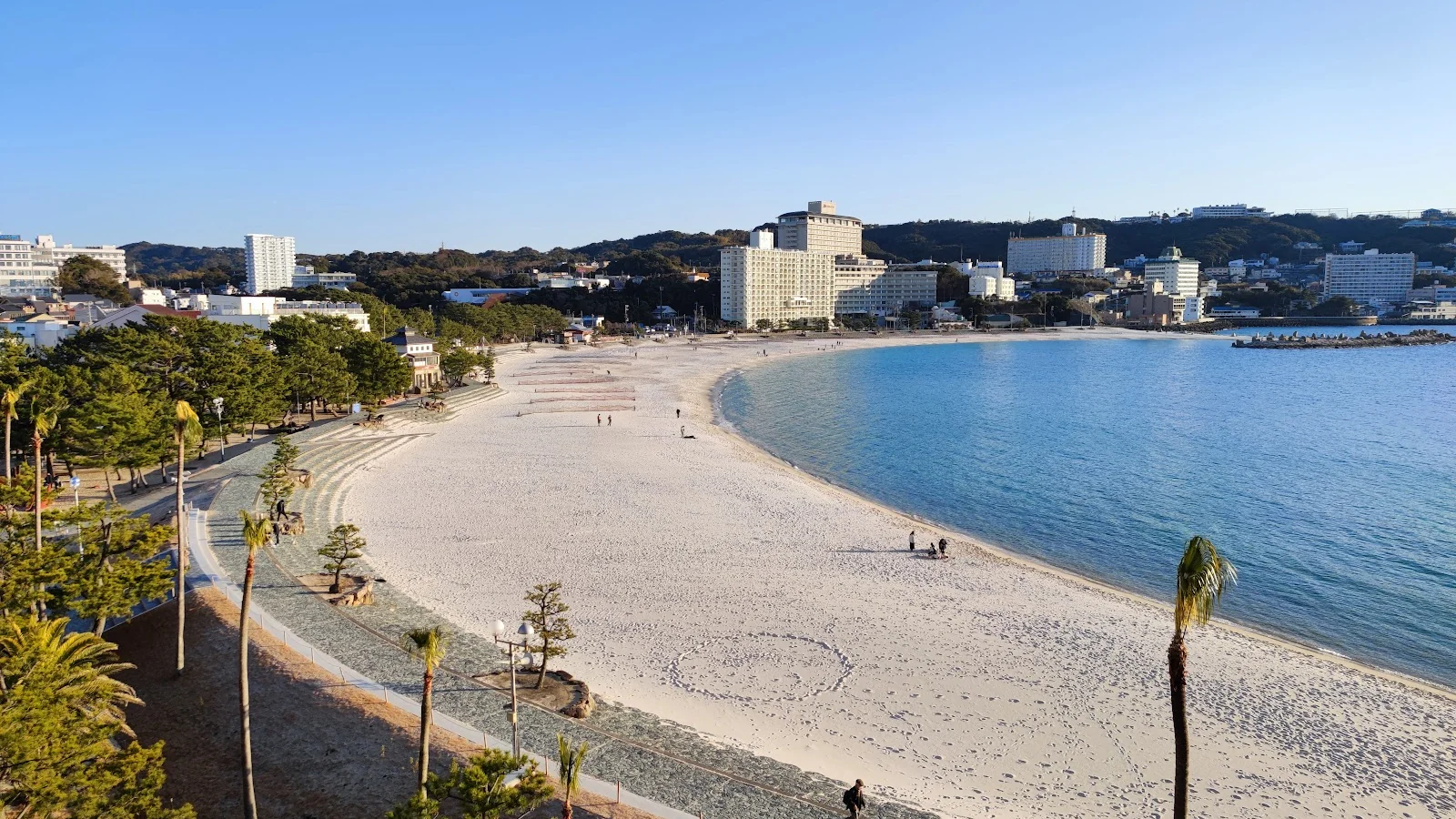
Shirarahama Beach is officially twinned with Waikiki and plays the part: powder-white sand, palm-leaf parasols, and a season that opens May 3, weeks before anywhere else on Honshu. It is also the only beach here where the sand leads straight into an onsen town.
- Getting there: JR Kinokuni Line to Shirahama Station, then about 10 minutes by car or taxi.
- Best time: Open from May 3; spring and autumn are calmer than a packed July and August.
- Worth a stop: Public footbaths and onsen inns line the street behind the sand.
Go for the earliest swim of the year in Honshu. Skip July and August if crowds bother you.
5. Tsunoshima Ohama Beach
 Google
White-sand / scenic
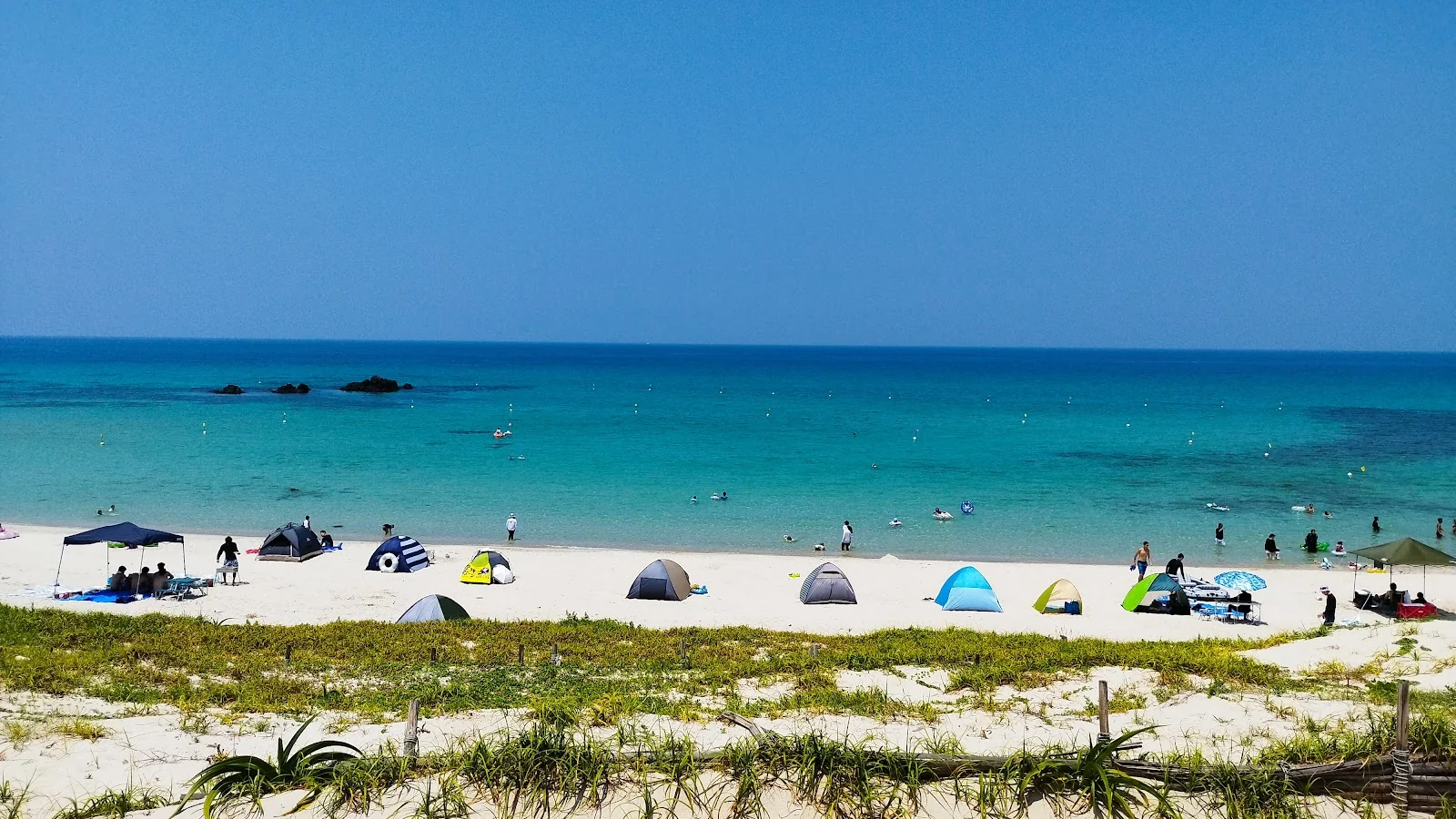
The approach is most of the attraction: a 1,780-metre bridge runs low over turquoise water to an island of about 700 people, and Tsunoshima Ohama Beach sits on the far side, backed by grass and wildflowers rather than concrete.
- Getting there: JR to Takibe Station, then about 50 minutes by bus across the bridge, or drive from Shimonoseki.
- Best time: Summer for swimming and camping; the exact official season is not published in English.
- Budget: Free to enter; tent pitches from around 2,000 yen, bungalows in season.
Go to camp on an island most itineraries skip. Skip it if you need lockers: none exist on Tsunoshima.
6. Shirahama Ohama Beach
 Google
Surf / white-sand
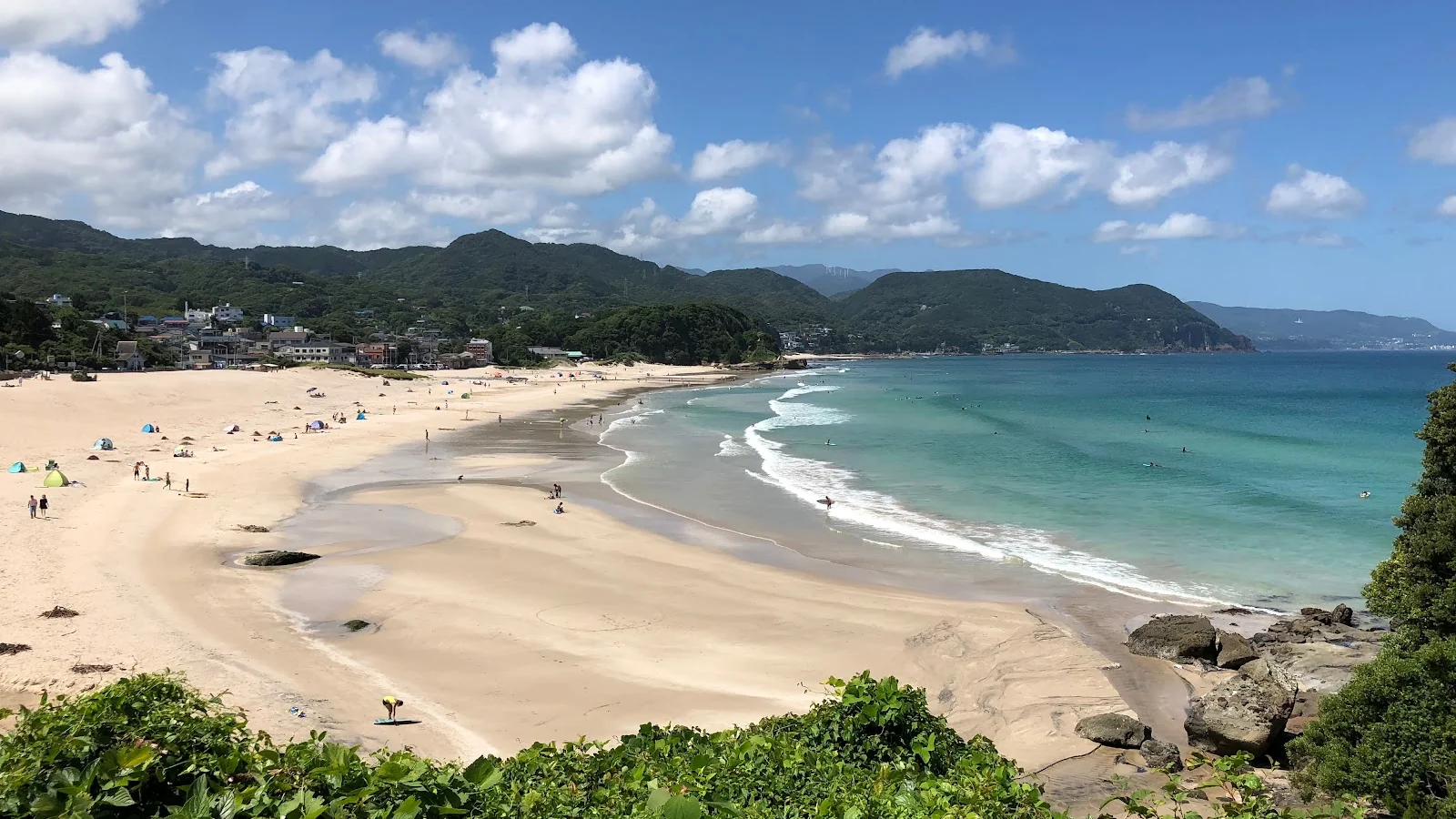
Shirahama Ohama Beach is the closest thing to a tropical-looking beach Tokyo can reach without a flight: over 800 metres of white sand at the southern tip of Izu. It works as a summer swimming beach with rental gear on site and a shoulder-season surf break.
- Getting there: Izukyu Line to Izukyu-Shimoda Station, then a bus toward the beach, about 15 minutes.
- Best time: Official season is July and August; good conditions run June to mid-September.
- Crowd warning: Packed through August; the neighbouring beach to the south trades crowds for pensions and seafood.
Go for a proper white-sand beach near Tokyo. Skip August if you want space: try June or September.
7. Chichibugahama Beach
 Google
Scenic (mirror beach)
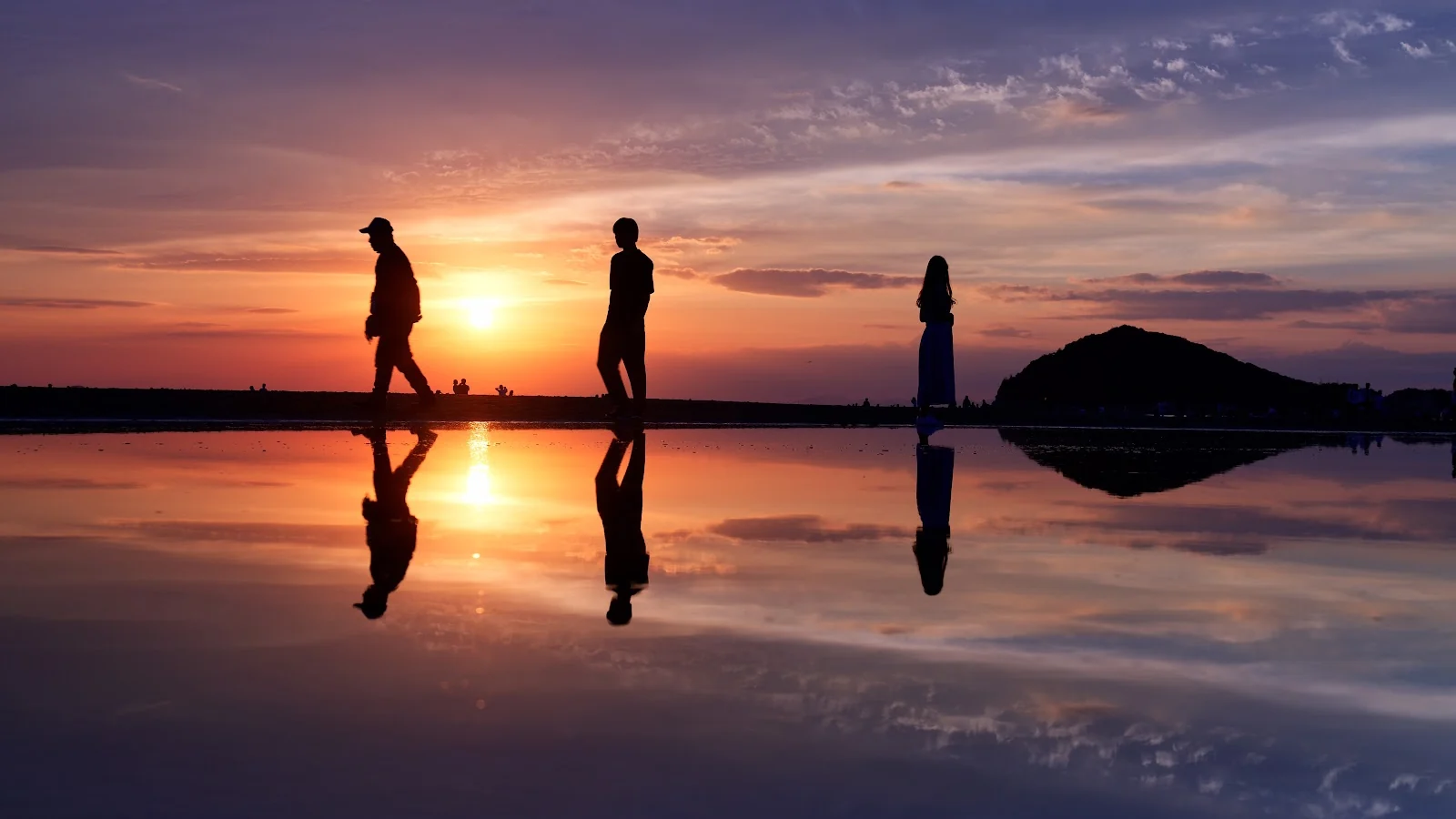
Chichibugahama Beach only works when tide and sunset line up. As the sea retreats several hundred metres at low tide, the film of water on the sand turns into a sheet of mirror, and on a windless evening the horizon disappears.
- Getting there: JR Yosan Line from Takamatsu to Takuma Station, then about 20 minutes by taxi or bus.
- Best time: Arrive 30 to 60 minutes before sunset at low tide; wind ruins the reflection.
- Worth a stop: The effect can occur in any season, not only summer.
Go for the mirror, not the swim. Skip a windy evening: there is no reflection without still water.
8. Tomori Beach
 Google
Family / snorkel
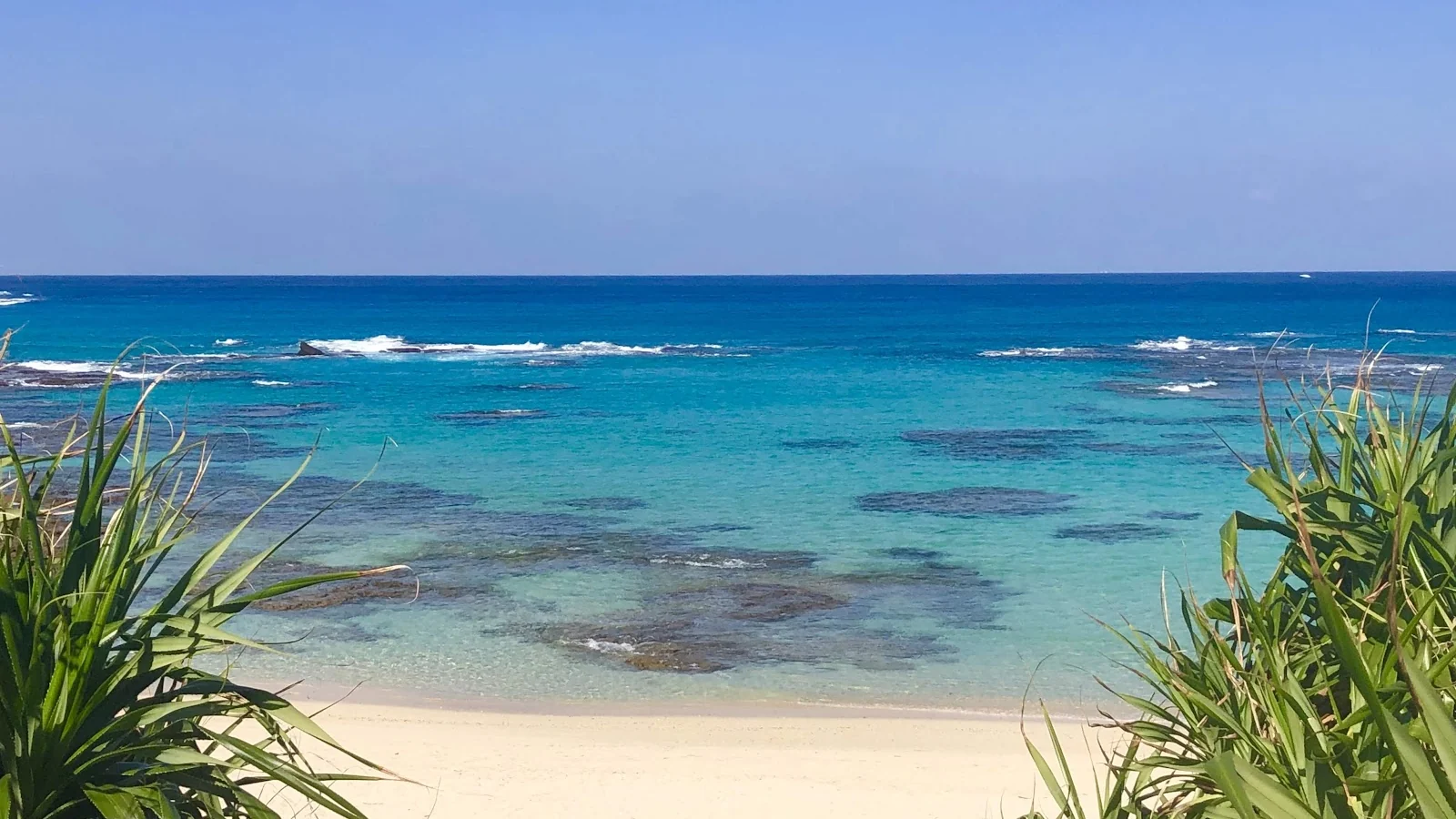
Ten minutes from Amami Airport, Tomori Beach is the rare subtropical beach reachable on arrival day. The prefecture calls it "Blue Angel" for how the water shifts between dark green and blue, shallow enough for an easy family swim with turtles grazing nearby.
- Getting there: About 10 minutes' drive from Amami Airport, itself reached by air or ferry.
- Best time: Subtropical, so summer for swimming; no official season dates are published.
- Worth a stop: The current strengthens as the tide goes out; swim on a rising tide.
Go for turtle-grazing shallows minutes from the runway. Skip a falling tide: the current warning is explicit.
9. Kujukuri Beach
 Google
Surf
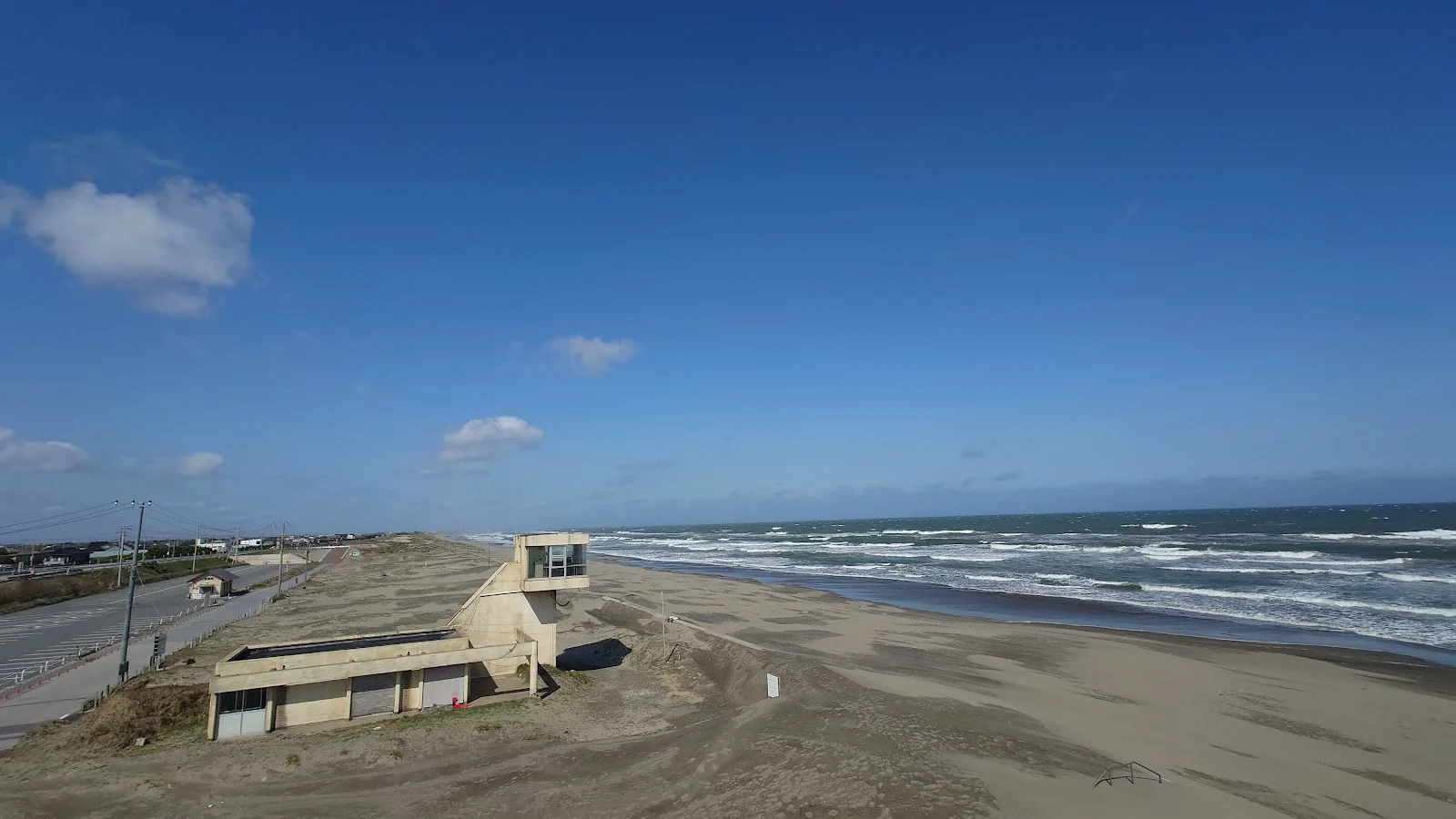
At 66 kilometres, Kujukuri Beach is a geographic outlier on a coastline that is otherwise rock and cove, and that length is why it surfs. JNTO rates it among the best surf spots in the country; it faces east, so this is a sunrise beach, not a sunset one.
- Getting there: JR Sobu Line from Tokyo Station to Togane Station, then bus or taxi to the coast.
- Best time: July and August for swimming sections; late August into October for surf.
- Crowd warning: The swell that makes it surf well makes parts unsuitable for weak swimmers.
Go for surf within reach of Tokyo. Skip it for a calm family swim: most of it is unpatrolled.
10. Nishihama Beach
 Wikimedia Commons
Snorkel / white-sand
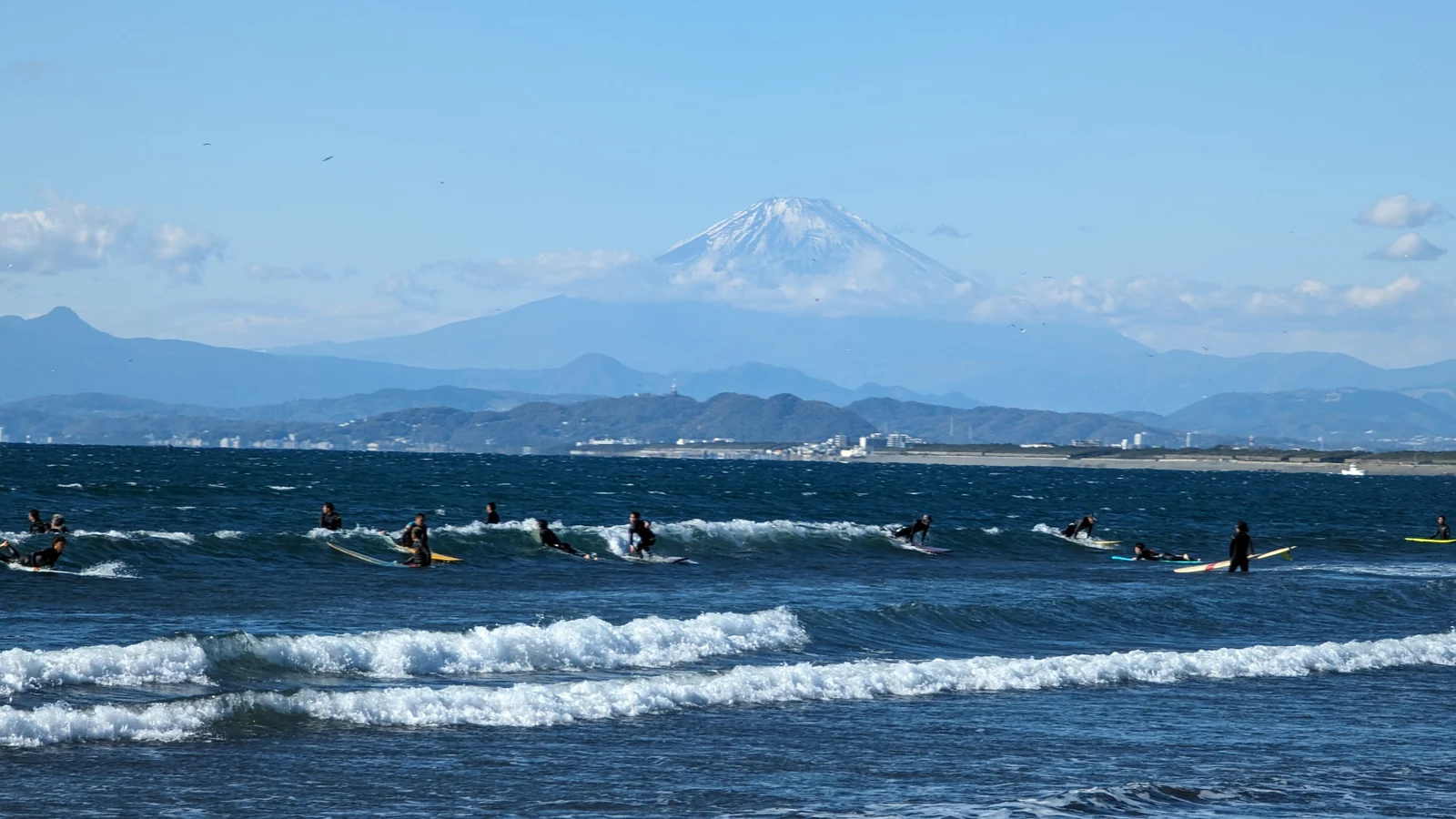
Hateruma is Japan's southernmost inhabited island, and Nishihama Beach is what a world-class reef beach looks like with almost no infrastructure attached. The water darkens in bands as it deepens, branded locally as "Hateruma Blue," and the beach empties once the day ferry leaves.
- Getting there: High-speed ferry from Ishigaki Port, crossing 60 to 100 minutes; no public transport once ashore.
- Best time: Summer for swimming, with the same box jellyfish caution as the rest of Okinawa.
- Worth a stop: Stay overnight if the ferry allows; the island has essentially no light pollution.
Go for a reef with almost nobody on the sand. Skip a same-day return in rough weather: the ferry cancels often.
11. Nagata Inakahama Beach
 Google
Scenic / wildlife
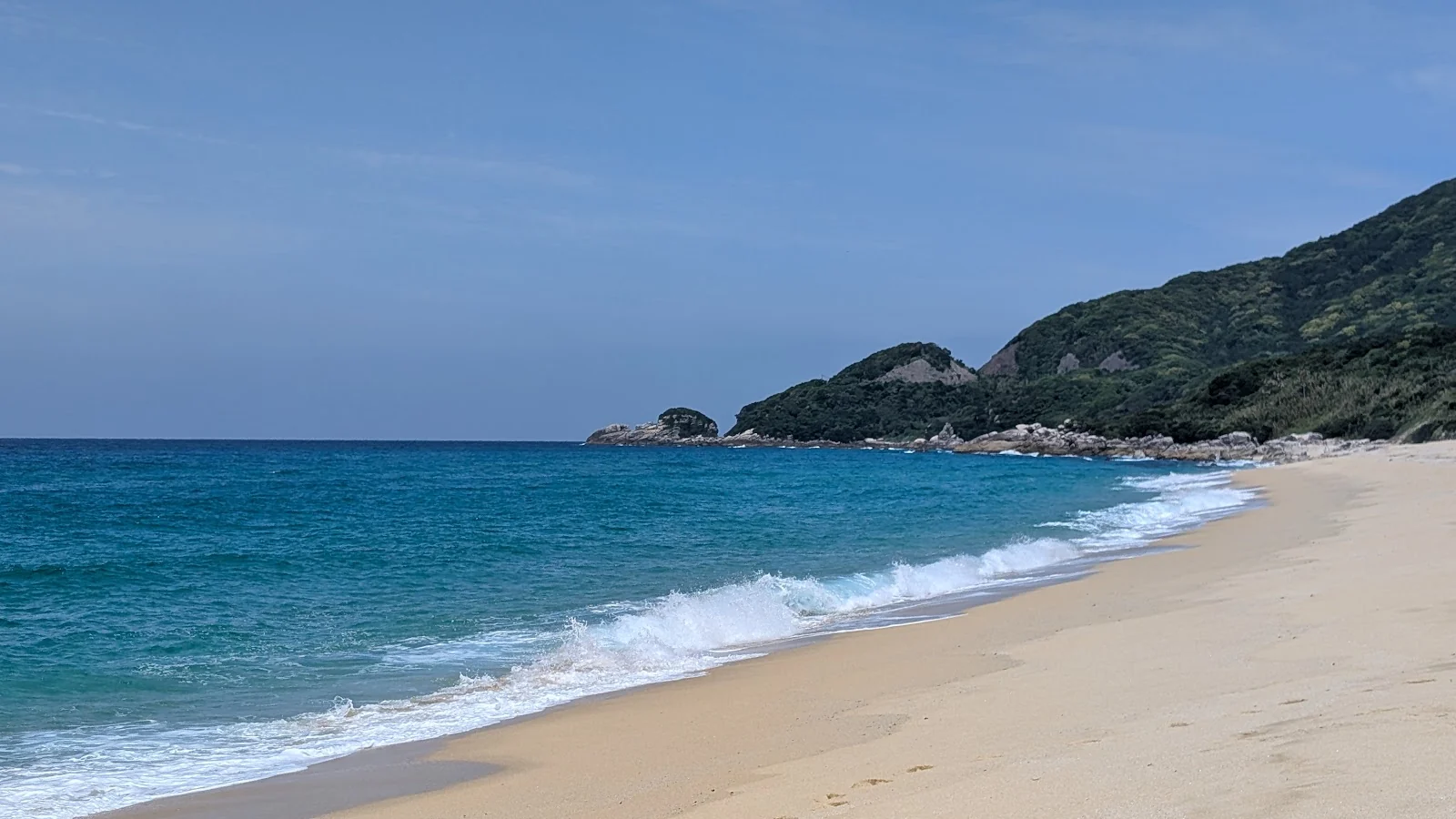
Nagata Inakahama Beach is Japan's largest sea turtle nesting site, and between May and July as many as 20 loggerheads can come ashore in a single night to lay. The sand is coarse and granite-flecked, which is what the turtles need; facing west, it also frames Mount Shindake at sunset.
- Getting there: Ferry or flight to Yakushima, then a Nagata-bound bus from Miyanoura to Inakahama.
- Best time: May to July for nesting; sunset views work year round.
- Worth a stop: Whether swimming is permitted is not stated, so treat this as a beach for looking.
Go to see nesting turtles on a booked, numbers-limited tour. Skip walking the sand alone after dark.
Honorable mentions
- Kondoi Beach: Taketomi's one swimming beach, a shallow sandbar 10 minutes by high-speed boat from Ishigaki; the neighbouring beach has the famous star sand but bans swimming for its currents.
- Katsurahama: Kochi's pine-backed crescent bans swimming outright for strong currents and big waves; go for the Sakamoto Ryoma statue and the view.
- Isshiki Beach: a Hayama beach about an hour from Tokyo, placed 65th in CNN's World's 100 Best Beaches in 2014, in front of the imperial family's summer villa; official season dates are unconfirmed.
FAQ
What is the best time of year to visit Japan's best beaches?
Most beaches declare an official swimming season of a few weeks to about two months, generally mid-July into early September, with lifeguards and jellyfish nets only inside those dates. Jodogahama's 2023 season ran just July 22 to August 15. Shirarahama in Wakayama opens earliest, on May 3.
Are Japanese beaches free to use?
Entry is free everywhere on this list, but extras add up. Jodogahama charges 300 yen for a three-minute shower. Rental gear, parasols, jet skis and camping pitches are all charged separately from the beach itself.
Is it safe to swim at Okinawa's beaches?
Box jellyfish are typically present in Okinawa's waters from May to October, which is why well-run beaches string protective nets and mark a safe zone. Reef rip currents can run up to 2 metres per second: swim parallel to the shore, not against one.
Can you swim at every beach on this list?
No. Katsurahama in Kochi prohibits swimming outright for strong currents and big waves, and is here for the view rather than the water. The beach next to Kondoi bans swimming for the same reason, and Nagata Inakahama on Yakushima is a turtle-nesting site with no documented swimming facilities.
How do you reach Japan's best island beaches?
Distances vary sharply once you are in a region. Taketomi is 10 minutes from Ishigaki by high-speed boat, hourly. Hateruma is 60 to 100 minutes on the same route and cancels in rough weather. Miyako and Amami are flight-only from the mainland.