
Japan in April is a month with three personalities, not one. Most guides write about the cherry blossoms and leave the rest as a footnote. This one covers all three windows: early April (peak sakura, high prices, big crowds), mid-to-late April (the underrated sweet spot when Western tourists leave and the weather stays good), and Golden Week from April 29 (the domestic travel peak that reshapes everything). Which phase your trip falls into is the most important planning decision you will make.
What you need to know about April in Japan
Weather and conditions
Spring showers arrive in the second half of the month; this is not the rainy season, which arrives in June.
- Tokyo, Kyoto, OsakaHonshu lowlands, comfortable walking weather10–20°C
- Takayama, Nikko, AlpsMountain areas, colder all day5–15°C
- Tohoku and HokkaidoCool evenings in late April5–8°C
Pack a compact umbrella and light layers: lowland mornings can start at 8–10°C and warm to 18–20°C by afternoon.
The three April windows
| Window | Dates | Crowds | Prices | What you get |
|---|---|---|---|---|
| Early April | April 1–14 | High at major temples and parks | Kyoto and Tokyo stays 20–40% above the standard rate | Cherry blossom peak across Honshu: Tokyo around April 1–5, Kyoto around April 3–9 |
| Mid-to-late April | April 15–28 | Drop substantially as international visitors leave | Back to normal | Often better weather (more settled, warmer, clearer) and late-blooming cherry trees in mountain regions |
| Golden Week | April 29 to May 5 | Some of the busiest days of the year in Tokyo, Kyoto and Osaka | Shinkansen fill weeks in advance | Domestic tourism at its annual peak: no cherry blossoms, but all the crowds |
Mid-to-late April is the window foreign visitors underuse, and it is consistently pleasant.
How to plan your Japan April trip
Identify your actual travel window
April 1–14, April 15–28, and April 29 onwards are three different trips, each with its own booking lead times and budget. Settle which one you want before choosing flights.
Book accommodation early for the sakura window
Early April in Kyoto and Tokyo: book 3–4 months ahead; Higashiyama ryokan and boutique hotels near the main parks sell out by December. Mid-April: standard windows. Golden Week: 6–8 weeks ahead.
Track the annual sakura forecast
Bloom timing shifts by up to 10 days with winter temperatures. The official forecast comes out each January: check whether the year runs early or late before booking non-refundable rooms around a peak date.
Decide whether a rail pass makes sense
A 7-day JR Pass usually pays off for Tokyo, Kyoto, Hiroshima and Nara by long-distance train, rarely for one city or 1–2 long journeys. Check your route in a journey planner first; pricing changes.
Reroute for Golden Week if possible
Overlapping April 27–May 5? Shift away from Tokyo, Kyoto and Osaka (alternatives in the Golden Week section below) and plan your Kyoto and Tokyo days before April 27.
Cherry blossoms in April: a practical timing guide
Sakura progresses northward through April. Typical windows; exact dates shift by up to 10 days each year.
- TokyoParks and waterwaysFirst bloom Late MarchFull bloom Early April
- KyotoHigashiyama canal route; a few days behind TokyoFirst bloom Early AprilFull bloom April 3–9
- NaraDeer park and hillsides; same window as KyotoFirst bloom Early AprilFull bloom Early April
- HiroshimaRiverfrontFirst bloom Late MarchFull bloom Early April
- TakayamaThree weeks behind KyotoFirst bloom Mid-AprilFull bloom Mid-to-late April
- HirosakiJapan's finest late-bloom settingFirst bloom Late AprilFull bloom April 24–27
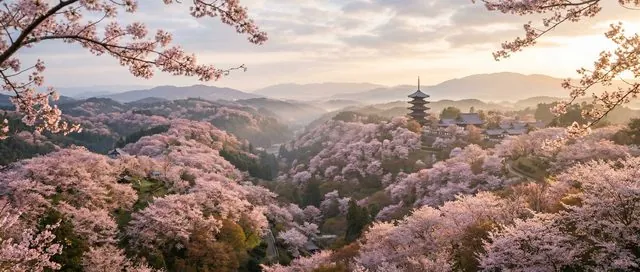
Sakura is the reason most first-time visitors choose April, but the timing varies by several weeks depending on the year and the region. Missed the city peak? Look north and up: Hirosaki in Aomori prefecture often peaks in the last week of April (typically around April 24–27), and Takayama in the Japanese Alps blooms in mid-to-late April, a full three weeks behind Kyoto, with mountain scenery and fewer crowds.
See the cherry blossom season guide for a full region-by-region timing breakdown, and the Kyoto cherry blossom guide for Kyoto's specific spots and how to time a visit without the worst crowds.
April events and festivals
April is one of Japan's richest festival months, independent of the cherry blossom calendar, with Nikko's festival on April 13–17 and Takayama's floats on April 14–15 in the same week.
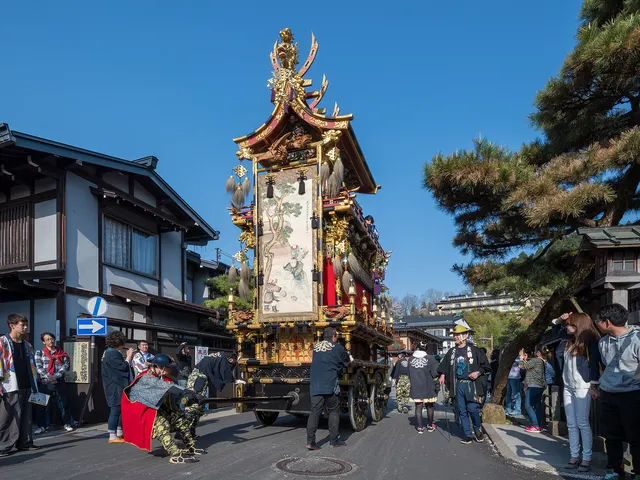 Photo: Chme82, CC BY-SA 4.0
14–15 Apr
Takayama float festival
Shrine complex, Takayama's old town
Twelve elaborately decorated yatai floats parade through the Edo-period streets; a UNESCO intangible cultural heritage, timed with Takayama's own late cherry blossom. Rooms for April 13–15 fill several months ahead.
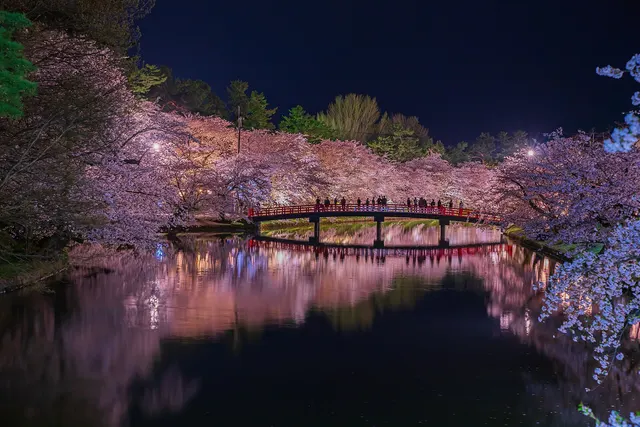 Photo: mko294, CC BY 4.0
c. 17 Apr–5 May
Hirosaki sakura festival
Castle park, Hirosaki (Aomori)
Over 2,500 cherry trees, including some of Japan's oldest somei yoshino, and a moat that fills with fallen petals. Peak bloom typically around April 24–27, shifting by year.
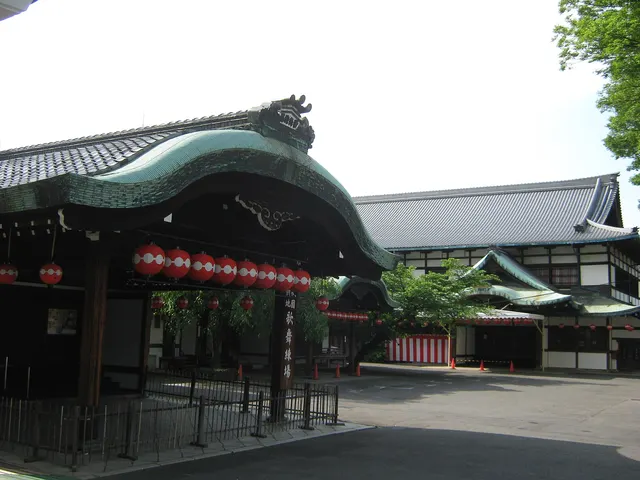 Photo: mariemon, CC BY 3.0
Throughout April
Gion spring dances
Gion dance theater, Kyoto
Geiko and maiko perform the annual spring dances: one of the few occasions where formal viewing of the geisha arts is open to visitors. Advance booking required; check the official Gion district dance website.
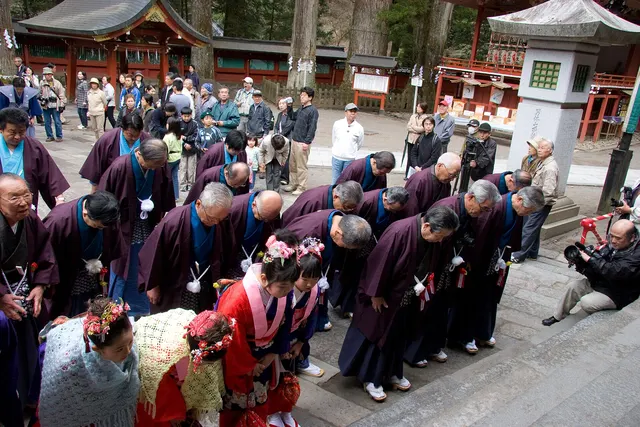 Photo: KimonBerlin, CC BY-SA 2.0
13–17 Apr
Nikko's April festival
Main shrine complex, Nikko
One of Nikko's three major annual festivals, with the float procession on April 16–17. Generally less crowded than the larger May festival, with the cedar forests at their greenest.
Getting to Takayama for the festival: see the Takayama guide. For Hirosaki, accommodation for the peak window fills well in advance, so check Hirosaki hotels early.
Golden Week: what you actually need to know
- Apr 29–May 5Golden Week holidaysShowa Day to Children's Day; sometimes to May 6
- 1 monthShinkansen reservations openReserve the day the window opens
- 6–8 weeksBook city accommodation aheadAny major city during Golden Week
Golden Week is a cluster of national holidays from Showa Day on April 29 through Children's Day on May 5, sometimes extending to May 6: Japan's annual domestic travel peak. In some locations it is more intense than early April, and it comes without the compensating beauty of full bloom.
- Shinkansen: Tokyo to Kyoto or Osaka fills to capacity. Reserve seats the day the window opens (one month in advance); reservations are free with a JR pass, otherwise book via the Shinkansen booking site or at station kiosks.
- Okinawa: manageable. The visitor base skews toward domestic beach tourism, and the islands have the infrastructure for it.
- Shikoku: the 88-temple pilgrimage circuit and the Iya valley gorge are largely off the Golden Week radar; Matsuyama and Kochi see modest increases.
- Kyushu and castle towns: the coast south of Fukuoka and smaller castle towns see modest volume increases, nothing like the major Honshu cities.
- Tokyo and Kyoto: if they are non-negotiable, do your most popular days (Fushimi Inari, Arashiyama, the main temple at Asakusa) before April 27.
For a broader planning perspective, see the best time to visit Japan guide.
Tips and common mistakes
- Book cherry blossom accommodation in December. The forecast isn't published until January, when the best-located Kyoto properties are already sold out. Book on average peak dates (early April) and shift a day or two if the forecast runs early or late.
- Mid-April is not a consolation prize. If the peak Kyoto blossom scene isn't your main goal, consider April 15–28 first: settled weather, normal prices, breathing room at the main sites.
- Go early or late on blossom days. Crowds at popular Kyoto spots concentrate between 9:00 and 16:00. Fushimi Inari before 07:30 or after 17:00 is a different experience; the same holds for Higashiyama and Arashiyama.
- JR Pass: check the maths first. The 7-day pass covers its cost on a Tokyo–Kyoto–Hiroshima–Tokyo route with a few extras; a mostly single-city trip rarely breaks even. Buy via Klook and verify the current rate.
- Consider a guided sakura experience. A half-day guided cherry blossom tour in Tokyo or Kyoto gives you the scenic spots without the timing guesswork.
- Typhoons are not an April concern. The season runs July to October; April brings showers and the occasional cool snap. Travel insurance is still sensible for medical cover and trip disruption.
FAQ
Is April a good time to visit Japan?
April is excellent, with important caveats about which part of April.
Early April (1–14) delivers the iconic cherry blossom experience at peak prices and crowds. Mid-to-late April (15–28) combines good weather with substantially fewer visitors and normal accommodation pricing. Golden Week from April 29 brings high domestic travel volumes to major cities.
Choosing the right window for your priorities makes a bigger difference than any other planning decision.
When do cherry blossoms bloom in Japan in April?
Honshu's main cities (Tokyo, Kyoto, Osaka, Nara) typically peak between late March and early April, with Tokyo slightly ahead of Kyoto. Hiroshima and the western coast follow a similar schedule. Mountain regions and Tohoku (Sendai, Hirosaki in Aomori) bloom significantly later, generally in late April.
Exact dates shift by up to 10 days each year. Japan's meteorological services publish an annual forecast each January; check it before booking fixed dates around peak bloom.
How crowded is Japan during Golden Week?
Very crowded in the main cities. Shinkansen between Tokyo and Kyoto sell out of seats weeks in advance. Kyoto and Tokyo's most visited sites see some of their busiest days of the year.
Japanese families travel in large numbers on domestic routes. The practical answer for foreign visitors is to either book everything early, reroute to less affected areas (Okinawa, Shikoku, smaller Kyushu cities), or plan major city days before April 27.
What is the weather like in Japan in April?
In Honshu (Tokyo, Kyoto, Osaka), April runs 10–20°C with comfortable walking conditions. Spring showers are common in the second half of the month but this is not the rainy season.
Mountain areas (Takayama, Nikko, the Japanese Alps) are colder, typically 5–15°C. Northern regions (Tohoku, Hokkaido) can still have cool evenings around 5–8°C in late April. Pack a light jacket, layers that compress easily, and a compact umbrella.
Should I get a JR Pass for an April trip to Japan?
The 7-day JR Pass (current price via Klook) pays off if your itinerary covers the main Tokyo–Kyoto–Osaka–Hiroshima shinkansen corridor plus two or more additional express routes. It rarely pays off for a single-city stay, a Tokyo-only trip, or itineraries relying heavily on city subways. Run your specific planned journeys through Hyperdia or the JR official planner and compare individual fares before buying the pass.
What are the best late-blooming sakura spots for mid-to-late April?
Hirosaki in Aomori is the most celebrated: a castle park with a moat, over 2,500 trees, and a peak that typically falls in the last week of April. Takayama in the Japanese Alps sees its own sakura 2–3 weeks behind Kyoto's schedule, combined with the town's Edo-period streets and the float festival on April 14–15. The upper hillsides above Yoshino in Nara prefecture also offer late-blooming trees. See the cherry blossom season guide for a full regional breakdown.
What should I book in advance for Japan in April?
For early April: accommodation in Kyoto and Tokyo (book December or earlier for the sakura peak), shinkansen reservations (open 1 month in advance), and any tickets for Gion district dance performances. For Takayama's April 14–15 float festival: town accommodation fills months ahead. For Golden Week: shinkansen seat reservations should be made the moment the 1-month window opens, and accommodation in any major city should be booked at least 6–8 weeks ahead.
Is late April better than early April for first-time visitors?
For first-time visitors whose primary goal is the cherry blossom peak, early April is necessary. For first-time visitors who want to experience Japan's temples, food, streets, and general atmosphere with more ease, late April (15–28) delivers that reliably: same weather, fewer crowds at the main sites, normal prices. The cherry blossoms are gone in the cities by then, but late-blooming sakura still appears in mountain areas and gives the season a second, quieter act.