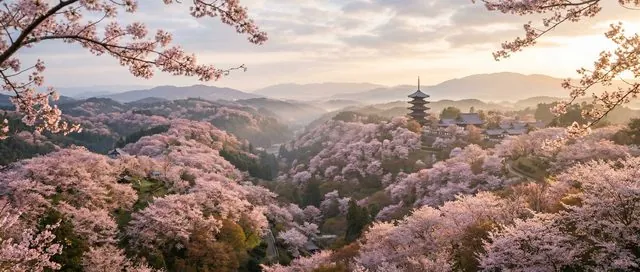

Kyoto's cherry blossom season is one of the most photographed events in Japan, which is exactly the problem. The same five spots appear in every guide, and all of them are heaving by 10am on a Saturday in early April. This list is ranked by crowd-to-payoff ratio, not by fame: how rewarding is the experience relative to how hard you have to work for it? The timing notes under each entry tell you not just where to go, but when.
When do cherry blossoms bloom in Kyoto?
The typical peak window is late March to early April, roughly March 25 to April 10, shifting by up to two weeks depending on the year. Full bloom (mankai) usually lasts about a week; after that, petals fall and crowds ease. For live forecasts, check Japan's official sakura forecast (published each February) or kyoto.travel.
The key planning insight: the second week of April is consistently underrated. The famous central sites peak first; late-blooming spots like Daigo-ji and the yaezakura (double-petal cherry) at Heian-jingū hit their best colour 5-10 days after the main rush. If you can be flexible, aim for April 8-15. Weekday mornings before 9am are a reliable quiet window at every site on this list.
1. Maruyama Park
Public park
The weeping cherry at the centre of Maruyama Park is the single most photographed sakura in Japan: an 80-year-old shidarezakura that hangs like a pale-pink curtain from a six-metre central branch. The surrounding park is unremarkable beyond that tree, but the atmosphere at dusk is worth the crowds. Paper lanterns are lit after dark through peak week and the park stays open all night, giving you the best sakura in Japan with a warm glow behind it and far fewer cameras pointed at it than at 2pm.
- Getting there: 10 min walk from Keihan Gion-Shijo Station, or 7 min walk from Hankyu Kawaramachi
- Best time: Weekday evenings after 17:00 for the lanterns; avoid Saturday and Sunday afternoons in peak week entirely
- Time needed: 45 minutes unless you are photographing by lantern light, in which case allow 90
Go for the weeping cherry and the lantern atmosphere. Skip it in the middle of the day at weekends.
2. Heian-jingū Shrine
Shinto shrine with strolling garden
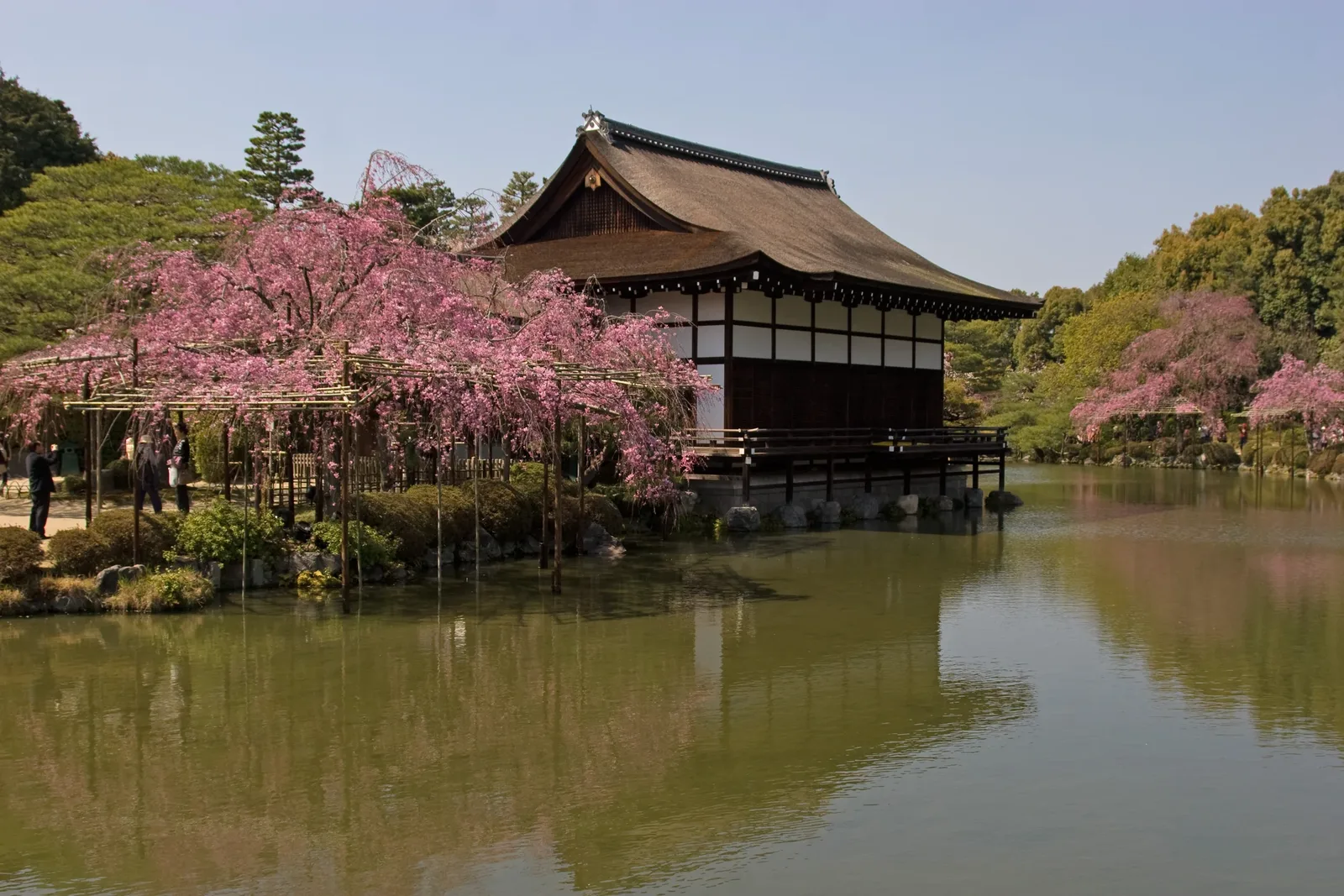
The outer shrine of Heian-jingū Shrine is free and open all day, but the ¥600 inner garden is where the spring experience genuinely earns its entry fee. Late-weeping cherry trees (yaezakura) line the pond's edge with stone bridges and traditional garden architecture behind them, and the ticket price acts as a natural crowd filter: at 08:30 opening the garden holds perhaps 20-30 people; by 10:30 it is fuller but rarely overwhelming. These yaezakura bloom 7-10 days after the main city peak, making this one of the best late-season options.
- Getting there: 5 min walk from Higashiyama Station on the Tozai subway line
- Best time: 08:30-10:00 on weekdays; revisit after April 7-8 when the yaezakura are at peak
- Time needed: 1 hour for the garden; add 20 min for the outer shrine buildings
The ¥600 entry is the best crowd-filtering tool in Kyoto's spring calendar. Arrive at opening for the closest thing to a private garden you will find at a major city site.
3. Nijo Castle
Edo-period castle complex
The UNESCO-designated grounds of Nijo Castle contain over 400 cherry trees along the moat and inner compounds, and the castle runs a separate night illumination event in late March to early April where the trees glow against stone walls. The daytime visit is busy but manageable: the grounds are large enough to absorb visitor numbers in a way that compact parks cannot. The night event is ticketed separately and draws a fraction of the afternoon foot traffic, often selling out in advance.
- Getting there: 2 min walk from Nijo-jo-mae Station on the Tozai subway line
- Best time: Night illumination (late March to early April, book in advance) or weekday mornings before 10:00
- Time needed: 90 minutes for the grounds and palace interior; add 60 minutes for the night event
One of the more civilised ways to see cherry blossoms near the city centre, especially at night. Worth the entry fee for the moat walk alone.
4. Kiyomizu-dera
Buddhist temple on wooden stage
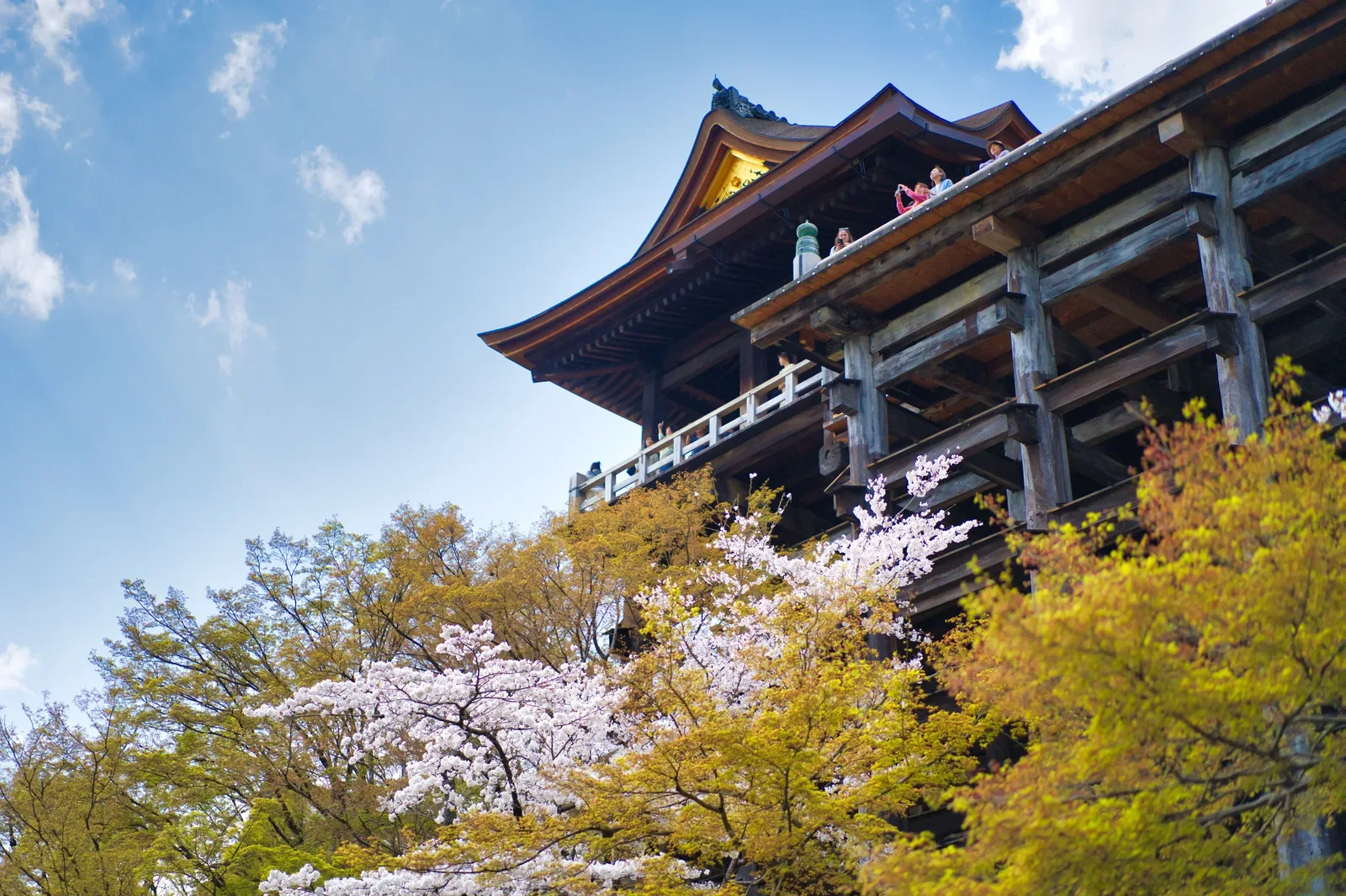
The wooden stage of Kiyomizu-dera, a UNESCO World Heritage structure cantilevered over the Higashiyama hillside, frames cherry blossom views across the city rooftops that genuinely justify the entry fee. The Ninenzaka and Sannenzaka approaches below are themselves lined with sakura. The problem is well-known: this is one of the most-visited temples in Japan, and peak-week afternoons bring queues for entry and shoulder-to-shoulder conditions on the main stage. The temple opens at 6:00am and the first two hours are a different place entirely.
- Getting there: 15-20 min walk from Keihan Kiyomizu-Gojo Station; bus 100 or 206 to Kiyomizumichi stop
- Best time: 6:00-8:00am on any day; avoid 10:00-16:00 during peak week
- Time needed: 1 hour for the temple; add 30 min for the Ninenzaka cobblestone approach
One of the highest-payoff sites in Kyoto in spring, but only if you are there before the tour buses. The 6am opening is not a rumour.
5. Ginkaku-ji
Zen temple and garden
Often overshadowed by its gilded counterpart, Ginkaku-ji sits in Kyoto's quieter northeast and draws fewer visitors than the headline sites even during sakura season. The mossy garden with its iconic sand cone (kogetsudai) and the silver pavilion make an elegant backdrop for the sparse cherry trees along the approach canal path. It pairs naturally with an early-morning walk south along the Philosopher's Path, the 2 km canal lined with hundreds of sakura that is best covered before tour groups arrive after 9am.
- Getting there: Bus 5, 17 or 32 to Ginkakuji-michi stop, then 5 min walk
- Best time: 8:30-10:00, then continue south along the Philosopher's Path canal toward Nanzenji before crowds build
- Time needed: 45 minutes at the temple; add 45 min for the canal walk south to Nanzenji
Combine with an early-morning Philosopher's Path walk for an efficient northeast circuit before heading to the busier sites.
6. Nanzenji
Zen temple complex
Genuinely missed by most day-trippers who exhaust their morning at the more famous sites, Nanzenji holds cherry trees around its 23-metre San-mon gate and along the sub-temple paths, with a 19th-century brick aqueduct (suirokaku) behind them providing a backdrop unlike anything else in Kyoto's sakura calendar. The outer grounds are free to enter, making this the most accessible lesser-known spot on the list. It sits at the south end of the Philosopher's Path, making it a natural endpoint for an early-morning canal walk from Ginkaku-ji.
- Getting there: 10 min walk from Keage Station on the Tozai subway line
- Best time: 8:30-10:00; the free outer grounds are uncrowded on weekday mornings even in peak week
- Time needed: 1 hour for the outer grounds and aqueduct; add 45 min for Tenjuan sub-temple garden
The aqueduct framed by cherry branches is one of the most underused views in Kyoto in spring. Get there before the Philosopher's Path foot traffic reaches this end.
7. Daigo-ji
UNESCO temple complex
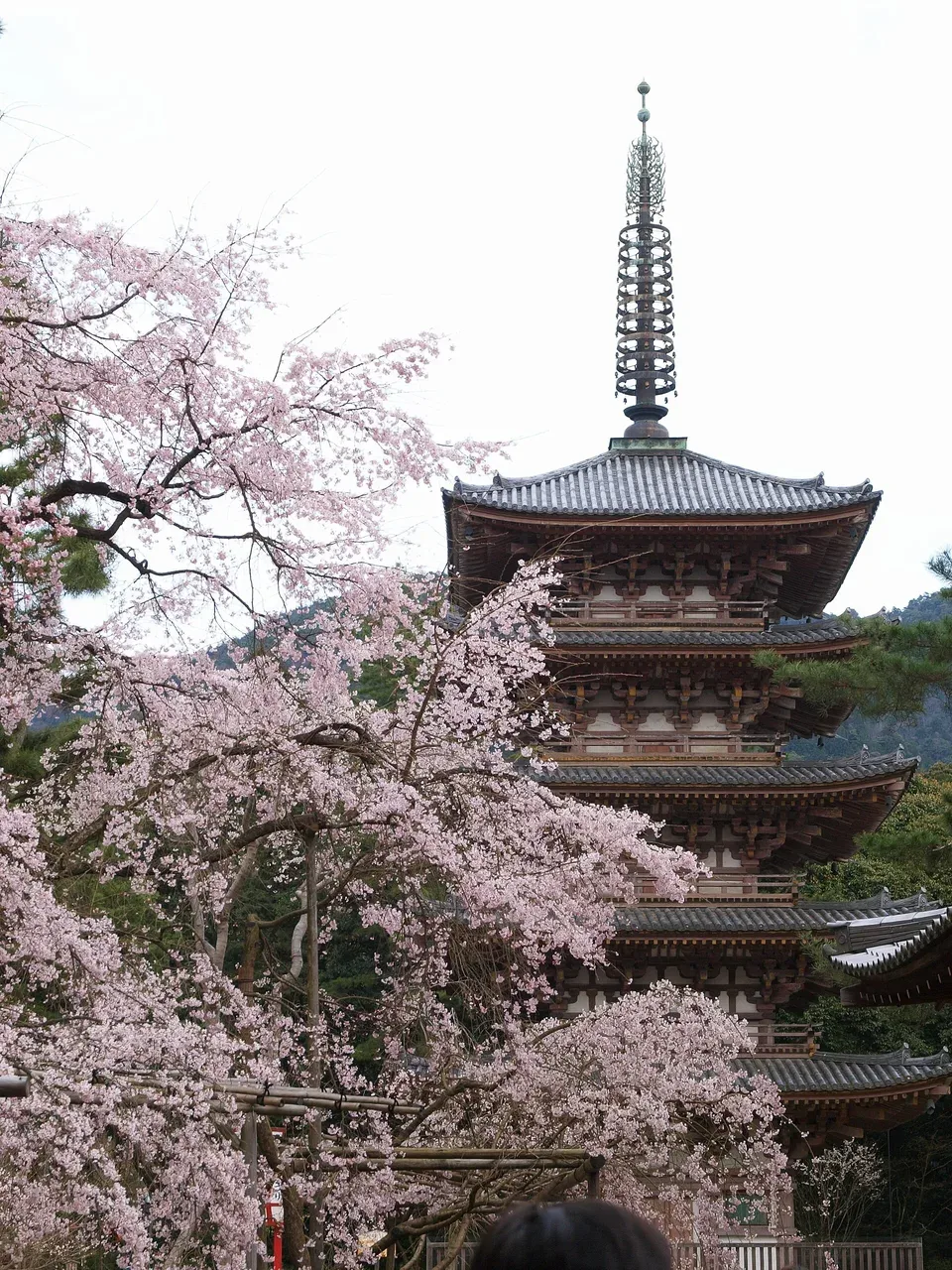
Daigo-ji is the strongest argument for visiting Kyoto in the second week of April rather than the first. The weeping cherry trees in the main garden complex peak 5-10 days after the city centre, which means a UNESCO-listed temple in full bloom with dramatically fewer visitors. A feudal warlord staged his celebrated cherry blossom viewing party here in 1598; the garden was designed for exactly this spectacle, and the scale of the weeping cherries over the pond is unlike anything at the better-known city sites.
- Getting there: Daigo Station on the Tozai subway line (25 min from the city centre), then 10 min walk; avoid the bus from Kyoto Station, which takes 40 min in peak-season traffic
- Best time: April 8-15 in most years; check daigoji.or.jp for the current season forecast before making the journey
- Time needed: 2 hours minimum for the garden complex and lower temple; allow 3 hours if walking the mountain path to the upper section
The best sakura site in Kyoto for anyone who can time their visit to the second week of April. Genuinely worth the 25-minute detour from the city centre.
8. Enkoji
Zen temple with moss garden
Almost entirely absent from English-language guides, Enkoji is a compact Zen temple in the Ichijoji neighbourhood, north of the city, famous in autumn for its maple canopy but unexpectedly fine in spring. The cherry grove behind the moss garden blooms quietly over three to four days in early April; on a weekday morning between 9:00 and 10:30 it can be close to empty. The temple has a wooden rooftop viewing platform with views over northern Kyoto that most visitors miss because they do not read the map at the entrance.
- Getting there: Eizan line to Ichijoji Station (20 min from Demachi-yanagi), then 8 min walk northeast; this private rail line is rarely crowded even in peak spring
- Best time: 9:00-10:30 on weekdays; this site is rarely busy at any hour in spring
- Time needed: 45 minutes; it is a small site
Go if you want cherry blossoms in genuine quiet and are already planning the Daigo-ji detour to the south. The two bloom at roughly the same time and can be combined into a single second-week-of-April day trip.
How to visit Kyoto during cherry blossom season
Book accommodation in December or January at the latest. The peak period (late March to mid-April) fills months ahead, and the best-located hotels sell out first. A short walk or subway ride from the Higashiyama sites saves considerable stress during a week when the bus network slows to a crawl.
Saturday and Sunday between April 1 and April 8 in any year are the worst days to visit any of the sites on this list. If your trip is fixed around a weekend, commit to arriving before 8am or after 4pm, and use the subway rather than buses.
Transport within Kyoto during sakura season: the Tozai subway line runs through most of the key eastern sites (Nanzenji at Keage, Nijo Castle at Nijo-jo-mae, Heian-jingū at Higashiyama) and is reliably fast. For Ginkaku-ji and Enkoji, buses are unavoidable but run frequently. Rental bikes work well for the northeast circuit (Ginkaku-ji, Philosopher's Path, Nanzenji) and put you on the Philosopher's Path before pedestrian traffic builds.
Consider somewhere else: Nara and Yoshino
If Kyoto feels too crowded in peak week, two practical alternatives are within an hour by train. Nara Park has around 1,700 cherry trees among free-roaming deer, and the crowds never reach Kyoto's scale; the park is 45 minutes from Kyoto Station on the Kintetsu Nara line.
Yoshino, in Nara Prefecture, has the most celebrated mountain sakura in Japan: 30,000 trees across four elevation zones, each blooming in sequence over two weeks. The journey takes around 90 minutes from Nara by Kintetsu. Book any accommodation months in advance if you plan to stay overnight.
Cherry blossom at a glance
Bloom timing across Kyoto's eight sites spans roughly March 27 to April 14. Match your travel dates against this chart before deciding which sites to prioritise.
- Nijo CastleEvening illumination event late MarchFirst bloom Mar 27Peak window Mar 27 – Apr 5
- Kiyomizu-deraEarly morning only during peak weekFirst bloom Mar 28Peak window Mar 28 – Apr 7
- Ginkaku-jiPairs with Philosopher's Path walkFirst bloom Mar 28Peak window Mar 28 – Apr 7
- NanzenjiFree outer grounds; underratedFirst bloom Mar 28Peak window Mar 28 – Apr 7
- Maruyama ParkLanterns lit after darkFirst bloom Apr 1Peak window Apr 1 – 5
- EnkojiNear-empty morningsFirst bloom Apr 1Peak window Apr 1 – 8
- Heian-jingū gardenYaezakura; ticketed crowd filterFirst bloom Apr 5Peak window Apr 5 – 12
- Daigo-jiLate bloomer; 25 min from city centreFirst bloom Apr 7Peak window Apr 7 – 14
Typical bloom timing, entry costs, and crowd pressure across all eight sites.
| Spot | Typical peak | Entry fee | Crowd level |
|---|---|---|---|
| Maruyama Park | Apr 1-5 | Free | Very high (daytime) |
| Heian-jingū garden | Apr 5-12 (yaezakura) | ¥600 | Medium |
| Nijo Castle | Mar 27-Apr 5 | ¥800 | Medium |
| Kiyomizu-dera | Mar 28-Apr 7 | ¥500 | Very high |
| Ginkaku-ji | Mar 28-Apr 7 | ¥500 | High |
| Nanzenji | Mar 28-Apr 7 | Free (outer grounds) | Low to medium |
| Daigo-ji | Apr 7-14 | ¥1,500 | Low to medium |
| Enkoji | Apr 1-8 | ¥600 | Low |
Honorable mentions
The Arashiyama district has sakura along the riverside and in the garden of its main Zen temple (¥500 garden entry), though it works better as part of a bamboo grove visit than as a cherry blossom destination in its own right. Philosopher's Path (free, the 2 km canal between Ginkaku-ji and Nanzenji) belongs on every Kyoto spring list but lacks a single standout spot; treat it as connective tissue between the northeast temple circuit rather than a destination to plan a morning around.
FAQ
When is the best time to see cherry blossoms in Kyoto?
The typical peak is late March to early April, usually March 25 to April 10, shifting by up to two weeks depending on the year. Full bloom lasts about a week. For late-blooming variety, the second week of April is underrated: Daigo-ji and Heian-jingū's yaezakura cherry trees peak after the main rush, with noticeably thinner crowds. The official annual sakura forecast is published by mid-February and gives year-specific dates.
How do I avoid the worst crowds at Kyoto cherry blossom spots?
Visit on weekdays, arrive before 9am or after 4:30pm, and consider the second week of April when the main crowds have dispersed but late-blooming sites are still at their best. The ticketed inner garden of Heian-jingū acts as a natural crowd filter; Enkoji and Daigo-ji in the city's outer areas are consistently quieter than the central sites. Avoid bus routes during peak hours and use the Tozai subway line wherever possible.
Which Kyoto cherry blossom spots are best for photography?
For dramatic cityscape shots: the wooden stage at Kiyomizu-dera at dawn with the Higashiyama rooftops behind it. For intimate garden shots: the Heian-jingū inner garden pond at opening time, and Daigo-ji's main garden in the second week of April. For an unusual backdrop: the brick aqueduct at Nanzenji framed by pink branches. For atmosphere after dark: the lantern-lit weeping cherry at Maruyama Park.
What should I book in advance for cherry blossom season?
Book accommodation by December at the latest; peak weeks sell out months ahead. The Nijo Castle night illumination event is ticketed separately and sells out. No advance booking is needed for most temples and parks, but check Daigo-ji's site before travelling as timed-entry policies are sometimes introduced during peak season. Transport within Kyoto needs no booking; expect longer wait times on bus routes in the busiest weeks, and use the subway where possible.
Is the kyoto cherry blossom season worth visiting with children?
Maruyama Park (flat, free, open all night) is the easiest option with young children. Nijo Castle has wide paved paths and large open grounds. Kiyomizu-dera involves a steep cobblestone approach and is difficult with pushchairs during peak hours. Daigo-ji and Enkoji require more walking and suit older children better; both reward families willing to arrive on the quieter second week of April.