
The bamboo path runs 500m between the north gate of Tenryū-ji and Ōkōchi Sansō villa: moso bamboo culms 20m tall, light filtering green, and a wind-through-bamboo sound the Ministry of Environment ranks among Japan’s 100 protected soundscapes. Free, no closing time, and the only Kyoto attraction where the difference between 7:30 and 10:00 is the difference between contemplative and unbearable.
What to Expect
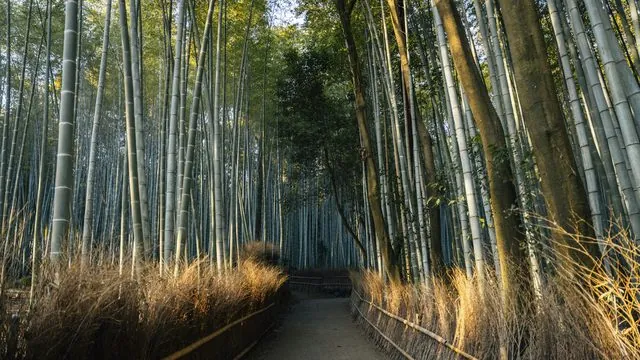
Enter from Tenryū-ji north gate (the temple’s exit, ¥500 if entered through the south gate) or from Nonomiya Shrine at the south end. The path slopes gently uphill, opens into a small junction at Ōkōchi Sansō villa, the silent-film actor’s 1930s estate (¥1,000 entry), traditionally where the bamboo crowd dissipates. Beyond the villa, the path continues into Sagano forest with a fraction of the visitors. Allow 30 min for the bamboo + 60 min if you continue to the calmer northern Sagano hamlet.
How to Get There
Getting There
- 1Take JR Sagano Line → Saga-Arashiyama Station
- 2Walk to bamboo grove → Bamboo Grove south entrance
- 1Bus 28 from Gion → Arashiyama-Tenryū-ji
- 2Walk through Tenryū-ji to north gate → Bamboo Grove
Tips
- 06:30–07:30 is the only quiet window. By 09:00 the path is full; 10:00–15:00 is shoulder-to-shoulder with selfie sticks. Sunset (45 min before close-of-light) is calmer but the canopy makes it gloomy fast.
- Combine with Tenryū-ji garden. ¥500. The Sōgenchi pond garden by Musō Soseki is the actual Zen masterpiece; most bamboo-grove visitors skip it, which is the day’s biggest mistake.
- The Sagano Romantic Train. ¥630, runs late March–December. A vintage open-side train through Hozugawa river gorge, 25 min one way. Book 1+ day ahead in autumn.
- Don’t carve your name in a culm. Public-service notice: vandalism rose ~10x in 2018 and walls of carved tags now disfigure the south entrance. The grove is publicly funded.
Consider Take-no-michi (Muko Bamboo Path) Instead
- Where
- Terado-cho to Mozume-cho, Muko City, Kyoto
- Map
- Open in Google Maps →
Both sites deliver the core experience of walking through a dense bamboo forest with filtered light and a sense of enclosure—the atmospheric quality that draws visitors to Arashiyama. Take-no-michi, located in nearby Muko, offers the same immersive bamboo environment with substantially fewer crowds, making it genuinely suitable for visitors seeking that meditative forest walk without the congestion of one of Kyoto's most heavily trafficked attractions.

- Where
- 180 Kuramakibune-cho, Sakyo-ku, Kyoto 601-1112
- Hours
- 6:00 – 20:00 (May–Nov); reception 9:00 – 17:00
- Price
- Free entry
- Map
- Open in Google Maps →
Arashiyama's bamboo grove now sees roughly 30,000 visitors a day in peak season; Kibune village is a 1-hour Eizan-railway ride and still feels like the Kyoto-mountain experience from before the tour buses. Kifune Shrine's stone stairway flanked by hanging red lanterns is one of Japan's most photographed approaches — different image than bamboo, same forest-mystery atmosphere. In summer, riverside dining platforms (kawadoko) suspend you over the cold Kibune River — found nowhere else.

- Where
- 2-7-4 Jomyoji, Kamakura, Kanagawa 248-0003
- Hours
- 9:00 – 16:00, closed Dec 29 – Jan 3
- Price
- ¥
- Map
- Open in Google Maps →
Hokokuji Temple in eastern Kamakura offers the same core experience as Arashiyama — standing inside a dense, towering bamboo grove and feeling enclosed by the rustling stalks — at a fraction of the visitor volume. The grove of roughly 2,000 moso bamboo behind the main hall is compact but genuinely immersive, and the adjacent tea house serving matcha gives the visit a contemplative quality that Arashiyama's commercialized surroundings rarely allow. Travelers based in Tokyo or passing through Kamakura will find it a 10-minute bus ride from Kamakura Station, making it a practical alternative to the Kyoto original.
FAQ
How long is the path itself?
About 500 metres of dense bamboo, 5–8 min to walk briskly. Counting the approach from Tenryū-ji and any side-trip to Ōkōchi Sansō, plan 30–45 min total. Plus the Tenryū-ji garden (worth it) adds an hour.
Is autumn or spring better?
Spring (April) for sakura at adjacent Tenryū-ji. Autumn (mid-November to early December) for the maples around the bamboo path entrances; the bamboo itself is evergreen, so the seasonal contrast is mainly outside the grove.
Are there toilets?
At Saga-Arashiyama Station, in Tenryū-ji garden, and at the bamboo grove’s main entrances. None inside the grove itself. Free at all stations.
Where to bathe in Kyoto
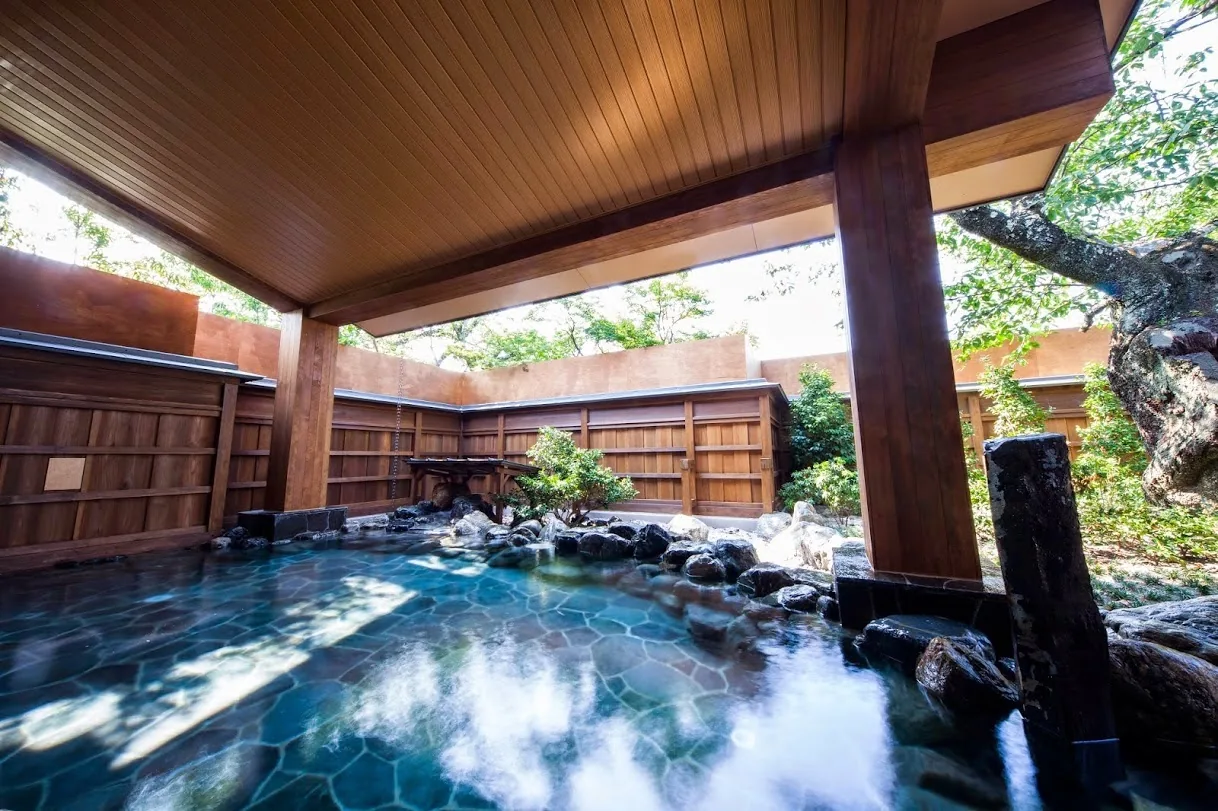
Onsen
Fu Fu No Yu Onsen
public4.11.8k
Klook-bookable; iconic experience
Day-use onsen in Kyoto: 1,816 Google reviews, 4.1★ average.
Hours, address
- Hours
- Monday: 12:00 – 10:00 PM / Tuesday: 12:00 – 10:00 PM / Wednesday: 12:00 – 10:00 PM / Thursday: 12:00 – 10:00 PM / Friday: 12:00 – 10:00 PM / Saturday: 12:00 – 10:00 PM / Sunday: 12:00 – 10:00 PM
- Address
- 1 Arashiyama Kamikawaracho, Nishikyo Ward, Kyoto, 616-0001, Japan