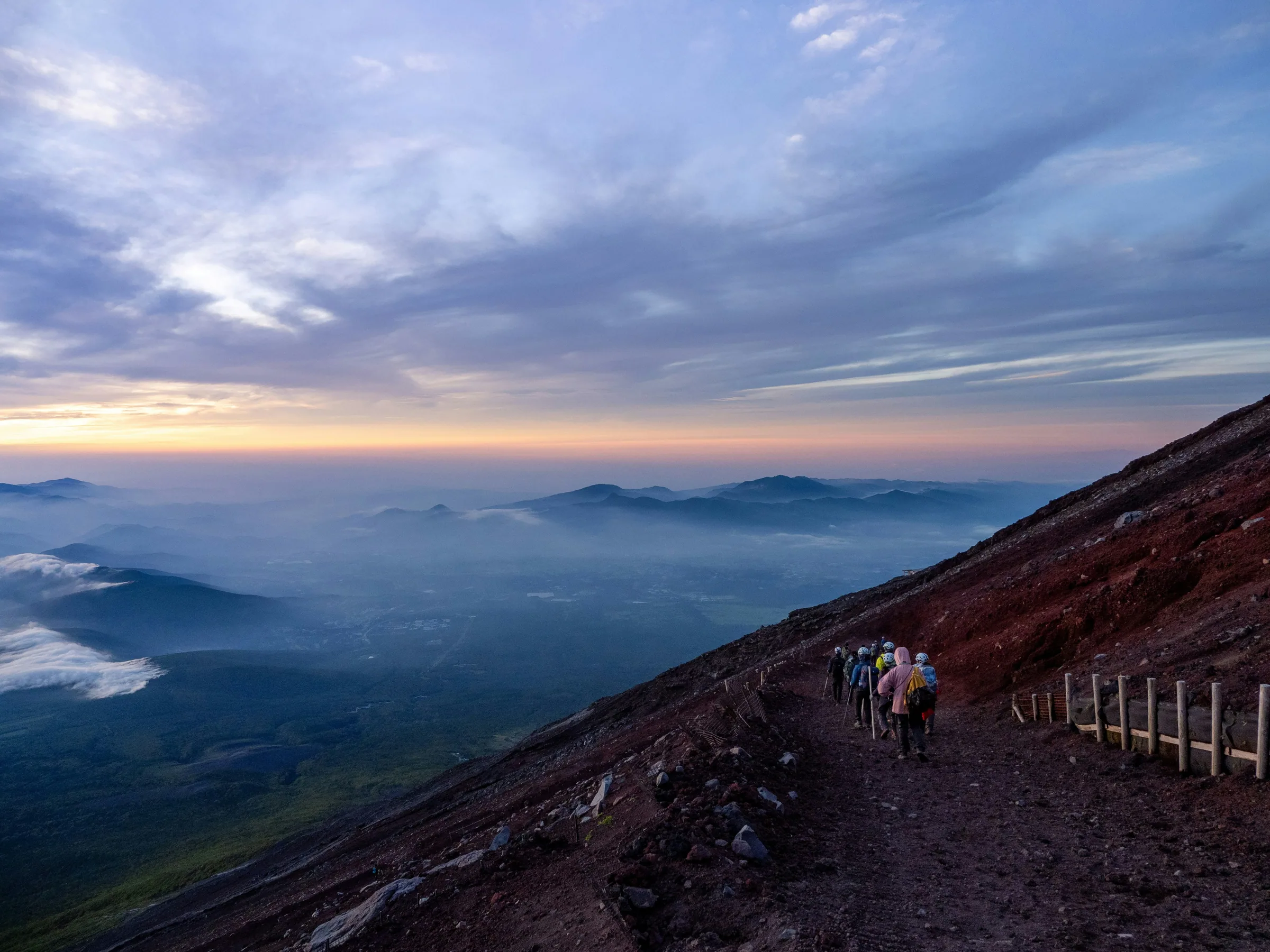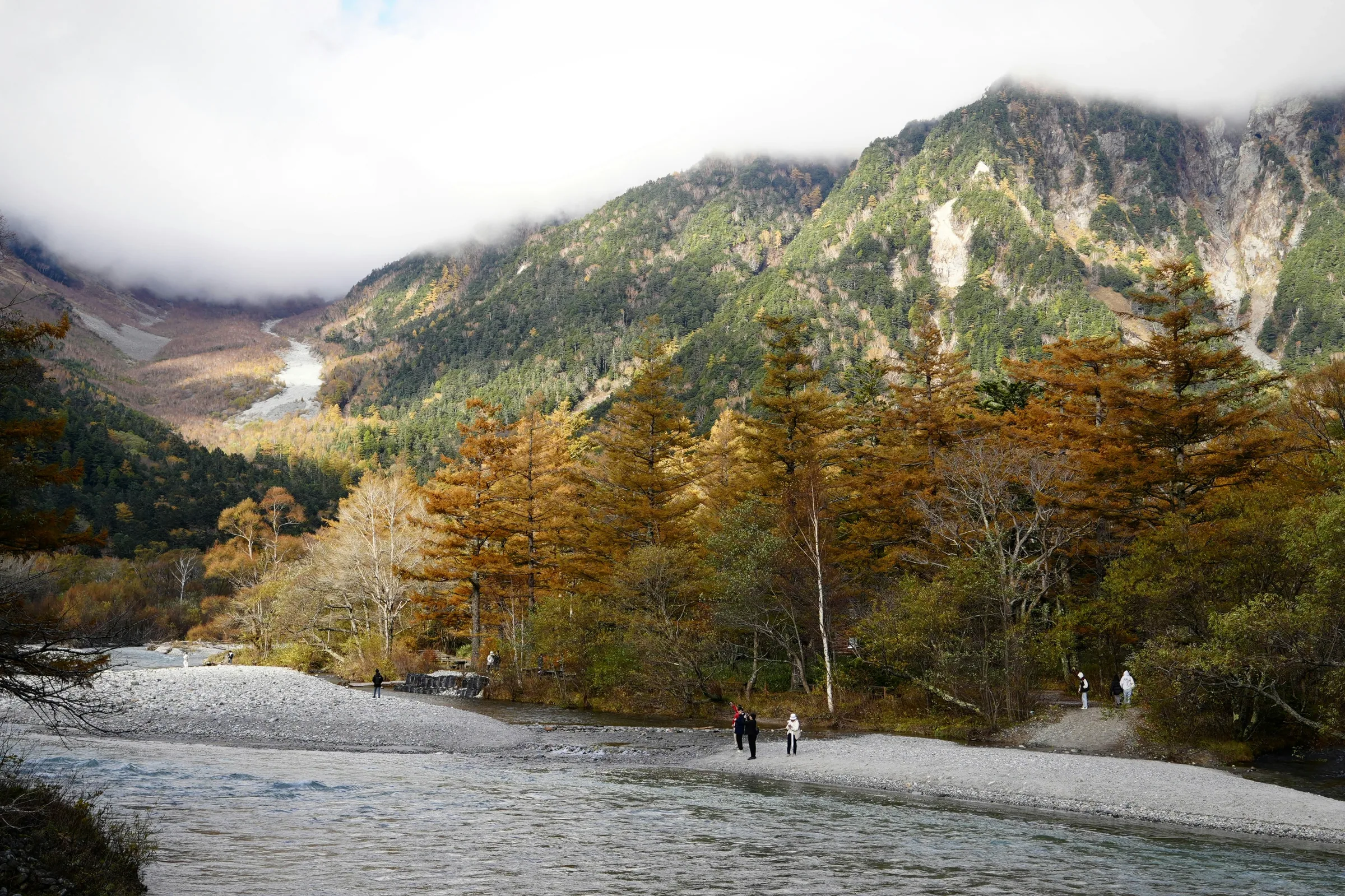

Yakushima is a small UNESCO world heritage island off the southern tip of Kyushu, reached by ferry or a short flight from Kagoshima, where the forest is so old and so wet that it barely resembles anywhere else in Japan. Two hikes define most visits: the mossy ravine of Shiratani Unsuikyo, whose landscape directly inspired the forest scenes in Ghibli's 1997 animated film, and the long day trek to Jōmon Sugi, a cedar tree estimated at between 2,200 and 7,200 years old and one of the most remote natural landmarks in Japan that can be reached on foot without a guide. Most travel content covers both trails and nudges you to do them both. That is rarely realistic on a short visit, and this guide will tell you which one to pick, and why.
Yakushima fits this site's mission squarely: it rewards visitors willing to go considerably further than Kyoto or Tokyo with something those cities cannot offer. The logistics require planning and the weather demands respect, but the island's ancient-forest walking is genuinely unlike anything on the main islands. See also: hiking in Japan for a broader overview of the country's trail options and difficulty tiers.
Getting to Yakushima
Yakushima sits around 60 km south of the Kagoshima coast. Two sea routes and one air route serve the island, with meaningfully different trade-offs. This is not a day trip from Kyoto: plan around the ferry or flight logistics first, then build the hiking days around the island. The ferry journey from Kagoshima to Miyanoura (the main port on Yakushima's north coast) is the standard approach. For transport context, see getting around Japan.
Getting There
- 1Take the high-speed hydrofoil (Toppy or Rocket, operated by Cosmo Line) → Miyanoura port, Yakushima
- 2Alternative: car ferry (Ferry Yakushima 2, operated by Marix Line) → Miyanoura port
- 1Japan Air Commuter (JAC) regional flight → Yakushima airport
One practical note: the hydrofoil is faster but significantly more expensive than the ferry, and weather cancellations on the hydrofoil are common, because Yakushima's seas can be rough. If your hiking day has a fixed date (particularly for the Jōmon Sugi trek, which requires an early start), build in a buffer day or choose the ferry.
Getting to the trailheads once on the island is a separate logistics layer. Shiratani Unsuikyo is accessible by public bus from Miyanoura port (approximately 3–4 departures daily, ~35 minutes, around ¥560 one-way), by taxi, or by rental car. The drive from Miyanoura takes about 20–25 minutes. The Jōmon Sugi trailhead is governed by a different system entirely; see below.
Shiratani Unsuikyo: the mossy ravine
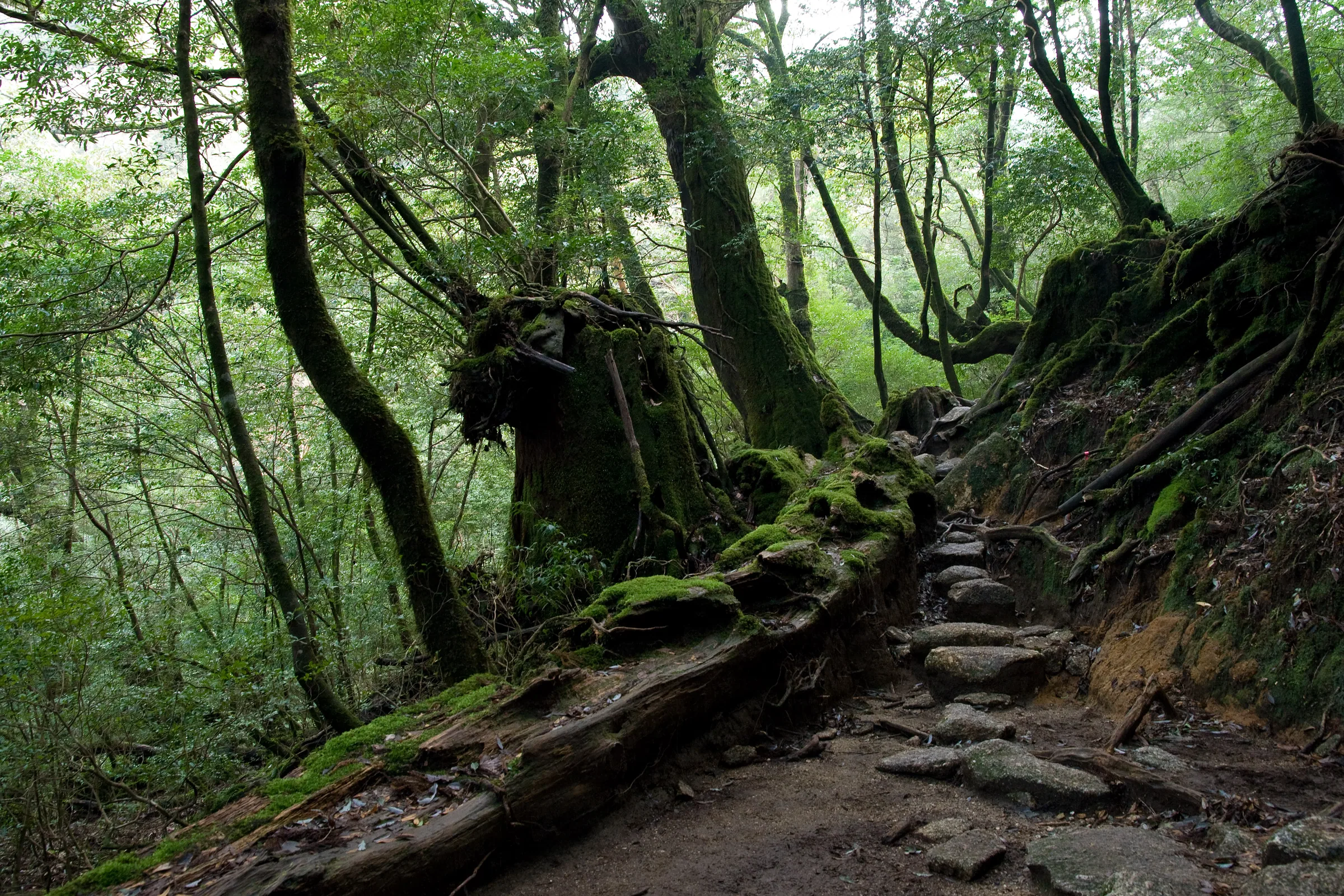
The Shiratani Unsuikyo ravine is a deep gorge where moss covers almost every surface (boulders, roots, fallen cedars, and the forest floor itself) in an uninterrupted carpet of green. The Ghibli connection is genuine: the film's lead background artist visited the ravine while developing visual references for the forest world, and Miyazaki also made visits during production. The specific section most directly associated with the film's atmospheric moss-forest sequences is reached on the Taikoiwa route, a section often called Kokemusu no Mori ("mossy forest"), and the visual resemblance is immediately apparent to anyone who has seen the film.
The gorge offers three main route options, each starting at the entrance gate:
- Yayoisugi course: 2 km, around 1 hour, easy. Suits anyone wanting a gentle introduction to the forest.
- Bugyosugi course: 4 km, around 3 hours, moderate; takes in several significant ancient cedars.
- Taikoiwa course: 5.6 km, around 4 hours, moderate. The full loop that reaches the highest point and passes through the Kokemusu no Mori section most directly associated with the film. This is the route to walk if you have the time.
The terrain is uneven and almost always damp; waterproof shoes and a rain layer are sensible regardless of the forecast. No permit is required. The entrance fee is collected at the trailhead booth (current fee ¥500–¥800; verify before visiting as fees have been subject to revision). The trail is open year-round with no fixed closing time, though the access office operates limited hours.
Choose Shiratani Unsuikyo if you have one full day on the island, are a moderate walker, or the Ghibli connection is part of why you came to Yakushima. It is also the right default for anyone whose fitness or time rules out a 10-hour day.
The Jōmon Sugi trek: the ancient cedar
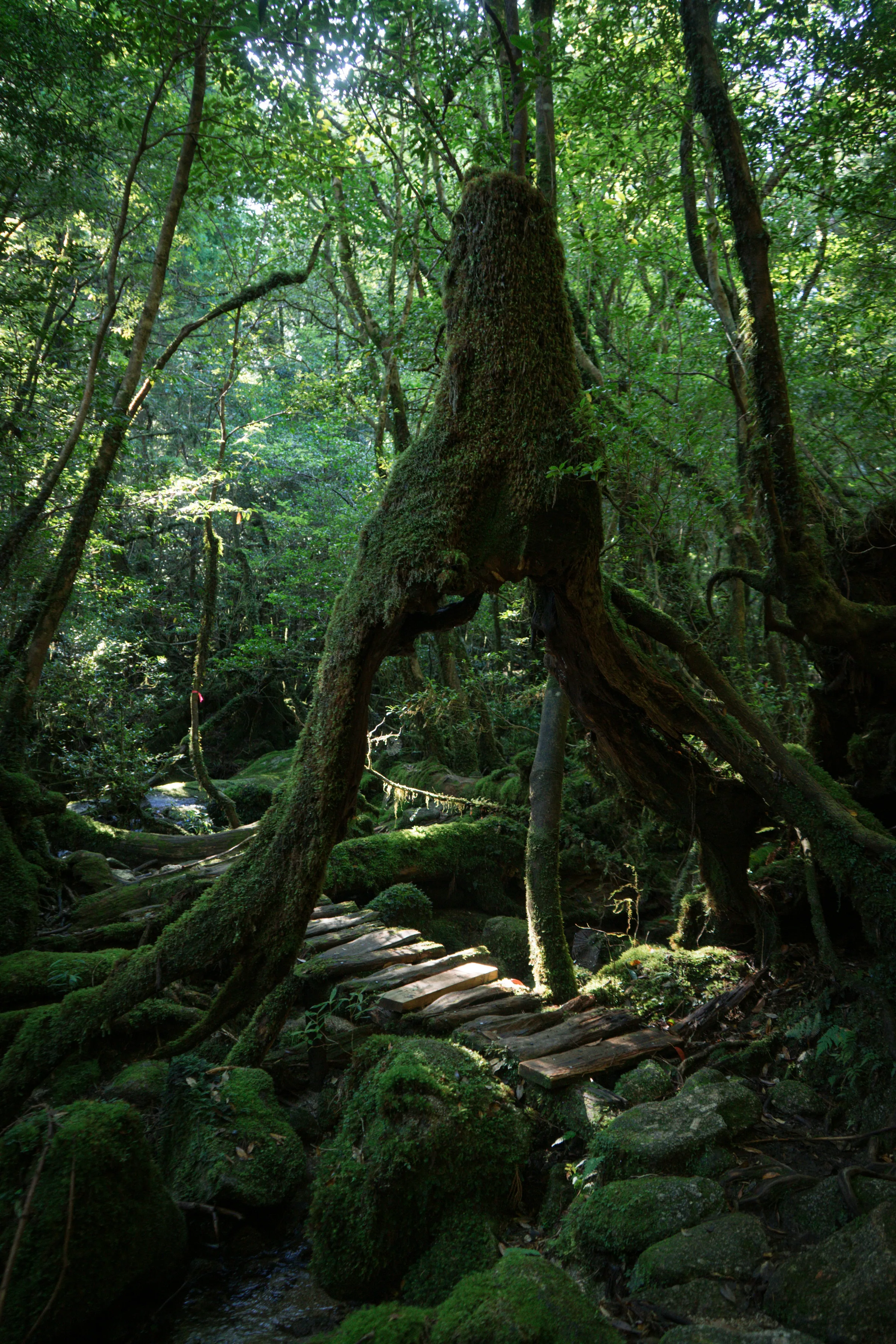
Jōmon Sugi is the most famous tree in Japan: a massive cedar whose age is officially estimated at between 2,170 and 7,200 years. The upper figure of 7,200 years is widely cited in tourism materials and is the high end of the range; the core of the trunk has rotted, making precise ring-counting impossible. Branch-core analysis has confirmed a minimum of around 2,000 years, and most scientific estimates cluster between 3,000 and 7,200 years. Whatever the precise figure, the tree is unambiguously ancient, and it looks it: its circumference exceeds 16 metres and its form has drifted from "tree" toward something more like a landform.
Reaching it involves a 22 km round trip along a trail that for much of its length follows the track of an old forestry railway: flat and well-maintained, but long. The final section involves a 600-metre elevation gain to reach the tree's location. The official guidance from Japan's Ministry of the Environment advises allowing at least 9–10 hours; many hikers take 10–12 hours at a comfortable pace. Start times are not optional: from March 1 to November 30, private vehicles are completely banned on the Arakawa approach road. The only way to reach the trailhead is the Arakawa shuttle bus, which departs from the trekking information center in Anbo (on the island's southeast coast) starting from approximately 4:40 AM, with several early departures before 6:00 AM. If you miss the first buses, you will not have enough daylight to complete the trek safely.
Before setting out, fill in the trekking registration form available at the trekking information centers in Miyanoura, Anbo, and Yakushima airport, and at the trailhead itself. This is a safety and rescue tracking requirement, not a permit. A headlamp is essential; you will be walking in the dark for the first stretch. The round-trip shuttle bus ticket costs approximately ¥3,000 and includes the ¥1,000 trail conservation fee; purchase the day before at the trekking center in Anbo or any tourist information office, as tickets can sell out in peak season.
One important logistics note: if you are staying in Miyanoura (the main northern port), the shuttle departure point in Anbo is a 30–40 minute drive across the island. You will need to factor this into your departure time, or choose accommodation on the east coast near Anbo.
Choose the Jōmon Sugi trek if standing at Japan's oldest known cedar is a genuine priority, you have a full day free with no tight travel commitments the following morning, and you are comfortable with long-day hiking (10+ hours, with an early start). Rain and fitness matter more on this trail than any other on the island.
Can you do both?
Answer two questions to get a direct recommendation.
9–10+ hoursYour match
Jōmon Sugi trek
Japan's oldest known cedar at an estimated 2,200–7,200 years old. A 22 km round trip on a former forestry track with a pre-dawn shuttle bus start.
You have a full day free, are in strong hiking shape, and standing at Japan's oldest tree is the goal.
3–4 hoursYour match
Shiratani Unsuikyo
The moss-covered ravine that inspired the Ghibli forest scenes. Accessible by public bus, no pre-dawn start, and beautiful even in light rain.
You have one day, prefer moderate hiking, or the Princess Mononoke connection is the draw.
The honest fatigue math: the Jōmon Sugi trek leaves most people genuinely tired. Not incapacitated, but not ready to do a second full hiking day immediately. Doing it the other way around (Shiratani Unsuikyo first) works slightly better, since the Shiratani day is shorter and less punishing. But the Arakawa shuttle schedule may not cooperate with a compressed itinerary.
With two or three nights on the island and no fixed commitments after, combining both trails is entirely realistic. The logical order: Jōmon Sugi on day one or two (fresh legs, early bus), a recovery day in between if needed, then Shiratani Unsuikyo. Do not reverse this order unless your fitness is exceptional; a 22 km day on tired legs is a recipe for a miserable walk that shortchanges both trails.
On a one-day or two-day visit, choose one:
- Ghibli fans, casual-to-moderate walkers, one-day visitors, anyone whose fitness or time rules out a 10-hour day: Shiratani Unsuikyo.
- "I must see Japan's oldest known tree" completionists with a full free day and real hiking fitness: Jōmon Sugi.
If you are genuinely torn, default to Shiratani Unsuikyo. It is the more visually distinctive of the two (the Ghibli forest is immediately striking), and it is forgiving of sub-optimal weather, fitness, and planning. The Jōmon Sugi trek requires all three to work well simultaneously.
When to go
Yakushima receives some of the highest rainfall in Japan; the Kagoshima island is famous for the local saying that "it rains 35 days every month." Coastal areas receive 2,400–4,400 mm annually; the interior mountain slopes receive 8,000–10,000+ mm per year, making them among the wettest inhabited areas on Earth. Rain is not a risk to manage on Yakushima. It is the baseline, and your gear and plans should treat it that way.
October and November are the most reliably good months for hiking: relatively lower rainfall, post-typhoon season, comfortable temperatures, and autumn colours. March to May offer milder weather but higher rainfall than autumn, particularly in May. July and August are the typhoon months; hiking is possible during good windows but requires flexibility. June through mid-July is the main rainy season, with June averaging around 474 mm in a single month; trail closures are most likely during this period.
The official closure threshold for all four main trailheads (including both the Arakawa route and Shiratani Unsuikyo) is 220 mm of rainfall in 24 hours. Closures are enforced promptly when this threshold is reached or forecast. In winter (December–February), the Jōmon Sugi trail gains snow at elevation and the shuttle bus schedule is reduced; the trail remains nominally accessible but requires more preparation and is not recommended for inexperienced mountain walkers.
Practical tips
- Gear that matters here more than on most Japanese trails: a proper waterproof jacket (not a packable wind layer), waterproof hiking boots or trail shoes, trekking poles for the Jōmon Sugi descent, and a headlamp for the pre-dawn Arakawa start. This is not Mount Takao; cut-price gear will make you miserable.
- Accommodation position is strategic: Miyanoura on the north coast is closer to Shiratani Unsuikyo. If the Jōmon Sugi trek is your priority, staying on the east coast near Anbo puts you within easy reach of the shuttle bus departure, a meaningful difference at 4 AM.
- Shuttle bus tickets: Buy them the afternoon before your Jōmon Sugi day at the trekking center in Anbo or a tourist information office. Do not rely on buying at the trailhead on the morning.
- Trekking registration: fill in the form before every hike, not just for Jōmon Sugi. Yakushima's trails are serious enough that emergency services rely on these records.
- Shorter option: A maintained trail system south of Anbo offers 30-minute to 2.5-hour walking routes through old-growth cedar forest with no shuttle required. It gives a genuine sense of the ancient cedar environment without committing to either main trail.
FAQ
Is Shiratani Unsuikyo really the Ghibli forest?
The connection is genuine and well-documented. The film's lead background artist visited the ravine while developing visual references for the forest scenes, and Miyazaki also made visits during production. The moss-covered section known as Kokemusu no Mori ("mossy forest"), accessible on the Taikoiwa route, most directly resembles the film's forest world. No single spot has been officially designated as "the" location, but the visual reference is unmistakable and acknowledged by the production team.
How hard is the Jōmon Sugi trek?
The trail is not technically difficult; most of the route follows a flat former forestry railway track and is well-maintained. The challenge is the length: 22 km round trip, 9–10+ hours, with a 600-metre elevation gain in the final section, a mandatory pre-dawn start (first bus around 4:40 AM), and Yakushima's persistent rain to contend with. Hikers who regularly do full-day walks in the hills will manage it; those who rarely hike should consider Shiratani Unsuikyo instead.
Can I do both hikes in one Yakushima trip?
Only comfortably with multiple nights on the island. On a one-day or two-day visit, choose one. Back-to-back days typically mean doing one trail on fatigued legs, which diminishes both experiences. With two or three nights, the logical order is Jōmon Sugi first (fresh legs), rest or explore the coast the next day, then Shiratani Unsuikyo.
Do I need a permit to hike in Yakushima?
Neither trail requires a formal hiking permit. Shiratani Unsuikyo charges a ¥500–¥800 entry fee (verify the current rate at the time of your visit). The trail to Jōmon Sugi requires a trekking registration form (available at tourist offices and the trailhead; fill this in), and a ¥1,000 conservation fee (typically bundled in the round-trip shuttle bus ticket of approximately ¥3,000). During March–November, the shuttle bus is mandatory; private cars are not permitted on the access road.
What's the best season to hike Yakushima?
October and November are the most reliable months for hiking: lower rainfall relative to the rest of the year, post-typhoon season, comfortable temperatures, and no rainy season complications. March to May is the second best window, though May can be wet. June through mid-July is the main rainy season: hiking is possible but gear requirements are non-negotiable and trail closures are more likely. Avoid planning non-flexible itineraries around June or September (typhoon month).