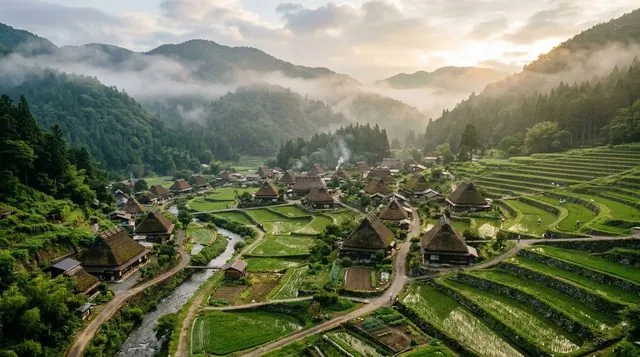

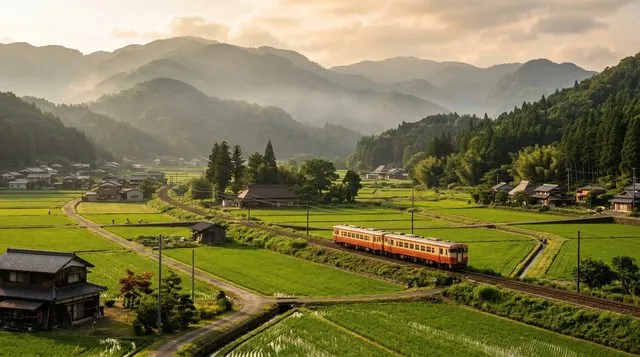
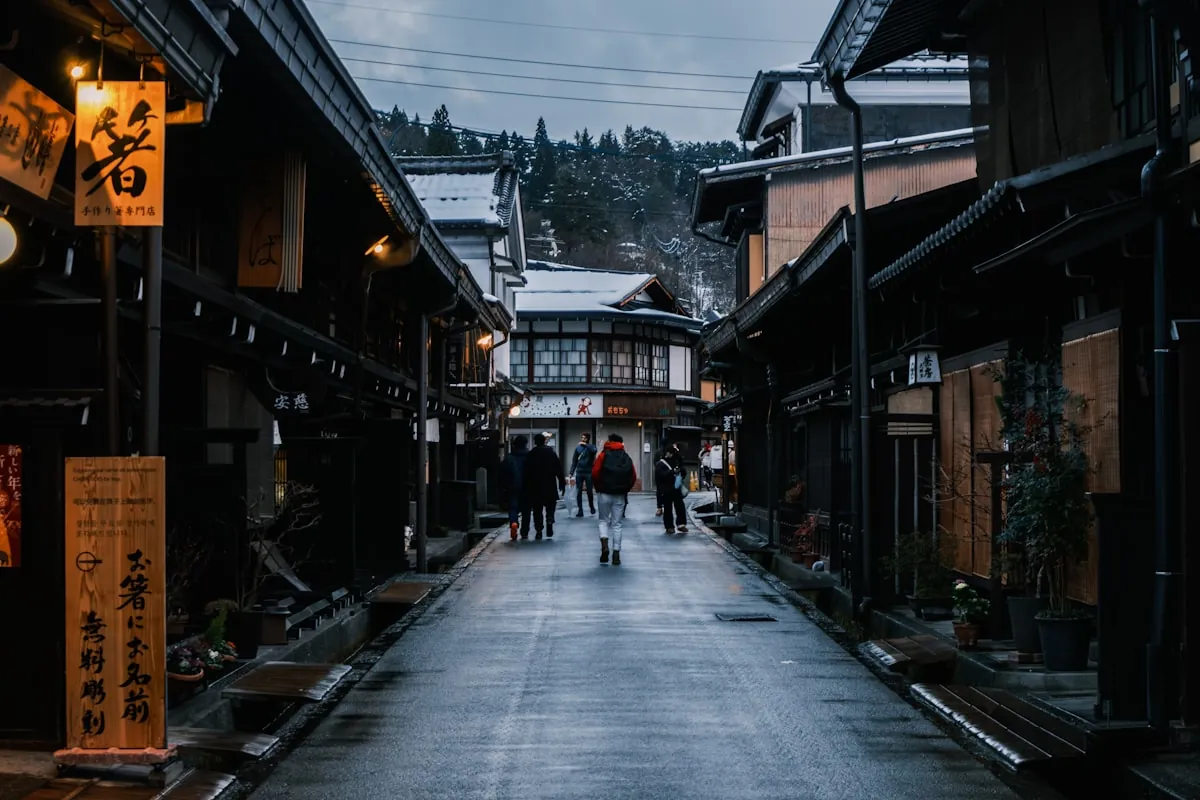
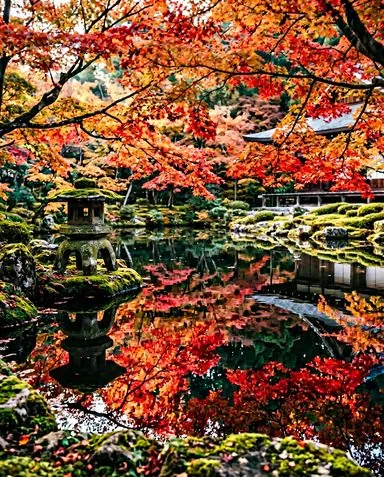

The Nakasendo once linked Edo to Kyoto through 69 mountain post towns and 500 km of highway. Today, almost all of it has been absorbed by modern roads or swallowed by development, except for one 8 km section in the Kiso valley. The walk between Magome-juku and Tsumago-juku takes about three hours, passes through cedar forest and past a waterfall, and arrives at a perfectly preserved post town where cars are banned during the day and the streets look much as they did in the 1600s. It is the most intact stretch of the Edo-period route that remains walkable.
What to expect
The trail is 8 km and takes about three hours at a comfortable walking pace, longer if you stop at Ōtsumago or spend time in Tsumago at the end. The route is well signposted in English throughout. Physical difficulty is low to moderate: there is a short steeper section leaving Magome, and the rest is largely flat or gently downhill.
Walk from Magome to Tsumago, not the reverse. The direction matters more here than on most trails. Magome to Tsumago is net downhill; the steeper climb is behind you within the first 30 minutes, and Tsumago-juku's preserved main street faces west, so it photographs well in the late morning to afternoon light that you arrive in after a typical early start. Walking the reverse (Tsumago to Magome) only makes sense if you plan to stay the night in Magome.
Magome-juku
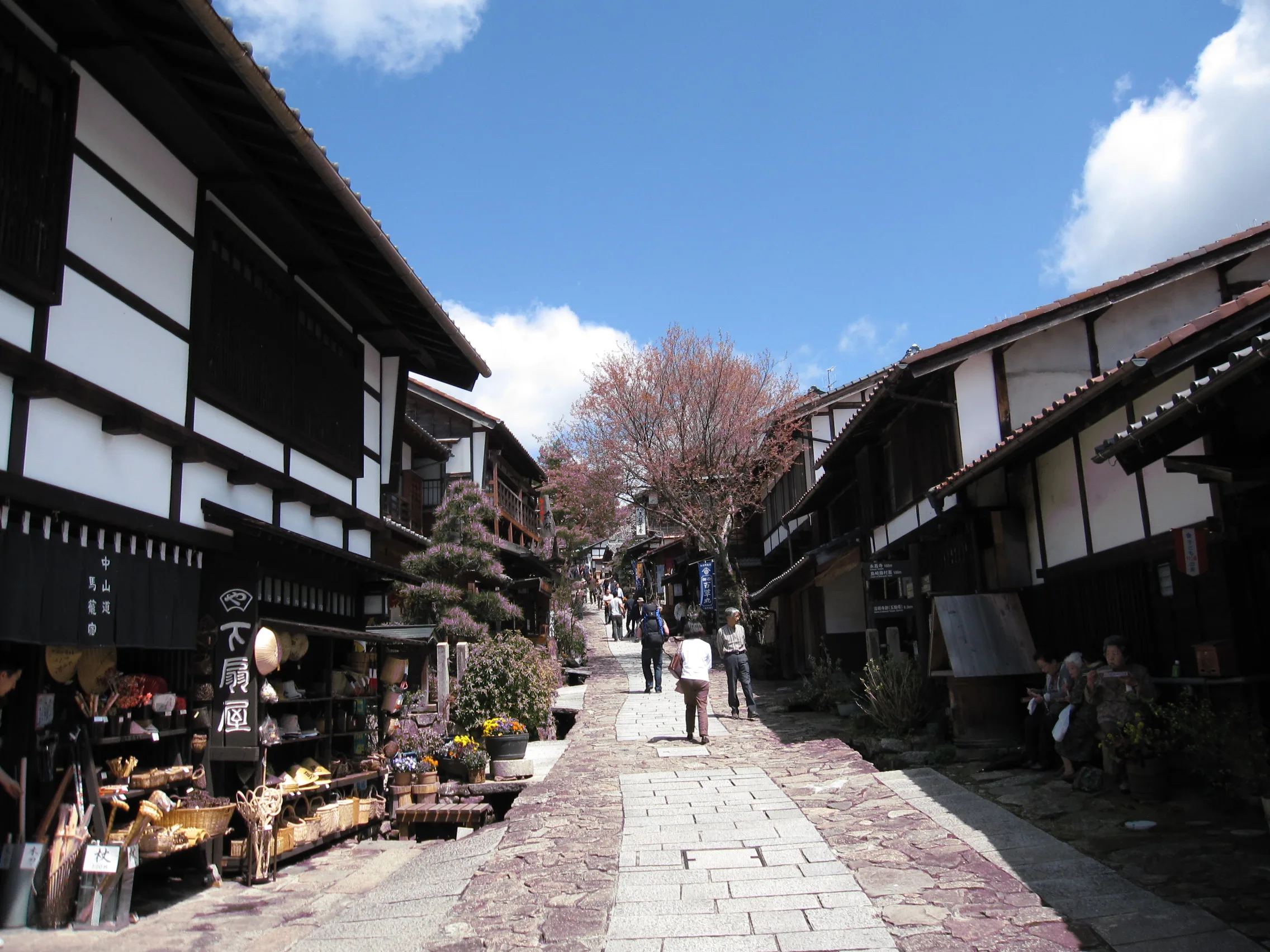
Magome-juku is built into a hillside above the modern town of Nakatsugawa. The bus stop deposits you at the foot of the post town, and the approach climbs steeply through a narrow lane of restored buildings: former inns, tea houses, and waterwheel mills now selling soba products, chestnut sweets, and pickled vegetables. Stone drainage channels run along the sides of the lane. At the top, the paved street gives way to a stone path descending into open countryside, and the trail begins in earnest.
Set off by 8am if you want Magome to yourself. The town wakes up slowly, and the morning light on the sloping street is worth the early alarm.
Cedar forest and the Otaki waterfall
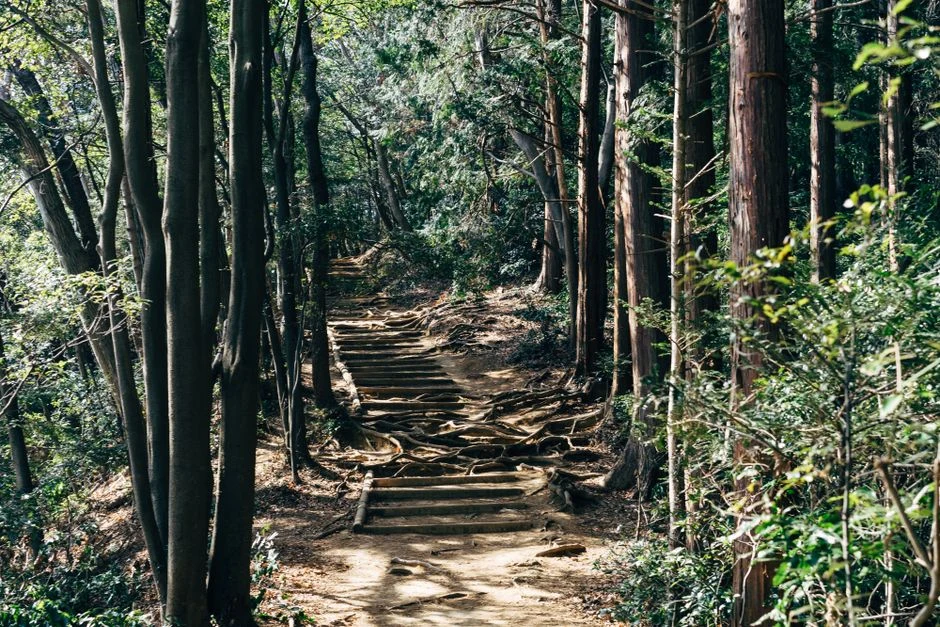
The trail spends most of its distance in cedar forest. The path alternates between original stone paving (some sections date to the Edo period) and compacted gravel track. Birds are the main soundtrack; the cedar canopy muffles outside noise completely in the deeper sections. Occasional stone markers and small roadside shrines mark the historical alignment of the route.
About two-thirds of the way to Tsumago, the trail passes the Otaki waterfall, visible just off the main path through a gap in the trees. It runs strongest in late April after snowmelt and in autumn after the rains, and can be little more than a trickle in dry midsummer. The waterfall area is also one of the quietest points on the entire route; mid-week walkers in the early morning frequently have it to themselves.
Ōtsumago
Just before the trail reaches Tsumago-juku, it passes through Ōtsumago, a small hamlet that functions as an informal halfway rest point. The tateba-chaya rest house here offers free cold tea (mugicha in summer, sometimes warm tea in cooler months) and bench seating. The house is donation-based; a guest book is left out for walkers to sign. Most visitors pressed for time walk straight through. Stopping for 10–15 minutes, however, gives you Tsumago on your own terms: you arrive slightly after the previous group, and the photogenic main street is briefly, visibly clearer.
Tsumago-juku
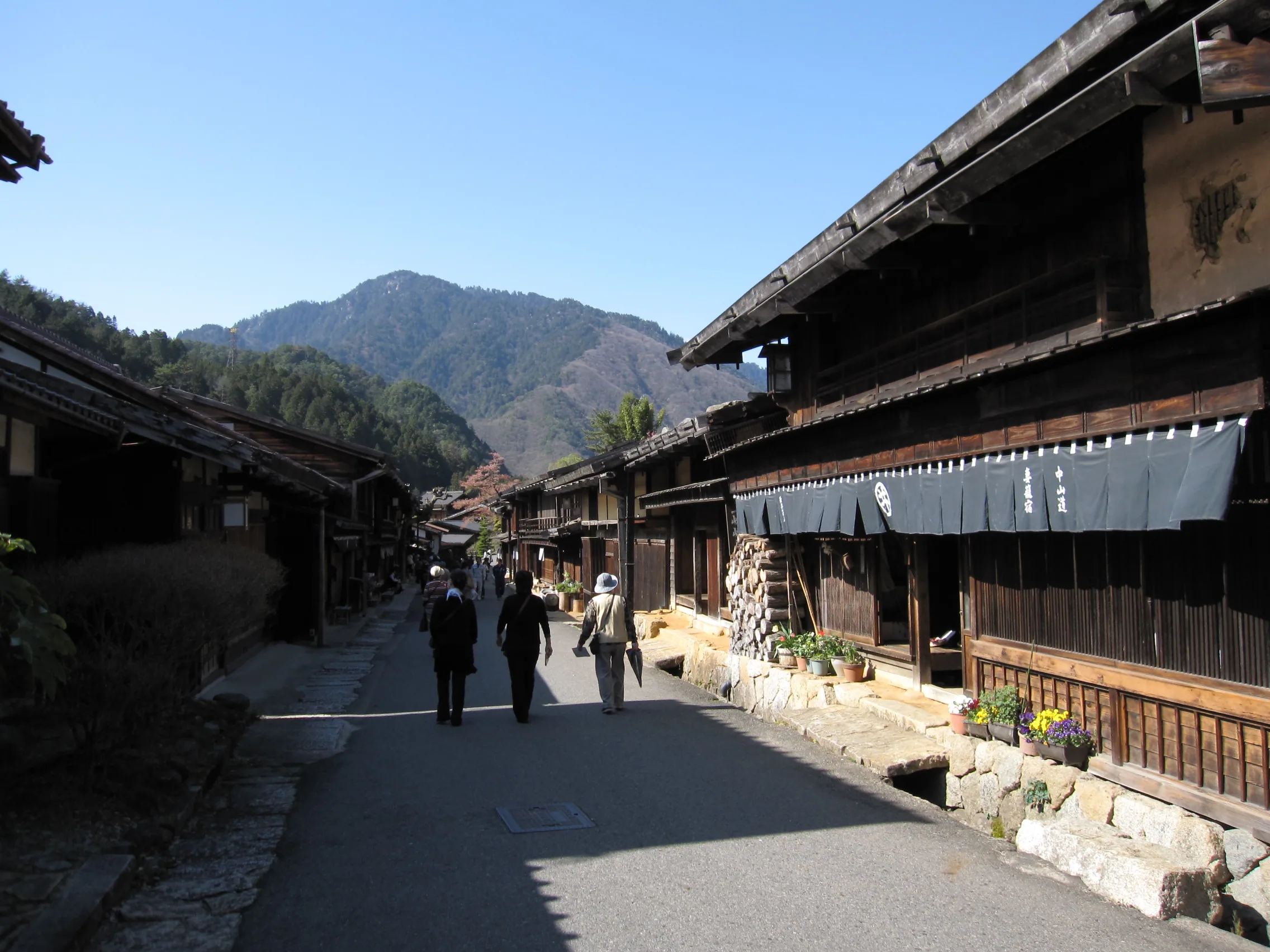
Tsumago-juku is one of Japan's most carefully maintained historic streetscapes. Designated an important preservation district in 1976, the main street bans vehicles during the day, electrical wires are buried underground, and the wooden facade of every building is regulated. The result is a post town that reads as the Edo period even to a visitor who has never seen a period print.
The honjin, the former residence where provincial governors and ranking samurai rested during their journeys, is the principal interior attraction. Admission is ¥300 for the honjin alone, or ¥700 for a combination ticket that includes the waki-honjin Okuya and the local history museum. Hours are 9:00–17:00; the building closes on Mondays. Along the main street, the preservation society operates free rest houses where visitors can sit and take tea without obligation. Shops sell kurikinton (chestnut sweets) and soba flour, both local to the Kiso valley, alongside more generic souvenir items.
Tour groups begin arriving by 10am on weekdays and throughout the morning on weekends. Arriving before 10am (possible if you set off from Magome by 7am) gives you an hour on the street before it fills.
How to get there
Getting There
- 1Take JR Shinano limited express to Nakatsugawa station
- 2Take bus from Nakatsugawa station to Magome-juku
- 1Take Tokaido Shinkansen (Nozomi or Hikari) to Nagoya
- 2Take JR Shinano limited express to Nakatsugawa station
- 3Take bus from Nakatsugawa station to Magome-juku
- 1Take JR Chuo line toward Nagoya → Nagiso station
- 2Take community bus from Nagiso station to Magome-juku
Tips
- Send your bags to Tsumago before you walk. The tourist information center in Magome-juku accepts luggage for forwarding to Tsumago-juku. Drop bags off by 11:30am; they are ready for collection from 1:00pm. Cost is ¥1,000 per item. The service runs from March 20 to November only; in winter, carry your bags or arrange your own transfer.
- Return from Tsumago to Nagiso station by bus. The journey takes about 10 minutes and costs ¥300. Multiple buses run daily; the last departure is around 17:41. Check the current timetable at the tourist information office in Tsumago, as schedules change seasonally.
- Buy the combination ticket at the honjin. ¥700 covers the honjin, waki-honjin Okuya, and local history museum: an extra ¥400 over the honjin alone, and worth it if you have an hour to spare in Tsumago.
- Avoid weekends and national holidays. The trail and Tsumago's main street are at their most crowded on weekend mornings between April and November when tour groups and day-trippers converge. Midweek visits, even in peak season, are significantly quieter.
- Trail shoes are adequate. The surface is mostly paved stone and compacted gravel. Some sections can be slippery after rain, but hiking boots are not necessary. Comfortable shoes with grip are sufficient.
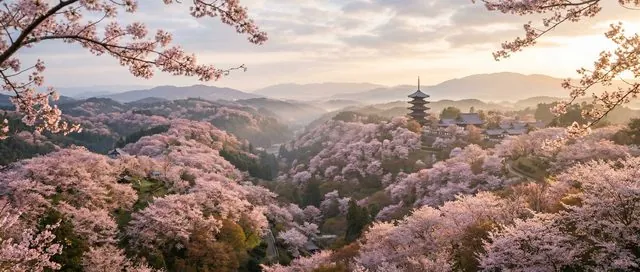
- Spring and autumn are the best seasons. Late March to early May brings cherry blossom and fresh cedar growth. October to November brings foliage colour along the trail. Both periods see the most visitors; midweek visits during either window remain far quieter than weekends.
- This 8 km is one stage of a much longer walk. The full Kiso valley traverse runs roughly 100 km over about five days, and almost everyone only ever walks the Magome to Tsumago section of it. If you want to keep going past Tsumago, David Lowe documents the complete route stage by stage in his five-day Kiso Valley walking guide, including where to sleep between the post towns.
Nearby
The Nakasendo walk pairs naturally with Nagano's other main destinations.
FAQ
How long does the Magome to Tsumago walk take?
About three hours at a comfortable pace with photo stops. The trail is 8 km with one steeper section near Magome, followed by largely flat or downhill terrain. Fast walkers finish in under two hours; plan for longer if you intend to stop at Ōtsumago or explore Tsumago-juku in any detail at the end.
Which direction is better: Magome to Tsumago or the reverse?
Magome to Tsumago is the recommended direction for most visitors. The walk is net downhill from Magome, the steeper section is tackled early, and Tsumago-juku makes a more dramatic end point. Walking the reverse (Tsumago to Magome) only makes sense if you are spending the night in Magome or have accommodation there.
Can I send my bags ahead instead of carrying them?
Yes. Drop luggage at the tourist information center in Magome-juku by 11:30am; bags are forwarded to Tsumago-juku and ready for collection from 1:00pm. The cost is ¥1,000 per item. The service operates from March 20 to November; it does not run in winter.
Is the trail open in winter?
The path itself is walkable in most winters, but the luggage-forwarding service closes from December to mid-March, some facilities reduce hours, and snow can make sections of the trail icy. Most visitors walk between April and November when all services are fully open.
Do I need to book anything in advance?
No. The trail is free and needs no reservation. The honjin in Tsumago is pay-at-the-door (¥300 adult, or ¥700 combination ticket). If you plan to stay overnight in Magome-juku or Tsumago-juku, book accommodation well in advance; rooms in both towns are limited and fill quickly on weekends in spring and autumn.