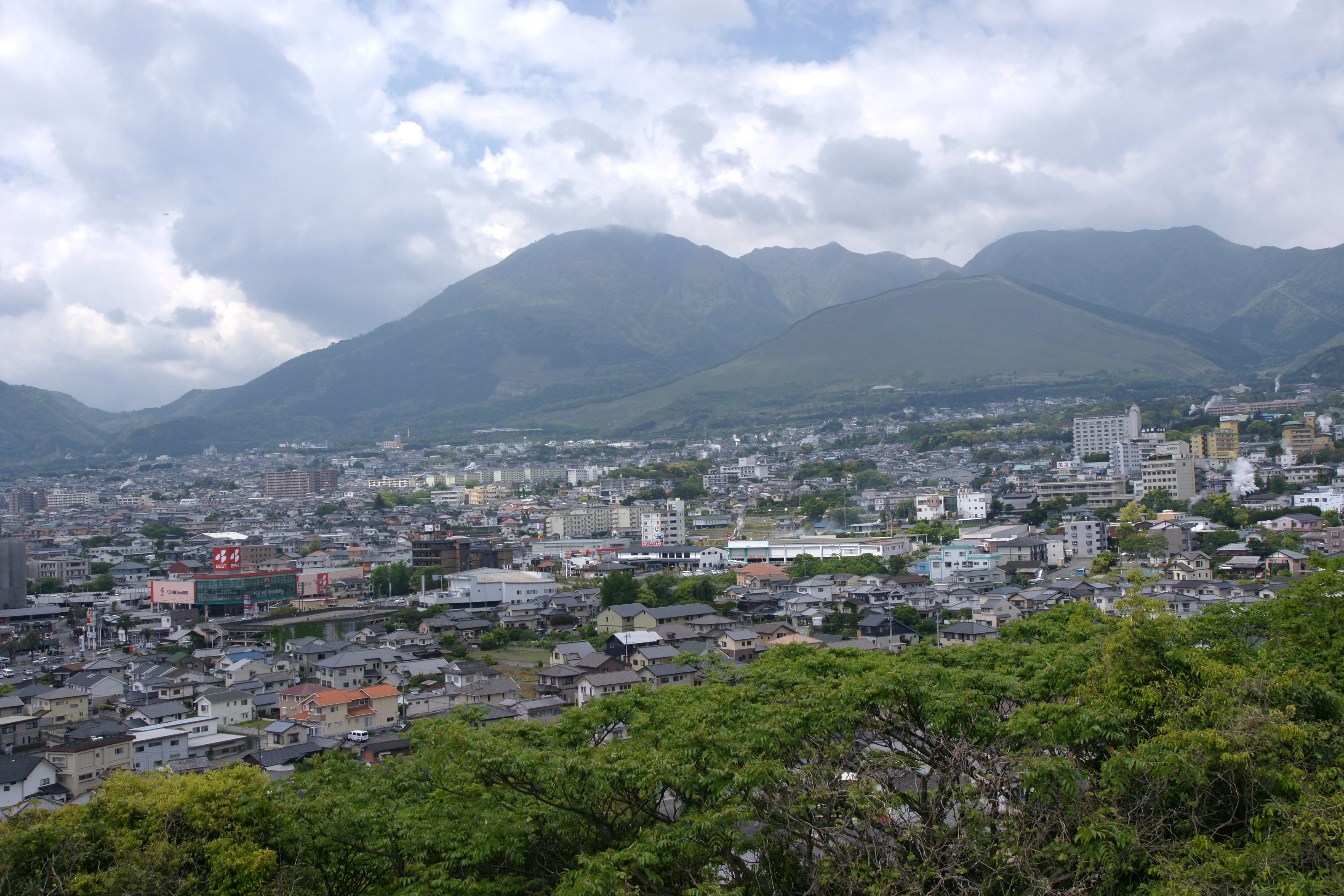

Beppu is Japan's most prolific hot-spring city, but half the visitors who arrive leave confused. The city's famous sights are its "hells" (jigoku): seven boiling geothermal pools where temperatures reach 98°C. None of them can be bathed in. The actual bathing happens elsewhere in the city, where Beppu's onsen scene spans hundreds of public baths across four distinct neighborhoods. Understanding that distinction turns a tourist detour into one of the best bathing experiences in Kyushu.
This guide is about Beppu's onsen specifically: which baths, in which neighborhood, and why, with the hells put honestly in their place. For the wider city (its sights, food, and how to get in), see the full Beppu travel guide.
First, the confusion to clear up
The Beppu Jigoku (Hells of Beppu) are geothermal springs so hot (most between 78°C and 98°C) that soaking in them would be lethal. They were historically treated as hellish wastelands, and only repurposed for tourism in the early twentieth century. Today, seven are maintained as viewing attractions in the Kannawa district, and a further two sit to the north at Shibaseki and Oniyama.
The mistake many visitors make is arriving in Beppu, queuing at the hells, and leaving, having spent the whole day looking at water rather than bathing in it. The public bath culture here is extraordinary: the city has over 2,000 registered springs, more than a hundred public bath facilities, and some of the cheapest and best-maintained community onsen in Japan. Those are the experience. The hells are the backdrop.
Knowing this upfront changes how you plan the day. The hells work well in the morning when lines are shorter; then the rest of the day belongs to the baths.
The hells, honestly
If you visit one hell, make it Umi Jigoku, the cobalt-blue pool that formed when Mount Tsurumi erupted, recorded in 859. Its vivid color comes from dissolved iron sulfate; the water reaches roughly 98°C and descends some 200 metres deep. A small museum was added to the grounds in 2022, and a free foot bath sits near the entrance. This is the most photogenic and historically significant of the circuit.
Umi Jigoku is open daily from 8:00 AM to 5:00 PM. The seven-hell combo ticket covers all the Kannawa sites but takes most of a day to complete and involves a lot of queuing at each gate. Unless you have a specific appetite for the full circuit, see one or two and move on. The queue time at each typically exceeds the time spent inside.
Beppu's bathing neighborhoods
The city splits naturally into four distinct bathing areas, each with a different water character and atmosphere. They are spread across hilly terrain (getting between them takes 20 to 40 minutes by bus), so most visitors focus on one or two neighborhoods per day rather than attempting all four in a single session.
Kannawa
Steam rises from pavement grates in Kannawa, and the streets themselves seem to exhale. This is the most atmospheric neighborhood in Beppu, sitting directly beside the hells circuit, which makes it busier than the others but worth the trade-off.
Kannawa Steam Bath is a city-run facility where you lie on a heated stone floor while natural geothermal steam rises from below. This is a mushi-yu (steam bath), not a soak: you emerge wrapped in a yukata, sweating thoroughly without entering any water. The experience lasts around ten minutes and is unlike anything in a standard onsen rotation. Open daily from 7:30 AM to 7:30 PM.
Steam bath (mushi-yu)
For a conventional soak in the same neighborhood, Hyotan Onsen is the most popular option: multiple pools, an on-site sand bath, and an open-air area, all open until midnight. Tattoos are accepted here, which is rare among Beppu's public baths. It draws an international crowd; the facilities are well maintained and the signage more navigable than the older municipal baths.
Multi-facility bathhouse
Myoban
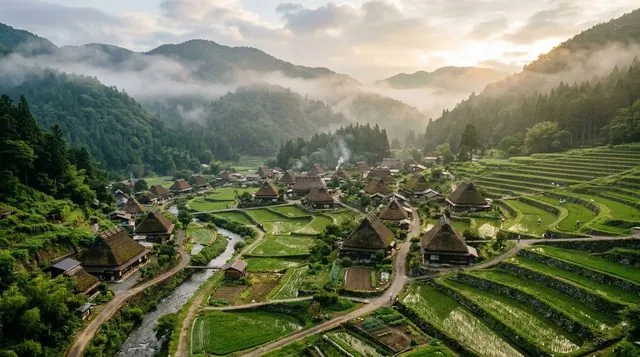
A ten-minute bus ride up into the hills beyond Kannawa brings you to Myoban, a cooler, quieter neighborhood where the water is milky-white or pale blue and the entire area carries a sulfurous mineral smell. Myoban is where yunohana (natural bath-salt crystals) have been produced for centuries, condensing from steam on the underside of traditional thatched-roof huts that still dot the hillside.
Myoban Yunosato Onsen is the main complex here, with indoor and outdoor baths using the neighborhood's signature milky water. Open 9:00 AM to 6:00 PM daily. The linked open-air facility, Myoban Onsen Yunosato Open-air, runs later hours (10:00 AM – 8:00 PM) and is well-suited to a late-afternoon visit when the light falls across the hills and the steam catches the sun.
Milky sulfur waters
Open-air outdoor bath
The shoreline
Down at the sea edge of the city, the Beppu Beach Sand Bath offers one of the more unusual bathing formats in Japan: you lie in a yukata while attendants bury you in naturally geothermally-heated black sand up to your neck. The sand sits at around 50°C; a ten-minute burial produces effects comparable to a full onsen soak in terms of circulation, and the views across the water while you are lying prone are genuinely good. Open daily from 8:00 AM to 7:00 PM.
Sand bath
Downtown
Beppu's downtown onsen scene is anchored by Takegawara Onsen, a striking wooden building dating to 1879 that still operates as a functioning public bath. The main pool charges a small entry fee; a separate sand bath is available with advance booking. This is one of the most atmospheric places to bathe in the city, busy with local regulars from early morning. Open daily from 6:30 AM to 10:30 PM.
Historic community bathhouse
A ten-minute walk away, Furosen is a city-run public bath operating in split sessions (morning and evening) that keeps it busy with locals timing their day around bath breaks. Tattoos are accepted. South of the city center, Horita Hot Spring runs the same split-session hours and serves as a reliable neighborhood bath for visitors based in the southern part of the city; the water quality draws consistent high marks despite a low tourist profile.
Municipal bath
Beyond the baths
Most day-trippers leave Beppu without climbing above the hells. Those who do discover that the city's hidden layer is considerably better than its tourist surface.
Jumonji Viewpoint sits on a plateau about three kilometres past Myoban, looking out across the full arc of the coast with Oita city to the south, the Kunisaki peninsula to the northeast, and on clear days even Shikoku visible on the horizon. It is free to visit at any hour, registered in both the Japan night-view heritage index and the 100 nationally selected night views, and the drive or bus ride up from Myoban adds only twenty minutes to a neighborhood bath visit. One of the genuinely great views in Kyushu, and almost nobody goes.
Viewpoint
Hachiman Kamado shrine, tucked into the Uchikamado district a short ride from Kannawa, rewards the detour with a dragon painted across the ceiling of the worship hall, a sacred soul-dwelling tree in the grounds, and a lucky turtle stone that visitors touch. Around the spring and autumn equinoxes, the sunrise aligns precisely with the shrine's torii gate. Open daily from 9:00 AM to 5:00 PM; the grounds feel genuinely local in a city where most of the signage points at the hells.
Shrine
Jigoku Onsen Museum, in the Kannawa district, puts the geology in context: it explains how rainwater spends approximately fifty years underground before emerging as hot-spring water, a genuinely illuminating companion piece to a day spent in the baths. Four walk-through scenes trace the subterranean journey, and the 50CAFE inside overlooks the rising steam. Open 9:00 AM to 6:00 PM daily.
Museum
Takasakiyama Natural Zoological Garden, on the mountain between Beppu and Oita, lets visitors observe wild Japanese macaques at close range without enclosures. Around 760 monkeys across two troops come down to the feeding area; staff track individual animals and their social rankings. Open daily 9:00 AM to 5:00 PM, reachable from the city in around twenty minutes by local bus.
Wild monkey park
Where to stay
Beppu has accommodation across every price point. The location decision matters more than in most cities: staying downtown keeps you close to the shoreline baths and the train connection, while Kannawa puts you within walking distance of the steam neighborhood's atmosphere, though the latter area is quieter at night.
Hoshino Resorts KAI Beppu is an upscale ryokan in the Kitahama waterfront district, part of the KAI chain known for pairing contemporary design with traditional onsen culture. Well reviewed across booking platforms; rates are considerably higher than the other options here but the on-site baths and service quality justify the price if the budget allows.
Luxury ryokan
Nogamihonkan Ryokan, also in Kitahama, offers a mid-range ryokan stay with on-site baths and a short walk to the waterfront. Consistently well reviewed for both the baths and the staff; the closest thing to a value ryokan in the center.
Mid-range ryokan
J-Hoppers Beppu Guesthouse is the pick for budget and solo travelers, with a 4.6-star average and a strong reputation for staff who can guide guests through the neighborhood bath scene. Near the waterfront and well-positioned for public transport to all four bathing districts.
Guesthouse · hostel
What to eat
Oita's signature dish is toriten: chicken tempura made in a lighter style than the karaage common in the rest of Kyushu. The batter is thinner and crisper, the dipping sauce typically a citrus ponzu rather than the thicker sauces found elsewhere. It is the dish to eat in Beppu, and it appears on menus across the city; these are the two most consistent options.
Restaurant Toyoken is the city's best-known tempura restaurant and the natural first stop for toriten, with over 4,500 Google reviews and a 4.2-star average. Mid-range pricing; open for lunch and dinner on weekdays and all-day at weekends.
Tempura
Tonkatsu Yamamoto Loin is a smaller specialist with a 4.5-star average across over 600 reviews, unusually high for a budget-to-mid restaurant. The focus is tonkatsu rather than toriten, but the quality is consistent. The restaurant closes on Sundays; weekday lunch slots fill quickly.
Tonkatsu
Getting there and around
From Fukuoka, the journey by Sonic limited express takes around two hours from Hakata. Highway buses take roughly twenty minutes longer at a lower fare and depart from multiple points across the Fukuoka area. Either option makes a day trip feasible, though the city rewards an overnight stay: the neighborhoods are spread out, and the best version of a Beppu day involves moving between at least two of them.
Getting There
From Hakata
- 1Take the Sonic limited express → Beppu
- 2Alternative: highway bus from Hakata Bus Terminal → Beppu
Getting around Beppu requires planning. The four onsen neighborhoods are not walkable from each other: Kannawa is a 20-minute bus ride from downtown, Myoban a further ten minutes beyond that, and the Jumonji plateau another ten past Myoban. The local bus network covers all these points; a one-day bus pass makes the economics of multi-neighborhood days straightforward. Taxis work well for short hops but become expensive across the longer city routes.
Yufuin, Oita's other famous onsen town, sits about an hour from Beppu by bus through the mountains, and the two make a natural two-day combination: a night in Beppu for the public bath culture and volume of options, a day in Yufuin for a quieter, more refined ryokan atmosphere. Attempting both towns on a single day trip from Fukuoka is possible but leaves neither destination properly explored.
FAQ
Can visitors with tattoos use the onsen in Beppu?
Most of Beppu's larger public bath facilities prohibit tattoos under traditional rules. Two verified exceptions in this guide are Hyotan Onsen in Kannawa and Furosen downtown, both of which explicitly accept tattooed guests. For a broader list of tattoo-friendly onsen across Japan, see the tattoo-friendly onsen guide.
What is jigoku-mushi and where can you try it?
Around the Kannawa district, several facilities use geothermal steam from natural ground vents to cook food, a practice called jigoku-mushi (hell cooking). You buy ingredients (eggs, corn, sweet potato) and steam them in a covered pot over the rising vent in just a few minutes. The Jigoku Onsen Museum and shops near the hells both offer the experience. It's a curiosity worth trying if you're already in the Kannawa neighborhood for the morning.
Is Beppu worth a day trip, or is an overnight stay necessary?
A day trip from Fukuoka is feasible (the train takes two hours each way), but it forces a choice between the hells and a single bathing neighborhood, leaving little time for either the viewpoint or a proper meal. An overnight stay opens the city up considerably: you can catch an early bath at Takegawara Onsen before the crowds arrive, spend a full afternoon across Myoban and Kannawa, and reach Jumonji Viewpoint at dusk when the light across the water is at its best.