
teamLab Planets is the Toyosu installation by digital-art collective teamLab: a body-scale immersive experience where you remove shoes and socks and physically walk through seven environment-rooms (mirror water, infinite light, hanging orchids, falling petals).
What to Expect
You queue, store shoes and socks in a free locker, then move through the rooms in your own time. The signature room, Drawing on the Water Surface, has knee-deep mirrored water with projected koi swimming around your legs that morph into flowers if you stand still. Allow 90–120 minutes inside.
Two more rooms are bucket-list-grade: the Floating Flower Garden (13,000 living orchids suspended at face height that rise as you walk through), and The Infinite Crystal Universe (a walk-in mirror room with hanging LED strips). Phones and photos are encouraged everywhere; selfie sticks are not allowed. Wear shorts or roll-up trousers, because the water is genuinely knee-deep.
How to Get There
Getting There
- 1Take JR Keiyo Line → Shin-Kiba Station
- 2Transfer to Yurikamome Line → Shin-Toyosu Station
- 3Walk to teamLab Planets → venue entrance
- 1Take JR Yamanote Line → Tokyo Station
- 2Continue via Keiyo + Yurikamome lines → Shin-Toyosu Station
Tips
- Book online, not at the door. There are no walk-in tickets, and weekend slots sell out 2-3 weeks ahead.
- Take the 09:00 slot. First arrival, smallest crowd, and you walk into the water room before it’s been churned to ripples.
- Skip the Toyosu fish auction the same morning. Auctions end 06:30; you’d be exhausted by 09:00. Pair with sushi at Toyosu Market for lunch instead.
- Stroller-friendly with caveats. Strollers are checked at the door; small children miss the orchid room ceiling but love the water room.
Consider Site of Reversible Destiny - Yoro Park Instead

- Where
- 1298-2 Takabayashi, Yoro-cho, Yoro-gun, Gifu 503-1267
- Hours
- 9:00 – 17:00 (last entry 16:30), closed Tue & Dec 29 – Jan 3
- Price
- ¥¥
- Map
- Open in Google Maps →
Visitors drawn to teamLab Planets are seeking an immersive, full-body art experience that actively disrupts ordinary perception — and the Site of Reversible Destiny in Yoro, Gifu delivers exactly that through a different medium. Shusaku Arakawa and Madeline Gins designed the park's tilted pavilions, warped terrain, and chromatic surfaces to physically disorient the body and challenge the visitor's sense of balance, producing the same kind of disorienting, memorable encounter with space that digital installations pursue. The site draws a fraction of the crowds of Toyosu, and while it requires a trip to rural Gifu via the Yoro Railway rather than a short Tokyo subway ride, it rewards the detour with an experience that is genuinely strange and difficult to find anywhere else in Japan.
- Where
- 607 Karato, Teshima, Tonosho-cho, Shozu-gun, Kagawa 761-4662
- Hours
- Monday: 10:00 AM – 5:00 PM / Tuesday: Closed / Wednesday: 10:00 AM – 5:00 PM / Thursday: 10:00 AM – 5:00 PM / Friday: 10:00 AM – 5:00 PM / Saturday: 10:00 AM – 5:00 PM / Sunday: 10:00 AM – 5:00 PM
- Price
- ¥¥¥
- Map
- Open in Google Maps →
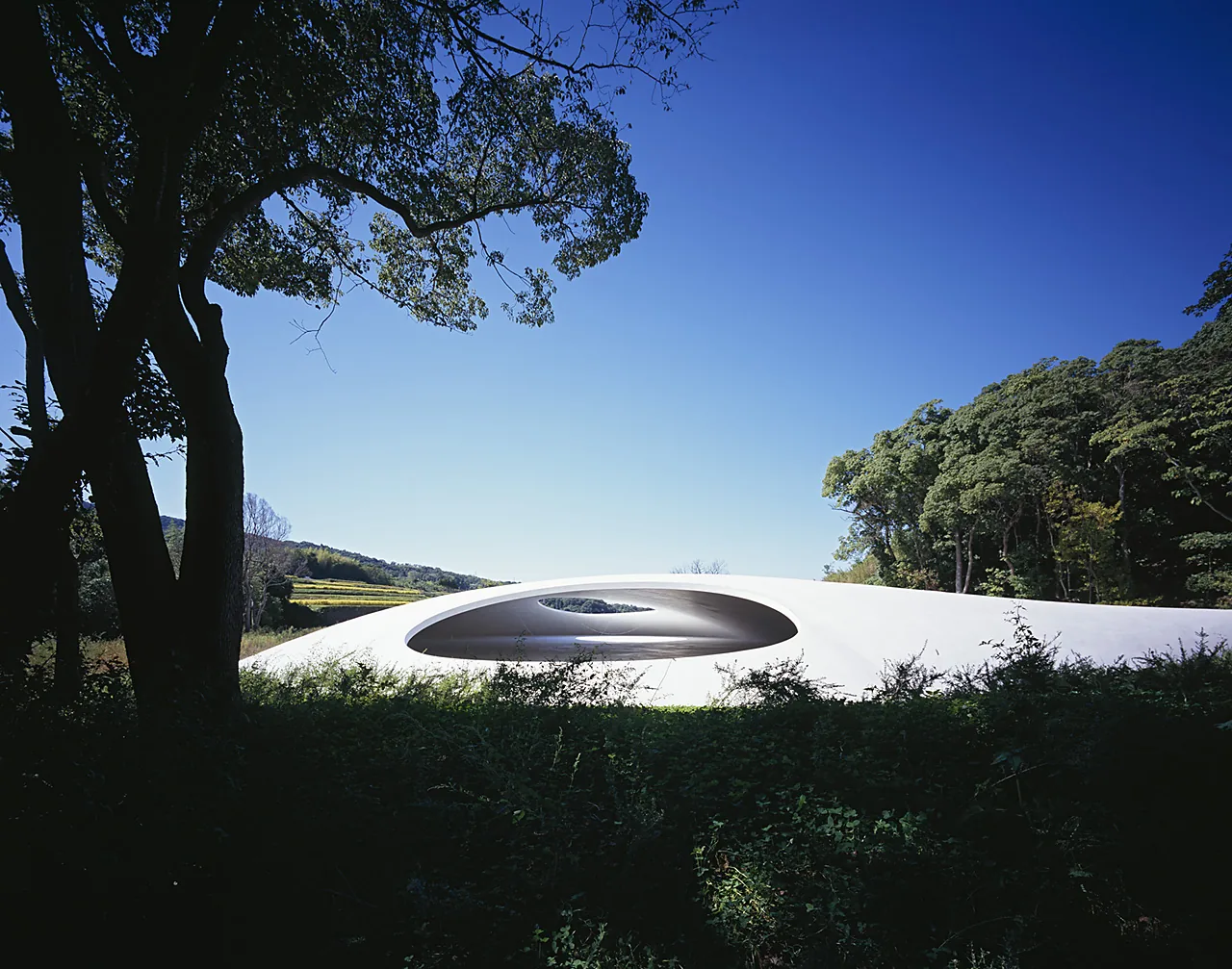
Visitors drawn to teamLab Planets are seeking an immersive, sensory art experience where the boundary between viewer and artwork dissolves — and Teshima Art Museum delivers that in a profoundly different but equally compelling form. Designed by Ryue Nishizawa with interior work by Rei Naito, the concrete shell opens to the sky and houses a living installation of water that wells from the floor and moves in response to air currents, creating a meditative encounter that absorbs the whole body and senses. The island setting on the Seto Inland Sea means a ferry crossing is required from Uno Port or Takamatsu, making this a half-day or full-day excursion rather than a city stop, but visitor numbers are strictly capped by timed entry and the atmosphere is consistently calm.

- Where
- 3449-1 Naoshima, Kagawa-gun, Kagawa 761-3110
- Hours
- Monday: Closed / Tuesday: 10:00 AM – 5:00 PM / Wednesday: 10:00 AM – 5:00 PM / Thursday: 10:00 AM – 5:00 PM / Friday: 10:00 AM – 5:00 PM / Saturday: 10:00 AM – 5:00 PM / Sunday: 10:00 AM – 5:00 PM
- Price
- ¥¥¥
- Map
- Open in Google Maps →
Visitors drawn to teamLab Planets are seeking an art environment that dissolves the boundary between viewer and work — spaces where light, form, and perception become the subject. Chichu Art Museum on Naoshima delivers that experience through a different but equally serious lens: Tadao Ando's underground concrete building is designed so that natural light transforms the permanent works of Monet, Turrell, and De Maria throughout the day, making the act of looking itself the event. Visitor numbers are capped by timed entry, the island setting keeps crowds thin, and the quality of the encounter — unhurried, physically immersive, architecturally considered — is consistently high, though the journey from Tokyo requires a half-day of travel via Okayama.
FAQ
teamLab Planets vs teamLab Borderless: which one?
Planets (Toyosu) is body-scale, barefoot, water rooms: the most physical and most Instagram-famous. Borderless (Azabudai Hills, 2024) is a maze of projection rooms, no water, more conceptual art. If you can only do one, Planets first.
How far in advance should I book?
Weekends and school holidays: 2-3 weeks ahead. Weekdays in shoulder seasons (January, June): often available 2-3 days ahead. Sunset slots always sell out fastest.
Is it OK with kids?
Yes. Kids love the water room and crystal universe. The orchid room hangs at adult face height; small children walk under without seeing them. Strollers checked at entry.