
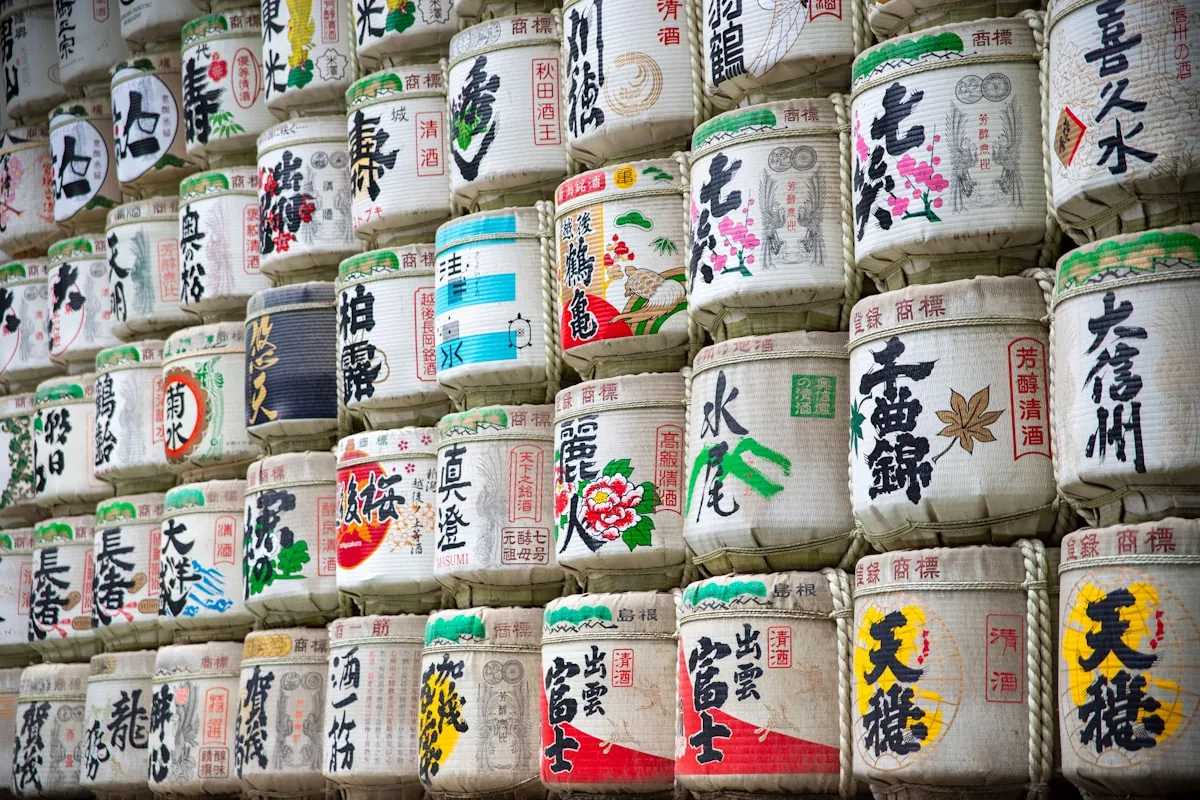

Omakase (お任せ) translates literally as “I leave it up to you”. At a Tokyo sushi counter it means there is no menu. You sit down across from the chef, you eat what he chooses for you, and the price was decided when you booked. Two to three hours, fifteen to twenty pieces of nigiri, no decisions to make at the counter beyond the pace at which you eat. The tradition is older than the modern restaurant industry — it goes back to the 1820s when Edomae sushi was street food and the chef behind the cart decided what to hand you next based on what came off the boat that morning. Two hundred years later the cart became a counter and the price went up. The trust-the-chef principle didn’t change.
Below: six omakase counters across the Tokyo price spectrum, from the ¥3,000 lunch entry tier to the ¥40,000 closed-list 3-Michelin tables. Plus the practical guide to actually eating one — how to sit, how to drink, how to behave between courses, and the rules nobody tells you on day one. The wider Tokyo sushi context (standing-bar sushi, the Tsukiji Outer Market morning shops, conveyor-belt sushi) is in our Best Sushi in Tokyo guide; this article is the omakase-only deep-dive.
What omakase actually means at a Tokyo counter
Three things define a genuine sushi-omakase versus a regular sushi meal:
- No menu. You don’t order. The chef plates each piece in front of you, one at a time, across two hours. You eat each piece within thirty seconds of it arriving (the rice cools, the wasabi soaks through, the chef notices).
- The order is the meal. Omakase starts with lighter white-flesh fish (tai, hirame), moves through medium-rich (shima-aji, kohada), into the rich and fatty (toro, uni, anago), ends with a soup and a piece of tamagoyaki egg. Asking the chef to skip ahead or repeat a piece breaks the sequence.
- The price was decided at booking. Most omakase counters quote a single price for the whole sitting (¥10,000, ¥20,000, ¥40,000 depending on tier) which covers all the pieces plus the soup. Drinks are usually extra. There’s no menu, so there’s no surprise on the bill — you walked in knowing what you’d spend.
What omakase is not: a tasting menu where you order from a list of three options. That’s a kaiseki or a Western-style tasting course, not an omakase. The defining quality of true omakase is total deferral to the chef.
1. Sushi Saito: the 3-Michelin closed-list omakase
 ★ Author's Pick
Sushi Saito (鮨 さいとう)
Eight counter seats. No longer accepts public reservations; bookings only via existing patrons or top-tier hotel concierge (Aman, Mandarin Oriental). ¥40,000+ dinner, ~20 pieces over 2.5 hours.
Ark Hills South Tower 1F, 1-4-5 Roppongi, Minato-ku, Roppongi-itchome Stn 4 min walkView on Google Maps →Sushi Saito on Tabelog → 4.81★
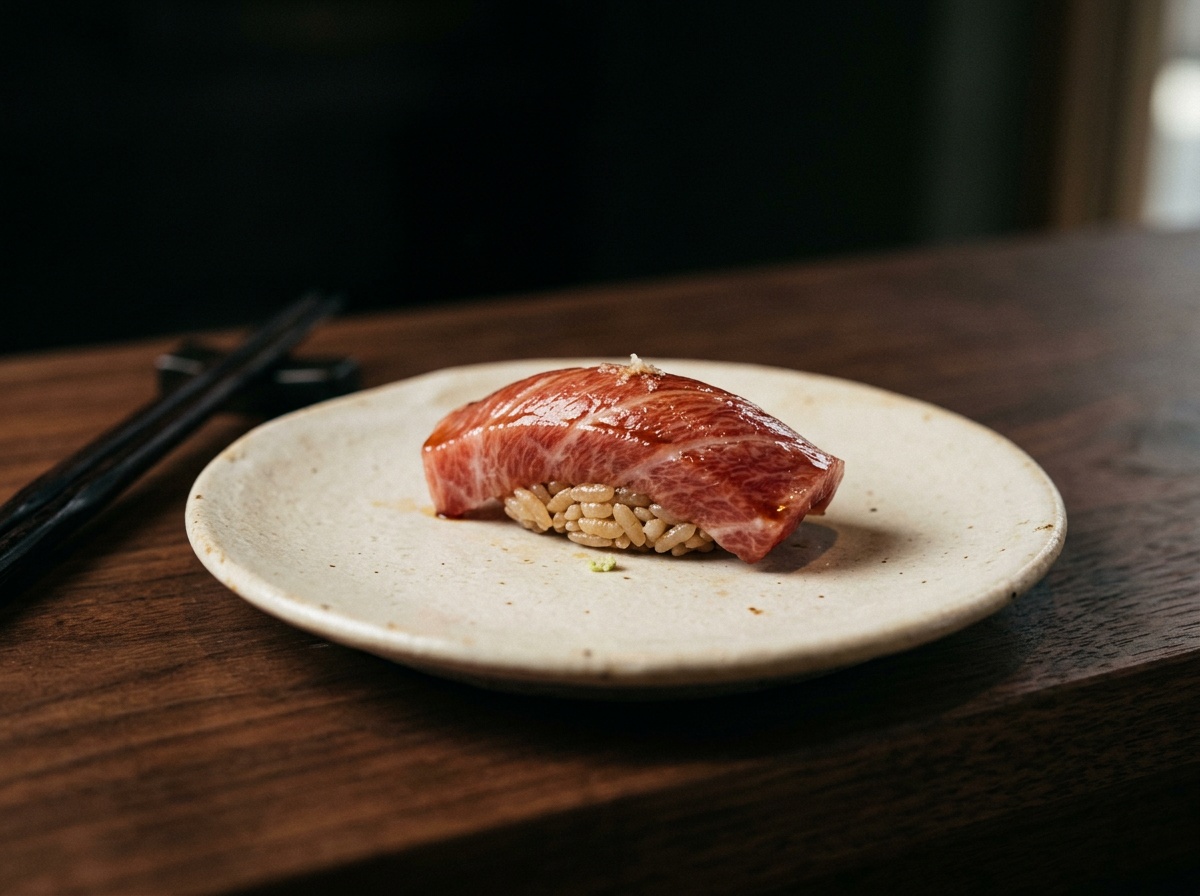
Sushi Saito is the omakase counter most international food critics rank as the best in Tokyo, and the booking nightmare that defines what “closed-list” means in the Tokyo high-end. Chef Takashi Saito trained at Kyubey in Ginza (covered below), opened his own counter in 2007, earned three Michelin stars by 2010 and has held them since. Eight counter seats in an Ark Hills South Tower basement. The omakase runs about 20 pieces over two and a half hours; the chef cooks every piece personally.
You almost certainly can’t book it. Sushi Saito stopped accepting public reservations in 2018. Today the bookings flow only through existing regulars or the concierge desks of Aman Tokyo, Mandarin Oriental, the Ritz-Carlton, and a handful of other top-tier hotels — and even those bookings now require existing relationships with the restaurant. If you’re staying at one of those hotels for a special occasion and the concierge can get you a seat, the experience justifies the price. If not, the next entries on this list are the realistic options. Include Saito in the article for completeness; don’t plan a trip around it.
2. Sushi Yoshitake: the bookable Ginza counter (2 Michelin, was 3)
 ★ Author's Pick
Sushi Yoshitake (鮨 よしたけ)
Seven-seat counter in Ginza. Two Michelin stars (was three). Reservations 1-2 months ahead via hotel concierge or the restaurant directly. Dinner ~¥40,000. Closed Sundays + Japanese holidays.
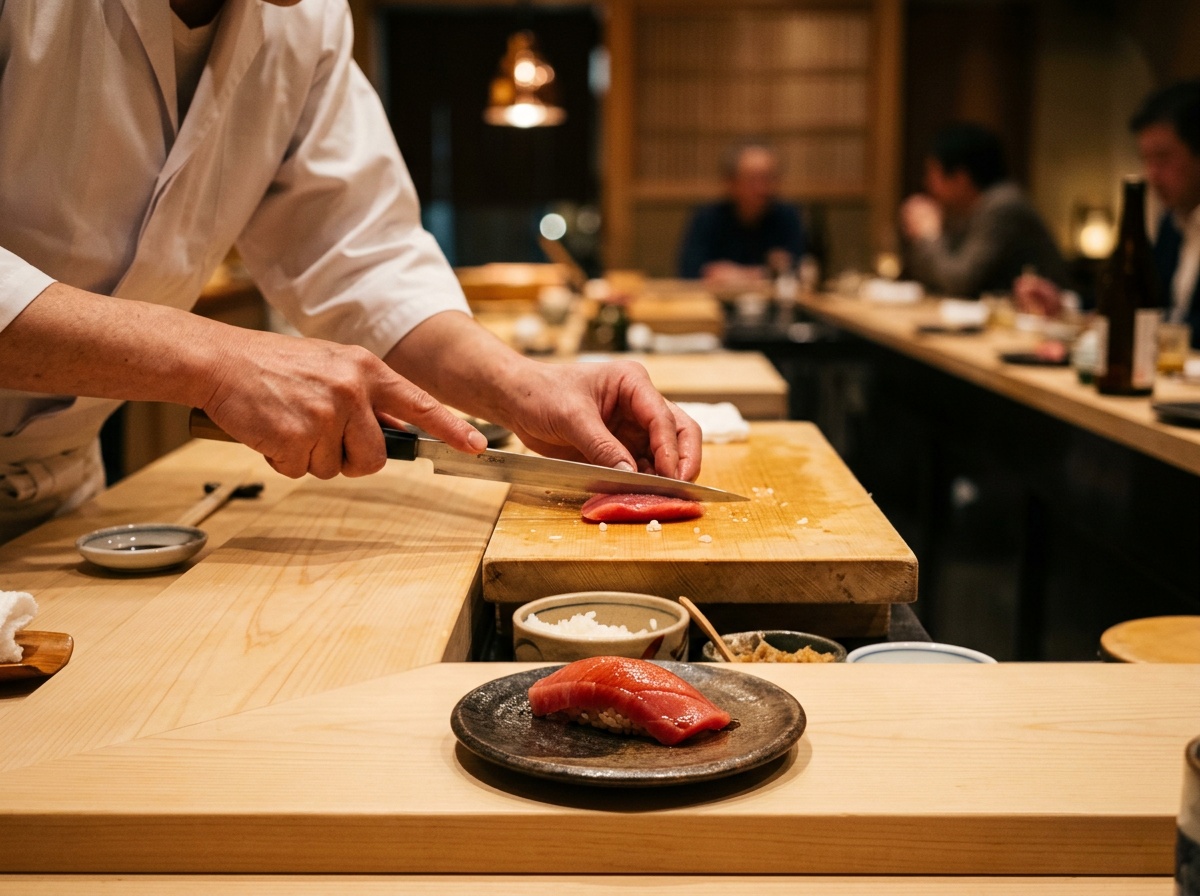
Brown Place 9F, 7-8-13 Ginza, Chuo-ku, Shimbashi Stn 5 min walk (Ginza Stn ~8 min)View on Google Maps →Sushi Yoshitake is the Ginza sushi counter most often recommended as the bookable answer to Saito-tier dining. Chef Masahiro Yoshitake held three Michelin stars consecutively from 2010 through the 2023 Tokyo Guide, then was demoted to two stars in the 2024 edition (Sushi Harutaka, also in Ginza, took the 3-star position in that same guide). The food itself hasn’t visibly changed — same Edomae tradition, same single-chef plating, same daily Toyosu sourcing. The room: seven counter seats on Brown Place 9F in Ginza. Omakase runs around 18 pieces over two hours.
Reservations 1–2 months ahead via hotel concierge or the restaurant directly (the website takes email reservations during certain windows). Dinner ¥40,000. The chef speaks limited English but the senior staff translate when needed. The 2-star designation in the current guide hasn’t lowered the kitchen’s actual technique — if you’re booking one high-end Tokyo sushi dinner on the trip and you’re not at the Aman with concierge access to Saito, this is still the answer.
3. Sushi Kyubey: the Ginza institution since 1935
 ★ Author's Pick
Sushi Kyubey (久兵衛)
Founded 1935. Multiple branches across Ginza/Tokyo + inside major hotels. Less mythical than Saito, easier to book, omakase courses from ¥10,000 lunch / ¥25,000 dinner. The classical entry to high-end Tokyo sushi omakase.
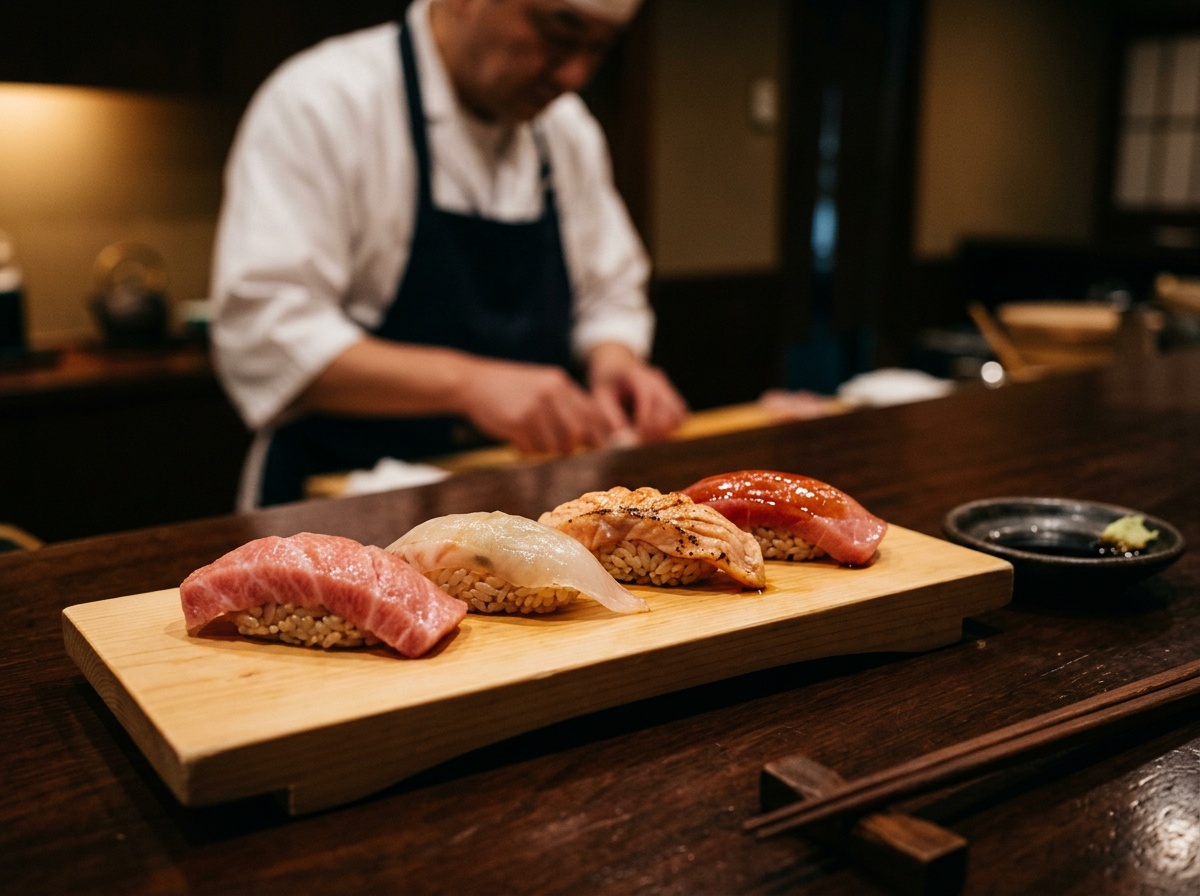
8-7-6 Ginza, Chuo-ku, Ginza Stn 4 min walkView on Google Maps →Sushi Kyubey is the Ginza institution that trained the chefs who now run the Michelin-starred counters. Founded in 1935 by the Imada family, the shop has produced multiple generations of Tokyo’s top sushi chefs — including the founder of Sushi Saito. The omakase is unfussy classical Edomae, served by chefs who have apprenticed for 10–15 years under the master, with the same fish sourcing and the same techniques. Lunch from ¥10,000, dinner ¥25,000.
The reason Kyubey matters for omakase travellers: it’s the most bookable of the high-end Tokyo sushi counters. Multiple branches across Ginza + inside the Imperial Hotel, the Mandarin Oriental, and the Ritz-Carlton mean the concierge can almost always find a seat within a week. The omakase quality is genuinely at the same level as the Michelin houses; what Kyubey lacks is the “single chef cooking everything himself” magic of a Saito or Yoshitake. For most travellers that’s a fair trade for being able to book.
4. Sushi Itsumi: the accessible 1-Michelin omakase
Sushi Itsumi (すし いつ見)
Sub-restaurant of a famed Ginza sushi house, run by a former apprentice of the parent shop. One minute from Akasaka-mitsuke Station. Lunch ¥10,000-12,000, dinner ¥20,000-25,000. Reservations 2-3 weeks ahead.
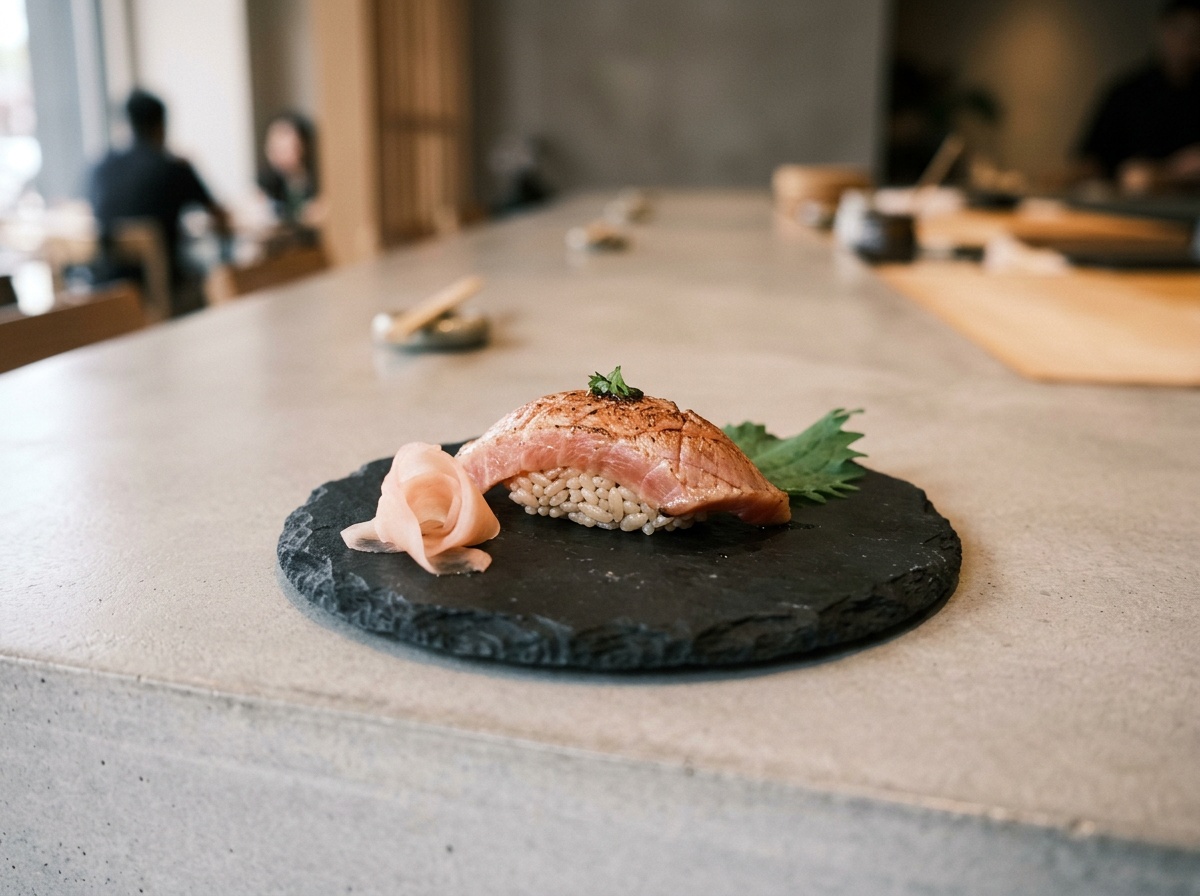
Akasaka, Minato-ku, Akasaka-mitsuke Stn 1 min walkView on Google Maps →Sushi Itsumi is the omakase counter that proves the 1-Michelin tier is genuinely accessible. The chef trained at the parent Ginza branch (a famous old-school sushi house) before opening this Akasaka sub-restaurant. The omakase follows the same Edomae playbook — sourcing from Toyosu morning, single-piece technique, ten to fifteen courses across 90 minutes — at half the price of the parent branch’s dinner. Lunch ¥10,000–¥12,000; dinner ¥20,000–¥25,000.
The reservation barrier is lower too: 2–3 weeks ahead via phone or concierge, and the website increasingly accepts email reservations in English. One minute from Akasaka-mitsuke Station puts you on the Marunouchi or Ginza line for easy onward transit. The pick for first-time Tokyo omakase travellers who want the Michelin tier without the 3-month lead time or the ¥40,000 sticker.
5. Harezushi: the modern Tabelog-Bronze counter
Harezushi (鮨 はれず)
Tabelog Bronze omakase house in Ginza area. Sourcing from Toyosu morning auctions. Lunch ~¥6,000 (cheapest serious omakase in central Tokyo); dinner ¥20,000. Reservations a few days ahead are usually enough.
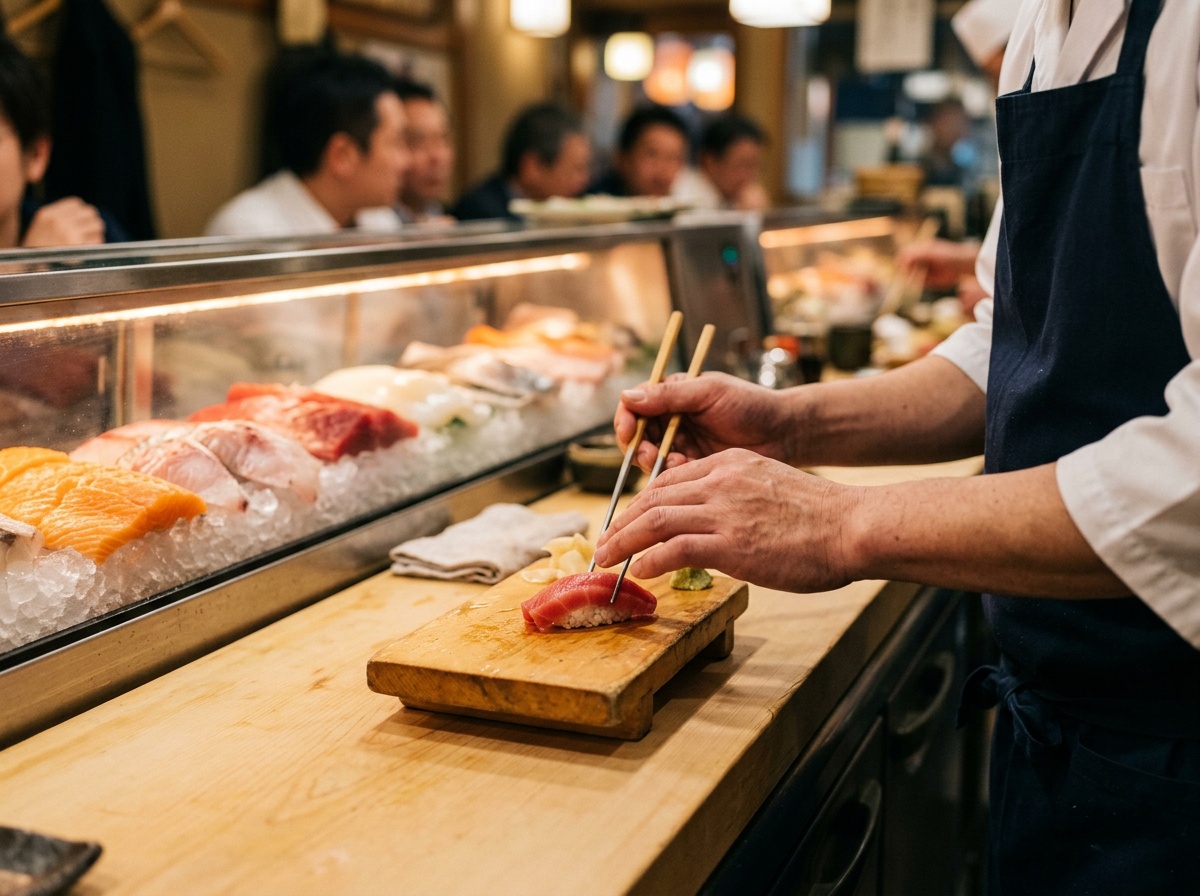
Ginza area, Chuo-ku, Ginza Stn 6 min walkView on Google Maps →Harezushi is the modern entry tier. The shop opened with a younger-generation chef applying the same Edomae principles as Kyubey or the Michelin houses, but at half the price and with a more relaxed atmosphere. Tabelog Bronze rating (the second tier below Gold), Ginza-area location, lunch course around ¥6,000 — the cheapest serious omakase in central Tokyo. Dinner is ¥20,000, comparable to Itsumi but at a slightly less rigorous level.
The bookability advantage is significant: 2–3 days ahead is usually enough, sometimes you can walk up for lunch on a quiet weekday. If your trip’s budget can’t justify the Michelin-tier price tag and you still want a real omakase counter experience, this is the answer. Not the best omakase in Tokyo. Genuinely good omakase at half the price.
6. The lunch tier: every omakase house at half the price
The most-under-used Tokyo sushi omakase strategy is: book lunch instead of dinner. Every counter on this list (and most others in the city) runs a lunch omakase course at 40–60% of the dinner price — same chef, same fish, fewer pieces (10–14 instead of 18–20), shorter sitting (90 minutes instead of 2.5 hours), but the technique and the quality are identical. For Tempura Kondo lunch is ¥10,000 vs dinner ¥18,000; for Sushi Kyubey lunch is ¥10,000 vs dinner ¥25,000; for Sushi Yoshitake lunch is ¥20,000 vs dinner ¥40,000.
For travellers on a tighter budget the strategy stacks: book the Tier 3 / Tier 4 omakase at lunch and you’re eating Tabelog Bronze omakase for ¥6,000 per person — cheaper than a hotel buffet dinner in Amsterdam or Frankfurt. The omakase lunch on the day-of-arrival is the Tokyo equivalent of the Schiphol-lounge dinner you didn’t buy.
How to eat an omakase
- Sit down, say nothing, listen. The chef will greet you (the standard is “Irasshaimase”), pour you green tea, and either ask if there’s anything you don’t eat or just start cooking. Tell the chef the things you don’t eat in the first thirty seconds (uni, anago, raw shrimp are common skips). Otherwise eat what arrives.
- Eat each piece within thirty seconds. Nigiri rice cools and falls apart quickly; the chef plates each piece at the optimal temperature. After thirty seconds the rice is wrong, the wasabi has soaked through, and the chef will notice. Eat. Now.
- Fingers, not chopsticks. Nigiri was finger food. Pinch from the side, dip the FISH in soy (never the rice — rice-side soy is mushy and falls apart), one bite. Chopsticks are accepted but unusual. Pick your dignity.
- Don’t drown it in soy. The chef has already applied the right amount of soy to each piece (you’ll see him brush it on as he plates). The soy at the table is for the few pieces that need a touch more. Bathe a piece of Saito’s nigiri in soy and you’re saying you don’t trust the chef.
- Wasabi’s already there. Between the fish and the rice. Adding more on top tells the chef “less wasabi next time”. Probably not what you wanted.
- Drink: beer first, then sake (warm or chilled). Cold beer is the standard opener — it cuts through the rice and the umami. Switch to sake after the third piece (warm or cold; the chef will recommend the pairing if you ask). Wine pairings exist at modern shops but are unusual at classical Edomae counters.
- Talk less than you would at a Western restaurant. Omakase counters are quieter than Tokyo izakayas. Light conversation between courses is fine; loud conversation breaks the room’s register. Phones at the counter are universally frowned upon — check your messages between courses, not during.
- The chef will ask if you want one more. Around piece 15–17 the chef will ask if you’d like an additional piece. You can say yes (each piece is ¥1,000–¥3,000 a la carte) or no — the conventional answer is “one more, the chef’s choice” and you’ll typically get something seasonal or special. The omakase ends with a soup and a piece of tamagoyaki egg.
- No tipping. Bow at the door. Service is included. The chef just personally cooked twenty pieces of food for you; the bill is the thank-you. A small bow at the door on departure carries more weight than an extra ¥1,000 tip would.
- Flight note. Schedule the omakase for day three or four of the trip — over the worst jetlag, your palate is sharp, and you can actually distinguish 20 small variations of nigiri without zoning out. On day one your taste is too exhausted to fairly judge a ¥25,000 omakase. KLM Schiphol–Haneda and Lufthansa Frankfurt–Haneda both land mid-morning, giving you 4–5 days of adjusted-palate eating before the return.
Related reading
- Best Sushi in Tokyo — the wider sushi context: standing-bar, conveyor, morning-market.
- Michelin Star Restaurants in Tokyo — the broader Michelin scene across cuisines.
- Best Yakitori in Tokyo — the yakitori-omakase parallel (chicken counter, same trust-the-chef tradition).
- Where to Eat in Tokyo — the hub food guide.
- Japanese Food — interest hub with all our food articles.