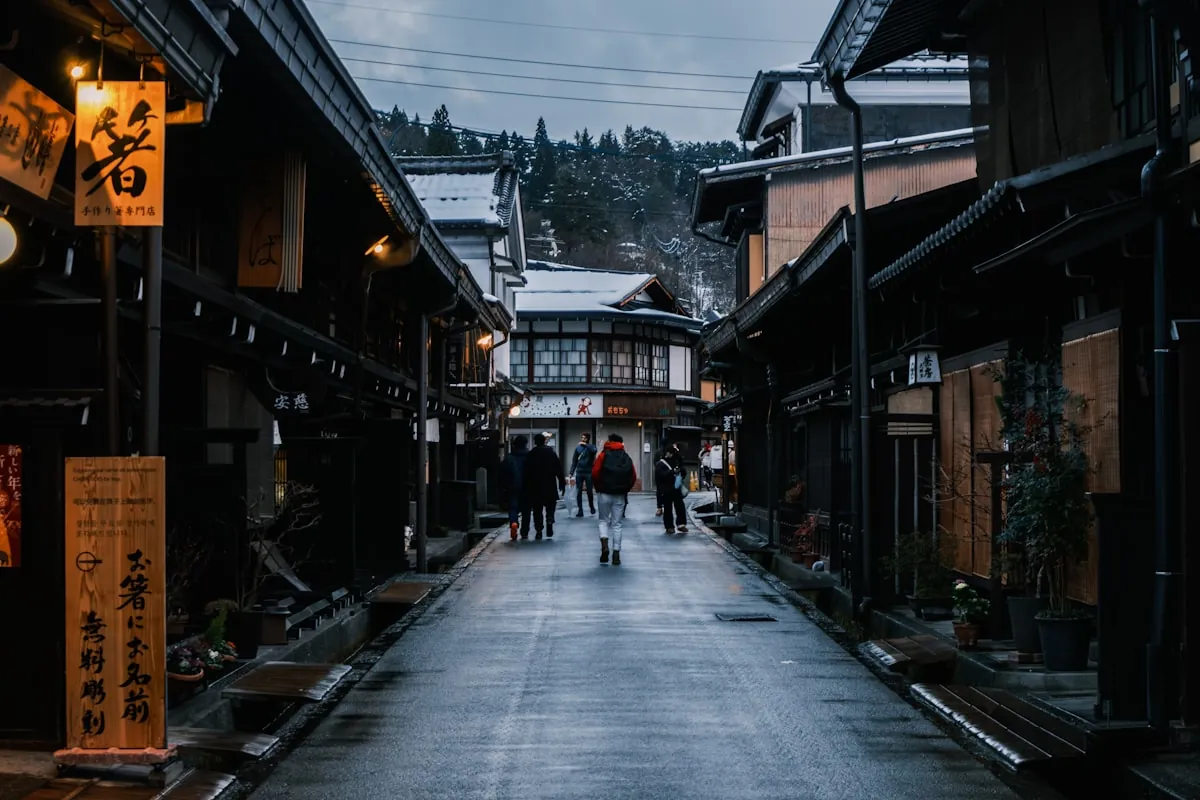

Hokkaido in winter is Japan at its most elemental: temperatures that make the air feel crystalline, powder snow that falls in depths the rest of Japan never sees, and a network of geothermal hot springs that feel most alive when the mercury drops. The ski resorts and the Sapporo Snow Festival draw the crowds, but there is a different case to be made for Hokkaido in winter, and it belongs to non-skiers, onsen seekers, and anyone willing to travel in December rather than February.
Why winter is a legitimate reason to visit Hokkaido
Most Japan winter trips default to Tokyo or Kyoto for illuminations and Kyushu for mild temperatures. Hokkaido pulls the other way, and that is the point: Sapporo averages -4°C in January, cold but not extreme, and the cold is the gateway to everything that makes the island worthwhile in winter. Its dry, light powder snow transforms Otaru's canal district, Hakodate's morning market and the forests around Jozankei, and an outdoor onsen in falling snow is the experience the climate was made for.
- -4°CSapporo average in JanuaryFamiliar to anyone from northern Europe or Canada
- 20–31 JanShiretoko drift ice window opensThe strongest single reason to come in late January
- 2 millionSnow Festival visitors in early FebruaryDecember has the same atmosphere at normal prices
Who it works for:
- Non-skiers after a cold-weather Japan with lower crowds.
- Onsen travellers who want maximum thermal contrast.
- Photographers chasing Biei's Blue Pond and Shiretoko's drift ice coast.
- Budget-minded travellers who saw February festival prices and chose December instead.
When to go: the winter calendar
The timing of a Hokkaido winter trip changes what is possible. Here is how the four months compare at a glance.
December
How busyQuiet No major events; normal accommodation prices; full winter atmosphere already established
Weather-2 to -8° · Snow
January
How busyQuiet Late January (around 20–31 Jan): Shiretoko drift ice window opens
Weather-4° · Snow
February
How busyPeak Snow Festival first two weeks (around 2 million visitors); ski season peaks late February
WeatherSnow
March
How busyModerate Ski season winds down; melt begins; least compelling winter window
WeatherThaw begins
The timing matters more in Hokkaido than in most of Japan: a few weeks off means missing the drift ice entirely, or paying Snow Festival prices without the festival.
- December: the best-value window. Reliable snow in Sapporo from late November, -2°C to -8°C, daylight until around 4pm, normal accommodation prices, and Otaru's canal district at a fraction of February's visitors.
- Late January (around 20–31 January): the Shiretoko drift ice window, with the rest of the island in full winter and no Snow Festival crowds yet.
- Early February (typically the first two weeks): Sapporo Snow Festival, seven days, around 2 million visitors. Prices triple or quadruple and rooms book out six months ahead.
- Late February to March: peak skiing at Niseko and Furano. March brings the melt, the least attractive window unless skiing is the goal.
Sapporo in winter
Sapporo is the hub of any Hokkaido winter trip. New Chitose Airport connects directly to Tokyo, Osaka and international routes, Otaru is 45 minutes away by rapid train, and Hakodate or Asahikawa are a half-day's journey.
- Snow Festival venues: the international snow sculpture competition in Odori park, the ice sculptures in Susukino. Both free.
- Festival beds: book six months ahead, or base yourself in Otaru and commute in.
- Outside the festival: Susukino's ramen shops, the historic beer hall, and two city onsen worth the walk in -8°C.
Kitano Tamayura Soen: a public onsen in Chuo Ward, close to the city centre and reachable without a car, with multiple bath types and a calm, local atmosphere rather than a resort feel.
Public bathhouse
Shinrin park spa KIYORA: a larger spa in Atsubetsu Ward, on Sapporo's eastern edge. Its outdoor baths suit winter, and it is tattoo-friendly, which most Japanese public baths are not.
Day spa and onsen
Otaru: the winter canal town
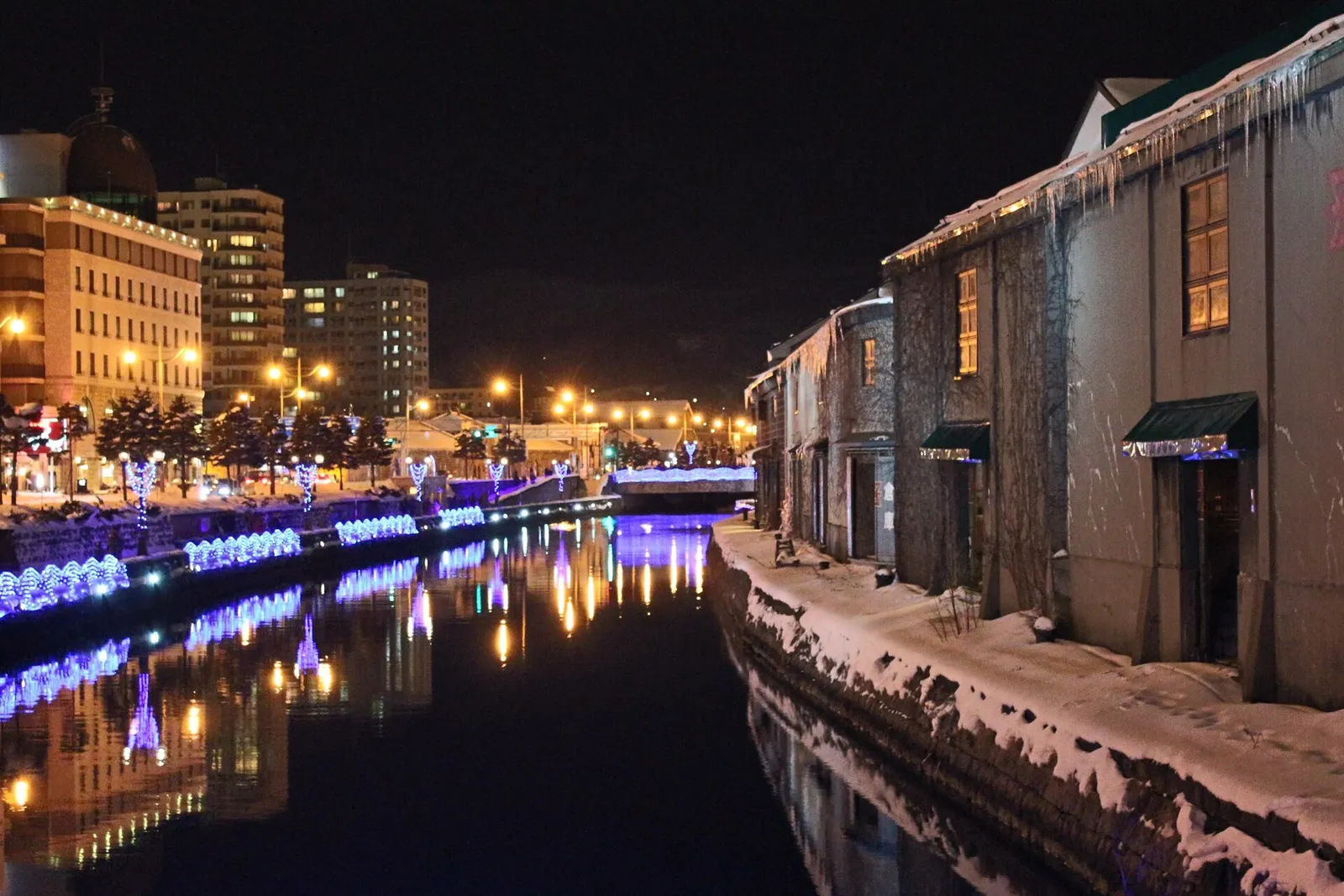
Otaru, 45 minutes from Sapporo by JR rapid train, improves with snow: gas lanterns and nineteenth-century stone warehouses along the canal, snow on the lamp posts, ice at the water's edge, and a fraction of the summer and autumn crowds. Sakaimachi street, parallel to the canal, sells glass and music boxes; fewer shops open in winter, and some glass studios let you watch the craft up close.
For a base, Dormy Inn Premium Otaru Natural Hot Spring sits near Otaru Station with a rooftop natural hot spring: the practical choice for one or two nights.
Hotel with natural hot spring
Hakodate in winter
Hakodate sits at Hokkaido's southern tip, roughly three hours from Sapporo by limited express and reachable from Honshu by Hokkaido Shinkansen through the Seikan tunnel.
- Morning market: open from 5am most mornings, busiest before 9am. Crab, squid and sea urchin straight off the boats; 7am on a sub-zero January morning is the moment to go.
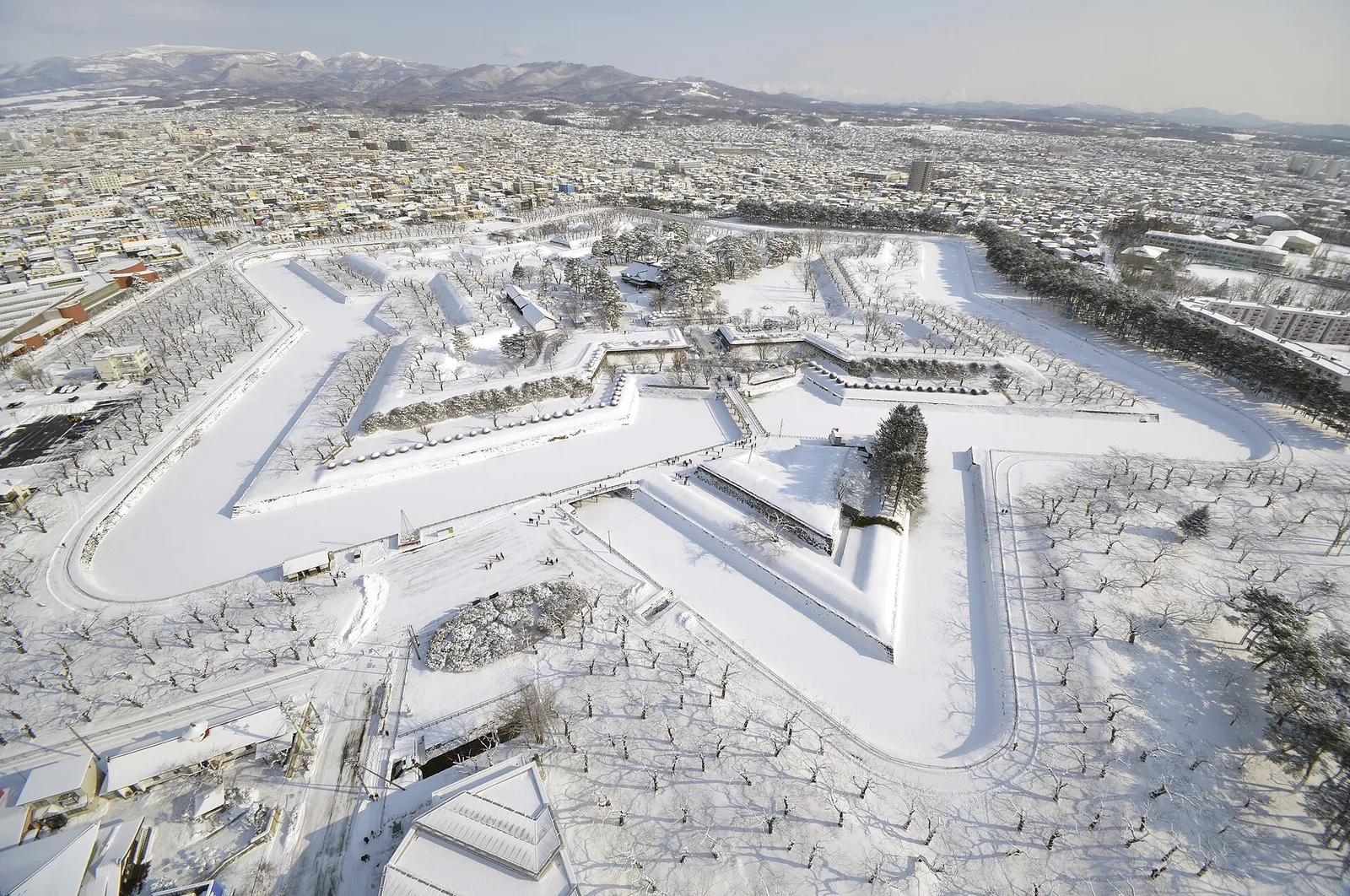
- Goryokaku: the star-shaped fortress from the 1860s turns into a flat expanse of white, and the observation tower makes the star legible.
- Onsen: the thermal district centres on the Yunokawa coastal strip, east of the city.
Yachigashira Hot Spring: Hakodate's best-known public bathhouse, with several pool types and low entry prices, in a local neighbourhood rather than the Yunokawa resort strip.
Public bathhouse
Yunokawa Onsen EMI HAKODATEYA: a ryokan-style hotel with indoor and outdoor baths on the Yunokawa spring, high in sodium chloride and good at warming you through in the cold.
Onsen ryokan
Hakodate Tropical Botanical Garden: its macaques bathe in the outdoor hot spring pools, most reliably in December and January. The garden stays open all winter for it, and entry is inexpensive.
Botanical garden with hot spring
Shiretoko Peninsula: drift ice in late January
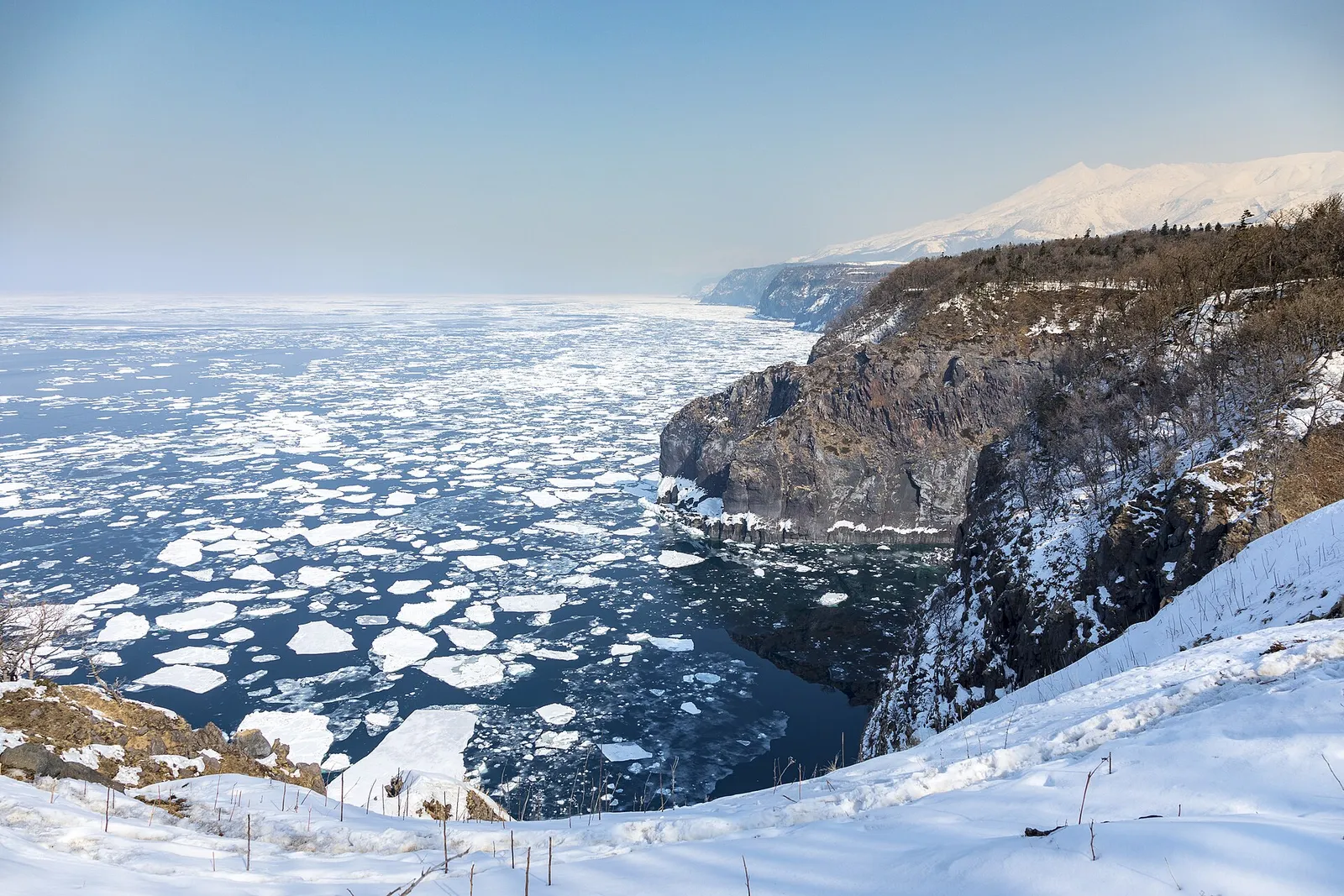
Shiretoko, UNESCO World Heritage territory at the island's northeastern tip, receives drift ice from the Sea of Okhotsk between approximately 20 January and mid-February: the southernmost drift ice in the northern hemisphere, and nowhere else at this latitude can you walk on sea ice.
- 20 Jan–mid-FebDrift ice seasonDepends on ice conditions each year
- 5 hoursSapporo to AbashiriJR limited express
- 2 daysMinimum on the peninsulaOne for the ice, one as a weather buffer
- Aurora icebreaker cruises: through the drift ice by ship when conditions allow, from the Abashiri area, about an hour from the Shiretoko coast.
- Guided ice walks: onto the coastal ice with safety equipment and instruction, departing from Utoro.
- Getting there: JR limited express from Sapporo to Abashiri, about 5 hours (or change at Kushiro), then local bus or taxi to Utoro on the western coast. Not a day trip.
- Book ahead, allow 2 days: both experiences need advance booking and depend on ice and weather, and road access to the interior closes in winter.
The Hokkaido onsen route
Hokkaido has a higher concentration of geologically diverse hot springs than any other prefecture in Japan, each with its own minerals, temperatures and outdoor baths. A winter route built around them works as well as one built around cities.
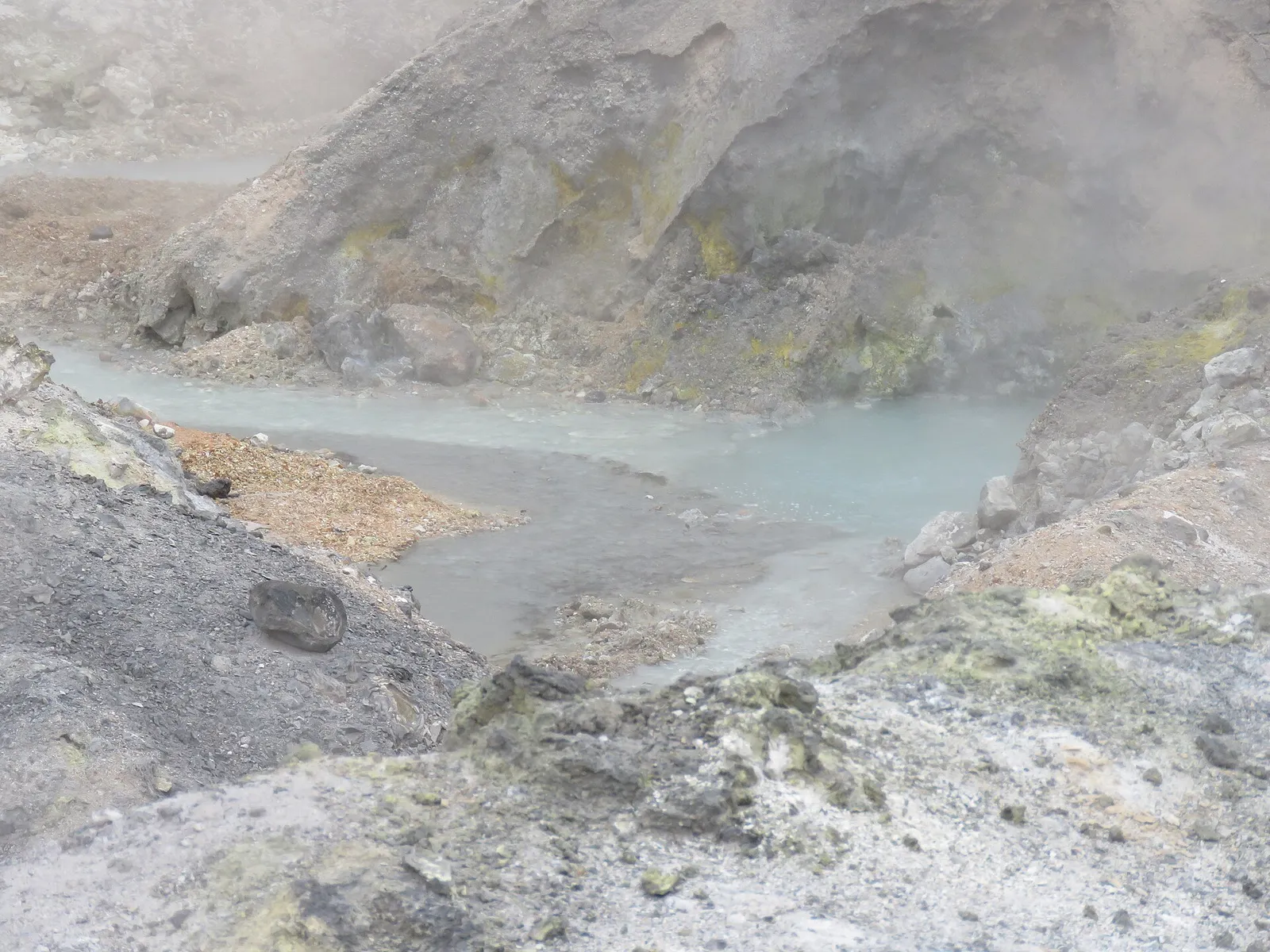 Photo: Calistemon, CC BY-SA 4.0
Noboribetsu
The closest major onsen town to Sapporo, about 90 minutes by limited express.
The closest major onsen town to Sapporo, about 90 minutes by limited express.
- Jigokudani: a crater valley of sulphurous vents and bubbling pools, its steam dramatic in cold air
- Some ryokan offer nine or ten chemically distinct baths under one roof
Jozankei
Sapporo's backyard onsen in a narrow valley, 90 minutes by direct bus.
Sapporo's backyard onsen in a narrow valley, 90 minutes by direct bus.
- Compact and easy, no long-trip planning needed
- Snow over the river gorge; quieter than the autumn foliage peak
Away from the Niseko slopes, Niseko Goshiki Onsen Hotel sits at higher elevation with mountain views. "Goshiki" (five colours) refers to the different mineral waters in its baths: here the landscape and the springs come first, not the resort.
Mountain onsen ryokan
First time in an onsen? Etiquette, what to expect and how tattoo policies work are in the onsen guide.
Practical information
- Dress in layers. A moisture-wicking base layer, an insulating mid-layer and a waterproof shell; heated buildings and covered arcades mean you shed layers indoors.
- Wear waterproof boots with grip. Ordinary trainers are dangerous on compacted snow. Gloves and a hat are non-negotiable in January and February.
- Check your rail pass. The national JR Pass is valid on many Hokkaido routes but not all limited expresses. JR Hokkaido's Hokkaido Rail Pass covers more local routes and is often better value on the island.
- Drive only with winter experience. Rental cars come with winter tyres, but roads outside the cities are not cleared quickly after heavy snow. For Shiretoko and the interior, trains and buses are safer.
- Carry cash. Onsen towns and smaller inns often take cash only. Japan Post and 7-Eleven ATMs accept international cards throughout Hokkaido.
Getting There
From Tokyo
- 1Fly from Haneda or Narita to New Chitose Airport (CTS) → New Chitose Airport, Chitose
- 2Take JR Airport Rapid train to Sapporo Station → Sapporo Station
Nearby
Hokkaido's major destinations connect well by rail from Sapporo, making multi-stop itineraries practical within a one-week trip.
FAQ
Is Hokkaido worth visiting in winter if you don't ski?
Yes. The non-skier case for Hokkaido in winter centres on the onsen circuit, Otaru and Hakodate's winter atmosphere, and the Shiretoko drift ice in late January. None of these involve skiing. The ski resorts are a separate part of the island with their own infrastructure, and a Hokkaido winter trip can be built entirely without them.
When is the Sapporo Snow Festival?
The Sapporo Snow Festival typically runs for seven days in early February, with the main international snow sculpture contest in Odori park and the ice sculpture event in the Susukino entertainment district. Both venues are free to enter. Accommodation in Sapporo during festival week books out six or more months in advance and prices significantly higher than the rest of the winter season. If you want Sapporo's winter atmosphere without the event pricing, December is the better alternative.
How do I see the drift ice at Shiretoko?
Drift ice at Shiretoko is accessible between approximately 20 January and mid-February, depending on ice conditions each year. Two main operators run ice experiences from the Abashiri area: one operates icebreaker ship tours, and another runs guided walks directly on the coastal sea ice. Book both in advance and plan for at least two days at Shiretoko to allow for weather delays.
From Sapporo, the journey takes approximately five hours by JR limited express. The drift ice window is highly seasonal and cannot be shifted; if it is not late January or early February, the ice will not be there.
Is the JR Pass valid for travel around Hokkaido?
The national JR Pass is valid on many Hokkaido routes but not all. Some Hokkaido limited express services require a separate seat reservation fee or are not covered by the national pass at all.
The JR Hokkaido Rail Pass covers more local routes within the island and is sometimes more economical for a Hokkaido-only trip. Verify which specific trains you plan to use before purchasing any pass. The JR Pass guide has a full breakdown of what is covered.
What is the minimum time needed for a Hokkaido winter trip?
Five to seven days is a reasonable minimum for a circuit covering Sapporo, Otaru, and Hakodate. Including the Shiretoko drift ice leg adds at least two more days for the peninsula itself, plus the travel time from Sapporo. A three-day trip from Tokyo is possible but covers only Sapporo and Otaru at a pace that feels rushed. The longer you spend, the more a Hokkaido Rail Pass makes financial sense relative to individual tickets.