
The best beaches in Okinawa split into four groups by access effort: three on the main island by car near Naha, one across a bridge, two on the Kerama Islands by ferry, and five on Miyako and the Yaeyama Islands needing a second flight. This list of 11 orders them that way.
Okinawa Prefecture is not one island: the Kerama Islands are a roughly 50-minute ferry from Naha's Tomari Port, and Miyako and the Yaeyama Islands need a second domestic flight of 45 minutes to an hour. Each beach carries a declared swimming season, so timing matters as much as location; most string a net for the habu jellyfish, present roughly May to October, though not every beach has one, stated per beach below. A rental car is close to essential once you leave Naha on the main island, since bus service there is too infrequent to rely on.
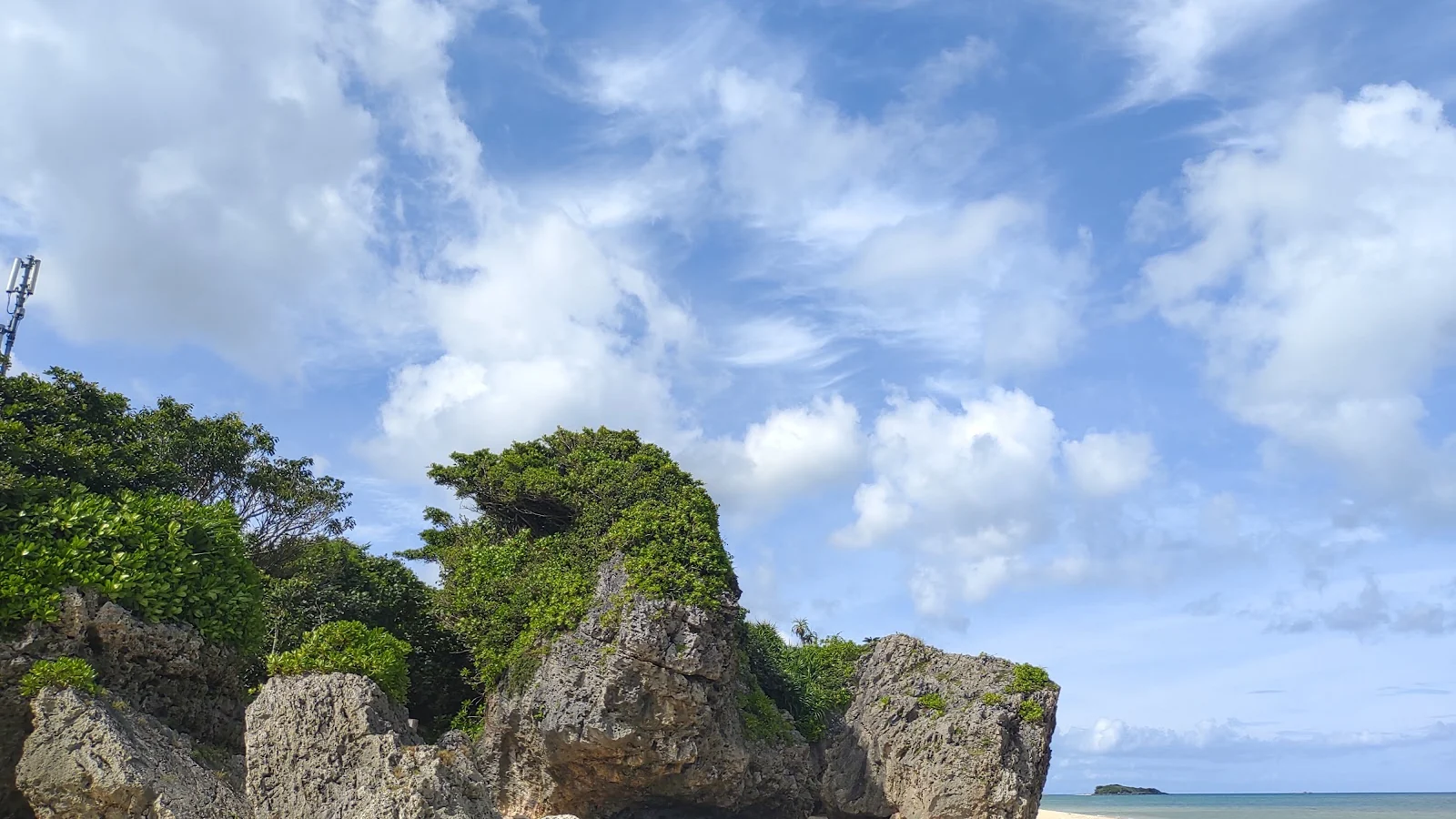
1. Mibaru Beach
 Google
Local beach, glass-bottom boat
Nanjo's south coast is the nearest real beach country to Naha, and this one has not been rebuilt into a resort frontage. Glass-bottom boats run to the reef, and swimming is open year round despite no net or lifeguard.
- Getting there: Rental car from Naha; the official source does not publish a drive time.
- Opening hours: Year round, 9:00 to 16:00, earlier than most Okinawan beaches.
- Worth a stop: No net or lifeguard; toilets, showers, lockers, and 30 paid parking spaces.
Go for a real local beach near Naha. Skip it after 16:00: no net or lifeguard extends the window.
2. Zanpa Beach
 Google
Family beach, full facilities
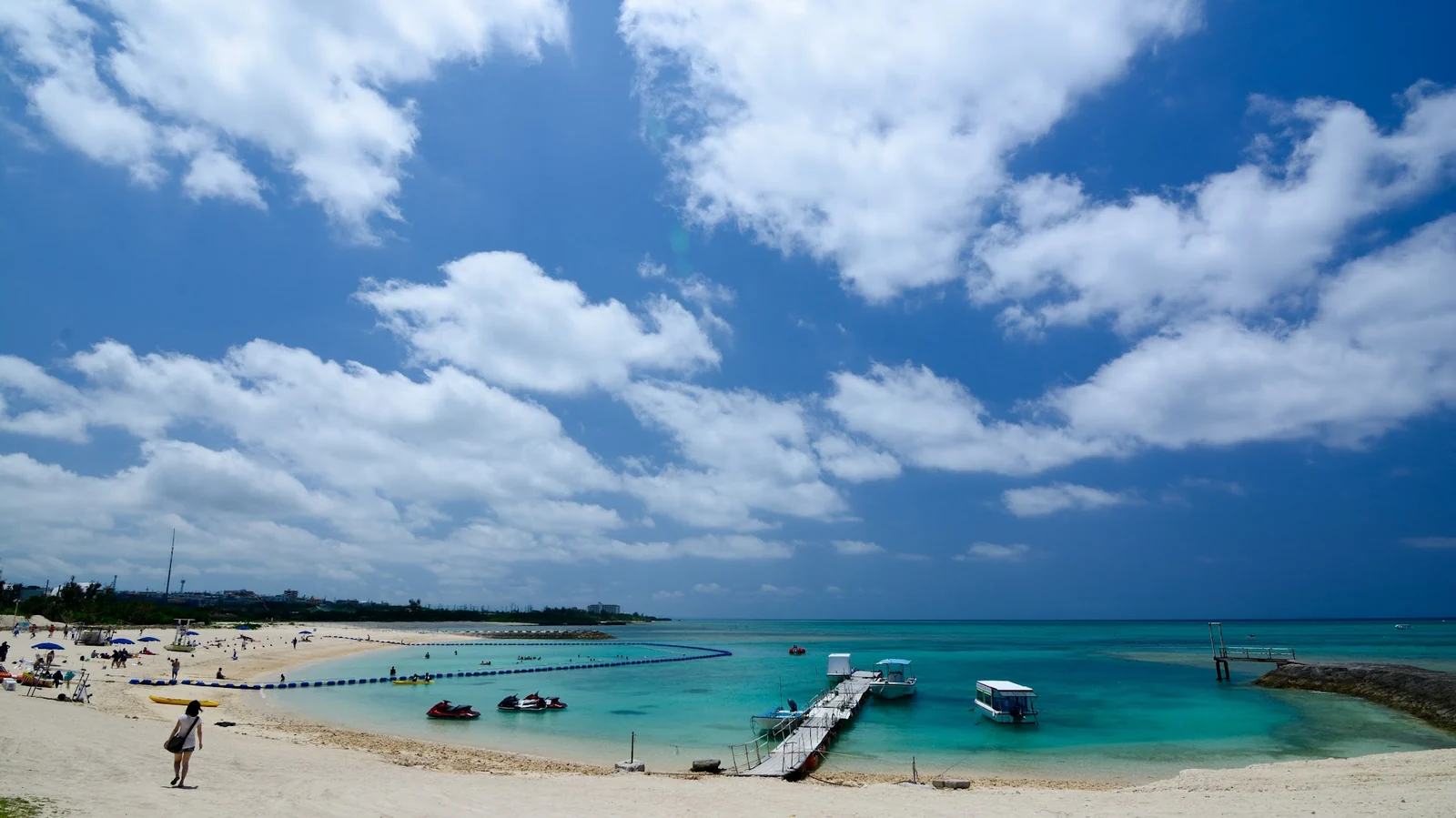
Yomitan sits between the Chatan bar strip and the Onna resort coast, so this free beach below Cape Zanpa's cliffs gets skipped by visitors at either end. It carries a full net, lifeguards and marine activities, all free.
- Getting there: Rental car from Naha to Yomitan; no drive time published.
- Opening hours: 1 April to 31 October, 9:00 to 18:00.
- Worth a stop: Net, lifeguards, toilets, showers, lockers, shop, marine activities, all free.
Go for a netted, lifeguarded beach that costs nothing. Skip the cliffs beyond the swimming zone: the net does not cover them.
3. Emerald Beach
 Wikimedia Commons
Family beach, white sand
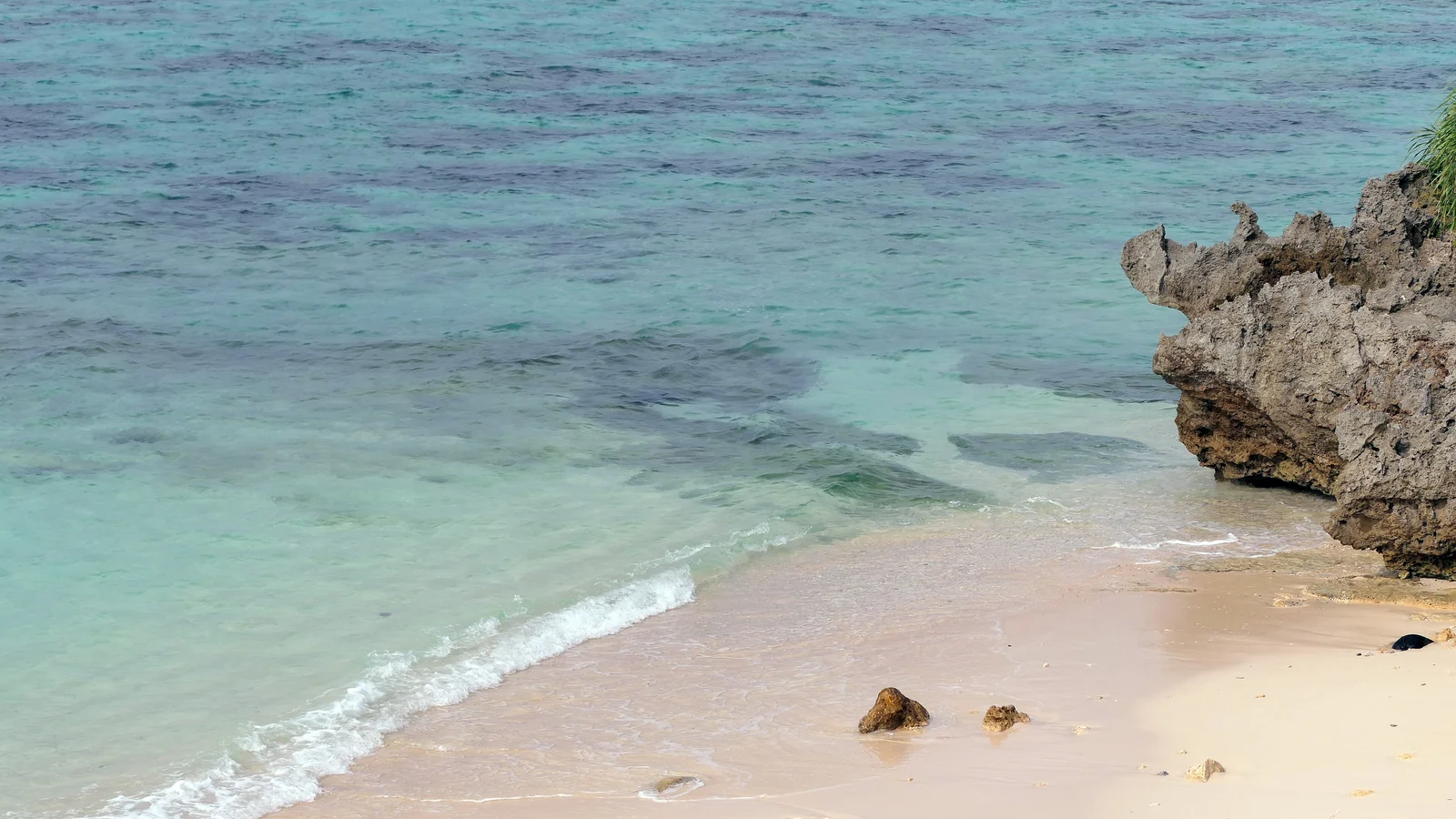
This beach sits inside a park on the island's north coast, described as the only beach set inside a lagoon in Japan, with the swimming area paved in coral sand. Water quality is certified AA, and it is the main island's best-equipped free beach.
- Getting there: Main island, no flight or ferry, to Motobu Town; no drive time from Naha published.
- Opening hours: 1 April to 31 October; the venue's current notice limits swimming to one zone, 8:30 to 18:30 through June, 8:30 to 17:00 from July.
- Worth a stop: Snorkelling prohibited; caps at about 3,000 people.
Go for the best-equipped free swim on the main island. Skip it for snorkelling: banned here, and the reef swap is Sesoko Beach or, further out, Yonehara Beach.
4. Sesoko Beach
 Google
White-sand beach with reef
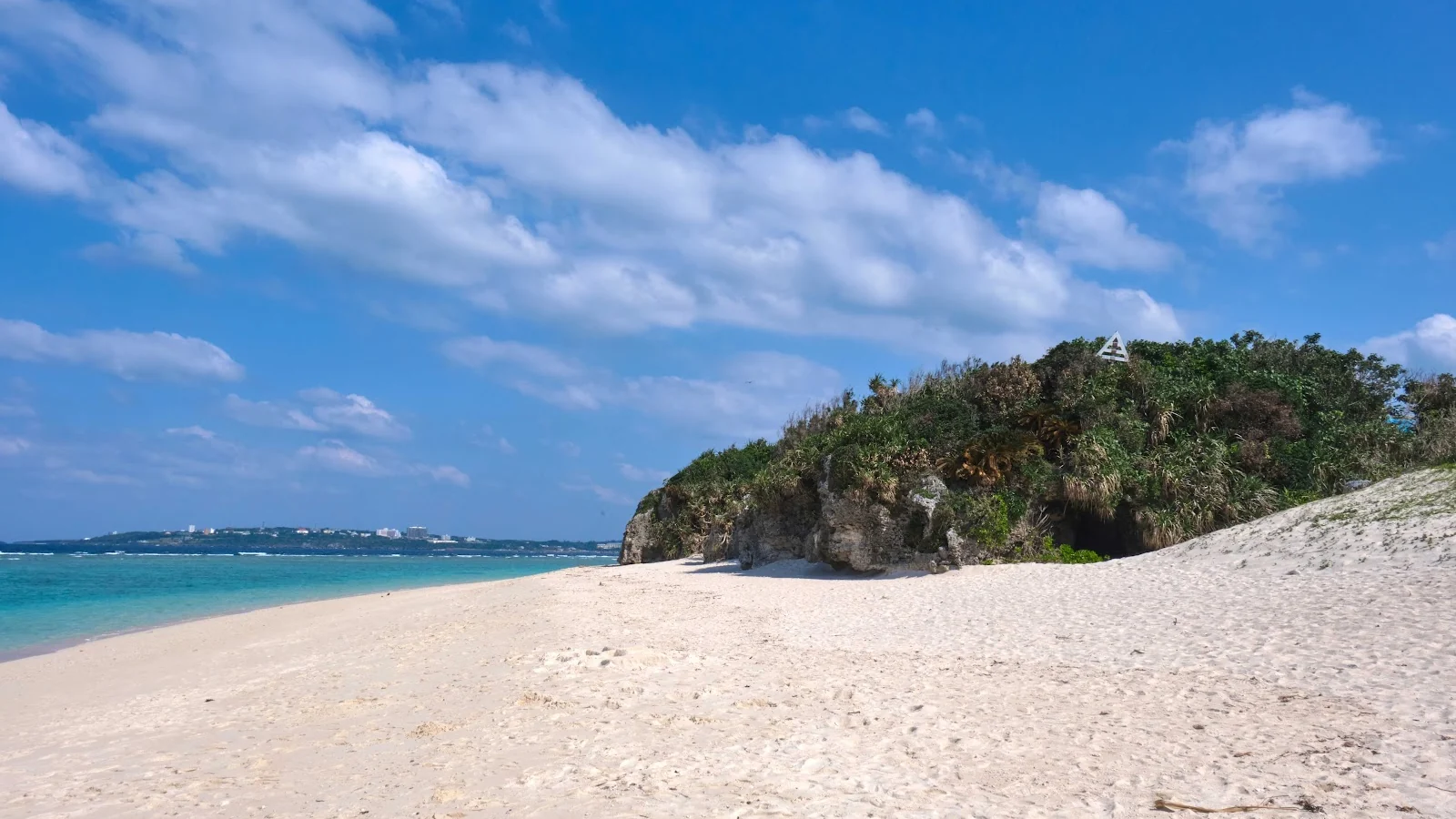
Sesoko Island connects to Motobu by road bridge, so this is outer-island water without a boat booking. The official directory lists a net, lifeguards, showers and marine activities, a fuller kit than most Kerama beaches, a short drive from Emerald Beach.
- Getting there: Road bridge from Motobu Town, no flight or ferry; rental car recommended.
- Opening hours: Mid-April to 31 October, 9:00 to 17:00.
- Worth a stop: Net, lifeguard, showers, lockers, shop, marine activities; parking is paid.
Go for netted water most itineraries drive past. Skip the 17:00 close: earlier than Emerald Beach down the road.
5. Furuzamami Beach
 Google
Snorkel beach, white sand
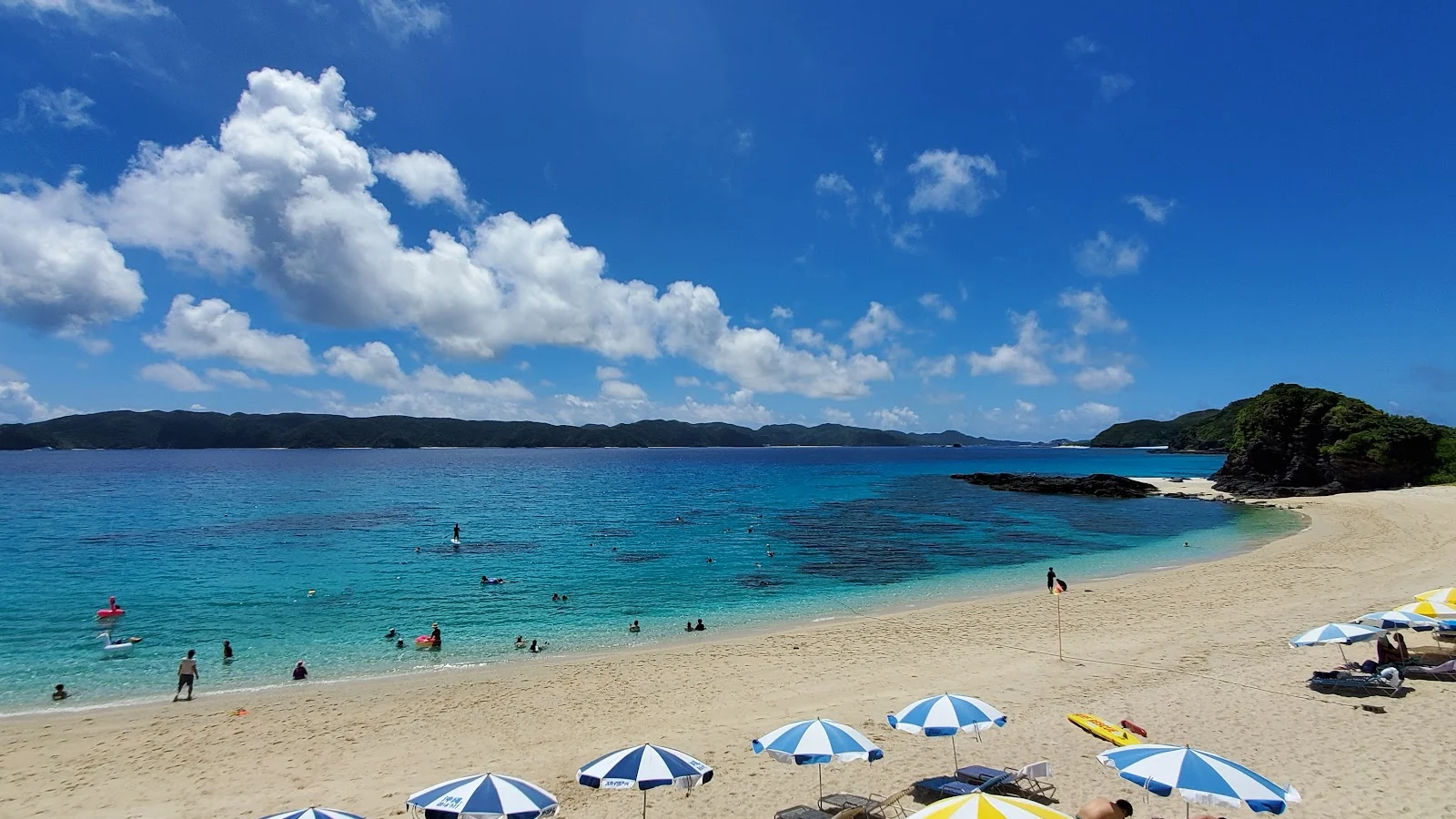
This is the reference beach for what Okinawa's tourism bureau calls Kerama Blue, inside a national park rather than a resort strip. The reef starts within a minute of walking in. Zamami Village restricts individual swimming to three designated beaches, this among them.
- Getting there: Ferry from Naha's Tomari Port to Zamami, roughly 50 minutes by high-speed ferry or around 2 hours by regular ferry; no flight needed.
- Opening hours: Year round; lifeguarded mid-April to end of November, 8:30 to 17:30.
- Crowd warning: Parking for 10 cars, no net; a rash guard matters more here than at a netted beach.
Go for coral reef within a minute of the shore. Skip swimming outside the marked zone: not permitted without a licensed guide.
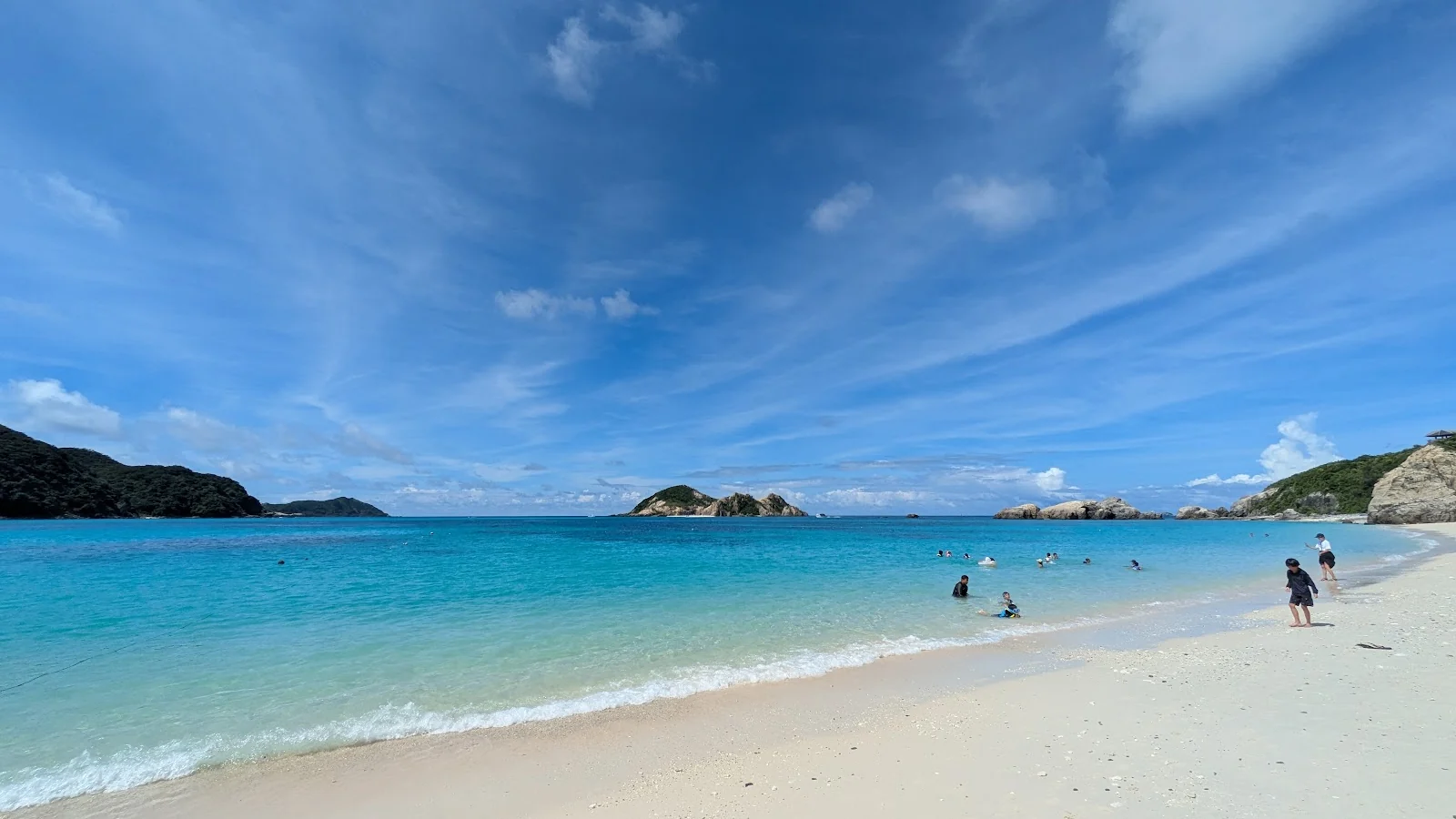
6. Aharen Beach
 Google
White-sand beach with coral reef
Tokashiki is the closest Kerama island to Naha, and this 800-metre curve of sand is its main beach, reef and fish immediately offshore, turtles a regular sighting. Reachable on a day return from Naha without a flight.
- Getting there: Ferry from Naha's Tomari Port to Tokashiki, then about 15 minutes by bus; crossing time is not published by the official source.
- Opening hours: Year round; lifeguarded 12 April to 30 November, 9:00 to 18:00.
- Crowd warning: No taxis on Tokashiki; missing the return bus leaves you stranded.
Go for coral and turtles on a day trip from Naha. Skip it without checking the last bus back: no taxi alternative exists.
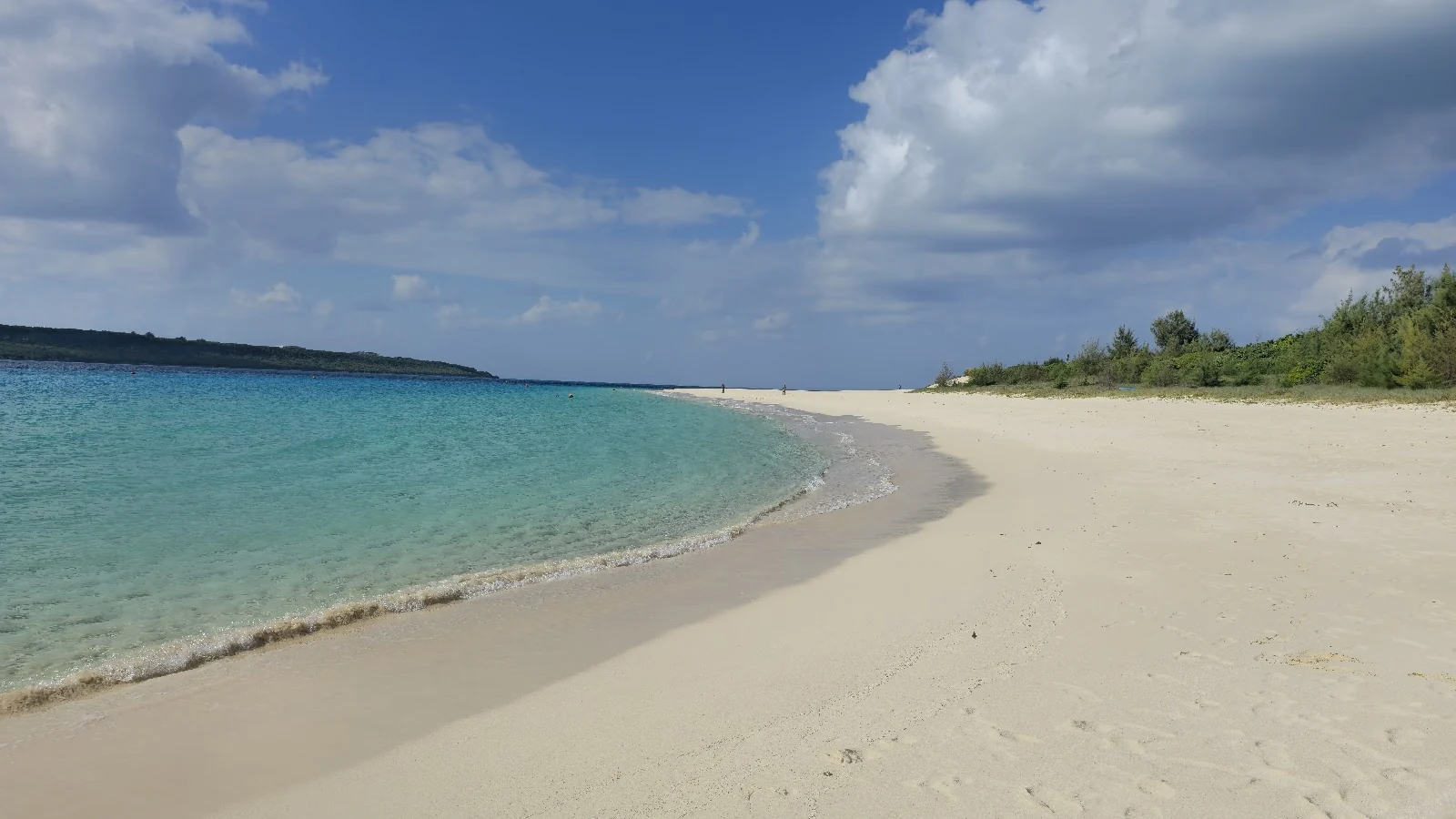
7. Yonaha Maehama Beach
 Google
Long white-sand swimming and sunset beach
Seven kilometres of white sand make this one of Miyako's longest beaches, long enough that a busy day gets absorbed. It faces Kurima Island and suits swimming and sunbathing rather than snorkelling, with the reward arriving at sunset.
- Getting there: Flight from Naha to Miyako, 45 to 50 minutes, then rental car; bus service is infrequent.
- Opening hours: 16 March to 30 November, 9:00 to 18:00, 17:30 in November.
- Crowd warning: No net or lifeguard listed; stay inside the marked swimming area.
Go for scale that swallows a crowd and a real sunset. Skip expecting a reef: the water here is sand, not coral.
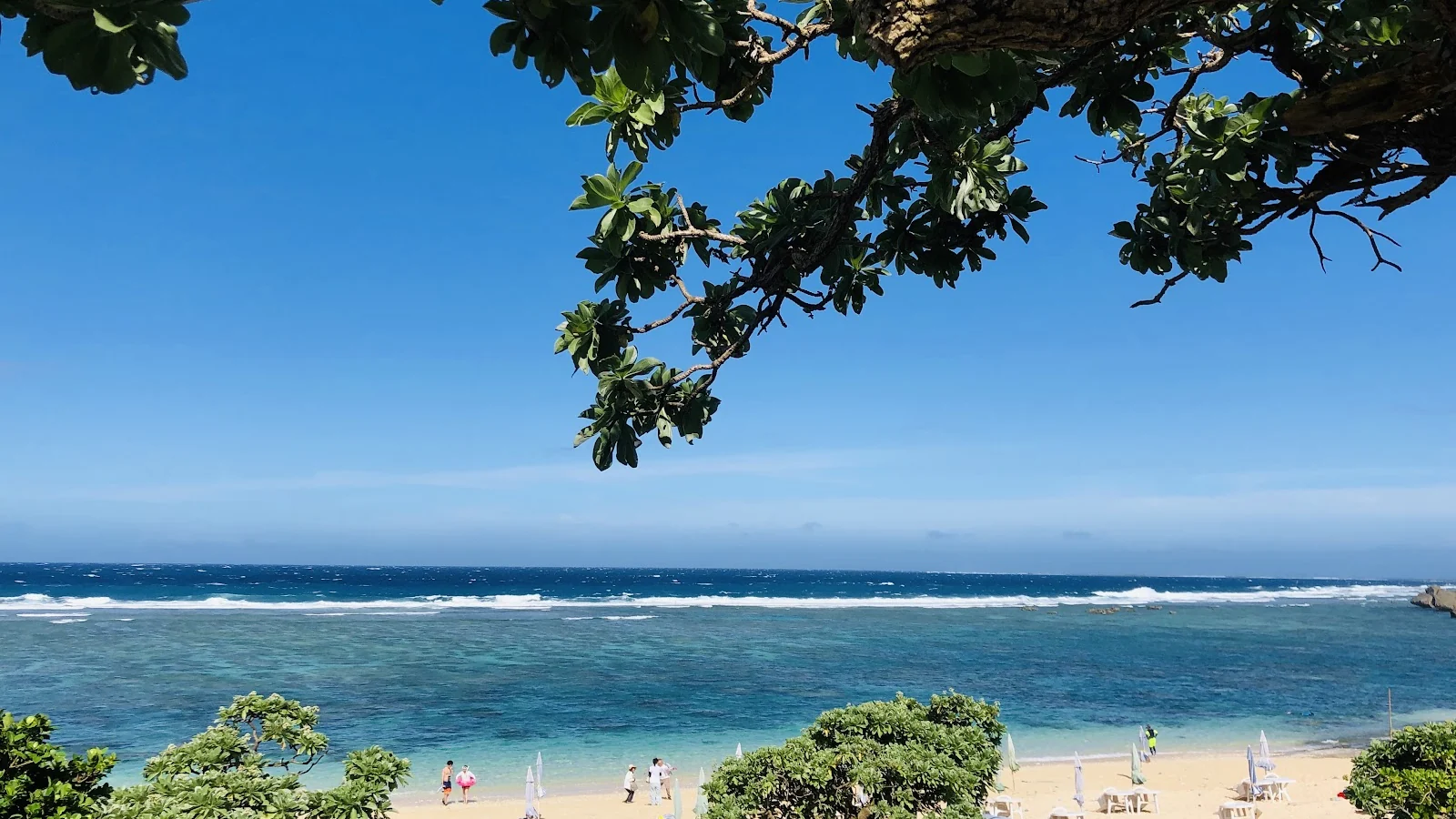
8. Yoshino Kaigan
 Google
Snorkel beach
Most of Miyako's fame attaches to the sand and sunset up the coast. This compact east-side cove, next to Cape Higashi-Hennazaki, is the opposite: the reef starts a few metres out, drawing snorkellers rather than coach parties.
- Getting there: Flight from Naha to Miyako, then rental car; the official source states one is needed to get around the island.
- Best time: Check the tide table first; at low water the reef sits close enough to scrape.
- Worth a stop: Showers, toilets, rental shop; no net or lifeguard confirmed.
Go for the best snorkelling on Miyako. Skip a low-tide entry without checking depth first.
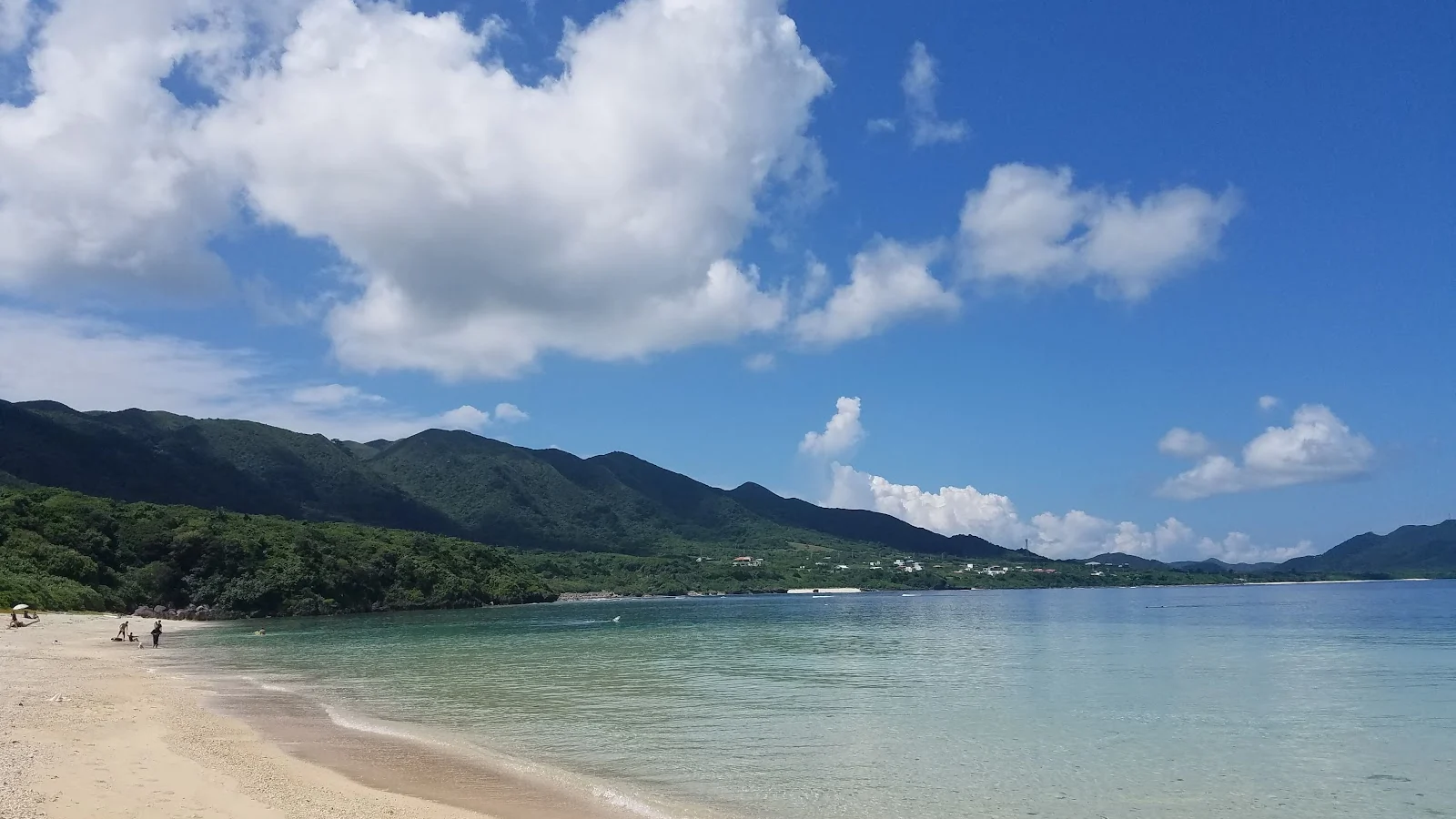
9. Yonehara Beach
 Google
Snorkel beach, coral reef
This is Ishigaki's snorkelling beach, the counterweight to Kabira Bay fifteen minutes up the road, where swimming is banned outright. The reef starts close to shore, delivering what most visitors expect from the bay's famous water.
- Getting there: Flight from Naha to Ishigaki, around one hour, then rental car.
- Best time: Enter where other people are already in the water; currents run at the reef channel.
- Worth a stop: Parking 500 yen, campground behind; no net or lifeguard confirmed.
Go for the snorkelling the bay cannot offer. Skip it without reef shoes: the coral sits close underfoot.
10. Kondoi Beach
 Wikimedia Commons
Family beach, shallow sandbar
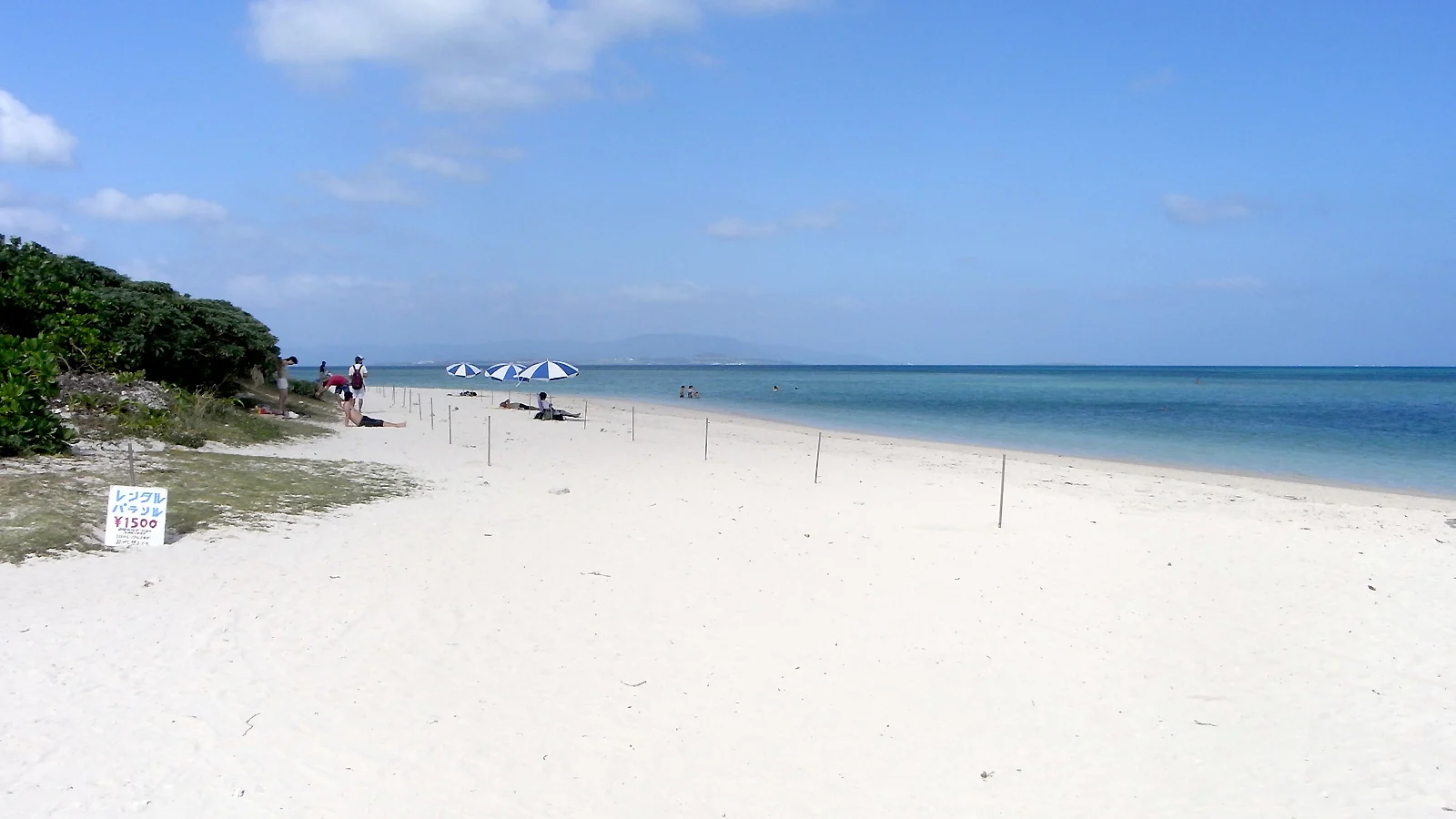
Taketomi pairs a preserved Ryukyu village of coral walls and red-tile roofs with its one swimming beach. The sandbar stretches far out in ankle-deep water at low tide, safe for children. Its neighbour, the island's famous star-sand beach, bans swimming for its currents.
- Getting there: Flight from Naha to Ishigaki, then a 10-minute ferry to Taketomi; bicycles rent at the port.
- Best time: Ride out early or stay overnight; Taketomi gets busy at peak times.
- Worth a stop: Toilets, changing rooms, picnic tables; no lifeguard or net confirmed.
Go for the only swimming beach on the island. Skip collecting star sand at the neighbouring beach: it is prohibited.
11. Nishihama Beach
 Google
Secluded white-sand beach
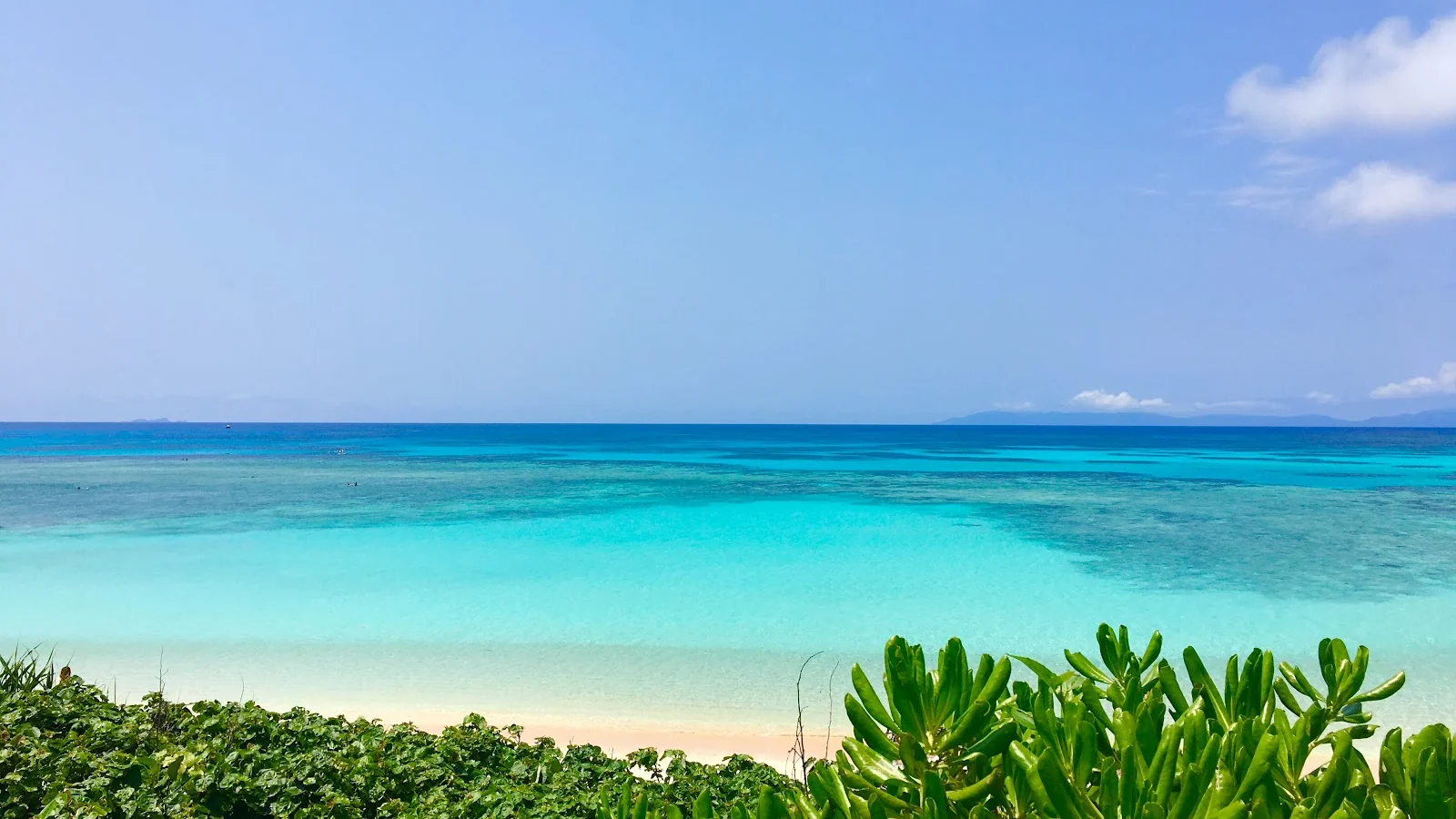
Hateruma is Japan's southernmost inhabited island, and this is as far from a tour bus as an Okinawan beach gets. Locals brand the colour Hateruma Blue. Getting here filters out day-trip volume: a flight to Ishigaki, then a small ferry that cancels in rough seas.
- Getting there: Flight from Naha to Ishigaki, then a ferry to Hateruma, about 60 minutes; never book a same-day return flight.
- Best time: No official season is published; bring water and sun cover, there are effectively no shops.
- Worth a stop: No lifeguard or net confirmed; habu jellyfish typically sighted May to October.
Go for a reef beach with almost no infrastructure. Skip a same-day return booked tight against a flight.
Honorable mentions
- Nishibama Beach: the quiet Kerama alternative to Furuzamami, on the small neighbouring island of Aka, parking for five cars only.
- Sunayama Beach: a rock arch on Miyako's northwest coast, for photographs rather than a swim.
- Azama Sun Sun Beach: a fully equipped southern Okinawa beach next to the Kudaka Island ferry pier, opening at 10:00.
- Manza Beach: a main-island beach with year-round swimming, though entry and parking turn paid during Golden Week and 1 July to 30 September.
- Kabira Bay: Japan's most photographed bay, but swimming and snorkelling from the beach are not permitted. See it by glass-bottom boat, then drive to Yonehara Beach to get in the water.
FAQ
What is the best time of year to visit Okinawa's beaches?
Most main-island beaches run 1 April to 31 October. The Kerama Islands allow swimming year round, but lifeguards cover only mid-April to end of November. On Miyako, Yonaha Maehama Beach runs 16 March to 30 November. Dates vary by beach, so confirm before travelling outside summer.
Are Okinawa's beaches safe from jellyfish?
Habu jellyfish are typically sighted May to October, and the sting is powerful and very painful. Netted beaches such as Zanpa Beach and Emerald Beach string a protective net; well-known beaches including Furuzamami Beach do not have one. First aid is to leave the water, pour vinegar liberally on any attached tentacles without rubbing, then chill the area.
Do you need a rental car for Okinawa's beaches?
Close to essential once you leave Naha. A car is needed on Miyako, and bus service there and on Ishigaki is too infrequent to build a beach day around. The exceptions are the small ferry islands: Taketomi is bicycle-sized, and Tokashiki, home to Aharen Beach, has a port bus and no taxis.
Which of the best beaches in Okinawa don't require a flight from Naha?
Mibaru Beach, Zanpa Beach and Emerald Beach sit on the main island, a drive from Naha; Sesoko Beach is a bridge away. The Kerama Islands, home to Furuzamami Beach, are a ferry ride from Tomari Port. Only Miyako and the Yaeyama Islands require a second flight.
Can you snorkel at every beach in Okinawa?
No. Emerald Beach prohibits snorkelling despite being the main island's flagship free beach, and Kabira Bay on Ishigaki bans both swimming and snorkelling from the shore. Beaches that reward a mask include Furuzamami Beach, Yoshino Kaigan and Yonehara Beach.