

Typhoon season in Japan runs from June through October, and yes, the warnings are real. Trains suspend, flights cancel, and a few hours of heavy rain can shut down an entire day's itinerary. But here is what weather websites don't tell you: the disruptions are short, predictable, and rarely dangerous for travellers who know what to expect. This guide explains what actually happens on the ground, month by month, so you can plan instead of panic.
When is typhoon season in Japan?
June
Typhoon riskQuiet Low risk; rainy season
WeatherRainy
July
Typhoon riskModerate Low to moderate
WeatherSun and cloud
August
Typhoon riskBusy Moderate risk
WeatherSun and cloud
September
Typhoon riskPeak High risk; peak month
WeatherRainy
October
Typhoon riskModerate Moderate to low
WeatherSun and cloud
November
Typhoon riskQuiet Low risk
WeatherSun and cloud
Japan's weather authority (JMA) defines the official typhoon season as June 1 through November 30. In practice, the serious risk concentrates in a narrower window.
The month-by-month picture:
| Month | Typhoon risk | What to expect |
|---|---|---|
| June | Low | Rainy season dominates; occasional tropical formation far south |
| July | Low to moderate | Activity increases; landfall risk rising, not yet peak |
| August | Moderate | Busy storm season begins; some years see multiple landfalls |
| September | High | Peak month; historically the most landfalls and strongest storms |
| October | Moderate to low | Late-season storms possible; intensity drops off |
| November | Low | Rare; the season winds down quickly |
If your Japan trip falls in April, May, or late October through November, typhoons are not a meaningful planning concern. September is the month where you need a genuine contingency.
What actually happens when a typhoon hits
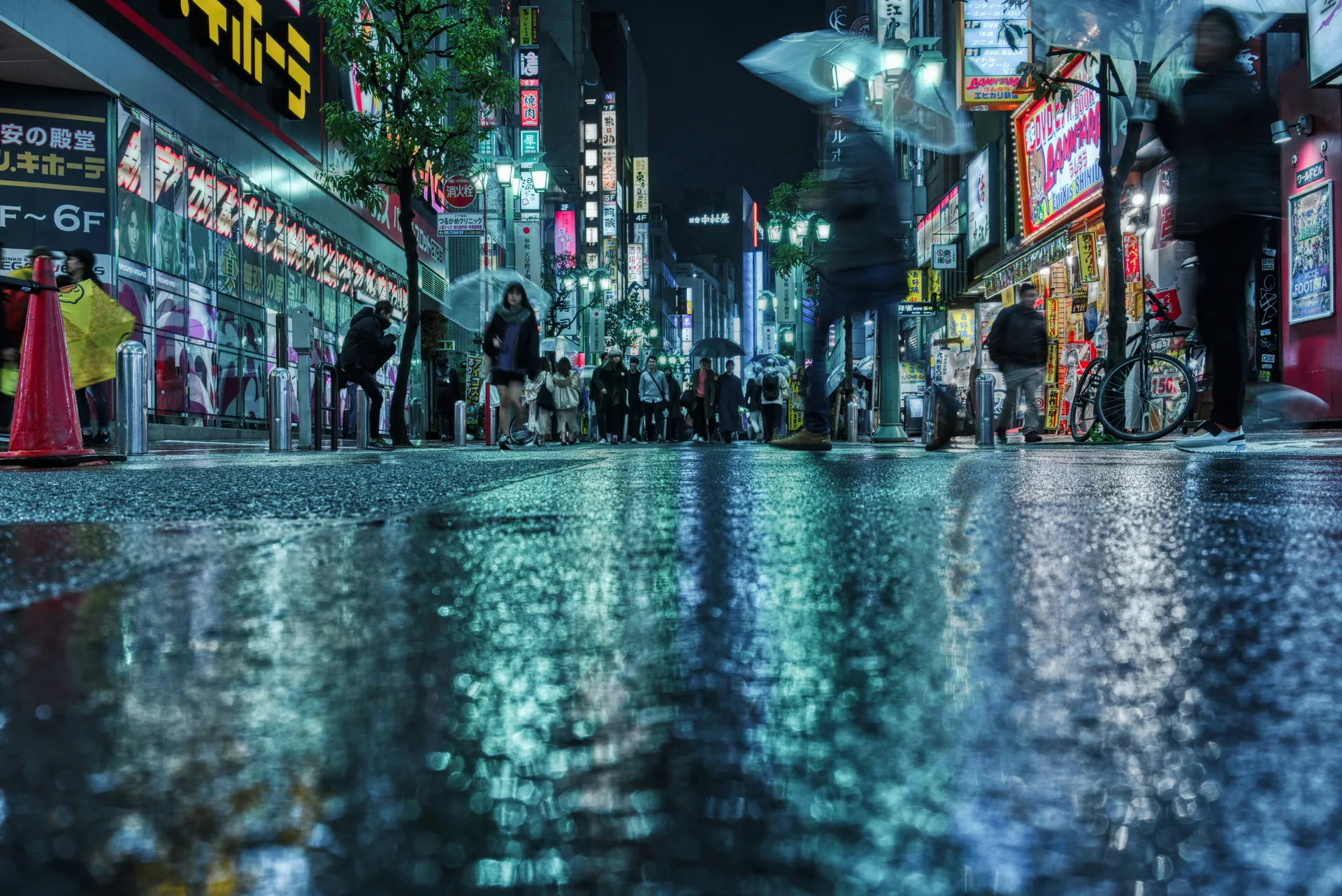
Foreign travellers over-cancel because they read flood warnings designed for residents, not tourists passing through for a week. The reality for most travellers is a 12 to 36-hour disruption window, after which Japan's infrastructure restarts with unusual efficiency.
Here is how the timeline typically unfolds:
JMA issues a forecast
Japan's weather service (JMA) publishes typhoon tracking 48–72 hours before a storm approaches the main islands. The track updates every 6 hours. NHK World broadcasts English-language updates; the JMA app has live radar.
Transport companies announce suspensions
JR (Shinkansen) typically gives 24-hour advance notice of service suspensions, with automatic full refunds (no claim needed). Airlines begin cancelling 12–24 hours out. Check your carrier's website; most publish specific cancellation windows during named typhoons.
The storm passes through
The core of a typhoon moves fast once it hits the main islands. Most locations experience 12–24 hours of heavy rain and wind, followed by a sharp clearance. The sky after a typhoon is often the clearest you will see in Japan.
Services restart
Shinkansen services resume within hours of confirmation that the track is safe. Hotels stay open throughout; convenience stores pre-stock in advance and remain open during the storm. Tourist attractions typically close for the day and reopen the following morning.
The headline: a well-tracked typhoon hitting a major city might mean one ruined day, not a ruined trip. What's genuinely disruptive is a typhoon that stalls, or one that hits during a weekend when your departure flight is already booked. That's where insurance matters.
How to prepare before and during your trip
Travel insurance: Look specifically for "trip interruption" cover, not just "trip cancellation." Cancellation covers you before departure; interruption covers accommodation and rebooking costs if you're already in Japan when a typhoon strikes. World Nomads and most premium credit-card insurance include both. Read the fine print: some policies require a named typhoon to trigger the clause; others use "travel advisory" language.
Monitoring: Download the NHK World app before you travel. It carries English-language emergency alerts and is far easier to read than the official JMA interface for non-Japanese speakers. The JMA website (jma.go.jp/en) has the authoritative track maps if you want the raw data.
Hotel policy: Most major hotels and chains waive cancellation fees during typhoon warnings. Call ahead or check the front desk when a storm is forecast; staff will often rebook you to a later date at no cost if you ask before the warning window closes.
Emergency supplies: If you're in your hotel during the storm, you need very little. Japan's convenience stores are extraordinary: stock water, snacks, and a phone charger before the wind picks up. A flashlight is worth having; power cuts in urban areas are rare but not impossible.
Should you change your plans?
The decision comes down to one question: is the typhoon tracking directly over your itinerary, or is it passing to one side?
- Direct hit: If the storm centre is forecast to pass within 50 kilometres of your location, expect a full day of disruption and possible transport suspension. Decide whether to reroute (move north or south of the track) or wait it out.
- Peripheral rain and wind: You may get heavy rain and gusts but transport usually continues. Some outdoor attractions close; everything else stays open.
- "Wait it out" option: Japan recovers fast. If you have a flexible day or two, staying in your current city and resuming the itinerary after the storm passes is often the least stressful choice. Hotels in Japan are good places to be stuck.
If you decide to reroute: a typhoon tracking from Kyushu toward Kansai means Tohoku becomes a sensible alternative for a day or two. The JR system makes cross-island repositioning faster than it would be anywhere else.
One rule: don't pre-cancel flights or hotels more than 48 hours in advance based on a forecast alone. Typhoon tracks shift. Wait for the 24-hour window before making irreversible changes.
Which regions are most at risk?
Typhoon paths vary by year, but historical landfalls show a consistent pattern:
- Kyushu: The highest frequency of direct hits. Kagoshima, Miyazaki, and Nagasaki face the Pacific and see more landfalls than anywhere else on the main islands.
- Kansai and Tokai: A common path for typhoons that curve northeast after Kyushu. Osaka and Nagoya have both seen significant storm impacts in recent decades.
- Tokyo and Kanto: Less frequent landfalls than Kyushu, but high-profile when they happen because of the density of travellers and the disruption to Narita and Haneda.
- Tohoku and Hokkaido: Rarely see direct hits; typhoons typically weaken to tropical storms before reaching this far north. A viable fallback during a September storm.
Okinawa sits in its own category: as the southernmost prefecture, it faces storms early and often, typically in July and August before the main season reaches Honshu.
Best months to visit Japan (typhoon-adjusted)
If avoiding typhoon risk entirely is a priority, the safest windows are April through May (cherry blossom season, low storm risk, crowded) and late October through November (autumn colours, cooling temperatures, low risk). Both are peak seasons with peak prices.
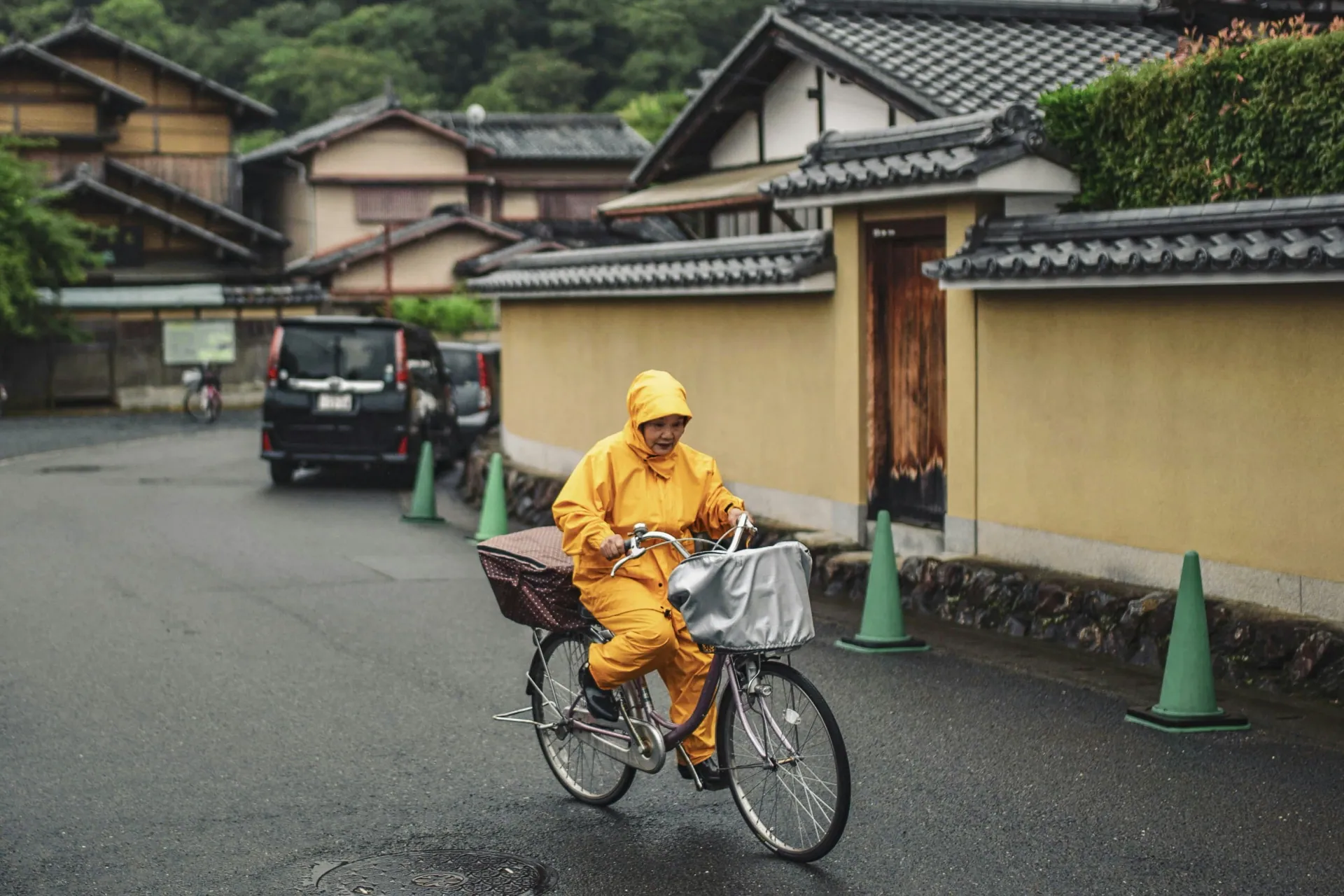
June deserves a closer look. It carries rainy season (tsuyu) rather than typhoon risk: persistent light rain, empty temples, and flight prices that are noticeably lower than August. Typhoon risk in June is low. If you don't mind grey skies and want uncrowded Japan at a fraction of the cost, June is the smart window.
For a broader picture of when to visit and what each month looks like in practice, see the complete guide to the best time to visit Japan.
FAQ
Is it safe to visit Japan during typhoon season?
Yes, with caveats. Japan's emergency infrastructure is among the best in the world, and most travellers during typhoon season never experience a direct hit. September is the highest-risk month; if you visit then, build one flexible day into your itinerary and have travel insurance that covers trip interruption.
What happens to the Shinkansen during a typhoon?
JR typically announces Shinkansen suspensions 24 hours in advance of a storm. Tickets are automatically refunded when services are cancelled; you don't need to file a claim. Services usually resume within hours of confirmation that the track is safe after the storm passes.
Will my hotel refund me if a typhoon disrupts my stay?
Most major hotel chains and traditional ryokan waive cancellation fees during official typhoon warnings. Policies vary, so check with your specific property before a storm is forecast. Calling the front desk early usually gets a better outcome than waiting.
Which month has the most typhoons in Japan?
September has historically seen the most typhoon landfalls and the strongest storms. August is second; the risk drops off significantly by late October.
Should I cancel my Japan trip because of a typhoon warning?
Not based on a forecast alone. Typhoon tracks shift significantly up to 72 hours before landfall. Monitor the JMA and NHK World updates, and make decisions inside the 24-hour window when the track is more reliable. Pre-cancelling 3 or 4 days ahead often means missing a trip that wouldn't have been affected.
What is the best weather app to use during a typhoon in Japan?
NHK World carries English-language emergency alerts and is the most accessible option for travellers. The JMA website (jma.go.jp/en) has the authoritative typhoon track maps. Both update every 6 hours during active storm periods.