

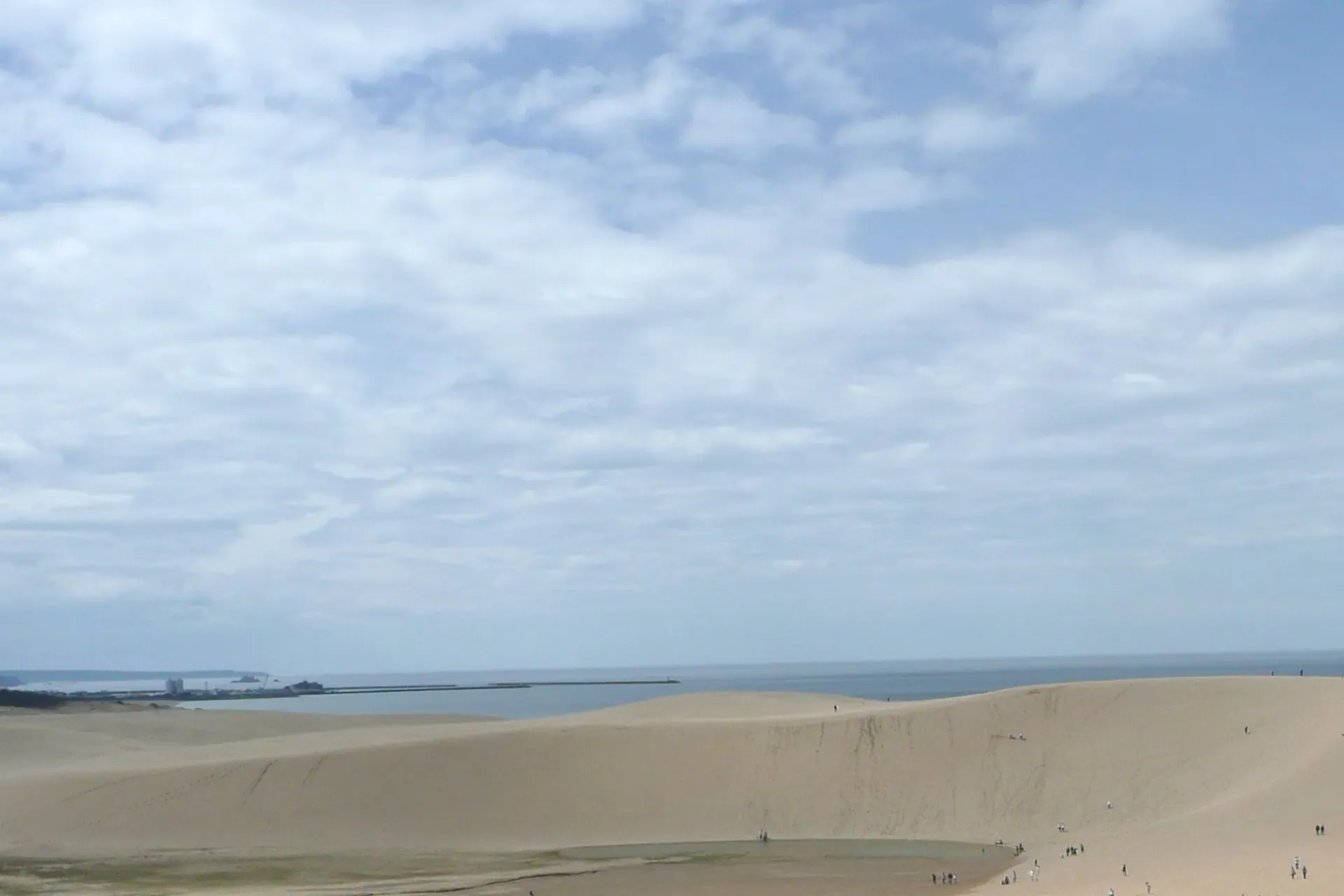

The Tottori Sand Dunes stretch 16 km along the San'in coast in Tottori prefecture.
A visit to the dunes alone takes about 90 minutes. The region around them (sea caves, an Edo-period storehouse district, a hot spring) is what makes the 2.5-hour journey worth it.
What to expect
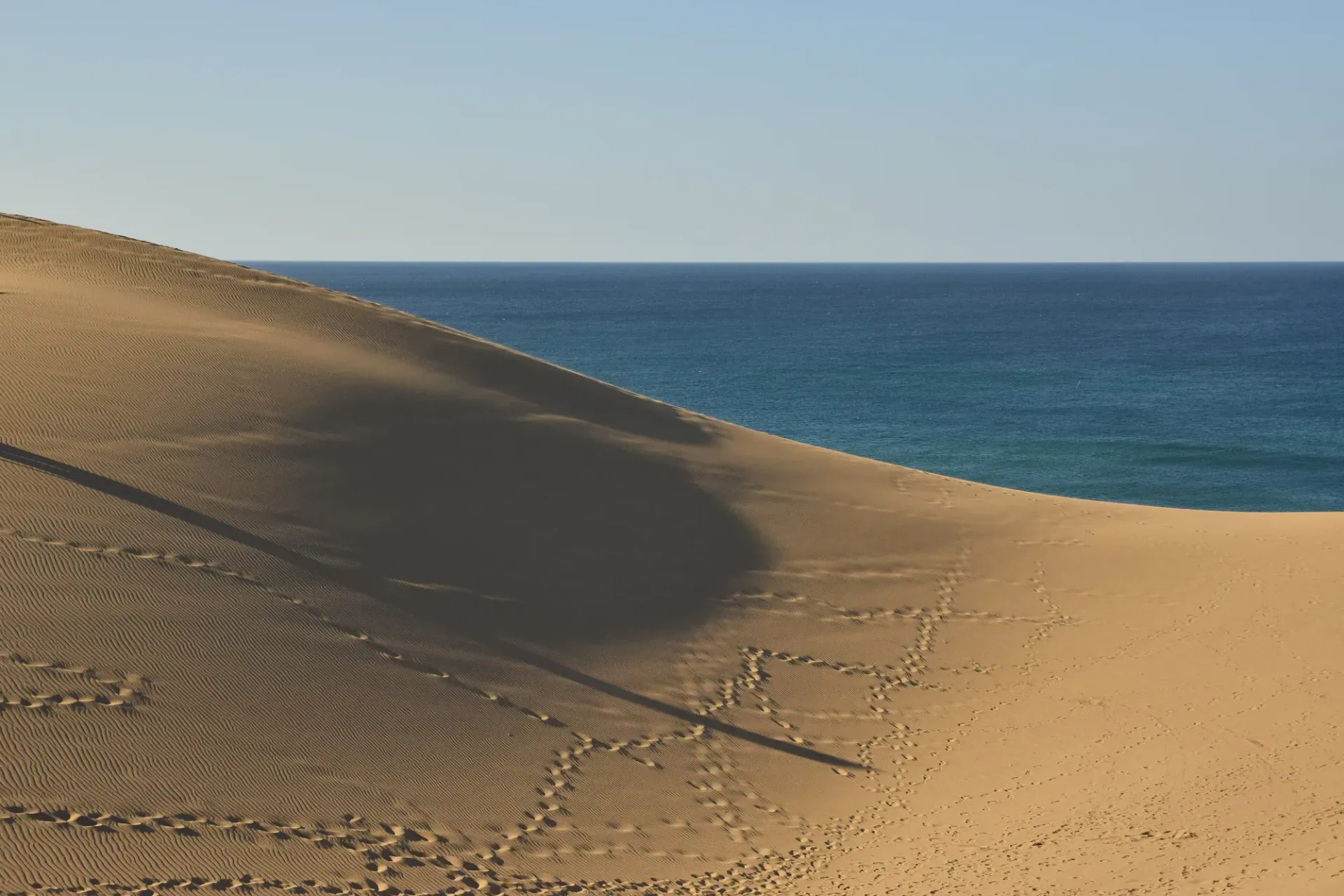
- Size: up to about 50 metres high, 16 km long and 2.4 km wide, part of the San'in Kaigan UNESCO global geopark.
- Origin: sand eroded from the Chugoku Mountains, carried down the Sendai River and shaped by sea currents and wind.
- Entry: free, no gates, open 24 hours.
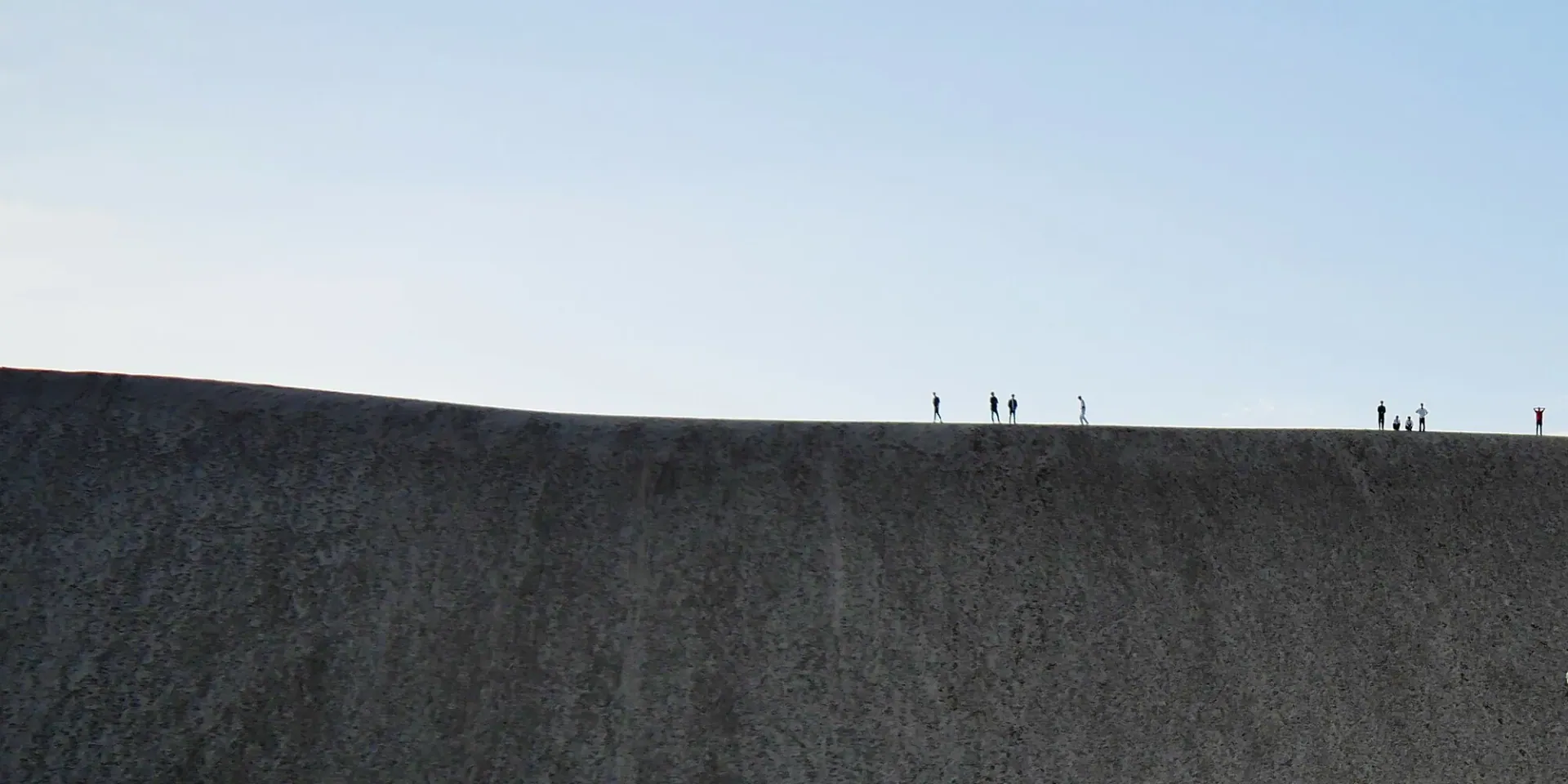
- Walk: the Umanose ridge, about 47 m high, is the main viewpoint. The city's standard dune course takes about 90 minutes, as the sand slows you down.
- View: the Sea of Japan to the north, the green hills of Tottori to the south.
Weekdays are quieter than weekends and public holidays, and winter is quieter still.
What to do at the dunes
- Sandboarding: private operators near the entrance rent equipment. Prices and hours depend on season and conditions; confirm on arrival.
- Camels: about 9:30 to 16:00, from 10:00 in December to February. A ride is about ¥1,600 per person. Since 2024, weekends, holidays and school holidays are photo-only with the camel, and weekdays mostly are too. Sessions can stop without notice, so treat it as a bonus.
- Paragliding: local schools offer experience flights over the dunes. Check conditions and booking with the operator.
- Sand sculpture museum: next to the dunes, ¥800 for adults, with a new country theme each year. It closes for exhibition changeovers; check the schedule at sand-museum.jp first.
Photography timing
- Best light: early morning and late afternoon, when low shadows pick out the wind ripples.
- Winter: cold north winds build the sharpest ripples, and the dunes are emptier.
- Summer: flat, harsh light, and sand hot enough to burn bare feet and sandals.
Beyond the dunes
Three more stops sit within easy reach of Tottori, so the trip is about the region rather than one attraction.
- Uradome Coast: Uradome Coast is east of the dunes, about 10 minutes by car. Sea caves, rock arches and clear water. The large-boat sightseeing cruise takes about 40 minutes (March to November).
- Kurayoshi: Kurayoshi's white-wall storehouse district is 30 minutes from Tottori by limited express to Kurayoshi Station, plus a 12-minute local bus. Edo-period kura line the Tama river, and former breweries and soy sauce distilleries now house local goods shops, tea shops and galleries. Allow about 2 hours.
- Misasa Onsen: Misasa Onsen is 15 minutes by car or about 25 minutes by bus from Kurayoshi Station. The spring water is rich in radon, and the hot spring dates back to the 12th century. Many visitors stay overnight in a ryokan. It is a quieter alternative to more-visited onsen towns.
How to plan your time in Tottori
- One day from Osaka or Hiroshima: take the earliest train and arrive mid-morning. Spend 2 to 3 hours at the dunes and museum, then drive or taxi to Uradome Coast for an afternoon cruise. Take the evening limited express home. No time for Kurayoshi or Misasa.
- Two days: dunes and Uradome Coast on day one, overnight at a ryokan in Misasa Onsen, Kurayoshi on day two.
- Add-ons for day two: Tottori Castle Ruins on a forested hillside add an easy hour. Mitokusan Sanbutsuji Temple needs at least half a day and good footwear: the trail to the clifftop Nageiredo hall requires rental straw sandals and some scrambling.
- Rental car: the practical choice for two days. Local buses between the dunes, Uradome, Kurayoshi and Misasa are infrequent.
How to get there
Getting There
- 1Take the Super Hakuto limited express direct to Tottori Station → Tottori Station
- 2From Tottori Station bus terminal (stop 0), take the route 39 Tottori Sakyu line bus to Sakyu Kaikan (last stop) → Tottori Sand Dunes
- 1Take the Shinkansen to Okayama Station → Okayama Station
- 2Take the Super Inaba limited express to Tottori Station → Tottori Station
- 3Take the route 39 city bus to Sakyu Kaikan (last stop) → Tottori Sand Dunes
Tips
- Suica and IC cards: accepted on Tottori prefecture route buses, so you can pay the ¥380 fare from Tottori Station with one (keep some coins as a backup). On weekends and holidays the city sightseeing loop bus also sells a ¥700 one-day pass. See the Suica card guide.
- Footwear: closed shoes and socks, not sandals. Bring water for the ridge walk, as there is no shade.
- Winter: November to February is cold off the Sea of Japan; dress warmly.
- Sakaiminato: a train ride west via Yonago (change to the Sakai Line). Mizuki Shigeru Road there has more than 150 bronze yokai statues from the GeGeGe no Kitaro manga. Worth an hour if you are heading west toward Hiroshima.
Nearby
Other destinations worth including in a Tottori trip:
FAQ
Are the Tottori Sand Dunes worth visiting?
Yes, if you plan beyond the dunes. As a standalone stop, the journey feels disproportionate to 90 minutes. Paired with the Uradome Coast, Kurayoshi or a night at Misasa Onsen, it makes a 1 to 2 day side trip.
How long do you need at the Tottori Sand Dunes?
Allow 2 to 3 hours for the ridgeline walk and the sand sculpture museum. Add an hour for sandboarding, a camel ride or paragliding.
Is a car necessary to visit Tottori?
Not for the dunes: the bus from Tottori Station takes 20 minutes and costs ¥380. A car helps if you want the Uradome Coast, Kurayoshi and Misasa Onsen in one day.
What is the best time of year to visit the Tottori Sand Dunes?
October to February: wind-sculpted ripples, fewer visitors and clear, angled light. Summer is busiest and the sand is hot. Spring and autumn are a reasonable middle ground.
Can you combine Tottori with Hiroshima or Miyajima on the same trip?
Yes, as a one-way routing. The limited express runs to Okayama, then the Shinkansen to Hiroshima, around 2.5 hours of travel in total plus the change. Miyajima is a short ferry from Hiroshima. It suits a longer itinerary better than a same-day round trip.