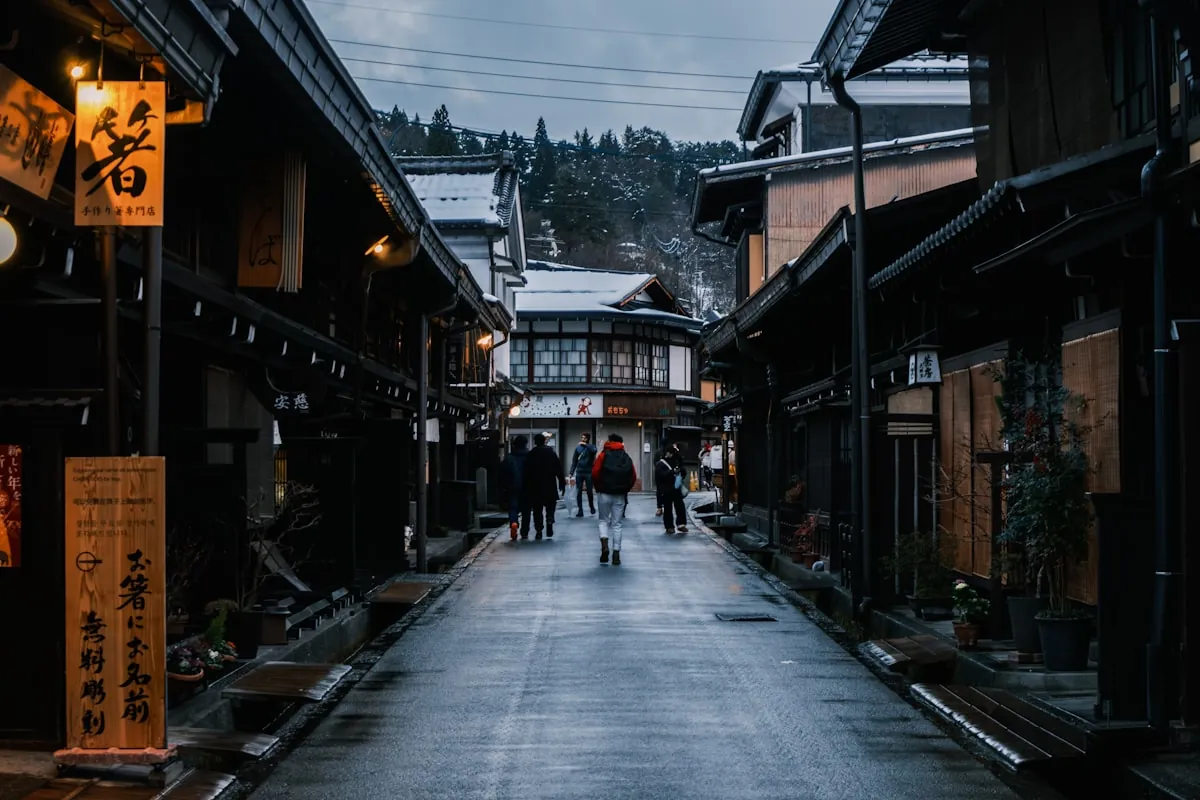
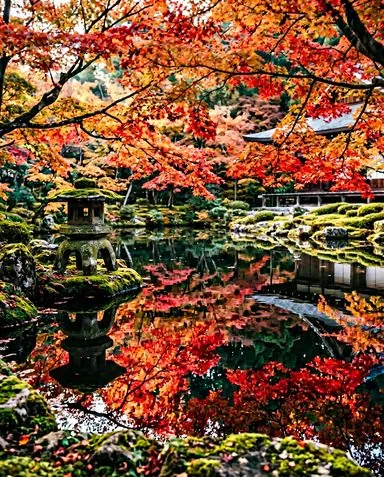
At 599 metres, Mt Takao sits inside Tokyo's own metropolitan area — a 50-minute train ride from Shinjuku, with no advance booking, no specialist gear, and a cable car for anyone who wants to skip the climb. The mountain has six numbered trails of meaningfully different character, a working Buddhist temple, and an open-sky viewpoint that frames Fuji on a clear winter morning. The caveat written on every guide: it is reportedly the most-climbed mountain on earth by annual visitor count, pulling somewhere between 2.6 and 3 million people a year. Which trail you take, and when you show up, determines whether you get a meditative forest walk or a slow queue with trees.
What to Expect
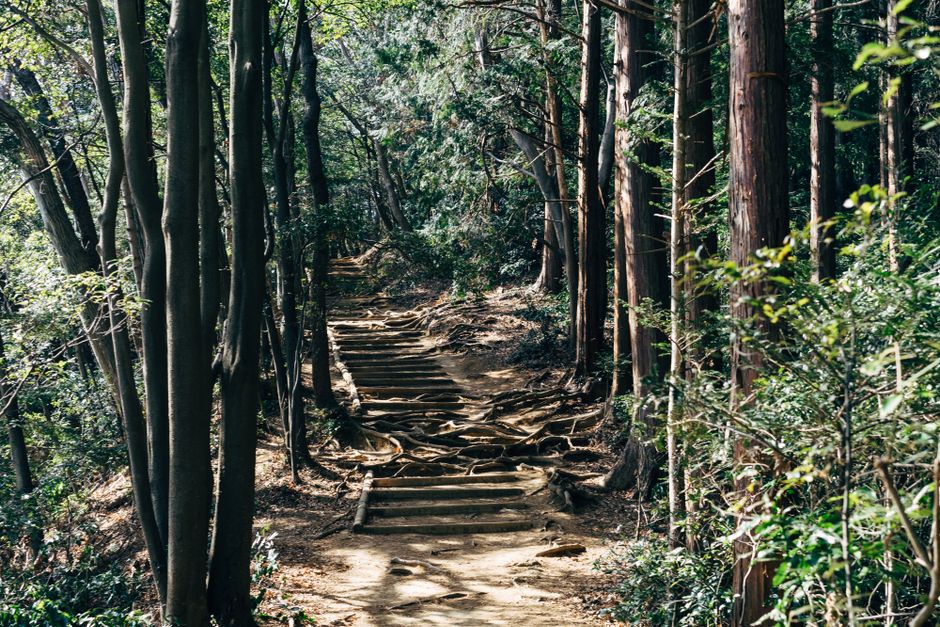
Mt Takao is a forested mountain with a working temple, a Michelin three-star rating as a sightseeing destination, and trails that range from a smooth paved walk to a stream-side scramble. The summit sits at 599 m — modest altitude, real forest. The Tokyo sprawl ends abruptly at the trailhead; thirty seconds in, you are in cedar canopy with almost no urban noise. Summit time on foot is 90 minutes to under two hours depending on trail. The hiking-in-japan tier quiz scores this as Tier 1 — easy, half-day, transit-accessible — and that is accurate, provided you choose the right trail for your day.
Cable car, chairlift, or full hike?
The Kiyotaki cable car ascends from the trailhead to the mid-mountain station (midpoint) in six minutes, cutting roughly half the vertical gain. The chairlift covers the same section in 12 minutes in the open air — more scenic on a clear day, uncomfortable in rain. Both cost ¥490 one-way or ¥950 return for adults, and both accept cash only at the ticket window.
The practical verdict: hike up, cable car down. You earn the views on foot, and the descent on tired legs — where most trail incidents happen — becomes quick and safe. If you have two hours from the trailhead, cable car up and a short walk to the summit works well; the panorama is identical. The cable car makes the mountain genuinely accessible for visitors with limited mobility or very young children, which is part of why the visitor numbers are what they are.
The six trails — pick the right one
Answer two questions and your trail lights up — or just read the cards.
around 1.5 hoursYour match
Cable car + summit stroll
Up in six minutes on the Kiyotaki cable car, then a short walk to the summit — the panorama is identical.
Pick this if: you want the view without the climb, or the day is nearly gone.
shorter than Trail 1Your match
Trail 4
A gentle circuit with a wooden suspension bridge over a valley as its signature point — quieter than the main route.
Pick this if: you are short on time but still want a real walk, or as a return loop after ascending via Trail 1.
3 to 3.5 hoursYour match
Trail 1
The main paved route past Yakuoin to the summit. Wide, well-signed, with food stalls and rest areas along the way — and the busiest trail by a significant margin.
Pick this if: it is your first visit, you have children with you, or you want the full temple experience.
90 minutes each wayYour match
Trail 6
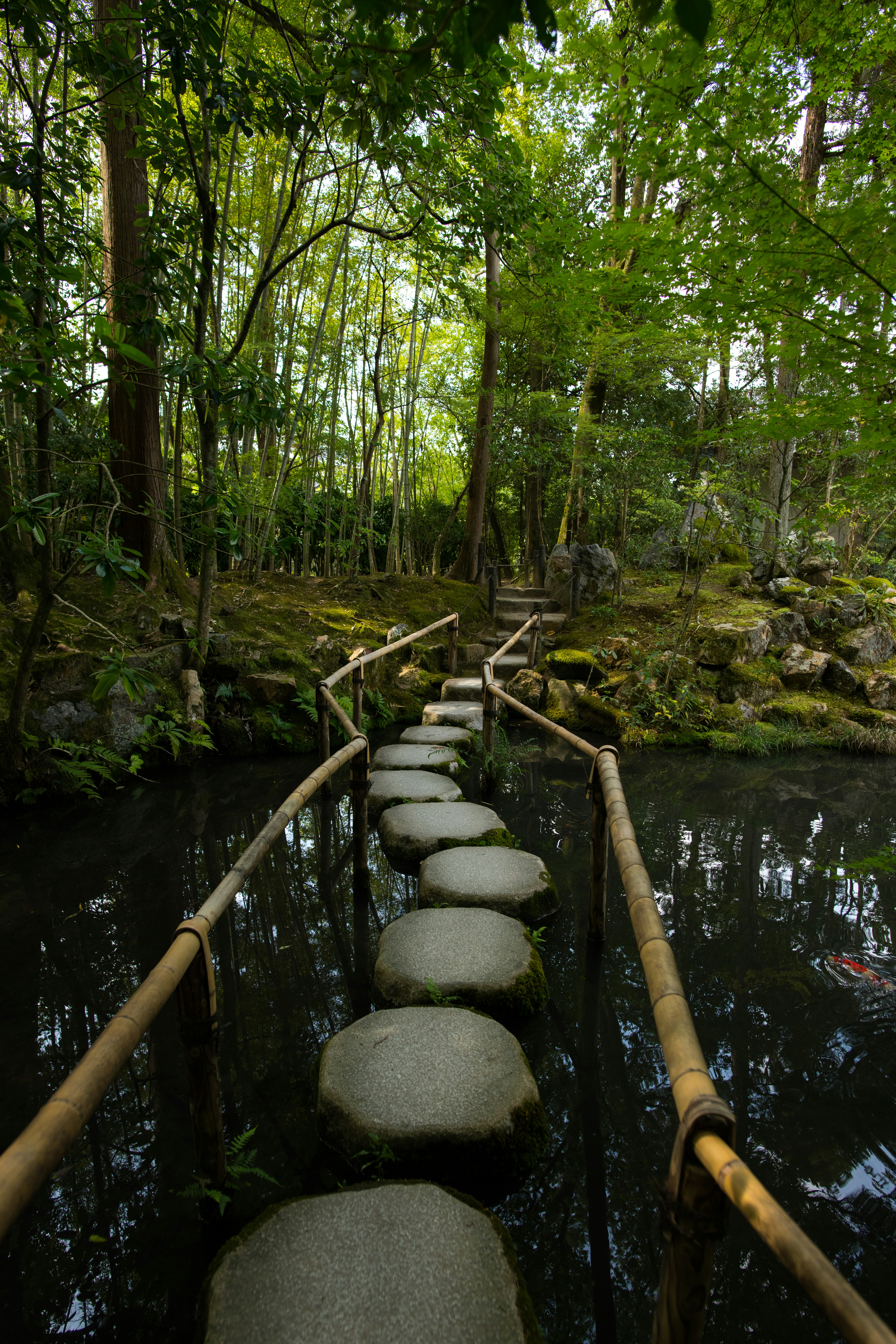
A stream-side path through a gorge, with stepping stones, a small waterfall and minimal paving. Quieter than Trail 1 even on busy weekends — check the official site for maintenance closures.
Pick this if: you want a genuine forest feel over a crowd experience, and you are comfortable with uneven, occasionally wet ground.
Your match
Inariyama trail
The steepest route on the mountain, running along a ridge with good forest canopy and the lowest foot traffic of any named trail.
Pick this if: you have been to Takao before and want a harder climb with fewer people.
Trails 2 and 3 are connecting paths that link the main routes across the mountain's mid-section — useful for building a custom loop rather than an out-and-back; both are quiet by default.
What is at the top
Yakuoin sits just below the summit and is the mountain's cultural anchor. It is dedicated to the tengu — the long-nosed mountain spirits whose red-faced carvings appear on the main gate, the lamp posts lining Trail 1, and virtually every souvenir on the mountain. The main hall and the carved Niomon gate are worth pausing at even for non-temple visitors. Incense smoke, wooden ema votive plaques, and the sound of wooden gongs drifting down from the inner buildings give the trail a character it would not have without them.
Just below the true summit, the Ōmiharashidai Viewpoint gives the widest open panorama. On a clear day — most reliably from December through early March, with February historically the single clearest month — Fuji is unmistakable on the western horizon. From April the atmospheric haze increases; summer views are mostly obscured. The summit area has food stalls serving tororo soba, buckwheat noodles topped with grated mountain yam. The dish has been the mountain's signature food since Yakuoin worshippers ate it for energy before long ascents, and it is still the right call here over anything else on the menu.
When to go
Weekdays are a fundamentally different experience from weekends. Trail 1 on a Saturday in autumn is not a hike — it is a queue with scenery. The autumn foliage window (mid to late November) is the single busiest period of the year. The cherry blossom weeks (late March to early April) run a close second.
The best practical combination: a weekday morning between December and February. Cold, but the least-crowded window of the year, with the clearest Fuji sightlines. Late April — after cherry season, before summer humidity — gives good spring greenery and manageable crowds. Summer is humid, the Fuji view is almost always obscured, and Trail 1 is popular with school groups. If summer is your only option, go for the forest experience on Trail 6 or Inariyama and set no expectations about the view.
Crowds and Fuji visibility by season
The same mountain is a different experience depending on when you show up. The honest picture, season by season.
December–February
CrowdsQuiet Least-crowded window of the year; February is the clearest Fuji month
WeatherCold, dry air — the most reliable Fuji sightlines
Late March–early April
CrowdsBusy Cherry blossom weeks — a close second to autumn
WeatherSpring; atmospheric haze increases from April
Late April
CrowdsModerate After cherry season, before the humidity
WeatherGood spring greenery
Summer
CrowdsBusy School groups on Trail 1 — take Trail 6 or Inariyama
WeatherHumid; the Fuji view is almost always obscured
Mid–late November
CrowdsPeak Autumn foliage — the single busiest period of the year
WeatherFoliage at its best; arrive at opening time
How to Get There
Getting There
From Shinjuku Station
- 1Take Keio line Limited Express toward Takaosanguchi → Takaosanguchi station
- 2Walk from station to trailhead
Tips
- Trail shoes are recommended, not optional, for Trails 6 and Inariyama. Trail 1 is paved and manageable in trainers. The stream-side and ridge routes have uneven, sometimes slippery terrain — a grip sole and ankle support matter.
- Bring cash. The cable car, chairlift, and most summit stalls are cash-only. A 7-Eleven ATM is available at Takaosanguchi station.
- IC card covers the train. Suica or Pasmo works throughout the Keio line; no booking or advance purchase needed.
- Time budget: Trail 1 round trip on foot takes 3 to 3.5 hours including summit time. Cable car up plus hiking back: around 2 hours. Cable car both ways with a summit wander: around 1.5 hours.
- Get there before 9am on weekends if you want any peace on Trail 1. The trailhead car park fills by 9:30 on busy days and the queue for the cable car follows shortly after.
- Check trail 6 status before going. Intermittent maintenance closures apply. The official Keio cable car site publishes current trail access information.
- Coin lockers are available at Takaosanguchi station. Leave large bags before the ascent.
- For IC card and transport logistics, see the getting around Japan guide. For JR Pass applicability on Keio line routes, see the JR Pass guide — the Keio line is a private railway and not covered by the JR Pass.
Nearby
Other options within reach of central Tokyo.
FAQ
Is Mt Takao worth visiting if I only have one free day in Tokyo?
Yes, if the timing is right. The round trip from central Tokyo — including hiking time on Trail 1 — fits into five to six hours. Pair it with a morning or evening in Shinjuku to make the most of the day. On a weekend or during autumn foliage season, expect genuine crowds on Trail 1 from mid-morning onward. In that case, arrive before 8am or take Trail 6 for a quieter experience. On a winter weekday, the mountain rewards you with forest solitude and a real chance of seeing Fuji.
Do I need hiking boots for Mt Takao?
Not for Trail 1, which is fully paved and manageable in ordinary trainers. For trail 6 or the Inariyama trail — both involving uneven rocky terrain, stream crossings, and occasionally wet ground — light hiking shoes with a grip sole make a real difference. Nothing technical is required. Any shoe with decent tread and some ankle support will do.
Which trail is best for first-time hikers?
Trail 1. It is wide, paved the entire way, clearly signed, and passes Yakuoin, the main food stalls, and the most amenities. The gradient is steady but never steep. If crowds are heavy on Trail 1, Trail 4 is a quieter alternative for first-timers — shorter than Trail 1 and with a suspension bridge as a highlight.
Can I see Mount Fuji from Mt Takao?
On a clear day, yes — from the Ōmiharashidai Viewpoint and from the summit area. The best conditions are December through early March. February is historically the clearest month, with cold dry air and low humidity. From April the atmospheric haze increases and the full mountain is visible only about a quarter of the time; summer views are usually blocked entirely. Check a Fuji visibility forecast the morning before you go — several apps and websites track conditions in near-real-time.
How crowded is Mt Takao on weekends?
Mt Takao receives around 2.6 to 3 million visitors a year, cited in multiple sources as the most-climbed mountain in the world by annual count. On autumn foliage weekends (mid to late November) and during cherry blossom season (late March to early April), Trail 1 is crowded from mid-morning. Weekday visits, or arriving before 8am on weekends, makes a significant difference. For a similar forested hike with far fewer people, Mount Mitake — about 90 minutes from Shinjuku via the Chūō Line — offers comparable terrain, a mountaintop Shinto village, and a fraction of the foot traffic.