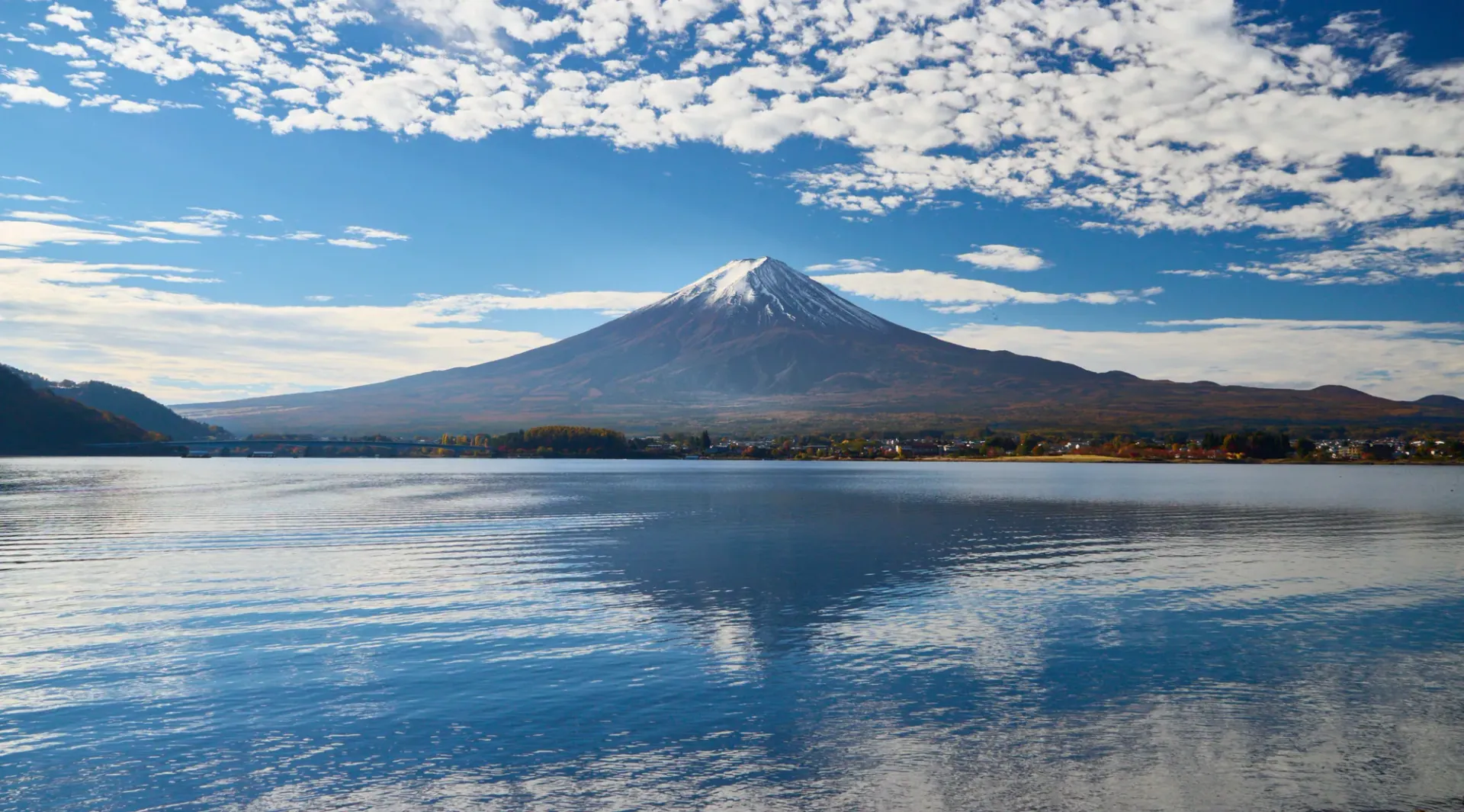

The Fujigoko, five lakes at the northern foot of Mount Fuji, are about two hours from Tokyo by highway bus.
Most visitors see only Kawaguchiko. Lake Shojiko, further west, has a similar Fuji view across open water with far fewer people.
What to expect
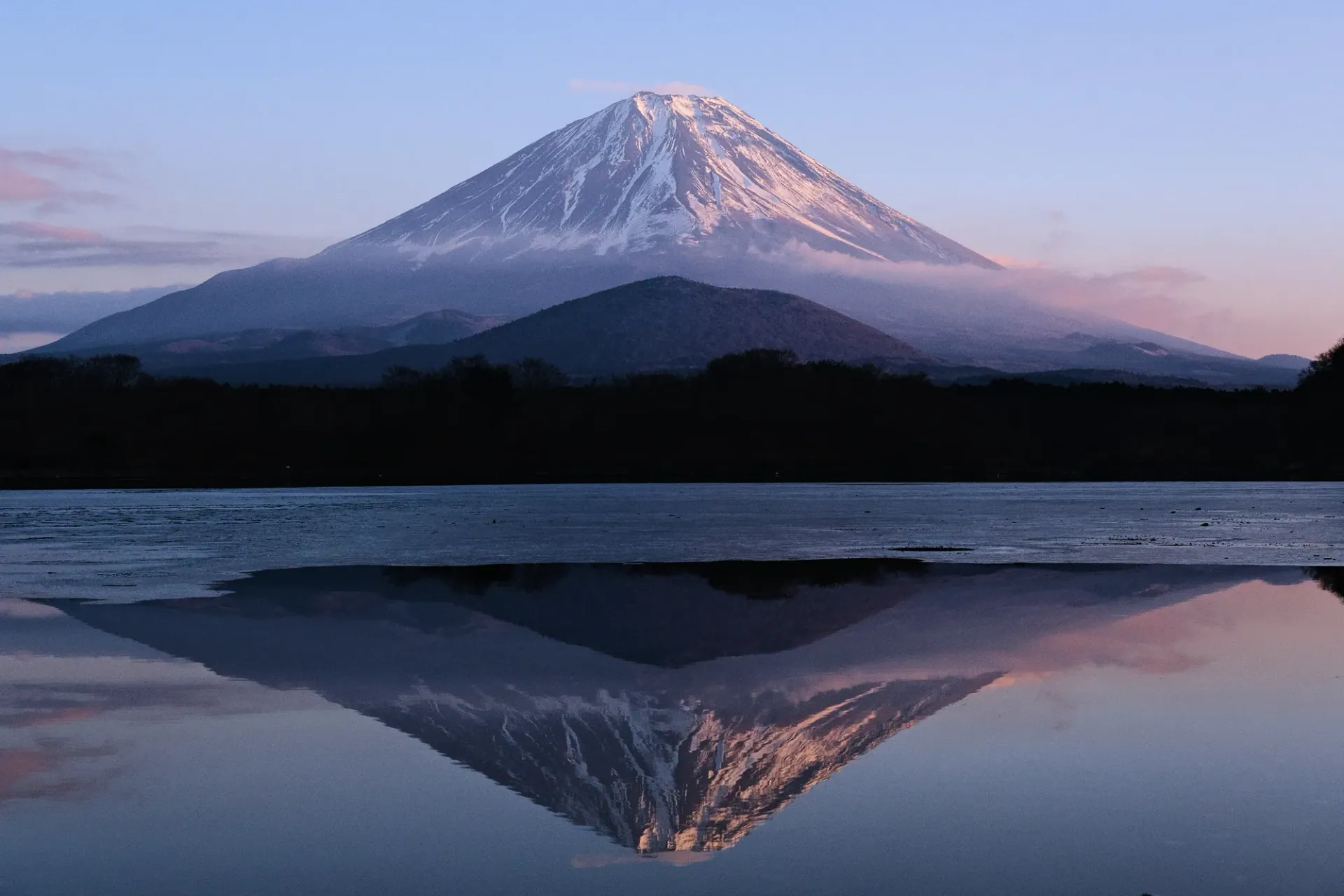
Lake Shojiko: the quiet reflection
- Why go: Lake Shojiko is the smallest of the five lakes. From its shore you see Fuji across open water, without tour buses or a busy lakefront.
- Best time: October and November, when cold nights bring still mornings and clear air. Cherry blossom in early to mid-April is a second peak.
- Getting there: the Blue Line sightseeing bus from Kawaguchiko Station. In fine weather a rental bicycle from Kawaguchiko is an option.
Lake Kawaguchiko: the practical base
- Why stay here: Lake Kawaguchiko has the best transport from Tokyo, the most hotels and a lakefront with cafes and rental shops.
- The classic view: the north shore looks across the lake to Fuji. Go at sunrise, before cloud builds and the car parks fill.
- Mt. Tenjo ropeway: a short ride from the lakeshore to a viewpoint above the lake, with Fuji behind it. Expect queues on weekends and holidays.
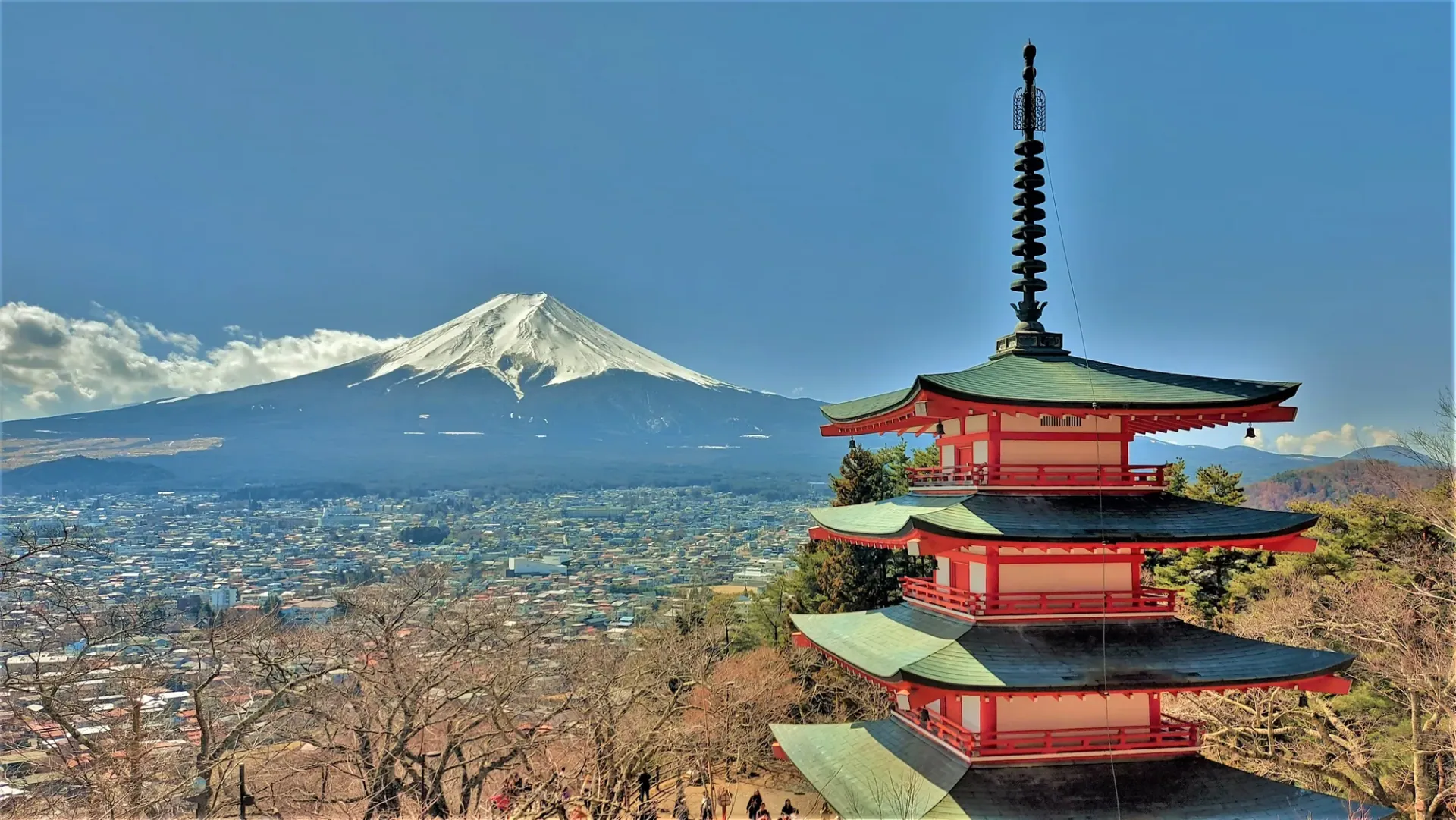
Arakurayama Sengen Park: the pagoda shot
- The view: the famous photo of a red five-storey pagoda with Fuji behind it is taken at Arakurayama Sengen Park Observatory in Fujiyoshida, not at Kawaguchiko.
- The climb: 398 stone steps up to the viewpoint. Wear good shoes.
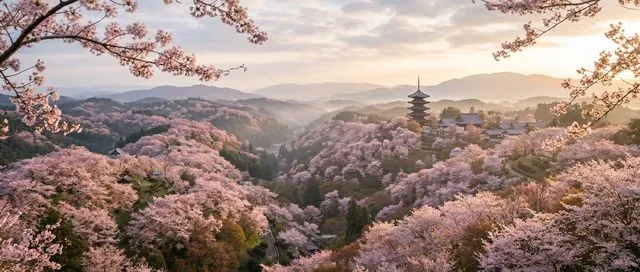
- Crowds: busiest in cherry blossom season (early to mid-April). Come early in the morning or late in the day.
- Getting there: Fujikyuko Line to Shimoyoshida Station, then walk uphill to the park.
Lake Saiko and Iyashi no Sato Nenba
- The lake: Saiko is quieter than Kawaguchiko, with Fuji views from parts of the shore.
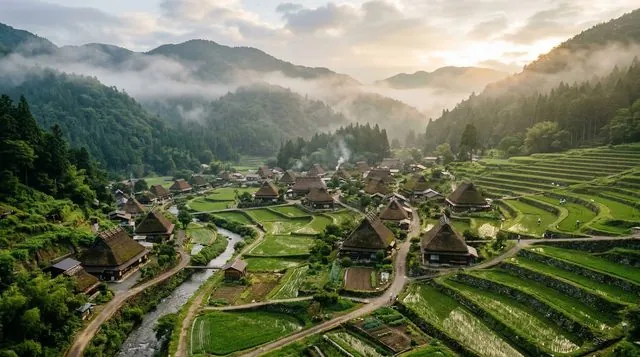
- Saiko Iyashi no Sato Nenba: a rebuilt village of thatched houses on the site of Nenba, a hamlet destroyed by landslides in a 1966 typhoon. It now holds craft workshops and small shops. Admission is charged.
- Getting there: the Green Line sightseeing bus from Kawaguchiko Station. It pairs well with Shojiko as a western-lakes half day.
Oshino Hakkai
- What it is: Oshino Hakkai is a group of eight spring-fed ponds in Oshino village, between Kawaguchiko and Lake Yamanakako. The water is Fuji snowmelt filtered through volcanic rock, and very clear.
- Guided tour: a local guide explains the springs and the village, which the Japanese-only signs do not.
- Getting there: the hourly Fujiyoshida–Oshino–Yamanakako loop bus from Kawaguchiko Station stops here, or come by car.
How to get there
Getting There
- 1Fujikyu highway bus from the Shinjuku expressway bus terminal → Kawaguchiko Station
- 2From Kawaguchiko Station: Red Line for the Kawaguchiko shore, Green Line for Saiko, Blue Line for Shojiko → Lake stops
- 1JR Chuo Line limited express to Otsuki → Otsuki Station
- 2Fujikyuko Line (via Shimoyoshida for Arakurayama) → Kawaguchiko Station
- By bus from Shinjuku: Fujikyu highway bus from the Shinjuku expressway bus terminal to Kawaguchiko Station, about 1 hr 45 min, about ¥2,200. Book ahead on weekends.
- By train: JR Chuo Line limited express to Otsuki (about 70 min), then the Fujikyuko Line to Kawaguchiko (about 55 min, about ¥1,170).
- Around the lakes: the Red, Green and Blue sightseeing bus lines leave from Kawaguchiko Station. A pass for unlimited rides pays off after a few trips.
- Lake Yamanakako and Oshino Hakkai: not on the Red, Green and Blue lines. The separate Fujiyoshida–Oshino–Yamanakako loop bus runs hourly from Kawaguchiko Station.
Tips
Two seasons stand out: early to mid-April for cherry blossom at Arakurayama, and October to November for clear mountain air. Golden Week in late April to early May brings the biggest crowds.
March
CrowdsModerate Quieter before the cherry blossom
WeatherSun and cloud
April
CrowdsPeak Cherry blossom in early to mid-April; Golden Week builds from late April
WeatherSunny
May
CrowdsPeak Golden Week (late April to early May)
WeatherSunny
October
CrowdsBusy Clear air; car parks fill by mid-morning on weekends
WeatherSun and cloud
November
CrowdsPeak Autumn colour and clear Fuji views; book a hotel early
WeatherSun and cloud
- Arrive before 9am: Fuji is usually clearest in the early morning and cloud often builds as the day goes on. Take the earliest bus from Shinjuku, or stay the night.
- Book early for peak weekends: Kawaguchiko hotels fill up for autumn colour (October and November) and cherry blossom (early to mid-April). Fujiyoshida, a few stops down the Fujikyuko Line, is the fallback.
- A car saves time: with a car you can do all five lakes in a day without working around bus timetables.
- Avoid Golden Week: late April to early May is the busiest time of the year at Kawaguchiko.
- Want to climb Fuji? That is a different trip, with its own season and rules. Read our guide to climbing Mount Fuji.
Consider Lake Yamanakako Instead

- Where
- Yamanakako Village, Minamitsuru District, Yamanashi
- Map
- Open in Google Maps →
Lake Yamanakako delivers the same core experience as Lake Kawaguchiko—a frontal view of Mount Fuji across clear water, with hiking and scenic driving routes—but with substantially fewer tour buses and roadside crowds. At 15 km away in the same Fuji Five Lakes region, it offers comparable photographic vantage points and access to the mountain's reflection, while remaining quieter year-round. The trade-off is slightly less developed infrastructure and fewer lakeside restaurants, but the visual reward and solitude are genuine.
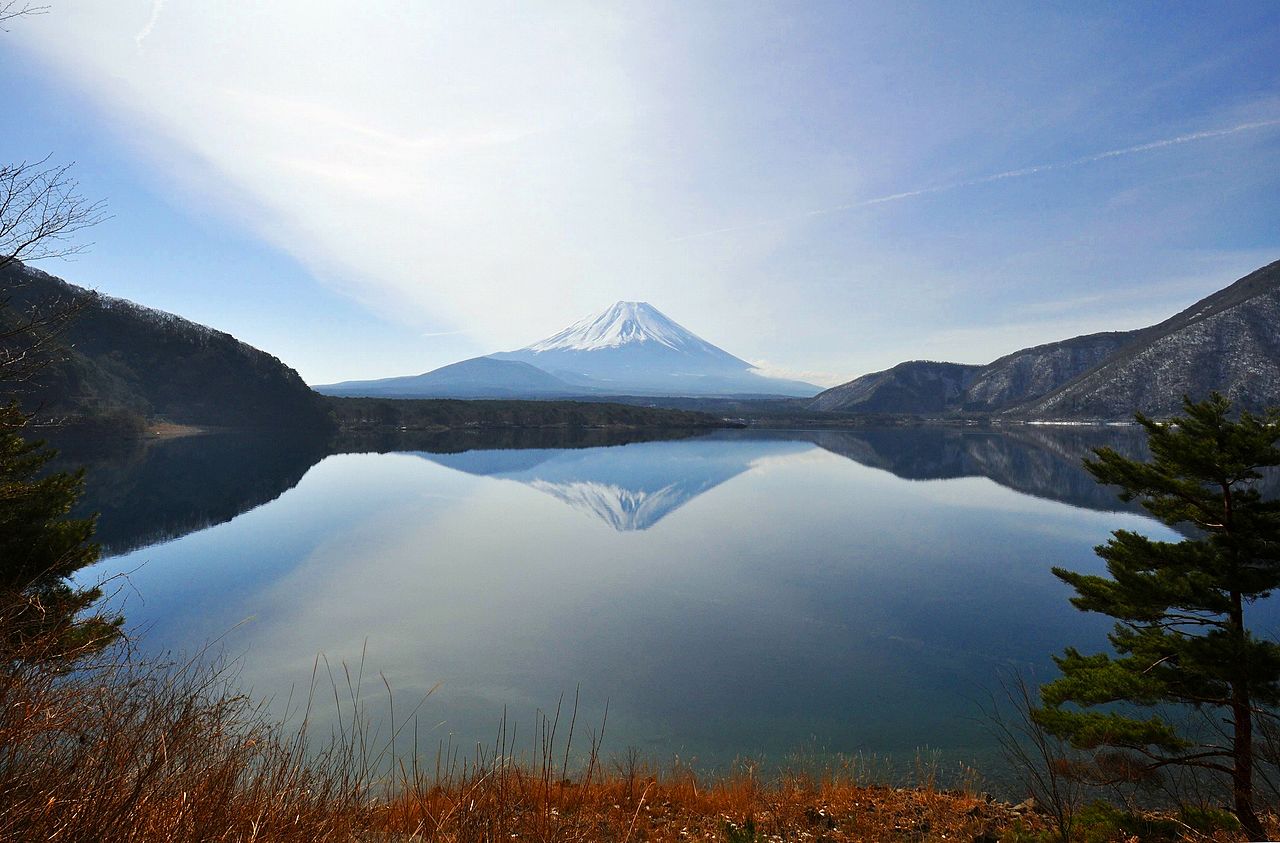
- Where
- Motosu, Fujikawaguchiko, Minamitsuru District, Yamanashi 401-0337
- Map
- Open in Google Maps →
Both lakes sit in the Fuji Five Lakes region and offer views of Mount Fuji across water, but Lake Motosuko draws far fewer tour buses and day-trippers than Kawaguchiko's crowded northern shore. Motosuko's steeper banks and more remote location preserve the contemplative quality of a mountain-lake visit without the roadside congestion; the 16 km distance makes it an easy substitution within the same day trip.

- Where
- Shoji, Fujikawaguchiko, Minamitsuru District, Yamanashi
- Map
- Open in Google Maps →
Lake Kawaguchiko draws visitors seeking an unobstructed view of Mount Fuji across calm water, a quintessential Japanese landscape moment. Lake Shojiko, 13.6 km away in the same Fuji Five Lakes region, offers the same sight line with substantially fewer tour buses and crowds, though the vantage angle differs slightly and the lake itself is smaller in scale.
Nearby
The Fuji lakes are a gateway to more of Yamanashi and the Fuji area.
FAQ
Which of the five lakes has the best view of Mount Fuji?
Kawaguchiko and Shojiko both look across open water to Fuji. Shojiko is much quieter, which makes it better for photos; Kawaguchiko has the transport and hotels.
Can you visit the five lakes as a day trip from Tokyo?
Yes. An early bus from Shinjuku gets you to Kawaguchiko in about 1 hr 45 min, enough for Kawaguchiko, Arakurayama and one western lake. For all five lakes or an early-morning Fuji view, stay overnight.
When is the best time to visit the Fuji five lakes?
October and November for clear views and autumn colour, or early to mid-April for cherry blossom. Both are busy, so book early and go out before 9am.
Is there a bus between all five lakes?
The Red, Green and Blue sightseeing bus lines link Kawaguchiko, Saiko, Shojiko and Motosuko. Lake Yamanakako is on a separate loop bus, also from Kawaguchiko Station.
Do you need a car to visit all five lakes?
No, but it helps. Kawaguchiko and Arakurayama are easy by public transport. Shojiko and Saiko are on the sightseeing bus. For all five in one day, rent a car at Kawaguchiko.