
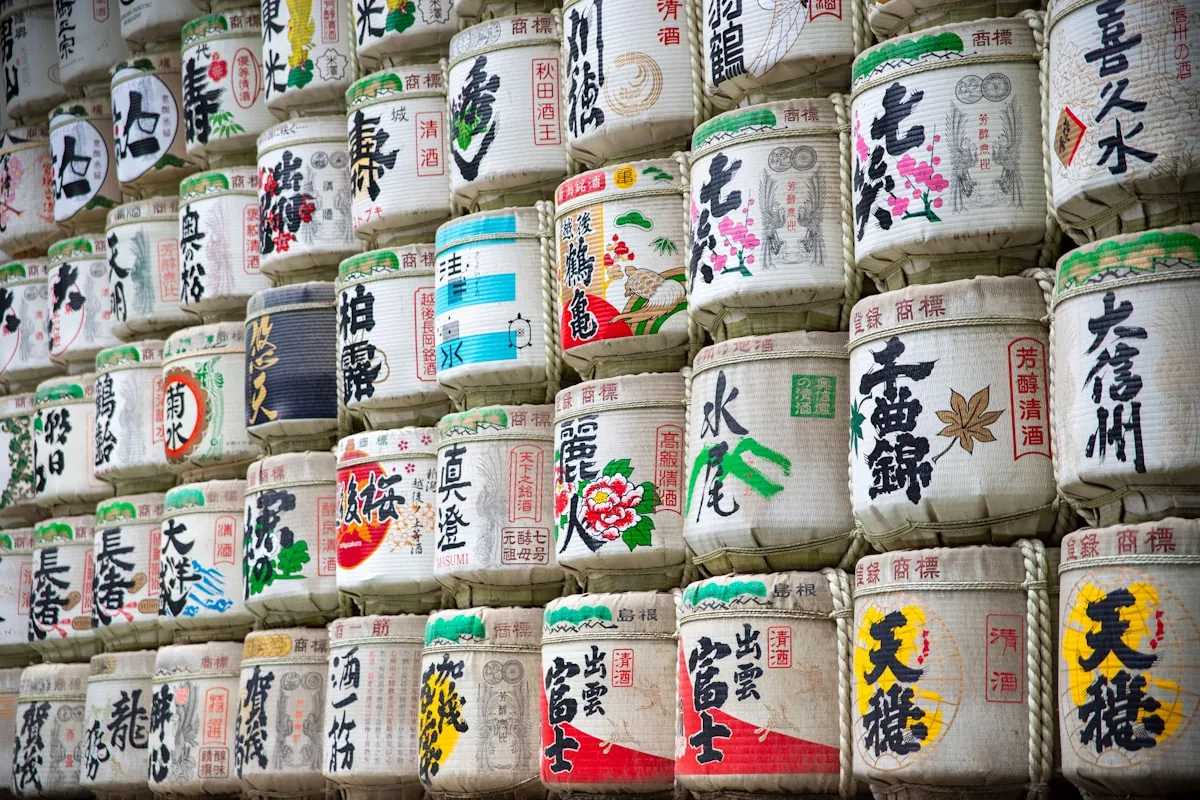
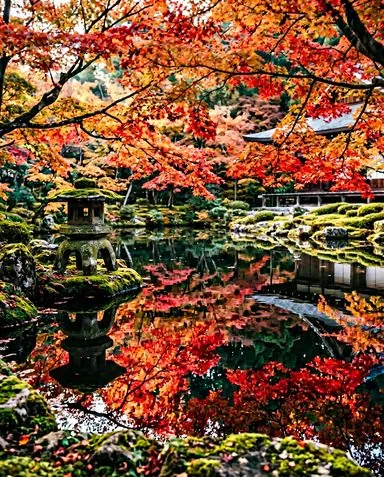

Osaka has a nickname: Tenka no daidokoro, the kitchen of the nation. It’s been the country’s commercial centre since the Edo period, the historical clearing-house for rice and sake and dried fish, and Japan’s undisputed capital of street food. The local saying is kuidaore (“eat yourself broke”), and it’s not a marketing line. Where Tokyo eats with restraint and Kyoto eats with ceremony, Osaka eats loud, cheap, and at counter speed, and most of the famous dishes were invented in this city. Below: six cuisines that define Osaka, plus the markets, the base-camp neighborhoods, and the practical rules.
Cuisine-first organisation, because that’s how a serious Osaka-eater plans the trip. Each section: 1–3 verified picks, what to order, how much it costs. Plan to spend ¥1,500–¥4,000 (€10–€26) per meal at the street-food / casual tier (most of the trip), with one ¥10,000–¥20,000 splurge for the kappo (counter-kaiseki) night. Cash is the default everywhere except the chains and the kappo houses.
1. Takoyaki: Osaka invented it
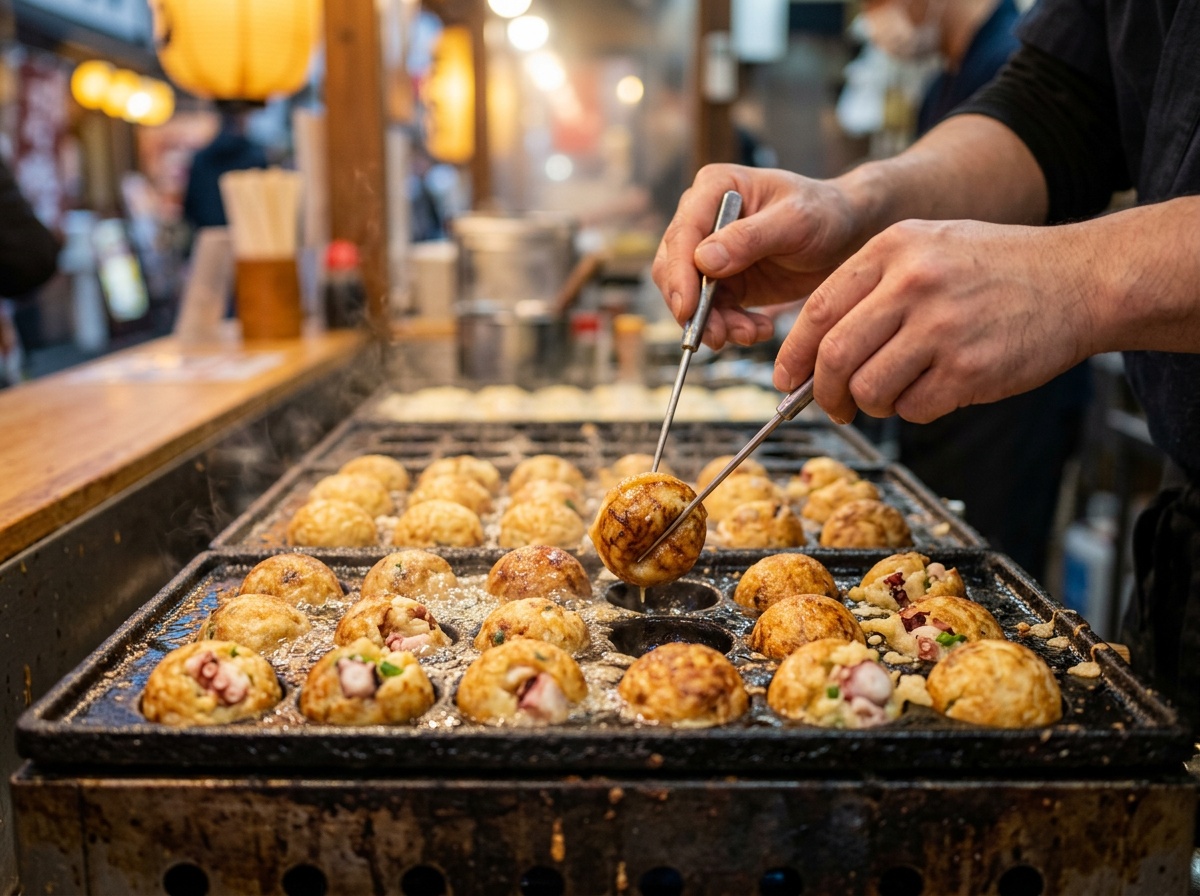
Takoyaki (たこ焼き) is the dish most international visitors recognise on sight: golf-ball-sized round griddle-cakes of wheat batter filled with octopus, brushed with sweet-savoury sauce, drizzled with mayo, dusted with bonito flakes and aonori (seaweed). They were invented in Osaka in 1933 at a street-cart called Aizuya (会津屋) by chef Tomekichi Endo, and the dish never properly left the city — you can buy supermarket-frozen takoyaki anywhere in Japan, but the street-cart version is an Osaka thing.
 ★ Author's Pick
Aizuya (会津屋), the takoyaki originator
The shop that invented takoyaki in 1933. Multiple branches including the Namba / Dotonbori area. Eight to twelve takoyaki per order, ¥500-700. Cash + IC. Daily until late evening.
Multiple branches across Osaka; the Namba branch is the easiest first-timer pickView on Google Maps →Aizuya is the original takoyaki shop and worth visiting for the historical context — the original takoyaki was served with a dashi-based dipping sauce rather than the modern sweet-soy glaze and mayo. The shop still serves both styles. Eight to twelve takoyaki per order, ¥500–¥700 (€3–€5). For the modern Dotonbori takoyaki experience (the queue-and-eat-on-the-bridge ritual), the major Dotonbori counters (multiple operators, all selling broadly the same dish) are open until midnight and serve thousands per night to the river-side crowds. For a focused deep-dive on the takoyaki tier see our coming Best Takoyaki in Osaka guide; for now, eat at least one Aizuya order and one Dotonbori street-counter order to taste the spectrum.
2. Okonomiyaki: Osaka’s signature savoury pancake
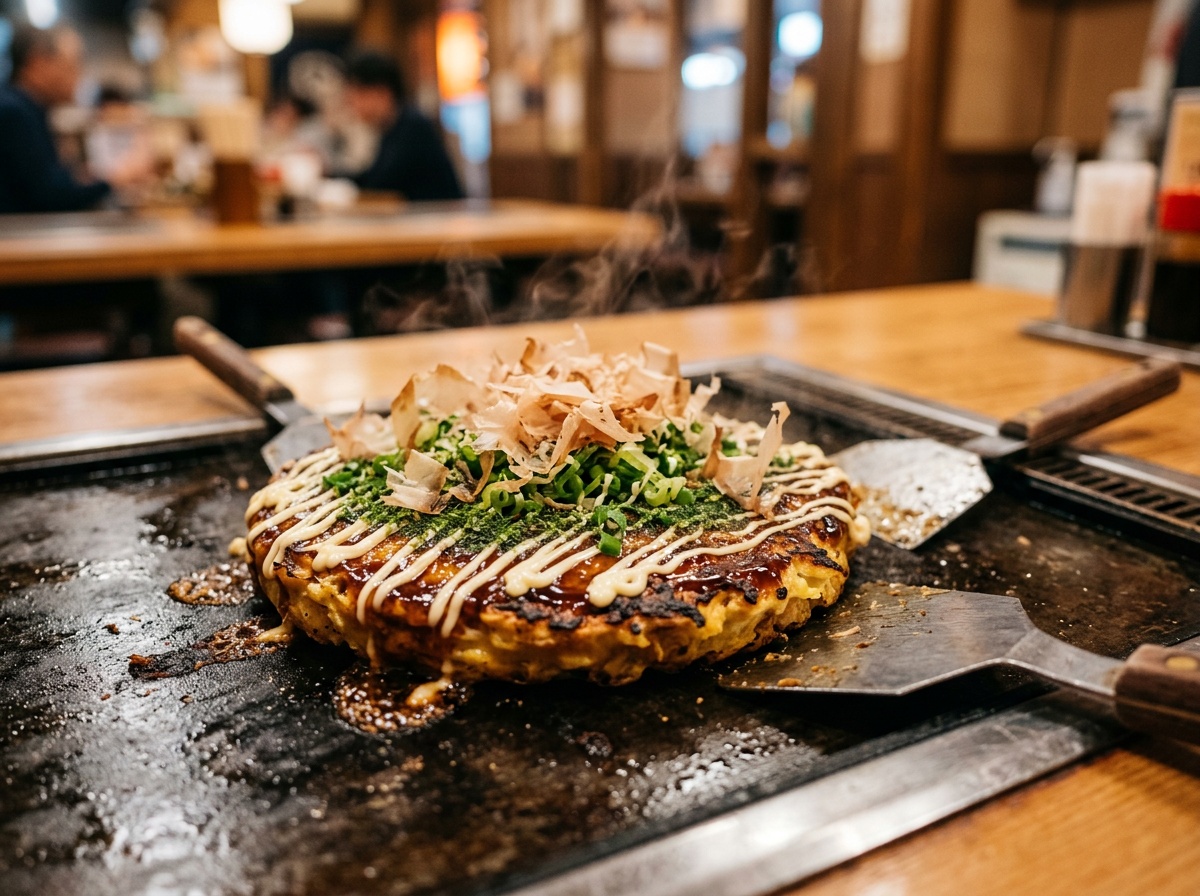
Okonomiyaki (お好み焼き) is a savoury pancake of shredded cabbage + flour batter + your choice of protein (pork, shrimp, squid, mochi, cheese) cooked on a griddle and topped with the same sweet-savoury sauce, mayo, bonito flakes, and aonori as takoyaki. The Osaka style mixes everything together before grilling, producing a thick fluffy pancake the size of a dinner plate. Hiroshima makes a different version (layered with noodles) which is its own thing. In Osaka, expect to either eat at a counter where the chef cooks in front of you, or at a teppan table where the staff cooks on the hotplate at your table and you eat directly off the iron.
 ★ Author's Pick
Mizuno (美津の), Dotonbori okonomiyaki institution
Open since 1945 in Dotonbori. Counter and teppan-table seating. Expect a 30-60 min queue at peak (12:00-14:00, 18:00-20:00); go off-peak. ¥1,500-2,500 per dish. Cash + IC.
1-4-15 Dotonbori, Chuo-ku, Namba Stn 5 min walk, on Dotonbori main streetView on Google Maps →Mizuno has been making okonomiyaki on the same Dotonbori block since 1945, which makes it one of the oldest okonomiyaki shops still operating. The signature is the yamaimo-yaki — an okonomiyaki using mountain-yam flour rather than wheat, which produces a lighter and fluffier pancake than the standard. Queue 30–60 minutes at peak; go 14:30 or 17:00. The other widely-recommended Dotonbori option is Chibo, the chain founded in Osaka with a Dotonbori flagship that has English menus and a less-intense queue. Both serve the same dish well; the choice is essentially ‘heritage’ (Mizuno) vs ‘convenient’ (Chibo). The deep-dive on the okonomiyaki scene comes in our upcoming Best Okonomiyaki in Osaka guide.
3. Kushikatsu: Shinsekai’s deep-fried skewer street
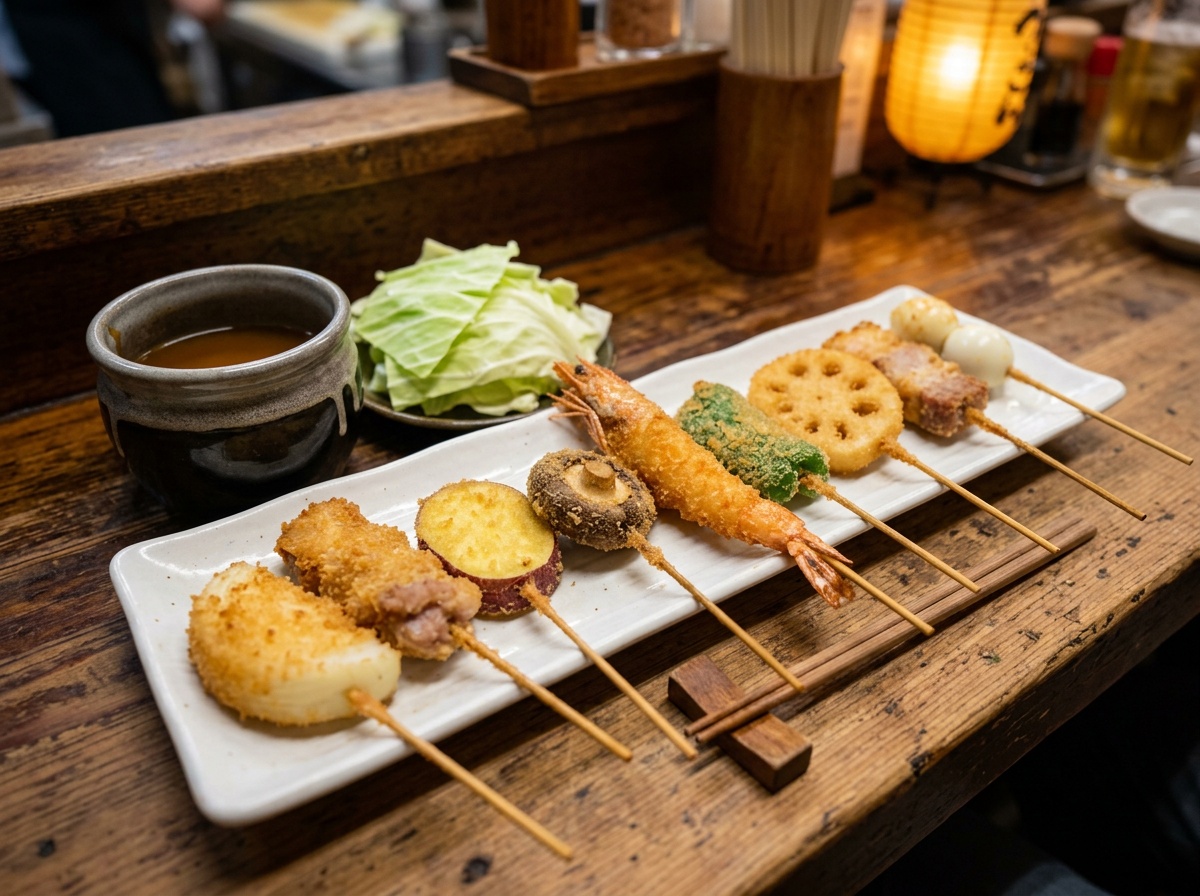
Kushikatsu (串カツ) is Osaka’s contribution to the Japanese fried-food canon: skewers of meat, vegetables, cheese, quail eggs, lotus root, anything — battered in panko, deep-fried to order, dipped in a communal pot of sweet Worcestershire-style sauce that sits on every table. The rule that defines the entire genre: no double-dipping. You dip your skewer once at the start and never again. The sauce-pot is shared with everyone in the room; double-dipping breaks the social contract. (If you want more sauce halfway through, use the free cabbage leaves on the table to scoop sauce onto the skewer instead.)
 ★ Author's Pick
Daruma (だるま), Shinsekai kushikatsu original
Founded 1929 in Shinsekai under Tsutenkaku tower. Multiple branches across Osaka now; the Shinsekai honten (main branch) is the original. Counter and table seating, loud-and-fast atmosphere. Cash + IC. Daily until late.
2-3-9 Ebisu-Higashi, Naniwa-ku, Dobutsuen-mae Stn 3 min walk, under Tsutenkaku towerView on Google Maps →Daruma is the kushikatsu shop that’s defined the genre since 1929. It’s in Shinsekai, the working-class district at the foot of Tsutenkaku tower — an area that was Osaka’s answer to Coney Island in the 1910s, fell into post-war decline, and has reinvented itself as the kushikatsu street. Skewers ¥120–¥200 each; you order 10–15 plus beers, total ¥2,500–¥3,500 per person. The neighbourhood itself is the experience — walk Tsutenkaku at dusk, eat kushikatsu in the alleys, drink cheap beer with the salarymen, take the photo. The Kushikatsu Tanaka chain (also founded in Shinsekai) has more accessible English-friendly branches across Osaka if Daruma’s queue is too long.
4. Kuromon Ichiba: the chefs’ market
Kuromon Ichiba (黒門市場) is Osaka’s Tsukiji-equivalent: a 600-metre covered arcade in the city centre with 150+ vendors selling fish, vegetables, fruit, pickles, snacks, and a growing tier of stand-up eateries that grill the fish in front of you. The kappo and sushi chefs of Osaka still source here. So can you.
The walking strategy: start at the Sakaisuji end at 09:30, work west, eat as you go. The famous stops: Maguro-ya Kurogin (fresh tuna sashimi, ¥500–¥1,500 per portion); Nishikawa (oysters and grilled sea urchin in season); the fugu street-stalls (puffer fish sashimi, only at certain stalls licensed for it, ¥1,500–¥3,000 a portion); and the seasonal strawberry / muskmelon stands (¥500–¥2,000 for premium fruit). Avoid the lunch rush 12:00–13:30 when tour buses arrive. Pre-10:30 or post-15:00 is when the market actually breathes. Cash everywhere; some larger vendors take cards.
5. Sushi: the Osaka pressed-sushi tradition
Osaka sushi is a different tradition from Tokyo Edomae. The signature local style is hakozushi or oshizushi — pressed sushi, where vinegared rice and fish are layered in a wooden mould, pressed flat, and cut into rectangular pieces. The dish predates the modern Edomae nigiri by centuries and was invented in Osaka because the city is on the Inland Sea but historically didn’t have the open-ocean access that Tokyo’s wholesale-market culture built around. The classic Osaka sushi is battera (mackerel pressed sushi with kombu) — oily, vinegared, intense, almost more like cured fish than raw sushi. Worth ordering once for the historical context.
For modern Edomae nigiri in Osaka, the bookable Michelin tier exists in the Kita-Shinchi (north Osaka, near Umeda) entertainment district — broadly similar to the Tokyo Edomae scene at half the price for similar quality. The Osaka high-end sushi houses are an under-rated alternative to the Tokyo ones for anyone who can’t book Sushi Saito. For the Tokyo Edomae deep-dive see our Best Sushi in Tokyo guide; the Osaka equivalents follow the same omakase tradition with shorter lead times.
6. Kappo: Osaka counter-kaiseki
Kappo (割烹) is Osaka’s answer to Kyoto kaiseki: multi-course counter-style Japanese dining, watching the chef cook in front of you, seasonal ingredients, restrained presentation. The difference from Kyoto kaiseki is that kappo is counter-only (no tatami private rooms), more casual in atmosphere, and roughly half the price for similar technical quality. Osaka has a strong concentration of kappo restaurants in Kita-Shinchi (north Osaka) and Hozenji Yokocho (south, near Dotonbori) — both areas walkable, both with multiple Michelin-rated counters in the ¥10,000–¥20,000 dinner range.
The kappo tier is where serious food travellers eat in Osaka. The Kita-Shinchi sushi-and-kappo evening (one sushi counter at 18:00, one kappo counter at 20:30) is the Osaka equivalent of a Ginza-night-out in Tokyo, at substantially less money. Reservations 2–3 weeks ahead via hotel concierge. Lunch courses available at most kappo houses for ¥5,000–¥10,000, same chef, same kitchen.
Where to base yourself in Osaka
Three base-camp neighborhoods cover the food spectrum:
- Dotonbori / Namba (south Osaka). The neon-lit food district — takoyaki, okonomiyaki, ramen, Dotonbori-river crowds, Glico running-man sign. Walking distance to Shinsekai (kushikatsu) in 15 min, Kuromon Market in 10 min. The most touristed area but also the most efficient for street-food eaters. Stay here for a first Osaka trip.
- Umeda / Kita-Shinchi (north Osaka). The business district, Osaka Station, the high-end kappo and sushi tier. Less neon, more restaurant variety. Walking distance to a stronger Michelin-rated dining cluster than Dotonbori. Better for serious food travellers on a second trip, or for shinkansen-arrivals at Shin-Osaka.
- Shin-Osaka (north of the city centre). The shinkansen hub, useful for day-trips to Kyoto (15 min by Shinkansen) or Hiroshima (90 min). Not a food destination in itself, but a convenient base if Osaka is the launching pad for a wider Kansai trip.
How to eat in Osaka
- Cash. Most street-food stalls, Daruma kushikatsu, the Kuromon Market vendors, and the older okonomiyaki shops are cash-only. Bring ¥3,000 in small notes per person per day. ATMs at 7-Eleven on every corner.
- No double-dipping. Kushikatsu rule, applies everywhere with a communal sauce-pot. Use the cabbage leaves on the table as sauce-scoops if you want more after the first dip.
- Order in rounds. Like the Tokyo izakaya pattern — don’t order everything at once. Order 3–4 dishes, see what you want next, order again. The kitchen is fast; the plates are small.
- Peak times. Lunch 12:00–13:30 at the famous Dotonbori shops means 30-90 min queues. Dinner 18:00–21:00 is the salaryman crowd. Off-peak (11:00, 14:30, 22:00) is when the experience is best.
- No tipping. Same as everywhere in Japan. Service is in the price. Leaving extra coins on the table will confuse staff and triggers a chase out the door.
- Osaka dialect. Locals speak Osaka-ben (the dialect) more than Tokyo-style standard Japanese. Useful word: maido (loose translation: “welcome / thanks / see you again”) — you’ll hear this at every counter.
- The Osaka eat-itself-broke rule. Reckon ¥4,000–¥6,000 (€26–€40) per person per day on food across all three meals. Less than a single Tokyo Michelin meal. Eat across cuisines: takoyaki for snack, okonomiyaki for lunch, kushikatsu for dinner, kappo for the splurge night.
- Vlucht-tip / Flight note. KLM and Lufthansa fly direct from Amsterdam Schiphol and Frankfurt to Kansai International Airport (KIX) — ~12 hours, around €700–€900 return in low season. KIX is on a man-made island 50 km south of Osaka; the Nankai Rapi:t or JR Haruka Express both run to central Osaka in 35–45 minutes.
Related reading
- Best Izakaya in Osaka — the Osaka izakaya scene (separate from the Tokyo izakaya tier).
- Where to Eat in Tokyo — the Tokyo equivalent, eight cuisines covered.
- Where to Eat in Kyoto — the Kyoto equivalent, kaiseki + tofu focus.
- 5 Cheapest Chain Restaurants in Japan — the chain backup for Osaka days.
- Japanese Food — interest hub with all our food articles.