

Tokyo’s street-food culture is different from Bangkok’s or Mexico City’s or Istanbul’s. There aren’t many vendor carts on corners. There aren’t food trucks parked outside office towers. What Tokyo has instead are shotengai (covered shopping streets), yokocho (yakitori-and-izakaya alleys), ichiba (food markets), and depachika (department-store basement food halls) — six different layouts of essentially the same idea: short walks where the food is the destination, eaten standing, paid in cash, finished in fifteen minutes. The dish itself is rarely the point. The walking is.
Below: six neighbourhood walks that cover Tokyo’s street-food spectrum, from the famous (Tsukiji at sunrise) to the locals-only (Sunamachi Ginza on a Saturday). Each section is a 1–2 hour walk, ¥1,500–¥3,000 per person for grazing across multiple stops. Cash is the default everywhere. The yokocho alleys around Shinjuku and Shibuya are covered separately in our Best Izakaya in Tokyo guide.
1. Tsukiji Outer Market: the morning walk
The wholesale fish market moved to Toyosu in 2018, but the outer market (Tsukiji Jogai) never moved — and that’s where the actual eating-as-locals tradition still lives. About 400 stalls and small shops in a 6-block grid east of Tsukiji Station, open from ~06:00 to ~14:00, mostly cash. The market was originally where restaurant runners shopped before the lunch rush; today the same vendors also sell to tourists, but the morning still belongs to the chefs.
The walking strategy: arrive at Tsukiji Station 07:00, walk 4 blocks east into the outer market, work the south-to-north grid as you go. Five things to eat:
- Tamagoyaki on a stick — sweet rolled-egg omelette, ¥100–¥150 per skewer. Marutake and Yamacho are the historic Tsukiji tamagoyaki specialists (both on the official market directory).
- Fresh tuna sashimi — ¥500–¥1,500 per stand-up portion. Maguroya Kurogin is the most prominent tuna stand at the Tsukiji Outer Market (same parent company as the Kuromon Ichiba version in Osaka).
- Grilled scallops in their shell — ¥600–¥800 each, grilled in front of you with butter and soy.
- Sea-urchin (uni) on a small rice scoop — the most-Instagrammed Tsukiji shot, ¥800–¥1,500 depending on season and quality.
- Strawberry mochi or matcha soft-serve — the dessert stop, ¥400–¥600.
By 09:00 the market is full of tour groups; by 11:00 the queues at the famous stalls are 30+ minutes. Pre-09:00 is when the experience works. For the sit-down sushi version of the same walk, the Sushizanmai Honten 24-hour flagship is two blocks west — covered in our Best Sushi in Tokyo guide.
2. Asakusa Nakamise-dori: the pilgrimage walk
Nakamise-dori is the 250-metre stretch of red-painted shops between Asakusa’s Kaminarimon gate and Senso-ji temple — one of the oldest shopping streets in Tokyo (records go back to the 17th century, when temple staff sold snacks to pilgrims arriving at Senso-ji). Today it’s the most-photographed shopping street in Tokyo and also the most touristed; expect 90 shops, dense crowds 10:00–17:00, prices marked up 30–50% versus elsewhere.
What to eat there anyway:
- Ningyo-yaki — small fish-shaped or doll-shaped cakes filled with sweet red bean paste, baked on a griddle in front of you. ¥600–¥1,000 for a box of 10. Kameya and Kimuraya Honten (both since 1868) are the original Nakamise ningyo-yaki vendors.
- Senbei (rice crackers) — grilled in front of you on charcoal, glazed with soy or wrapped in nori. ¥200–¥400 each. Don’t eat while walking (street-eating is mildly frowned upon in Tokyo, especially at temple grounds); take them home or eat in the shop’s small standing area.
- Kibi-dango — small skewered rice-flour dumplings dusted with kinako (roasted-soybean flour). ¥500 per stick. Asakusa Kibi-dango Azuma is the famous one at the temple end of the street.
- Imo yokan — sweet potato block, a Tokyo souvenir. ¥800–¥1,500 per box. Funawa Honten (founded 1902) is the heritage shop on Shin-Nakamise just off the main approach.
The trap: the chips, soft-serve, and meat-skewer stalls that have opened in the past decade are tourist-priced and not what Asakusa is for. Stick to the historic vendors (ningyo-yaki, senbei, kibi-dango) and skip the rest. For the actual Asakusa eating tradition see our Best Ramen in Asakusa guide — the ramen shops one block back from Nakamise are where locals actually eat.
3. Ameya-Yokocho (Ameyoko): the post-war alley
Ameya-Yokocho — usually shortened to Ameyoko — is the 500-metre alley running south from Ueno Station to Okachimachi Station. It started as a post-war black market in the late 1940s, selling American sweets (the name means “American Alley”) along with fish, dried goods, and contraband, and never quite stopped. Today it’s one of the densest food-and-drink streets in central Tokyo, with about 400 stalls and shops, mostly open until 19:00–20:00.
The walking strategy: enter at the Ueno end at 16:00 (the after-work crowd starts arriving), walk south, eat as you go. The signatures:
- Fresh seafood stalls — the central section has dozens of vendors selling crab legs, raw oysters, grilled scallops, tako-yaki, and sashimi-on-a-stick. ¥500–¥1,000 per portion. The shouting is part of the atmosphere.
- Korean street food — the Ueno end has a strong Korean-Tokyo presence, with kimchi vendors, Korean fried chicken, and tornado-potato stalls. ¥500–¥800 per item.
- Shimura Shouten (志村商店) — the historic Ameyoko candy vendor, famous for the tatakiuri (“bang-selling”) auctioneer-style sales pitch: the staff piles a clear plastic bag with chocolate while shouting prices and the price drops as the bag fills, ending around ¥1,000 for what looks like ¥2,000 worth of imported chocolates.
- The standing izakayas — about a dozen tachi-nomi (standing bars) cluster on the side alleys, opening from 15:00, selling beer + skewers for ¥1,500 per person per round.
Ameyoko is the closest Tokyo has to a Bangkok-style street-food market — loud, dense, cheap, mostly cash, food eaten standing. Best at dusk on a weekday. Avoid Saturday afternoons (locals shop here for the weekend, and the alley is shoulder-to-shoulder).
4. Yanaka Ginza: the old-town shotengai walk
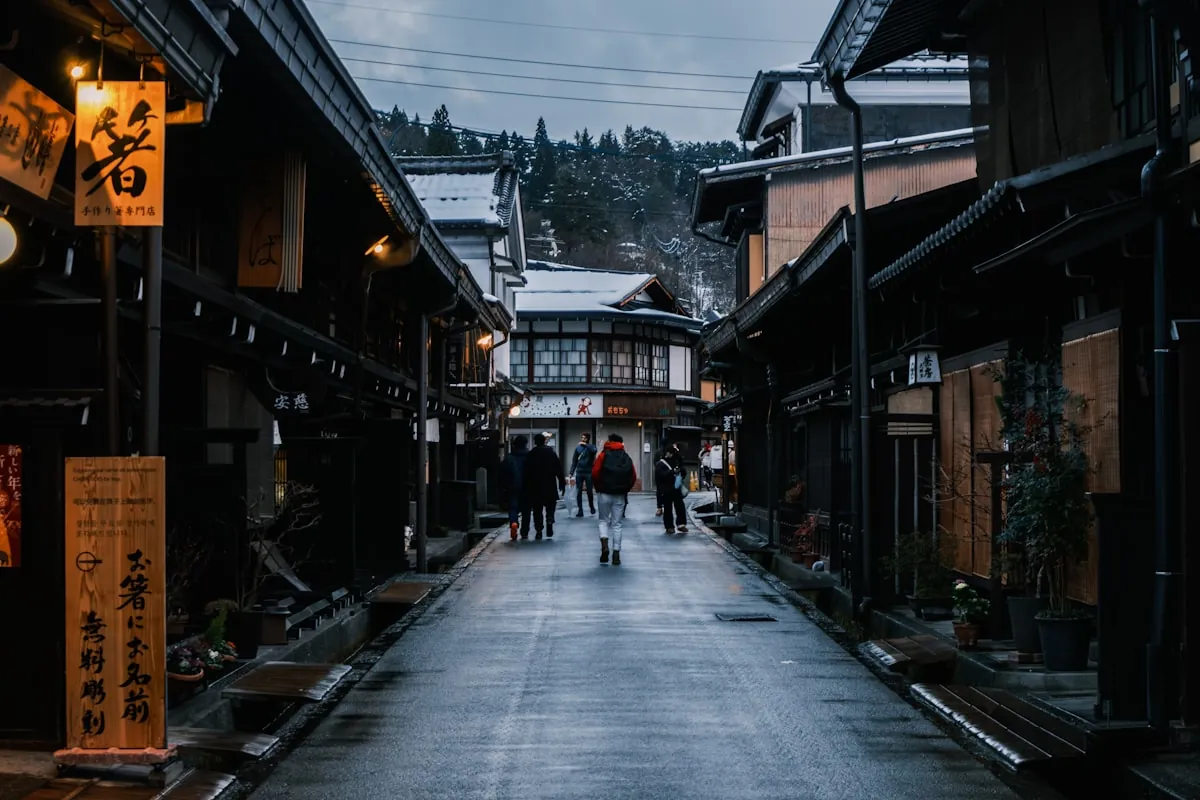
Yanaka Ginza is a 170-metre shotengai (covered shopping street) in the Yanaka neighbourhood, one of the few central Tokyo areas to survive the 1923 earthquake and 1945 firebombing without being levelled. Walking it today is the closest you’ll get to pre-war Tokyo: low wooden shopfronts, small ¥500 snacks, ¥150 menchi-katsu (fried meat patty) handed over the counter on a paper sheet, friendly shop owners.
The walking strategy: take the Yamanote line to Nippori Station, exit West, walk 5 minutes through residential streets to the top of the shotengai (the long staircase known as Yuyake Dandan — “sunset stairs”, the photo spot), then walk down through the 60+ shops. Three eats:
- Menchi-katsu at the famous butcher near the staircase — deep-fried minced-meat patty, ¥150–¥250 each, eaten standing on the street.
- Croquettes (korokke) — potato croquettes ¥80–¥150 each, sold by the same butcher and several others.
- Sweet potato baked or roasted by the shop with the wooden cart near the bottom of the staircase — the seasonal autumn / winter pick.
Yanaka is best at 16:00–18:00 on a weekday — the locals are shopping for dinner, the light is gold on the staircase, the tourist density is half what Asakusa is. Pair with a visit to Yanaka Cemetery (5-minute walk north) and the Yanaka temples for the best old-Tokyo day-walk in the city.
5. Tsukishima Monja Street: the local-only experience
Tsukishima Monja Street (Tsukishima Nishi-Naka-dori shotengai) is a 400-metre street on a small island in central Tokyo (Tsukishima, accessible via the Oedo line), with about 60 monjayaki restaurants concentrated in a 5-minute walk. Monjayaki is Tokyo’s answer to Osaka’s okonomiyaki — the same idea (cabbage + flour batter + ingredients cooked on a teppan grill at your table) but the batter is thinner and the result is more of a savory pancake-stew than a structured pancake. It’s a Tokyo dish that’s never escaped Tokyo, and Tsukishima is where it’s eaten.
The walking strategy: take the Oedo line to Tsukishima Station, exit 7, walk into the shotengai, pick a shop with a queue (always a safe filter). Most shops have a teppan at every table; you order, they bring the ingredients raw, and the staff cooks the first one in front of you so you understand the technique. Each monjayaki is ¥1,200–¥1,800 for one shop’s portion (enough for 2 people); pair with a beer and the night runs ¥3,000–¥4,000 per person.
Monjayaki is a Tokyo experience that most international visitors miss because it’s nowhere near the standard Asakusa-Shibuya-Shinjuku triangle. Tsukishima is 4 stops from Tsukiji on the Oedo line, walking distance to Tokyo Bay. Combine with the morning at Tsukiji Outer Market for a full Tsukiji + Tsukishima day.
6. Depachika: the food hall in the basement
The depachika is the food hall in the basement of every major Tokyo department store, and it’s the most-under-appreciated street-food category in the city for international visitors. Walk into Isetan in Shinjuku, Mitsukoshi in Nihonbashi, Takashimaya in Shibuya, or Daimaru in Tokyo Station, ride the escalator one floor down, and you’ll find a 5,000-10,000 m² hall with 50–100 vendors selling: bento boxes (¥1,000–¥3,500), single-portion wagyu (¥800–¥2,000), Kobe-beef katsu sandwiches (¥1,500–¥3,000), Kyoto wagashi sweets (¥300–¥800), French patisserie (¥400–¥1,500), seasonal fruit (¥500–¥5,000 for premium melon), and almost every other ready-to-eat category that exists in Japan.
The depachika strategy: don’t buy to eat there (most have minimal seating; eating in the food hall is awkward). Buy to take to a nearby park, a hotel room, or onto the shinkansen. The depachika at Tokyo Station’s Daimaru is the famous one for shinkansen-day eating — bento for the train ride to Kyoto in 25 minutes. The Isetan Shinjuku depachika is the famous one for sheer scale (it’s arguably the best food hall in Japan). The Takashimaya Nihonbashi depachika has the strongest pastry tier.
Open 10:00–20:00 daily. Cards accepted everywhere. The depachika is the answer to “Japan is expensive” tourists — ¥1,500 buys a multi-course bento that’d cost ¥6,000 in a restaurant. It’s also the answer to “the kids don’t want to sit through another kaiseki dinner”. It’s the answer to almost everything food-related in Tokyo. Most travellers never go down.
How to walk Tokyo street food
- Cash, in small notes. ¥3,000–¥5,000 in ¥500 and ¥1,000 notes per person per walk. Most stalls don’t take cards. 7-Eleven ATMs are everywhere.
- Don’t eat while walking. Eating-while-walking is mildly frowned upon in Tokyo (less so on Nakamise-dori where it’s expected, more so on residential streets). The local rule: eat what you bought standing next to the stall, then walk on. Most stalls have a small standing area for this.
- No street-side trash cans. Tokyo famously has almost no public bins. Either carry your trash to the next station, drop it at the stall where you bought (some accept their own packaging back), or use the bins inside konbini stores. Don’t leave food trash on benches.
- Timing matters. Tsukiji: 07:00–09:00. Ameyoko: 16:00–19:00. Yanaka Ginza: 16:00–18:00. Tsukishima Monja: 18:00–21:00. Nakamise: any daylight, but pre-10:00 or post-17:00 for fewer crowds. Depachika: 17:00–19:30 for the discount window (most stalls drop prices 30–50% in the last 30 min before close).
- Bring tissues / wet wipes. Some stalls give them; most don’t. Carrying a small konbini-pack of wet wipes saves you on a sticky-fingers afternoon.
- The street-food day adds up to ¥3,000–¥5,000. Three walks in one day (Tsukiji breakfast + Yanaka afternoon + Ameyoko evening) totals ¥4,000–¥5,000 per person and covers all three meals. Tokyo on street food alone is cheaper than Tokyo on chains alone.
- Konbini food belongs in this category. 7-Eleven, Lawson, Family Mart — the konbini food is genuinely good (onigiri ¥130, sandwiches ¥250, oden ¥120 per skewer). It’s not a fallback, it’s a category. For the deep-dive on cheap eating in Japan see our 5 Cheapest Chain Restaurants in Japan guide.
- Flight note. KLM flies direct Schiphol–Haneda; Lufthansa flies direct Frankfurt–Haneda. Landing at 09:30, you can be at the Tsukiji Outer Market by 11:30 for the late breakfast — jetlagged enough that 11:30 feels like an early lunch and the market is winding down (perfect for non-queue eating).
Related reading
- Where to Eat in Tokyo — the sit-down hub guide across 8 cuisines.
- Best Izakaya in Tokyo — the after-dark izakaya alleys (Omoide Yokocho, Golden Gai, Ebisu Yokocho).
- Best Ramen in Asakusa — the ramen shops one block back from Nakamise-dori.
- 5 Cheapest Chain Restaurants in Japan — the chain backup for ¥400-a-meal days.
- Japanese Food — interest hub with all our food articles.