
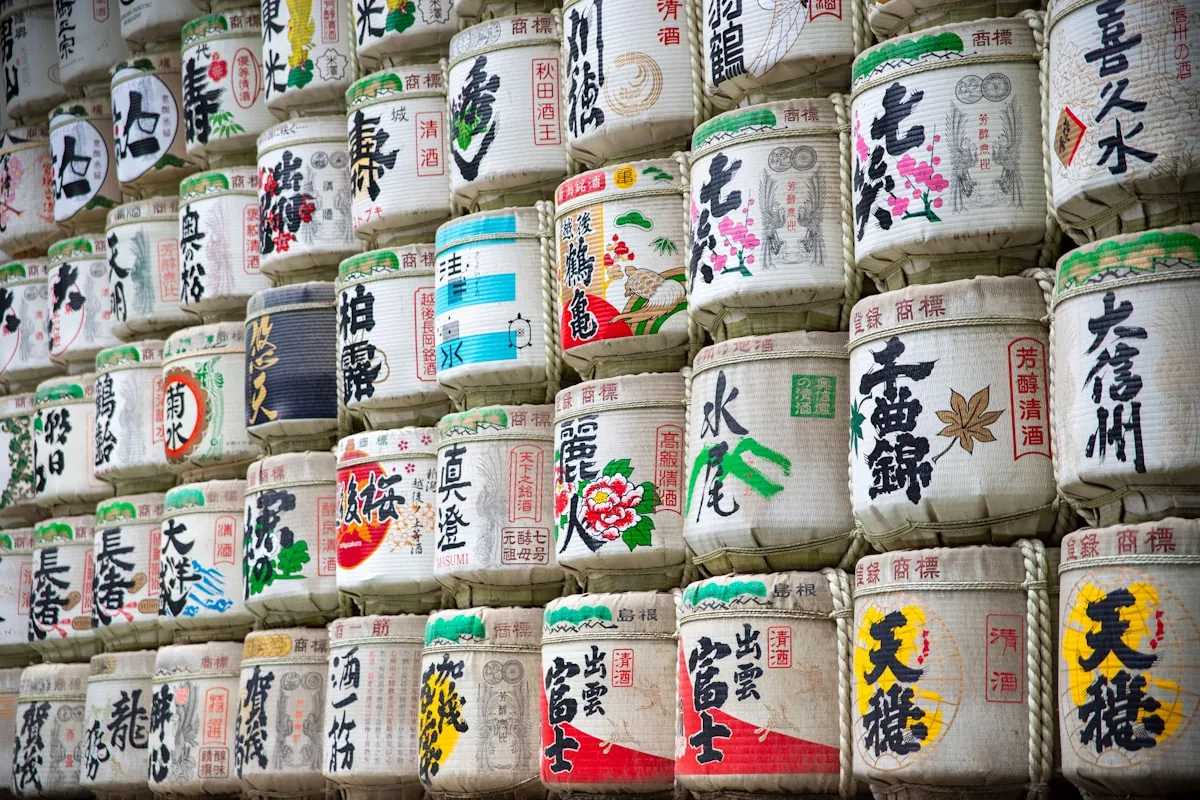
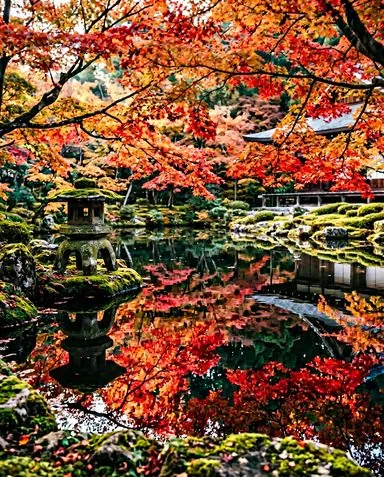

October falls between Tokyo's two crowd peaks: the heat of August and September, and the foliage rush of November. The result is a quieter, more pleasurable city: cooler evenings, shorter queues at the major parks, and an events calendar most visitors don't know exists. Tokyo in October won't deliver peak autumn colour, that waits until November, but it offers something rarer: a version of the city that still has room to breathe. Where October fits in the bigger picture is covered in our best time to visit Japan guide.
How October fits into the Tokyo year
October sits between two crowd peaks. Here is how it compares to the months around it.
September
Visitor pressureBusy Summer tail, typhoon season peak, high humidity
ConditionsRainy
October
Visitor pressureQuiet Quieter air, early foliage starting, outdoor events calendar
Conditions17–25° · Sun and cloud
November
Visitor pressurePeak Full autumn foliage peak, highest visitor numbers of the season
ConditionsSunny
October weather
Early October sits around 22–25°C during the day. Warm enough for short sleeves on the walk to the station, cool enough to actually enjoy a full afternoon on foot. By late October, daytime highs drop to 17–20°C and evenings can feel properly autumnal: pack a light jacket for anything after 7pm.
The humidity is one of October's quiet wins. September in Tokyo is often still muggy even when not raining; October air is noticeably drier, which changes the experience of a long day outdoors considerably. Typhoon season technically extends into October, and early-month storms are not rare. Pack a compact waterproof and stay aware of the forecast in the days before and after arrival. By mid-October, the risk drops significantly, and the month typically finishes with crisp, clear days that rank among the best walking weather Tokyo offers across the year.
The events calendar
This is where October separates itself from the months around it.
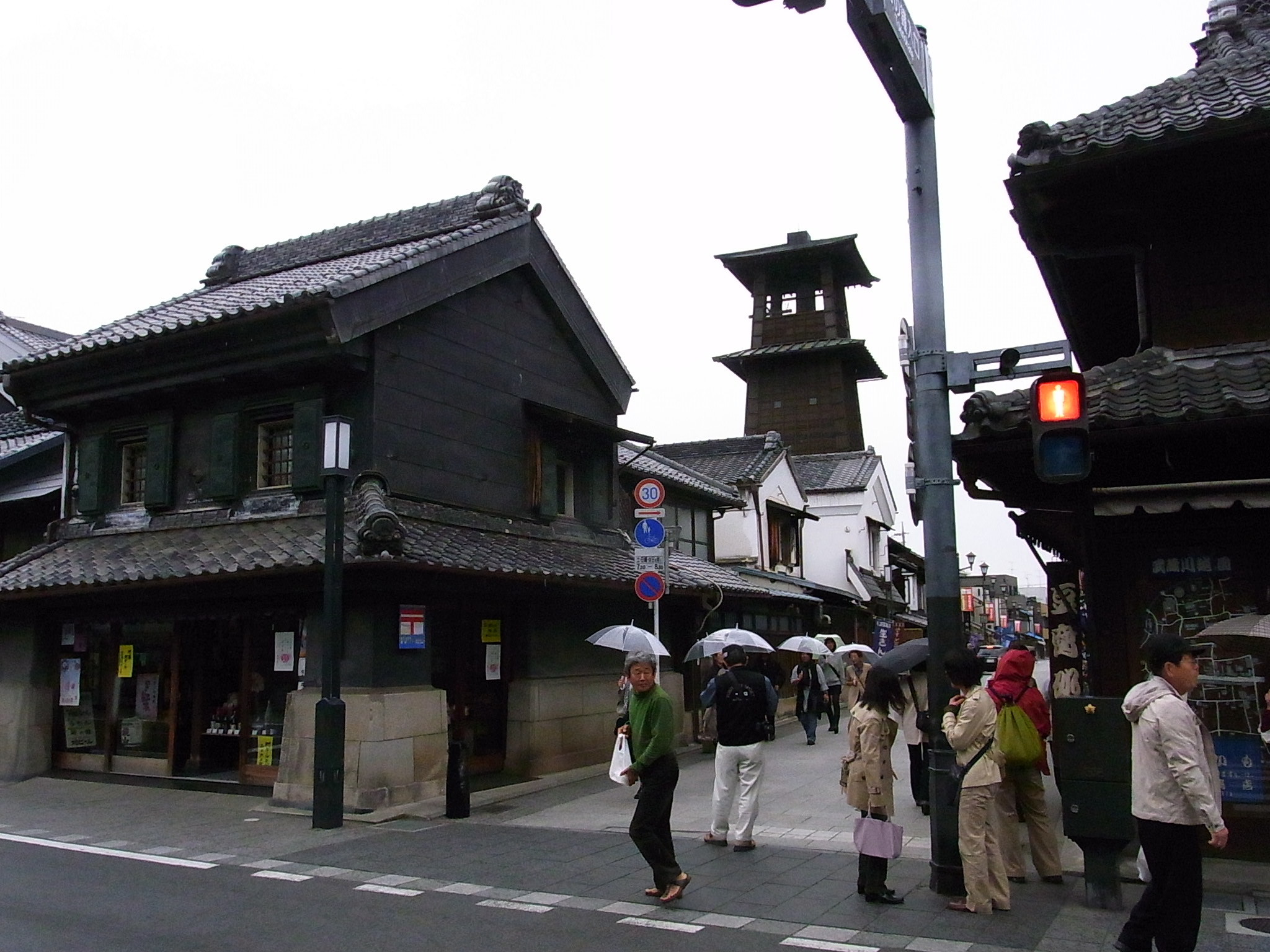
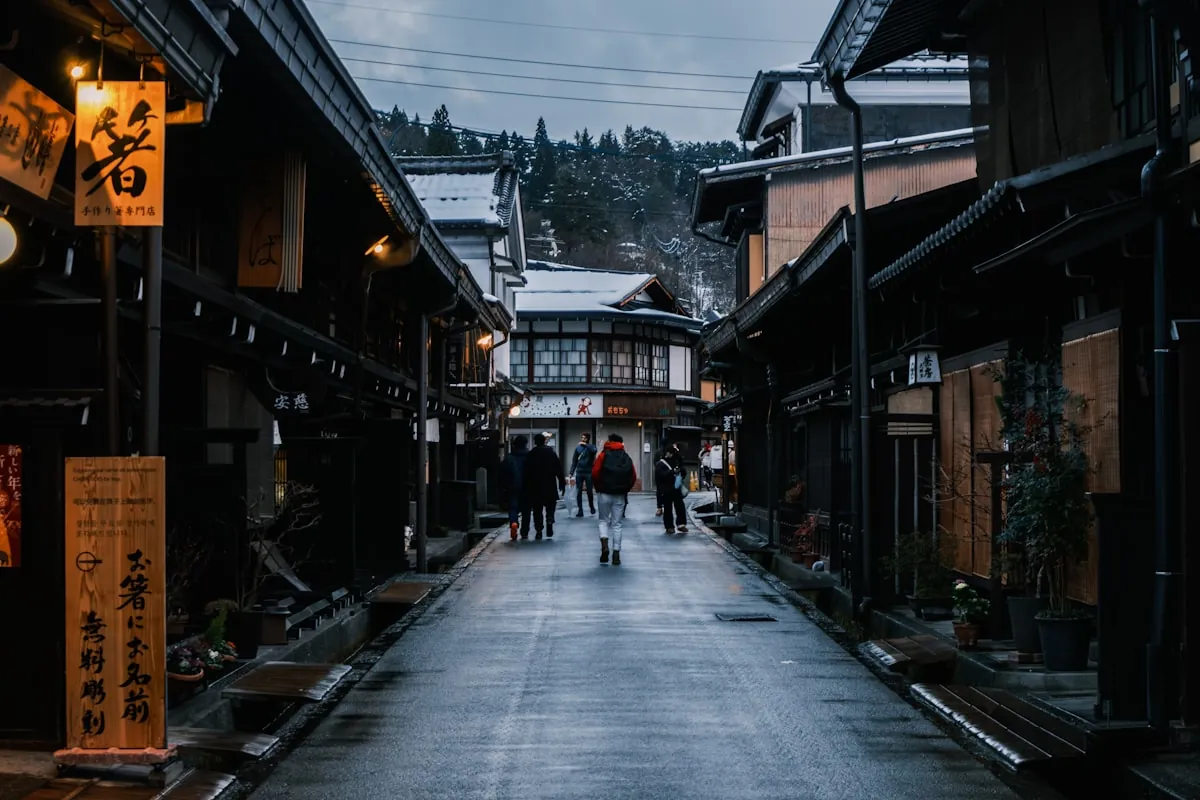
The Kawagoe festival runs October 17–18, 2026. Kawagoe, a 30-minute train ride from Ikebukuro, lines its preserved Kurazukuri merchant street with massive ornate floats and traditional musicians. It is free to attend, runs into the evening, and draws an almost entirely local crowd: none of the international tour-group density that fills Kyoto's equivalent festivals. Arrive by mid-afternoon to claim a spot before the procession fills the narrow streets. The floats are the real thing, lacquered wood and hand-carved panels with musicians playing inside a moving structure, and the town's historic warehouse district is worth seeing regardless. This is a legitimate alternative to any Kyoto autumn festival.
TIFF, Japan's premier annual film festival, runs from late October into early November across the Hibiya, Yurakucho, Marunouchi and Ginza districts; exact dates are on the official site. The main competition screenings require tickets, but outdoor events and free screenings in the surrounding plazas are open to everyone. Even without a festival pass, the Hibiya area takes on a different character during those ten days: international crowds, late-evening energy, and pop-up spaces that wouldn't exist at any other time of year.
Smaller neighbourhood festivals run through October across Tokyo, particularly around shrine precincts in Koenji and Yanaka. These don't appear on English-language tourism sites, which is the point: a float procession through a Yanaka shotengai on a Saturday afternoon is the kind of thing that doesn't make any major guidebook. Check local neighbourhood boards and an events calendar close to your dates; confirm before you plan a day around one.
One event that falls just outside October: the Meiji Jingu autumn grand festival runs November 1–3. If your trip extends into the first days of November, the free ceremonial programme at Meiji Shrine, including yabusame horseback archery on November 3, is worth planning around.
Parks and early foliage
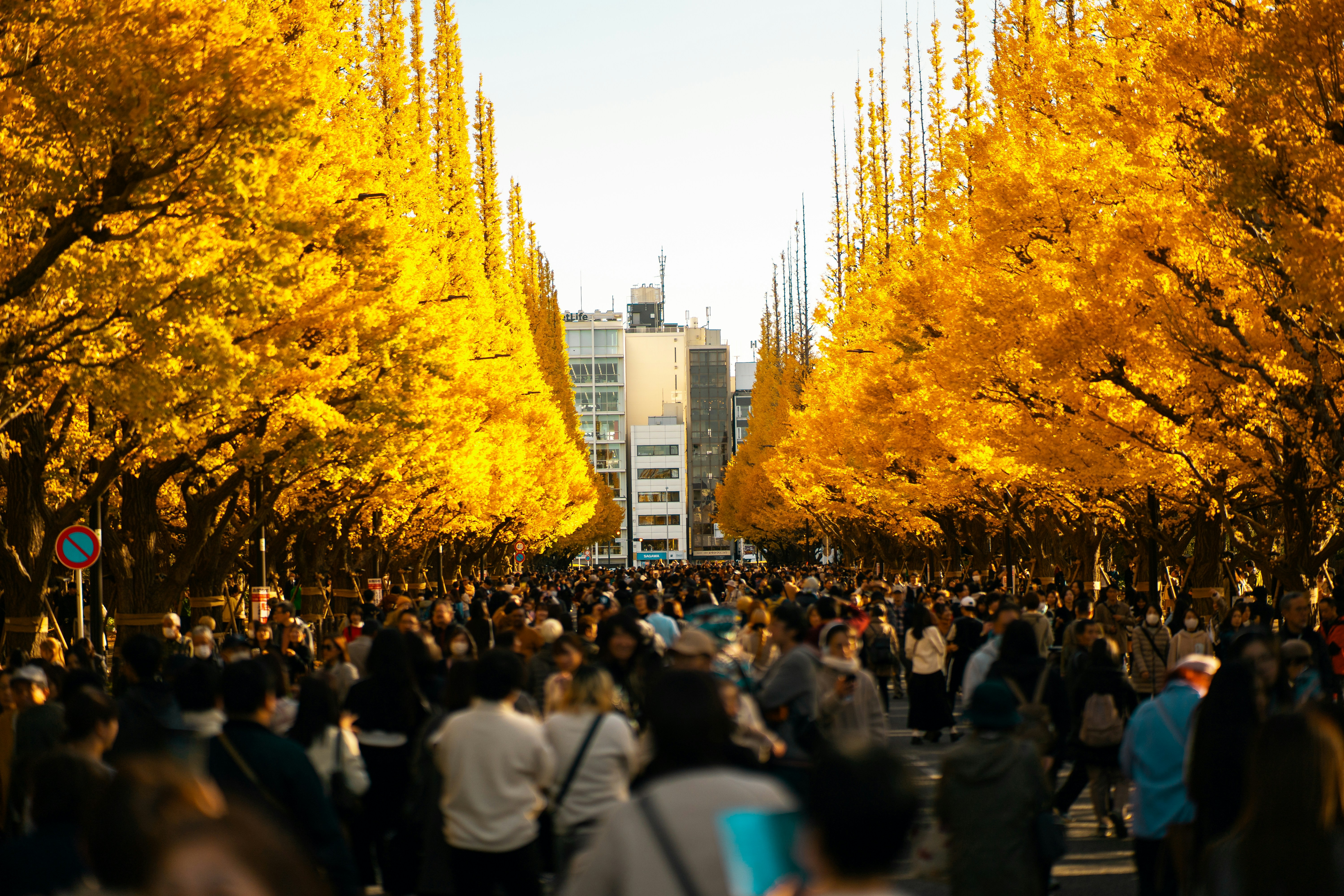
The foliage peak most visitors imagine runs from mid-November onward. October is the beginning of that change, not the climax. The trees to watch are zelkova and ginkgo: they turn earlier than the maples and produce a quieter, yellow-gold shift rather than the scarlet spectacle of late November. The parks are easier to navigate in October, and the light is good.
Shinjuku Gyoen National Garden is the most reliable mid-to-late October stop. The zelkova allée starts turning before the maples do, and cherry trees offer a secondary seasonal moment here: their leaves shift to burnt orange and copper in October, which most visitors don't associate with cherry trees at all. Admission is ¥500 for adults; closed Mondays.
Inokashira Park, a 15-minute walk from Kichijoji, is built around a rowing-boat pond with a zelkova and maple canopy. By late October, the trees above the water begin turning, and the combination of yellow leaves reflected in dark water is one of the most photographable compositions in outer Tokyo. Entry to the park is free; the rowing boats are paid, priced on the day.
Imperial Palace East Gardens run along the outer moat of the former Edo Castle grounds. The ginkgo trees along the entry path turn a strong yellow before November crowds discover them. Entry is free. Confirm current closure days before visiting, as the gardens close on select days of the week.
Hama-rikyu Garden sits at the southern end of Ginza, its tidal pond shifting with the bay behind a backdrop of Shiodome towers. The maple grove begins showing early-autumn colour in late October. Admission is ¥300 for adults. A natural companion is the water bus to Asakusa; check the current schedule before planning around it, as the service has seen suspensions for vessel renewal.
Ueno Park is the most accessible early-autumn stop in central Tokyo. The zelkova-lined central avenue is one of the better early-colour streets in the city, free, and positioned next to half a dozen museums and a zoo. For the autumn leaves experience without November's competition for space, an October visit to Ueno is the sensible move.
When it rains: the indoor plan
October averages around 16 rainy days, with heavier probability in the first two weeks. Having a solid indoor plan is not pessimism.
teamLab Borderless, in the Azabudai development near Roppongi, is one of the more genuinely interesting museum experiences in the city: an interconnected digital environment where installations respond to visitor movement. Book in advance; walk-in entry is limited.
The Edo-Tokyo museum in Ryogoku reopened in March 2026 after a four-year renovation, its first large-scale update in nearly 30 years. The revamped permanent collection covers Edo-period street life through Tokyo's 20th-century transformation, with expanded full-scale reconstructions including a new Meiji-era watchmaker's facade. October is a strong month for special exhibitions; check the current programme before visiting.
Kabukiza theatre in Ginza offers a practical entry point for first-timers: single-act standing tickets are available on the day from the fourth-floor box office, which means you can see one act without committing to a full afternoon. The October 2026 programme is not yet announced at time of writing; check Shochiku's official site for current listings before your visit.
Practical tips
- Weekday mornings at major sites: Major temples, shrines, and Meiji Shrine are busy on weekends throughout October, but weekday mornings before 9am bring them close to empty. The same applies to Shinjuku Gyoen National Garden.
- Accommodation: October is not peak season, so hotels are easier to book than November and prices reflect it. Popular ryokan near central parks can still fill on weekends; book those at least 6–8 weeks ahead. Business hotels in Shinjuku and Shibuya offer good value for the month.
- Getting around: Suica or Pasmo for trains and most buses, the same as any other time of year. See the transport guide for the full picture and the Tokyo city guide for neighbourhood logistics.
- What to skip: Any tour marketed as "autumn foliage in Tokyo" that runs in October is over-promising. Full maple colour arrives mid-to-late November. October is for parks that are turning, not peaked, and that distinction matters when you're deciding whether to go.
- Packing: Layers. A t-shirt works at midday in early October; you'll want a mid-layer fleece by late October evenings. A compact umbrella is more useful than a full-length one in the city.
The case for October
The honest version of Tokyo in October is not about any single event or park or foliage moment. It is about getting the city at a sustainable pace. November will come, and with it the full spectacle of autumn colour and the queues that accompany it. October is the version of Tokyo that still has room to show you what it actually is.
The Kawagoe festival on a Saturday afternoon, a walk through Inokashira Park while the zelkova just begins to turn, an evening in the Hibiya district during TIFF when the city stays out late: these are not consolation prizes for missing November's peak. They are a different reason to be there. October is what Tokyo looks like when it isn't performing.
If the autumn foliage is the main draw, consider building a longer trip that uses October for Tokyo and shifts to Kyoto or Nikko in November when the colour peaks elsewhere. The two months are complementary, not interchangeable. But if October is what you have, Tokyo is a strong choice: stronger, in several ways, than November's crowded version of the same city.
FAQ
Is October a good time to visit Tokyo?
Yes. October is one of the better months for visiting Tokyo: temperatures are comfortable (highs of 17–25°C), humidity is lower than summer, and the city is noticeably less crowded than November. The trade-off is that full autumn foliage doesn't arrive until mid-to-late November. October delivers early colour in the parks, a strong outdoor events calendar, and shorter queues at major sites.
Will I see autumn leaves in Tokyo in October?
You'll see the beginning of the colour change, not the peak. Zelkova and ginkgo trees start turning in mid-to-late October; parks like Shinjuku Gyoen National Garden and Inokashira Park are worth visiting. The maple peak in Tokyo typically arrives in mid-to-late November. If peak colour is the priority, November is the month.
What is the Kawagoe festival and is it worth a visit from Tokyo?
The Kawagoe festival is one of the largest traditional float festivals in the Kanto region, held annually on the third weekend of October (October 17–18 in 2026). Kawagoe is a 30-minute train ride from Ikebukuro, and the festival is free to attend. The town's preserved Edo-era merchant street, its floats, and its traditional music make it a genuine alternative to the more-visited Kyoto festivals. Worth it, especially on the Saturday evening.
How many rainy days does Tokyo get in October?
Tokyo averages around 16 rainy days in October, with higher rain probability in the first two weeks as typhoon season winds down. Most rain falls as showers rather than full-day downpours. Packing a compact waterproof is enough for the vast majority of October days; build in at least one indoor day to your plans as a buffer.
Are TIFF screenings free to attend?
Partially. The main competition screenings require tickets purchased in advance, with pricing per screening type on the official festival site. Outdoor events, free screenings in the Hibiya-Yurakucho area, and festival-adjacent public programming are free. Even without tickets, the area around Hibiya park during the festival window in late October and early November is worth visiting for the atmosphere.