
The best coffee in Tokyo comes from two traditions that barely acknowledge each other: Showa-era kissaten, where one cup is hand-brewed and takes ten minutes, and third-wave roasters that turned the city into a coffee capital. This list picks eleven for the cup, not the interior, and marks which tradition each one belongs to, because the rules differ.
Kissaten etiquette is strict: order at least one item per person, keep your voice down, skip the laptop, and bring cash, because Cafe de l'Ambre, Sabouru, Chatei Hatou and ARiSE Coffee Roasters all refuse cards. One cup buys the seat, and nobody moves you off it. A kissaten pour-over runs ¥500–800, third-wave drinks span ¥450–900, and Ginza cafes run higher still. Plan coffee around meals: see where to eat in Tokyo.
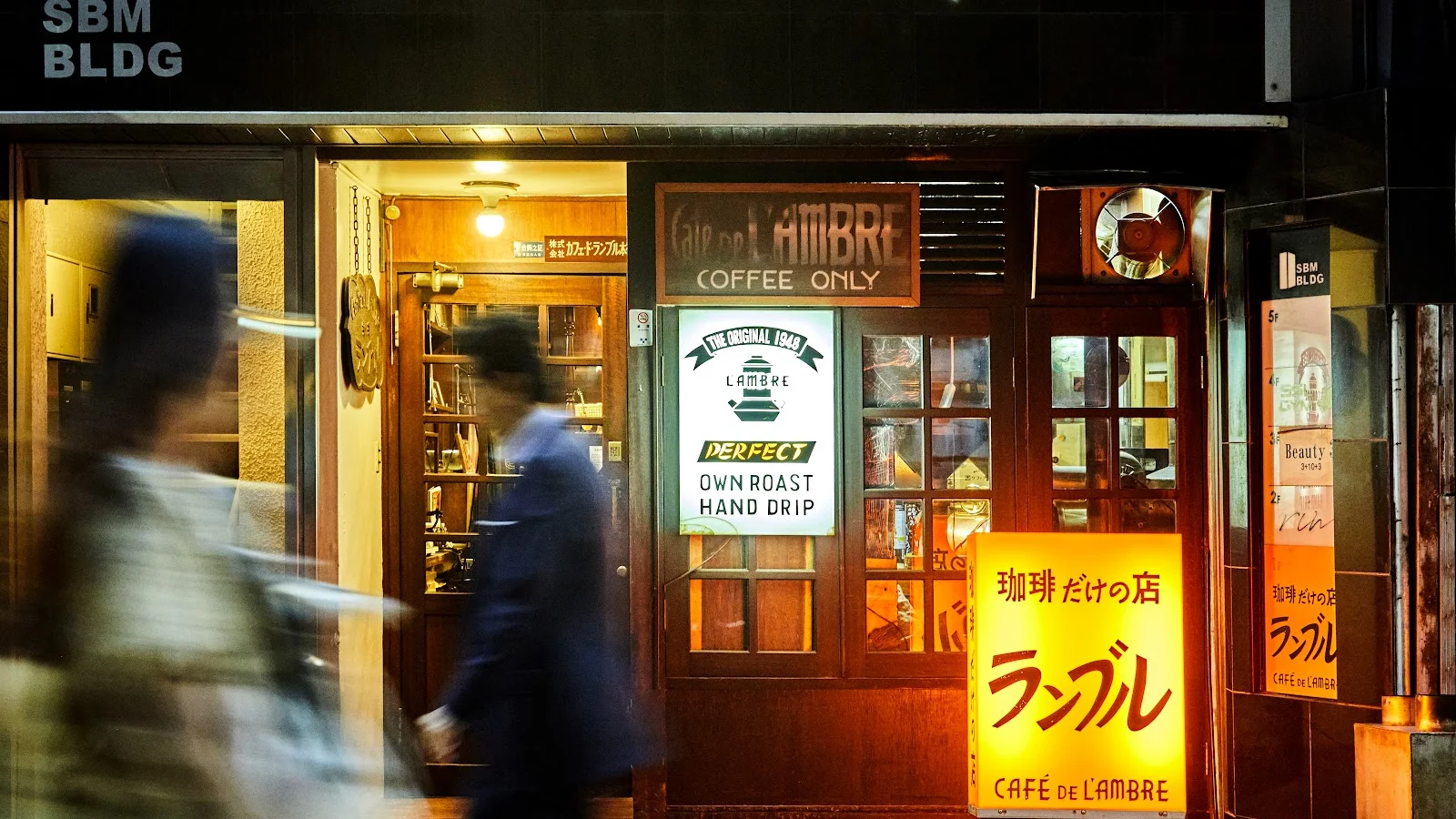
1. Cafe de l'Ambre
 Google
Showa-era kissaten, coffee only
Ginza's oldest coffee shop opened in 1948 and still serves nothing but coffee. Cafe de l'Ambre ages its beans in the back for years, some lots for decades, then brews one cup at a time through a cloth filter. The result is thick and low in acid, and this is the kissaten tradition at its least compromising.
- Getting there: Shimbashi, Ginza Line exit 1, 5 minutes on foot.
- Opening hours: Tue-Sat 11:00-20:00, Sunday until 18:00, closed Mondays.
- Order this: An aged-bean nel-drip, or the cold Blanc et Noir in a champagne glass. Cash only.
Go if you want to taste what coffee meant here before espresso. Skip it if you need food or a card terminal.
2. Glitch Coffee & Roasters
 Google
Third-wave light-roast roaster
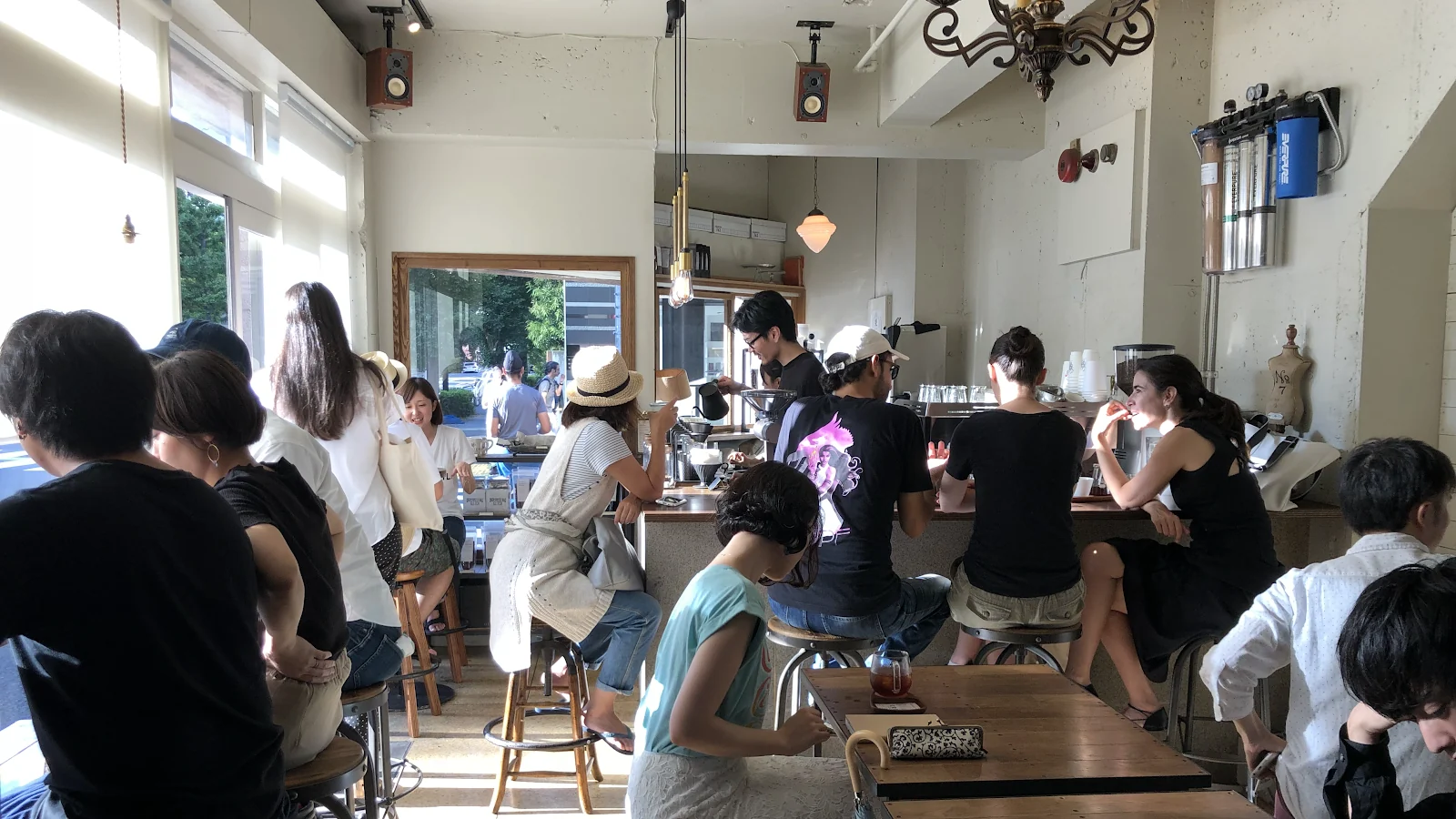
Barista champion Kiyokazu Suzuki opened this small black room in 2015, widely credited as Japan's first light-roast specialty shop. Glitch Coffee & Roasters is the third-wave side in concentrated form: you pick a lot off the card, the barista explains the farm, and the cup arrives fruity and closer to tea. Tabelog put it on the Cafe 100 list in 2025.
- Getting there: Jimbocho, exit A9, 7 minutes on foot.
- Best time: Weekday mornings from 08:00. Weekend afternoons mean waiting.
- Order this: Whatever tops the bean card, after checking the price, because rare lots run well above the ¥800–1,200 house range.
Go if you want the cup explained by the person who made it. Skip it if you want a takeaway on the way somewhere.
3. Chatei Hatou
 Google
Showa-style kissaten
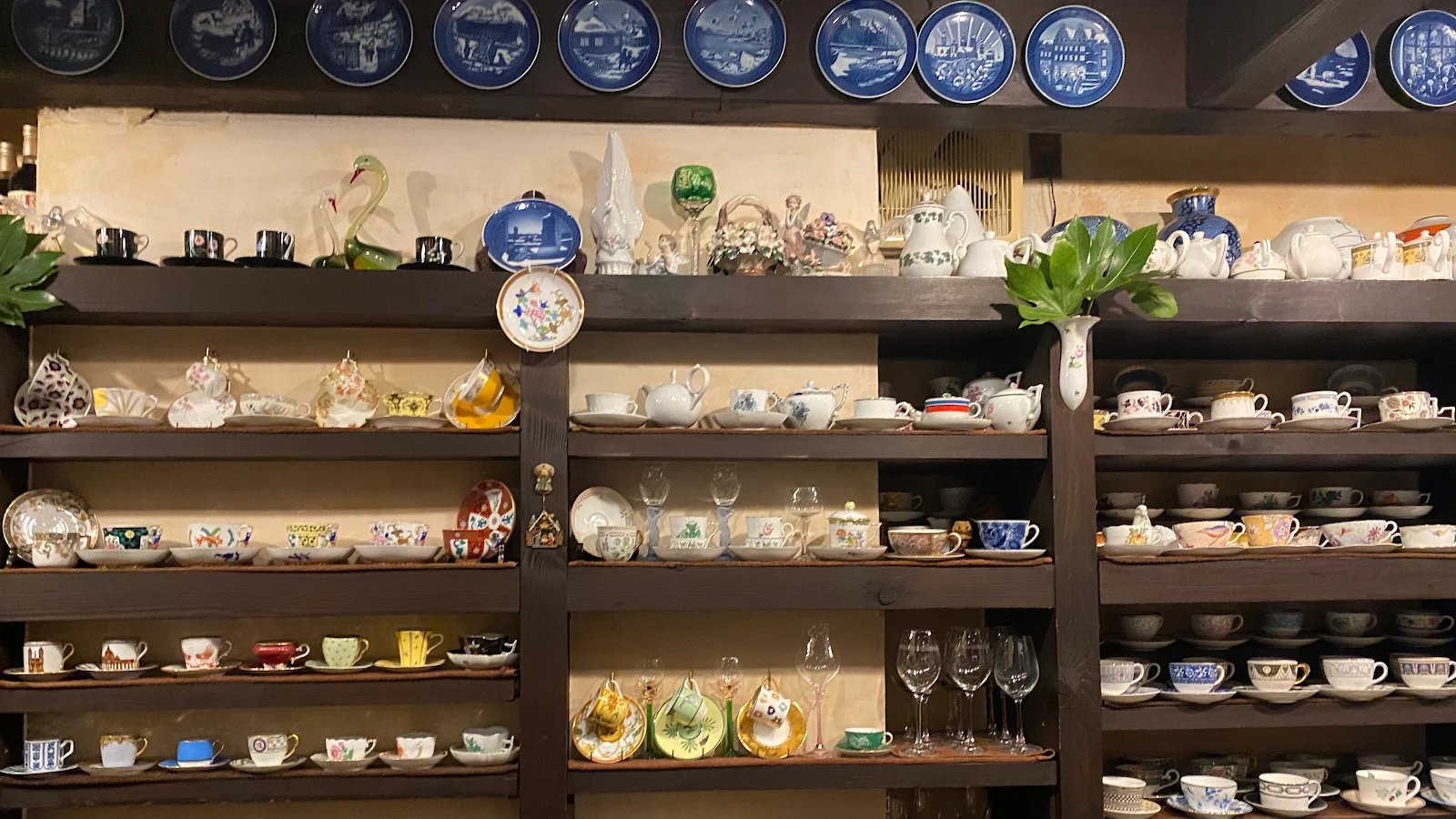
Three minutes from Scramble Crossing, up a staircase the crowd walks past, is a dim room of dark wood and antique porcelain. Chatei Hatou opened around 1989, late for a kissaten, and commits to the form harder than shops twice its age: every cup nel-dripped by hand over several minutes, in porcelain the staff choose to suit it. One of America's best-known specialty roasters names the place a founding influence.
- Getting there: Shibuya, East Exit, 3 minutes on foot.
- Opening hours: Daily 11:00-23:00, last order 22:00.
- Order this: A nel-drip blend with the chiffon cake. Cash only, and priced like a cocktail at ¥1,000–1,500.
Go if you want the loudest crossing on earth to vanish behind one flight of stairs. Skip it if ¥1,400 for a coffee reads as absurd.
4. Onibus Coffee Nakameguro
 Google
Third-wave roaster in a wooden house
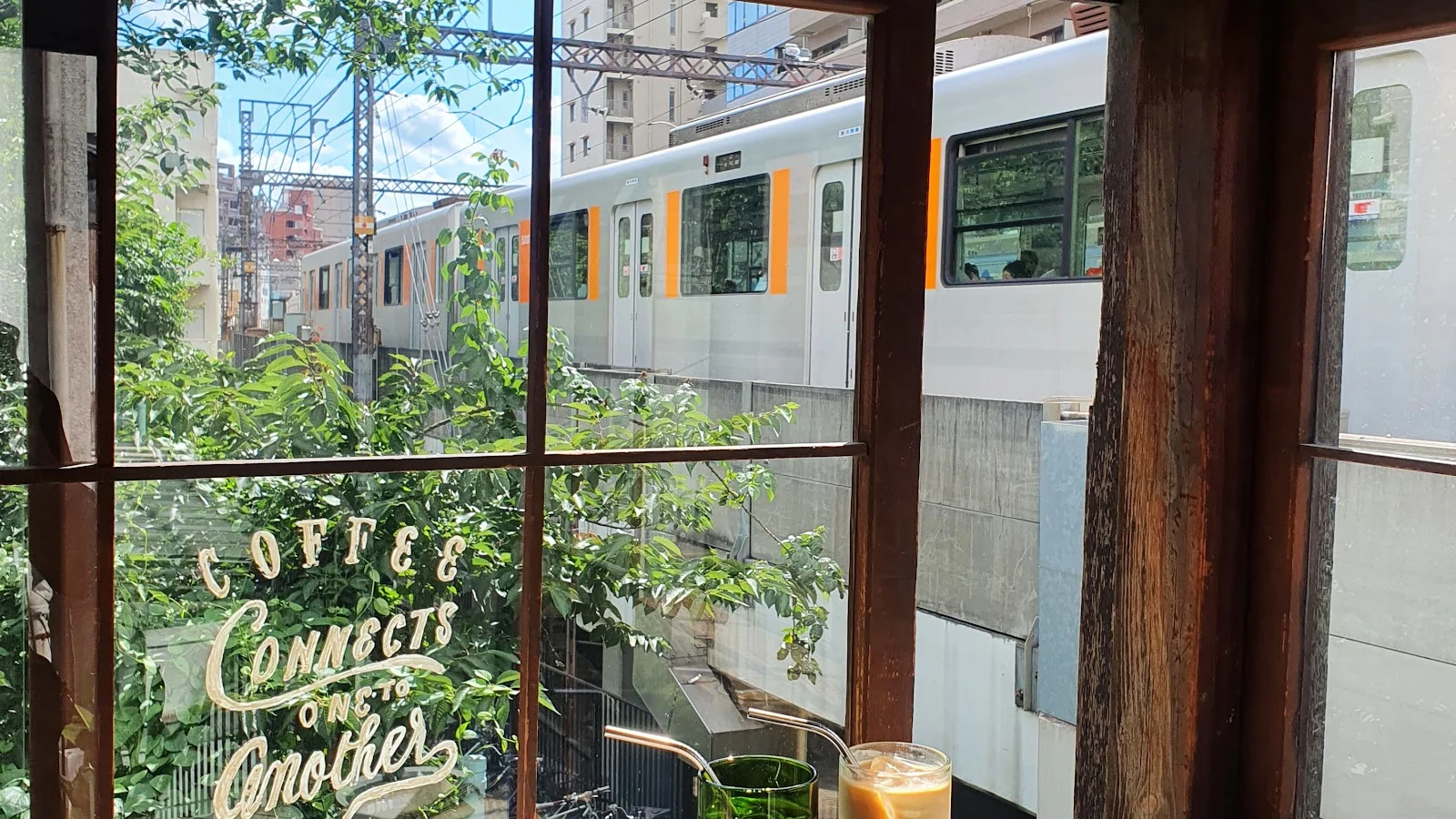
Almost every visitor to Nakameguro ends up at the Starbucks Reserve Roastery Tokyo on the river, which absorbs the neighbourhood's coffee traffic and the queue that comes with it, for a brand you can drink at home. Two minutes from the station the other way, Onibus Coffee Nakameguro roasts its own beans in a two-storey wooden house pressed against the railway, with a dozen seats and an upstairs bench facing the passing trains. Same third wave, no wait: go here instead and spend the queueing time on the river.
- Getting there: Nakameguro, Tokyu Toyoko and Hibiya lines, about 2 minutes on foot.
- Opening hours: Daily 09:00-18:00.
- Order this: A hand drip carried up to the window seat, roughly ¥400–700.
Go if you want a serious cup two minutes off the platform. Skip it in cherry-blossom season, when the river fills and a dozen seats disappear.
5. Sabouru
Showa-era kissaten
The log-cabin front with the red phone box has stood in the used-bookstore district since 1955, and the name means roughly to skip class. Two floors of carved wood, masks and graffiti-covered walls make Sabouru a kissaten as social institution rather than coffee laboratory. Seventy years of publishing staff and students have kept it full, and the cream soda is what everyone photographs.
- Getting there: Jimbocho, exit A7, 1 minute on foot.
- Best time: At the 11:00 opening. Saturday queues are routine and it closes Sundays.
- Order this: Pizza toast with a cream soda. Cash only, and the sister shop next door does the Napolitan spaghetti.
Go if you want the room as much as the cup. Skip it on a Sunday, or if you want somewhere quiet.
6. Fuglen Tokyo
 Google
Nordic-roast cafe by day, cocktail bar by night
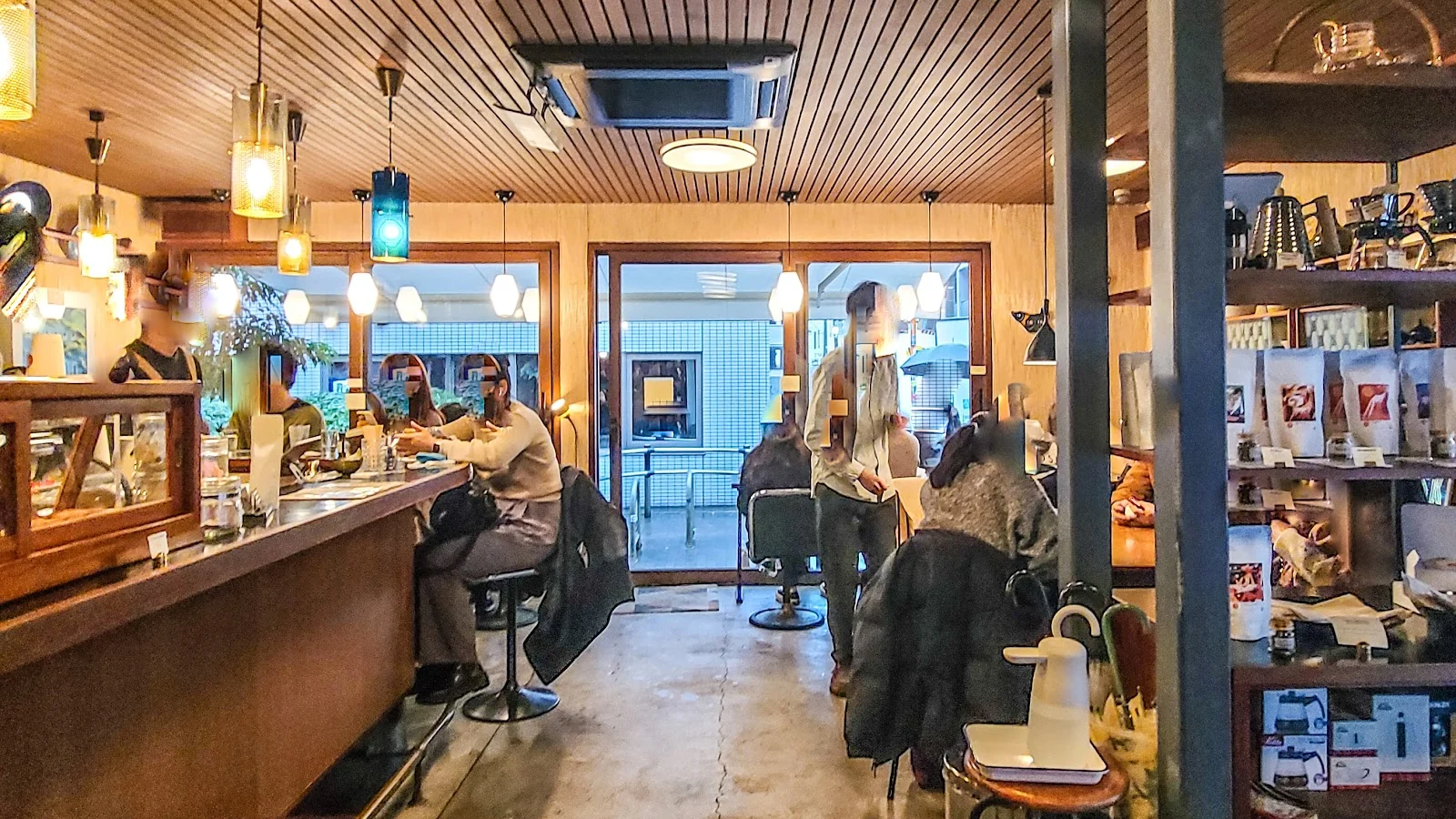
The Oslo original chose quiet Tomigaya for its first overseas outpost in 2012 and furnished it with Scandinavian pieces from the 1940s to the 1970s. Fuglen Tokyo is third-wave in the Nordic reading of it: pale roasts, filter coffee, and a door that opens at 07:00. At 18:00 the same corner becomes a bar pouring Norwegian spirits, which makes it useful at both ends of the day.
- Getting there: Yoyogi-Koen on the Chiyoda Line or Yoyogi-Hachiman on the Odakyu Line.
- Opening hours: Daily from 07:00; Mon-Tue until 23:00, Wed-Sun and holidays until 01:00.
- Best time: Before 09:00 for a seat. Late weekend mornings fill the room and leave you the outside bench.
Go if you land jet-lagged and want somewhere decent open at seven. Skip it at 11:00 on a Sunday.
7. Cafe Trois Bagues
 Miyuki Fujii
Basement kissaten, nel-drip
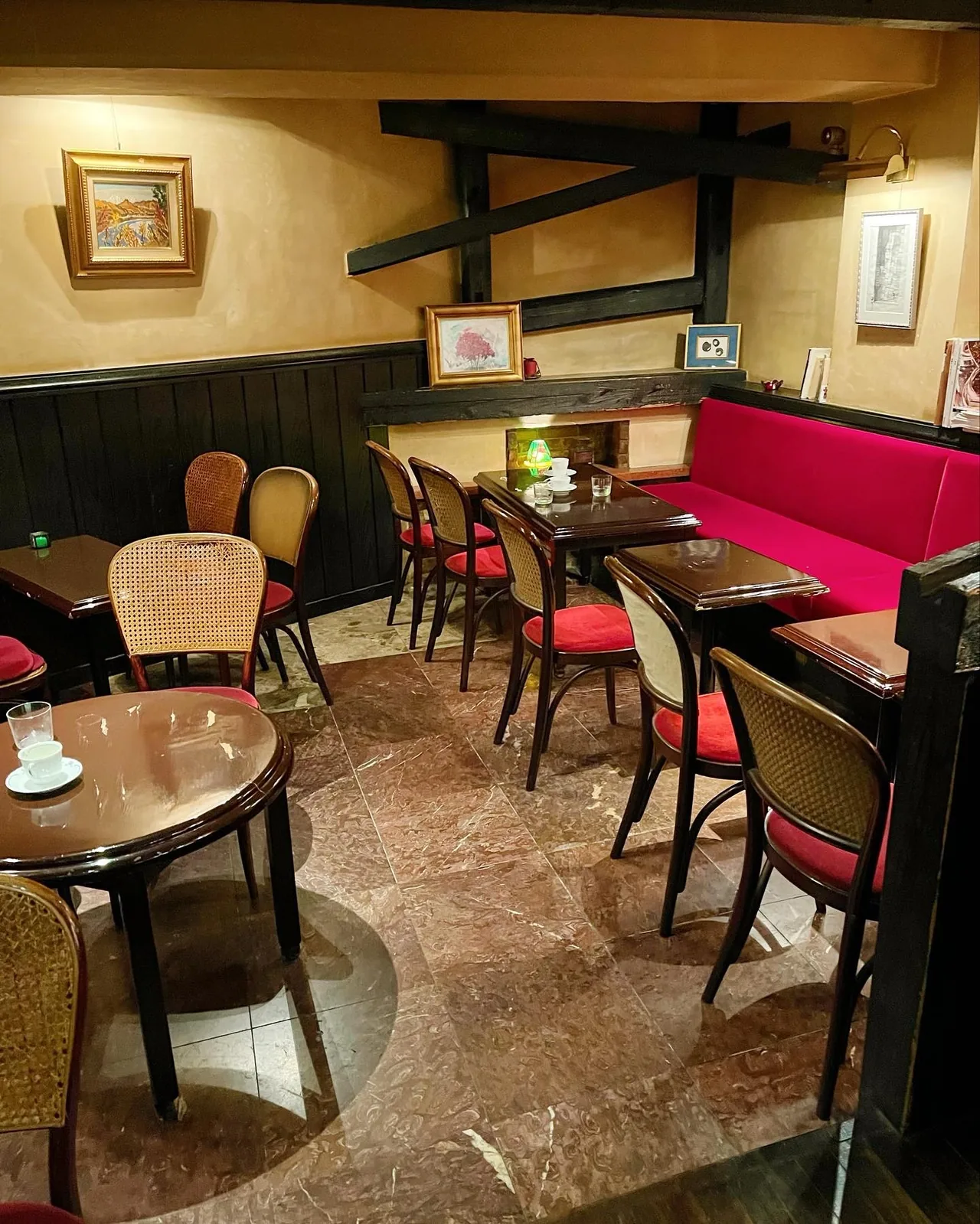
One minute along the same street, down a staircase under the bookshops, is a 1976 kissaten that English-language itineraries almost never list. Cafe Trois Bagues pours the same cloth-filter coffee as its famous neighbour and has made Tabelog's Kissaten 100 in 2021, 2022 and 2026, while the queue keeps forming around the corner. When Saturday at Sabouru looks hopeless, this is the answer sixty seconds away.
- Getting there: Jimbocho, exit A5, 1 minute on foot.
- Opening hours: Mon-Fri 10:00-20:00, Saturdays and holidays from 12:00, closed Sundays.
- Order this: The nel-drip house blend with gratin toast. Unusually for a kissaten, cards and IC cards work.
Go if you want the kissaten format without the wait outside it. Skip it if you need daylight.
8. ARiSE Coffee Roasters
 Google
Six-seat micro-roaster
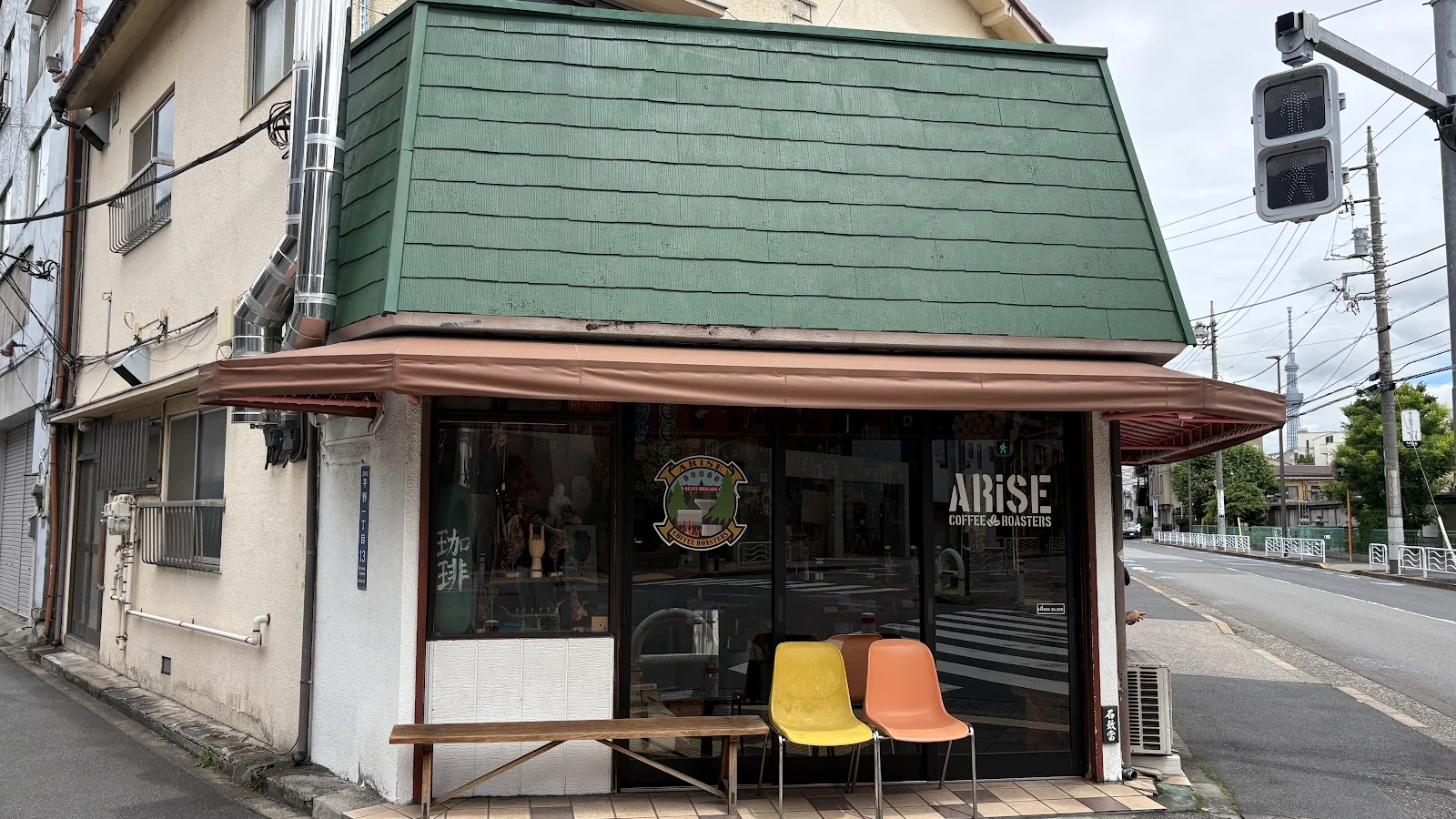
Kiyosumi-Shirakawa became Tokyo's coffee district when an international flagship roaster opened there, and that address still takes the weekend line. Seven minutes away is the version the neighbourhood produced itself: one room, one roaster, six seats. ARiSE Coffee Roasters has worked that way since 2013, third-wave in method but at a scale where the person who roasted the beans hands you the cup.
- Getting there: Kiyosumi-Shirakawa on the Hanzomon and Oedo lines, 7 minutes on foot.
- Opening hours: Tue-Sun 10:00-17:00, closed Mondays.
- Budget: Under ¥1,000 a cup, cash only, and with six seats most people take away.
Go if you would rather drink where the district's reputation came from. Skip it if the plan was an hour with a laptop.
9. Kayaba Coffee
 Google
Revived 1938 kissaten in a 1916 wooden house
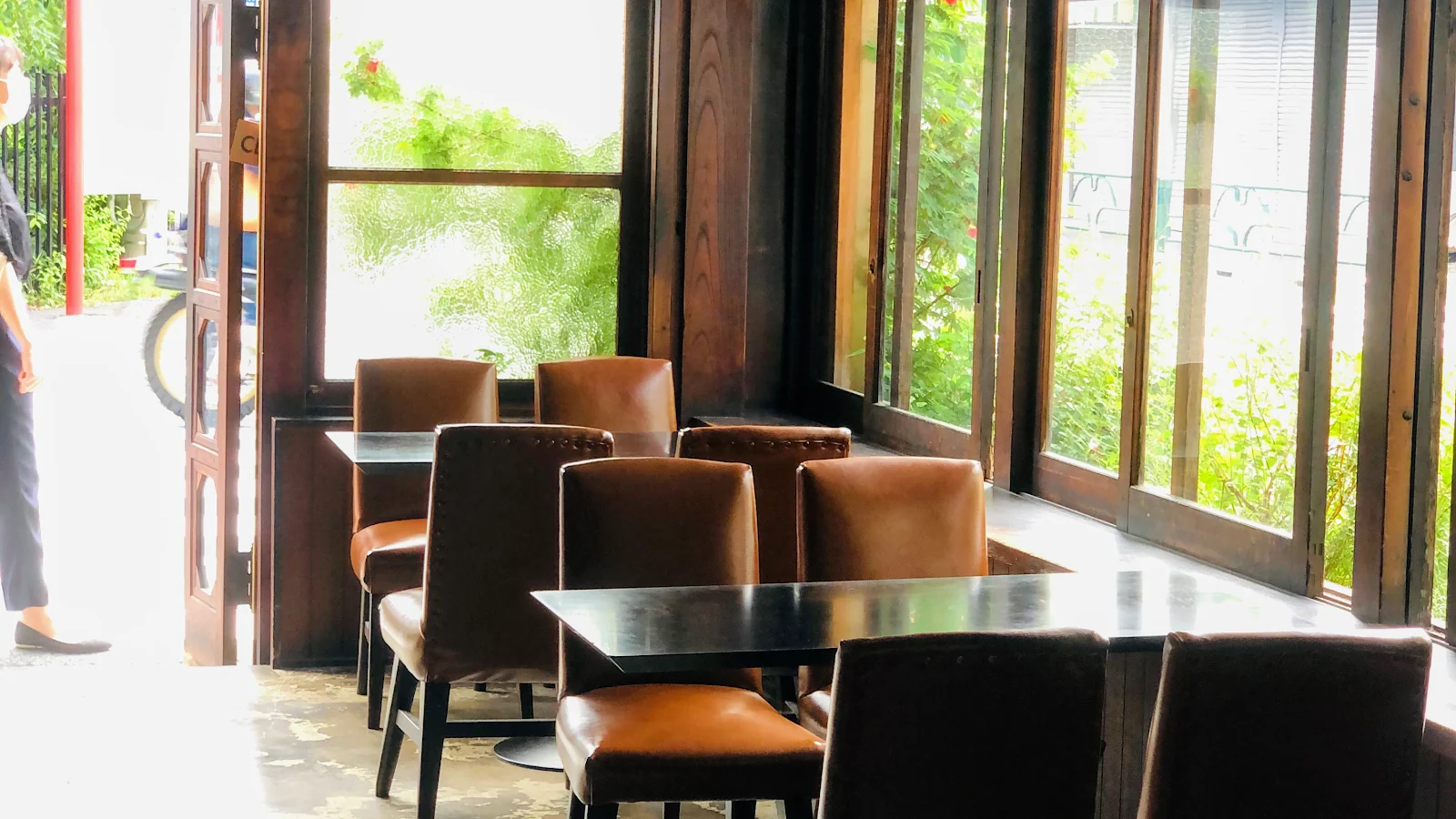
The wooden corner building in Yanaka dates from 1916 and became a coffee house in 1938, closed in 2006 when the owner died, and reopened in 2009 under a local non-profit. Kayaba Coffee kept the original signage and exterior, so it reads as the Shitamachi kissaten it has always been rather than a reconstruction of one. Ask for the tatami room upstairs.
- Getting there: Nezu on the Chiyoda Line or Nippori on the JR lines, both a walk through the old streets.
- Opening hours: 08:00-18:00, closed Mondays. Sources disagree, so check the day before.
- Order this: The tamago sando with a dark roast, roughly ¥600–1,200 for the set.
Go if you want breakfast in a building older than the coffee culture inside it. Skip weekend mornings, when the queue starts at opening.
10. Bread, Espresso &
 Google
Bakery cafe, breakfast and brunch
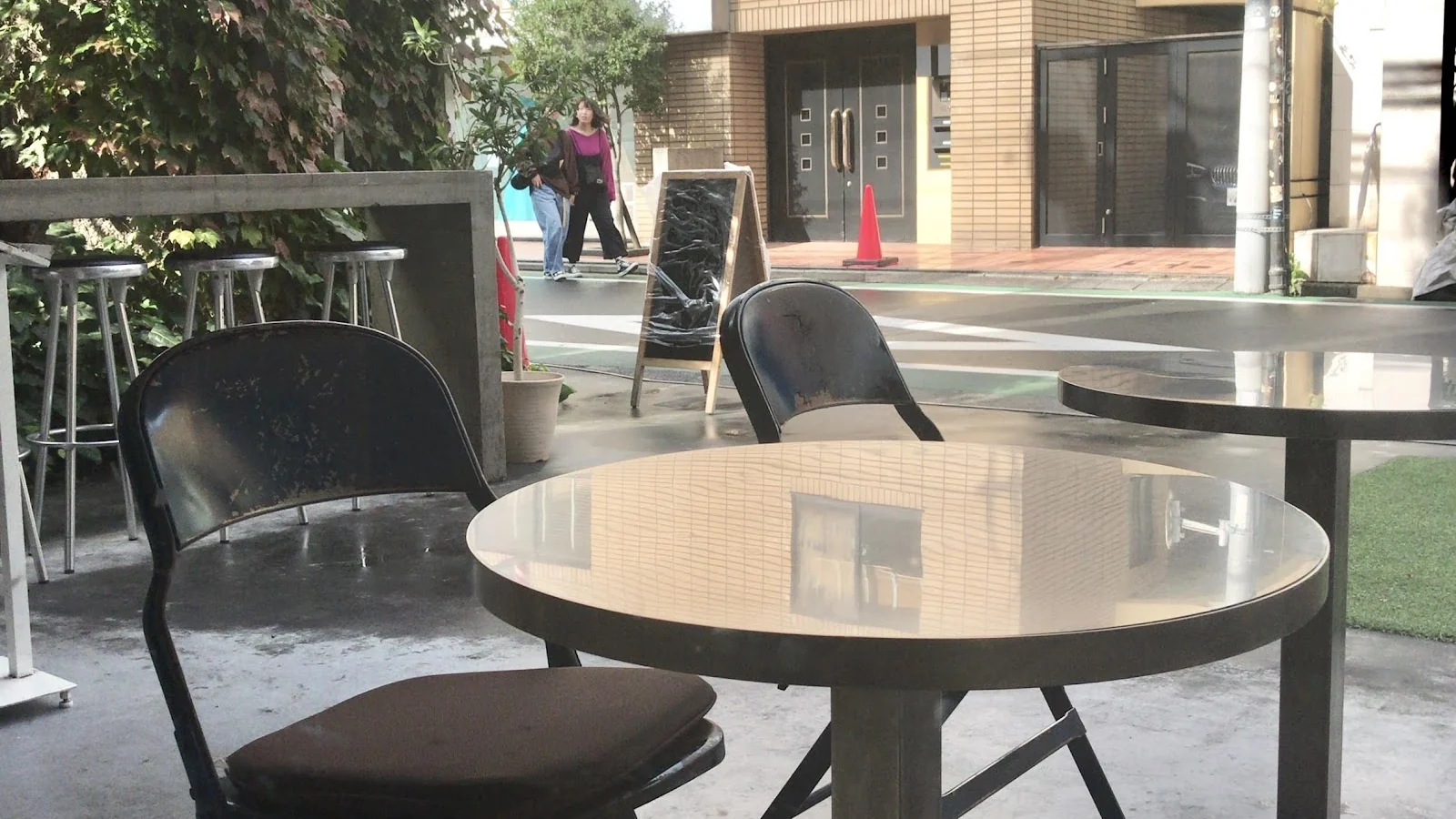
Japan does not do breakfast the way most visitors expect, which is why a bakery earns a place on a coffee list. Bread, Espresso & bakes more than thirty breads a day around a square brioche loaf called the Mou, and sits firmly on the modern side of the split: espresso, a queue, none of the unspoken kissaten rules. The morning set is toasted Mou with vanilla ice cream and espresso sauce.
- Getting there: Omotesando, 7 minutes on foot; Gaienmae is close as well.
- Opening hours: Daily 08:00-19:00, last order 18:30, with irregular closing days.
- Order this: The morning set, or the iron-plate French toast, eat-in only and only from 15:00.
Go if you want a real breakfast before the shops open. Skip weekends unless you are there before eight.
11. Sakurai Japanese Tea Experience
 Google
Tea counter, roasted in house
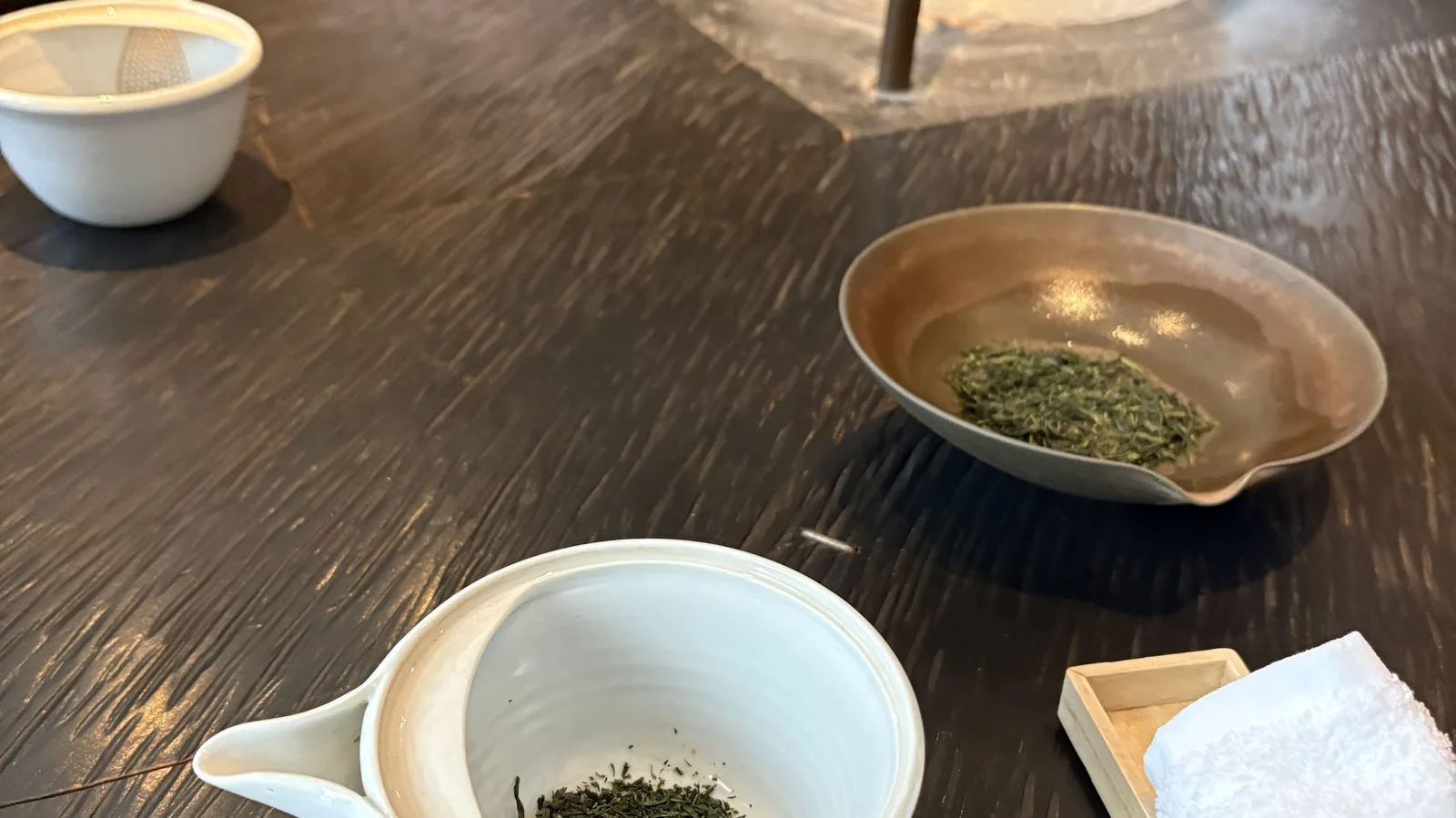
Tea is the tradition both coffee cultures grew out of, and this eight-seat counter on the fifth floor of the Spiral building treats it the way a serious pour-over bar treats beans. Sakurai Japanese Tea Experience roasts hojicha in front of you and pours sencha, gyokuro and matcha with wagashi over about ninety minutes. In spirit it belongs with the kissaten: one drink, made slowly, at a counter.
- Getting there: Omotesando on the Chiyoda, Ginza and Hanzomon lines.
- Opening hours: 11:00-20:00, with the weekday tea bar until 23:00, last order 22:00.
- Budget: ¥5,500–6,900 for the course, booked through TableCheck; the evening bar from 19:00 adds a cover charge.
Go if you want the counter ritual without the caffeine. Skip it if ¥6,000 is not how you want to spend an afternoon in Japan's food scene.
Honorable mentions
- Little Nap Coffee Stand: a shoebox espresso stand across from Yoyogi Park since 2011, with a bench outside and almost nowhere to sit. Closed Mondays.
- Bear Pond Espresso: roaster Katsuyuki Tanaka's Shimokitazawa bar, as known for its rules as for the syrupy Angel Stain shot. No photos inside, limited daily numbers, shifting hours.
- Koffee Mameya: a standing bean counter in Jingumae, daily 10:00-18:00, where a barista matches you to a bag from twenty to thirty roasters. No seats.
FAQ
What does the best coffee in Tokyo actually cost?
Less than most visitors fear, until it suddenly is not. A pour-over or siphon at a traditional kissaten runs ¥500–800, a third-wave espresso drink ¥450–700, and a single-origin pour-over ¥600–900, with rare lots above ¥1,000. Ginza and hotel cafes ask ¥1,200–1,800 a cup. Convenience-store coffee, which is genuinely decent, costs ¥110–150.
Can you work on a laptop in a Tokyo cafe?
Not in a kissaten. The etiquette is one order per person, low voices, no extended laptop sessions, and asking before you photograph anything, with some old shops banning photos altogether. Small roasters make the same point through geometry: ARiSE Coffee Roasters has six seats and expects most people to take away.
Which Tokyo cafes open early enough for breakfast?
Fuglen Tokyo opens at 07:00 daily, unusually early for specialty coffee here. Bread, Espresso & and Kayaba Coffee both open at 08:00, and both queue at weekends. Most kissaten do not unlock until 10:00 or 11:00.
Do Tokyo cafes take credit cards?
Often not. Cafe de l'Ambre, Sabouru, Chatei Hatou and ARiSE Coffee Roasters are cash only, which is the norm for kissaten and micro-roasters. Cafe Trois Bagues is the exception and takes cards and IC cards.
With one free morning, which single cafe should you pick?
Decide by culture, not by ranking. For the kissaten side, Cafe de l'Ambre is the purest version and opens at 11:00. For the roasters, Glitch Coffee & Roasters from 08:00 on a weekday. Check closing days: Mondays shut three of the eleven, Sundays two more.