

The Tokyo to Kyoto run is the spine of almost every first Japan trip, and the shinkansen makes it the easiest 450 kilometers you will ever travel. The decisions worth two minutes of thought: which train category, whether a rail pass pays for your route, and where your suitcase will live. This guide answers all three, plus the arrival from Kansai Airport.
What you need to know
Three train categories run the Tokaido line. Nozomi is the fastest at about 2 hours 15 minutes with departures every few minutes at peak. Hikari takes about 2 hours 40 minutes and is the fastest category the standard JR Pass covers; Nozomi requires a paid supplement on that pass. Kodama stops everywhere and is only interesting with discount platform tickets. Without a pass, expect roughly ¥14,000 one way in an ordinary reserved seat.
The options compared
| Option | Time | Cost | Notes |
|---|---|---|---|
| Nozomi shinkansen | About 2 h 15 | About ¥14,000 | Fastest; pass supplement required |
| Hikari shinkansen | About 2 h 40 | Free with JR Pass | The pass-holder default |
| Highway bus | 7–9 h | ¥4,000–8,000 | Overnight options; the budget floor |
| Flight to Kansai | ~4 h door to door | Varies | Rarely beats the train from Tokyo |
| HARUKA from Kansai Airport | About 80 min | About ¥3,110 | The direct airport train to Kyoto Station |
Booking and boarding in three steps
Do the pass math for the whole route
A 7-day JR Pass only pays if this ride is part of a bigger loop, roughly Tokyo to Kyoto and back plus a leg like Hiroshima. For a one-way trip, a plain ticket is cheaper than any pass.
Reserve seats in the famous seasons
Unreserved cars usually work midweek, but in sakura weeks, Golden Week and the November foliage season, reserve a seat when you buy, at any machine or JR office, no extra cost on most tickets.
Check the luggage rule before the platform
Cases over 160 cm of combined dimensions must be booked into the oversized-baggage seats at the car ends on this line. It is free but mandatory; without it staff will reseat you. Smaller cases ride the overhead rack.
From Kansai Airport, and arriving at Kyoto Station
Landing at Kansai instead of Tokyo, the HARUKA express runs direct to Kyoto Station in about 80 minutes and an ICOCA card covers everything after it. Kyoto Station itself is its own small city: from the shinkansen gates, the bus terminal is north through the central hall, the Karasuma subway line runs under it, and taxis queue on both faces. Most Higashiyama hotels are a 15 to 20 minute ride.
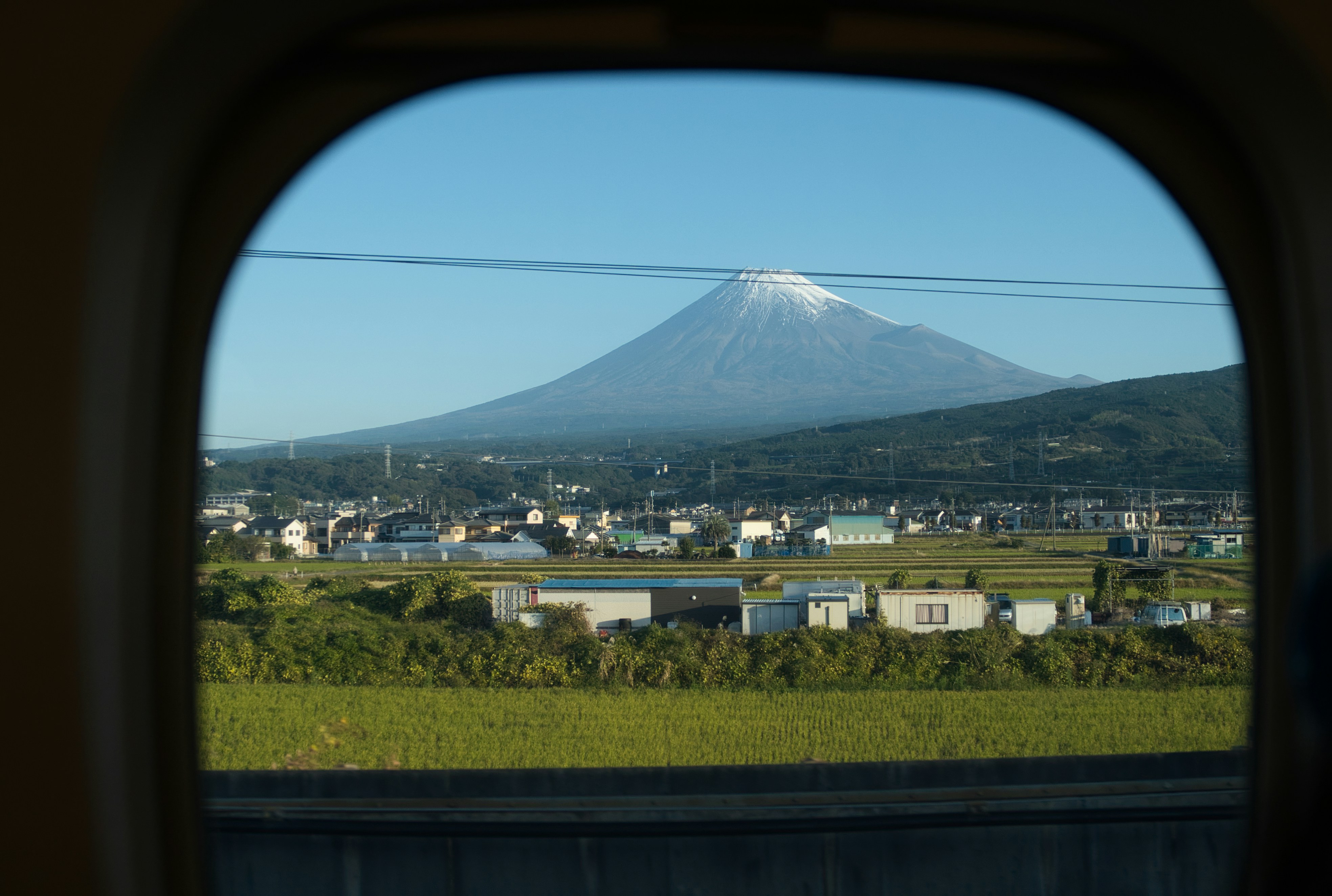
Seat side matters once: sit on the right side heading to Kyoto, rows E in ordinary cars, for the Mount Fuji window about 40 minutes out of Tokyo on a clear day.
Tips
- Trains leave to the minute; be on the platform three minutes early and mind the car numbers painted on it.
- Buy an ekiben boxed meal in the station before boarding; the platform shops beat the trolley.
- Smart-EX and the official apps sell discounted early-bird Nozomi seats if your dates are fixed.
- Luggage forwarding between hotels costs about ¥2,000 to ¥3,000 per case and turns the shinkansen leg hands-free.
- What to do on arrival: start with the Kyoto city guide and its two-day route.
FAQ
How much is the shinkansen from Tokyo to Kyoto?
Roughly ¥14,000 one way in an ordinary reserved seat on the fastest trains, a little less unreserved. Children ride half price, and early-bird app fares trim it further.
Does the JR Pass cover Tokyo to Kyoto?
The standard pass covers this route on Hikari and Kodama trains; the fastest Nozomi requires a supplement. For a simple return plus one extra long leg, the 7-day pass usually pays.
Do I need to reserve shinkansen seats?
Midweek outside the peaks, no; the unreserved cars have space. In sakura, Golden Week and foliage season, yes, and the oversized-luggage seat is mandatory for big cases year-round.
Is flying from Tokyo to Kyoto worth it?
Almost never. There is no Kyoto airport; flights land at Osaka's airports and the total door-to-door time loses to the train, along with the Fuji window.