
Kyoto's autumn foliage season lasts four weeks and peaks at different temples on different days. A traveler who arrives in early November misses Tofuku-ji entirely; one who books the third week for Arashiyama may find the western hills already past peak. This guide maps koyo timing by district, identifies which spots are worth visiting even when packed, and explains which famous names are better saved for any other time of year.
When does autumn come to Kyoto?
Kyoto's koyo front moves from west to south over four weeks. The dates below are typical; check Japan's official forecast in the week before your trip.
Autumn colour map
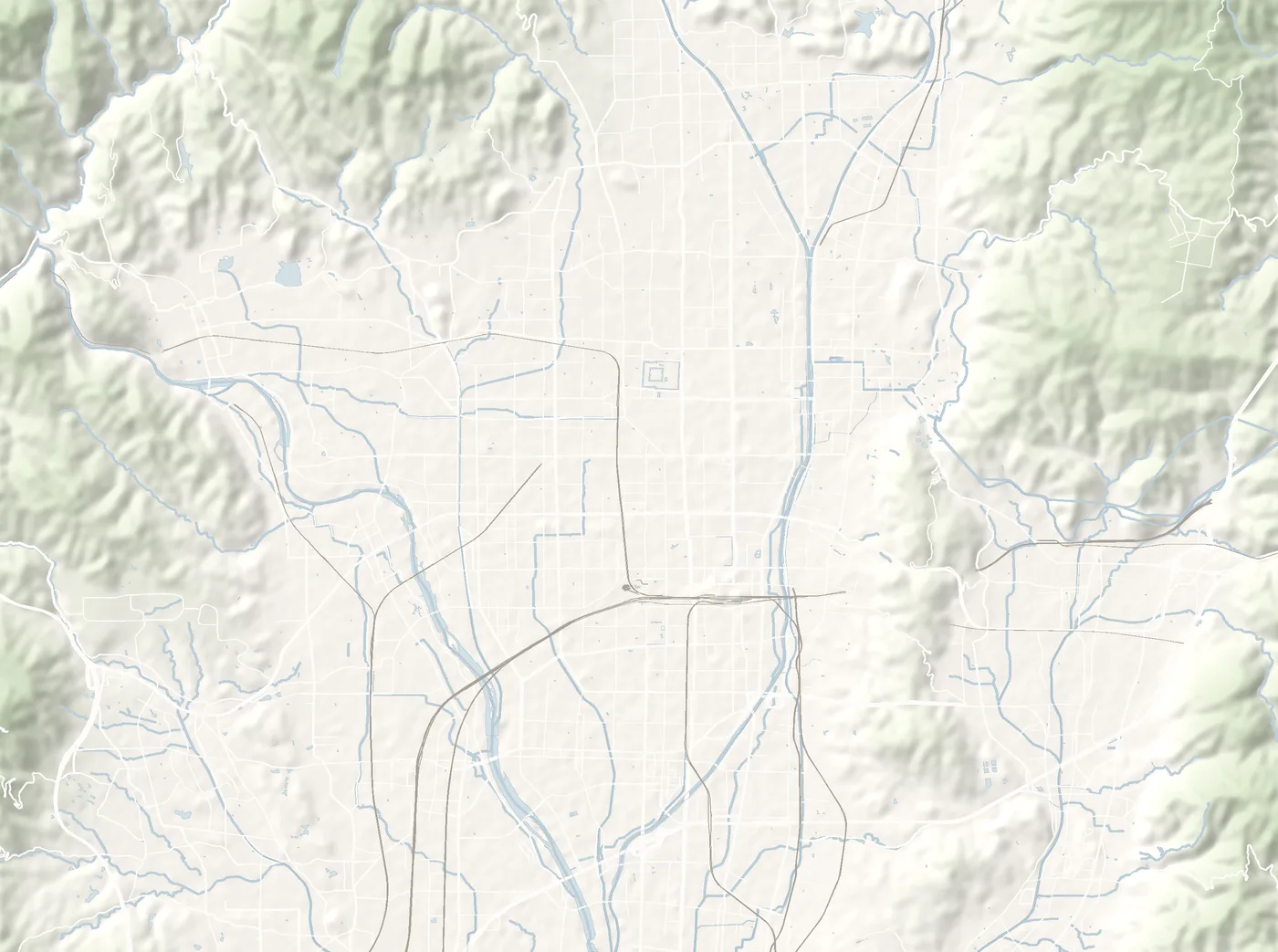 1ArashiyamaPeak2Northern HigashiyamaPeak3Southern HigashiyamaPeakOhara · Still greenOff map
- 1ArashiyamaJojakko-ji and Gio-ji best; bamboo itself stays greenFirst colour late Oct · Peak early NovPeak
- 2Northern HigashiyamaGinkaku-ji, Philosopher's PathFirst colour 5 Nov · Peak 10–15 NovPeak
- 3Southern HigashiyamaTofuku-ji, Eikan-do, KiyomizuderaFirst colour 10 Nov · Peak 15–25 NovPeak
- 4OharaSanzen-in; far quieter than the cityFirst colour late Nov · Peak late NovStill green
© OpenStreetMap contributors, OpenFreeMap, AWS Terrain Tiles
Kyoto's koyo window typically runs from the last week of October through late November. The timing shifts by two to three weeks depending on the summer: a hotter summer delays the colour change; an early cold snap can bring it forward. Most years, the peak for central Kyoto falls in the second or third week of November. Japan's official koyo forecast is published from late October each year with district-level timing; check it in the week before your trip for that season's specific peak window.
"Peak" and "turning" are not the same:
- Turning: the leaves have begun to change colour, but the display is incomplete. Often the more photogenic phase.
- Peak: most trees are at maximum colour at the same time. This is when the largest crowds arrive.
Planning for the last two days of turning or the first two days of peak gives you colour without the worst queues.
Arashiyama (late Oct)
The western hills colour first. The Arashiyama Bamboo Grove is evergreen and does not change in autumn, but the surrounding temple gardens do. Jojakko-ji and Gio-ji, both within ten minutes' walk of the bamboo path, have small maple gardens that reach peak colour before the rest of the city.
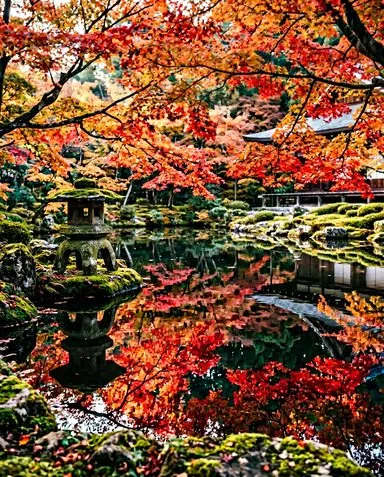
Tenryu-ji's garden pond is framed by maples that turn in early November. This is the district for visitors who want autumn colour with slightly fewer competitors for the same photo angle.
Best window: late October to 10 November.
Philosopher's Path (early Nov)
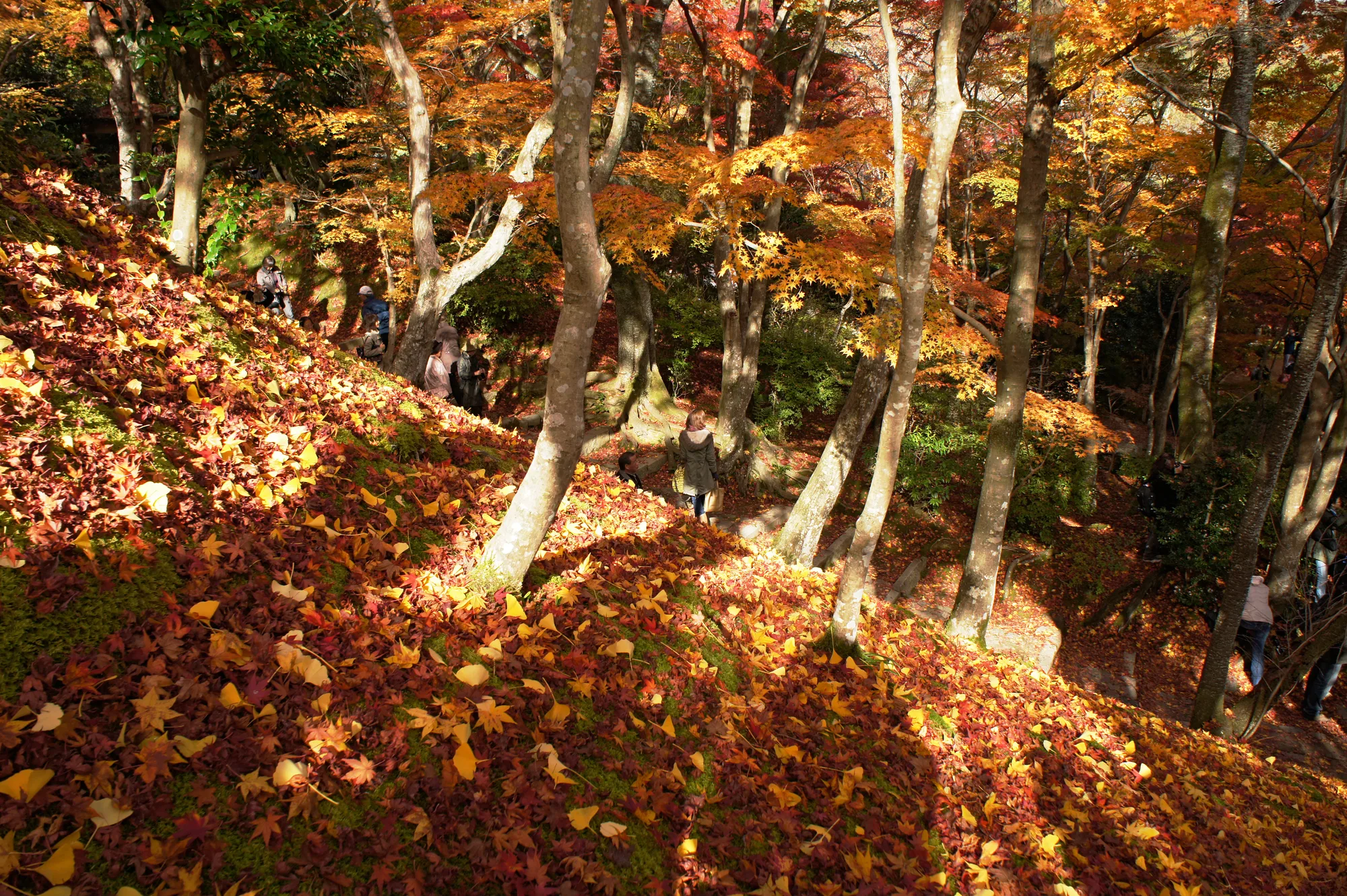
Ginkaku-ji (the silver pavilion) and the Philosopher's Path, a canal-side walking route that connects it to Nanzenji in the south, reach their best colour in the first half of November. The path is lined with cherry trees, and in autumn the foliage turns orange and red along the water.
Enkoji, a small temple five minutes north of Ginkaku-ji, has one of the finest maple gardens in the city and a fraction of the queues. It merits the detour.
Best window: 5–15 November.
Tofuku-ji and Eikan-do (mid-Nov)
The southern Higashiyama district peaks later and draws the biggest crowds. This is the district where timing the visit carefully matters most: arriving a week too early means green maples; arriving during peak week without a plan means queuing for an hour at each gate. Both problems are solvable.
Best window: 10–25 November, with mid-November the most reliable target.
The spots worth visiting in autumn
Tofuku-ji
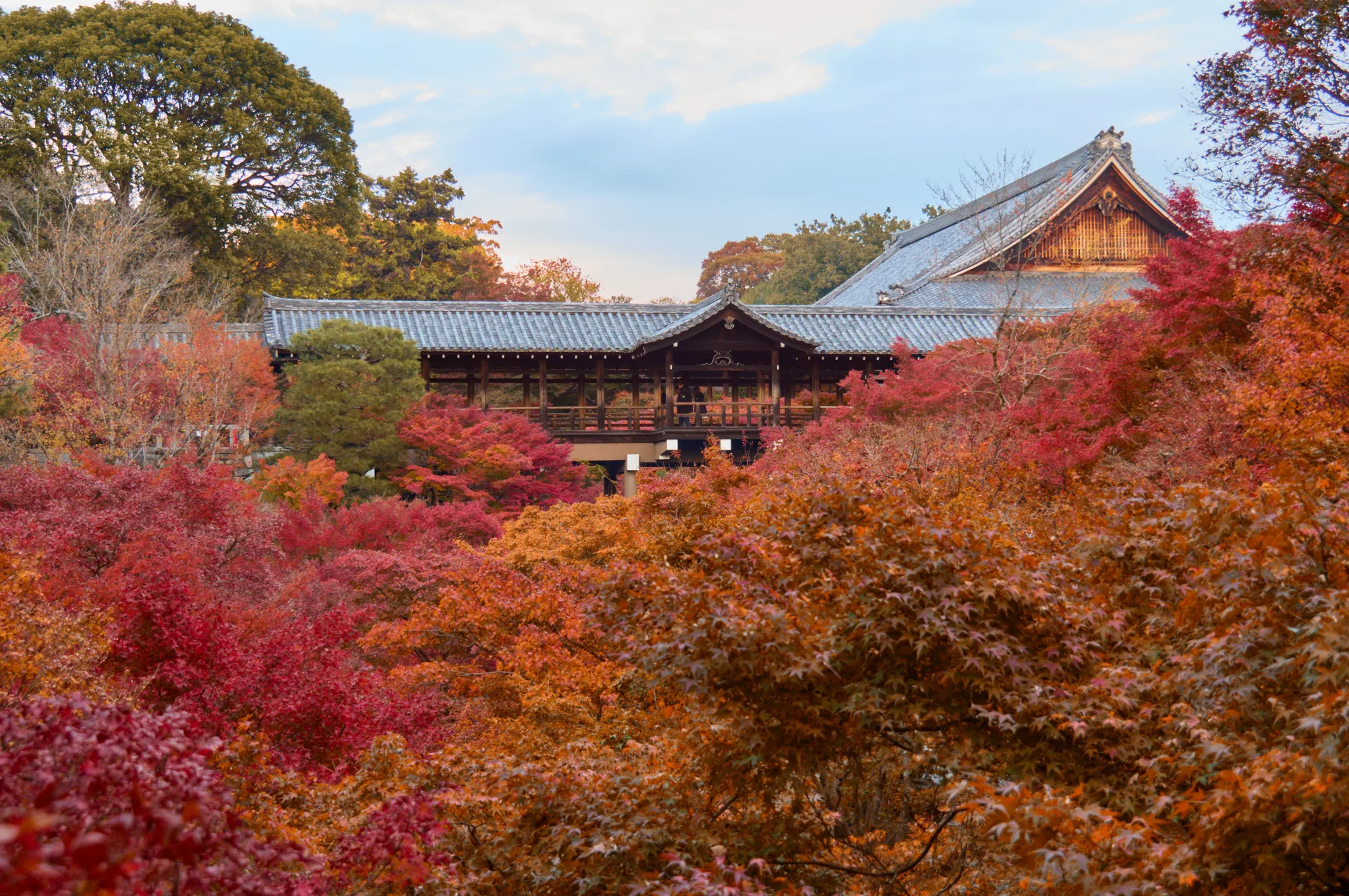
Tofuku-ji is the best koyo destination in Kyoto. The temple's Tsutenkyo bridge spans a ravine planted with roughly 2,000 maples; from the bridge, visitors look directly down into the canopy, and the effect during peak week is unlike anything else in the city. The autumn foliage season brings special extended hours and heightened admission pricing for the bridge section. Arrive before 8am to secure a position on the bridge before the queue becomes unmanageable.
Zen temple
Eikan-do: the best evening in autumn Kyoto
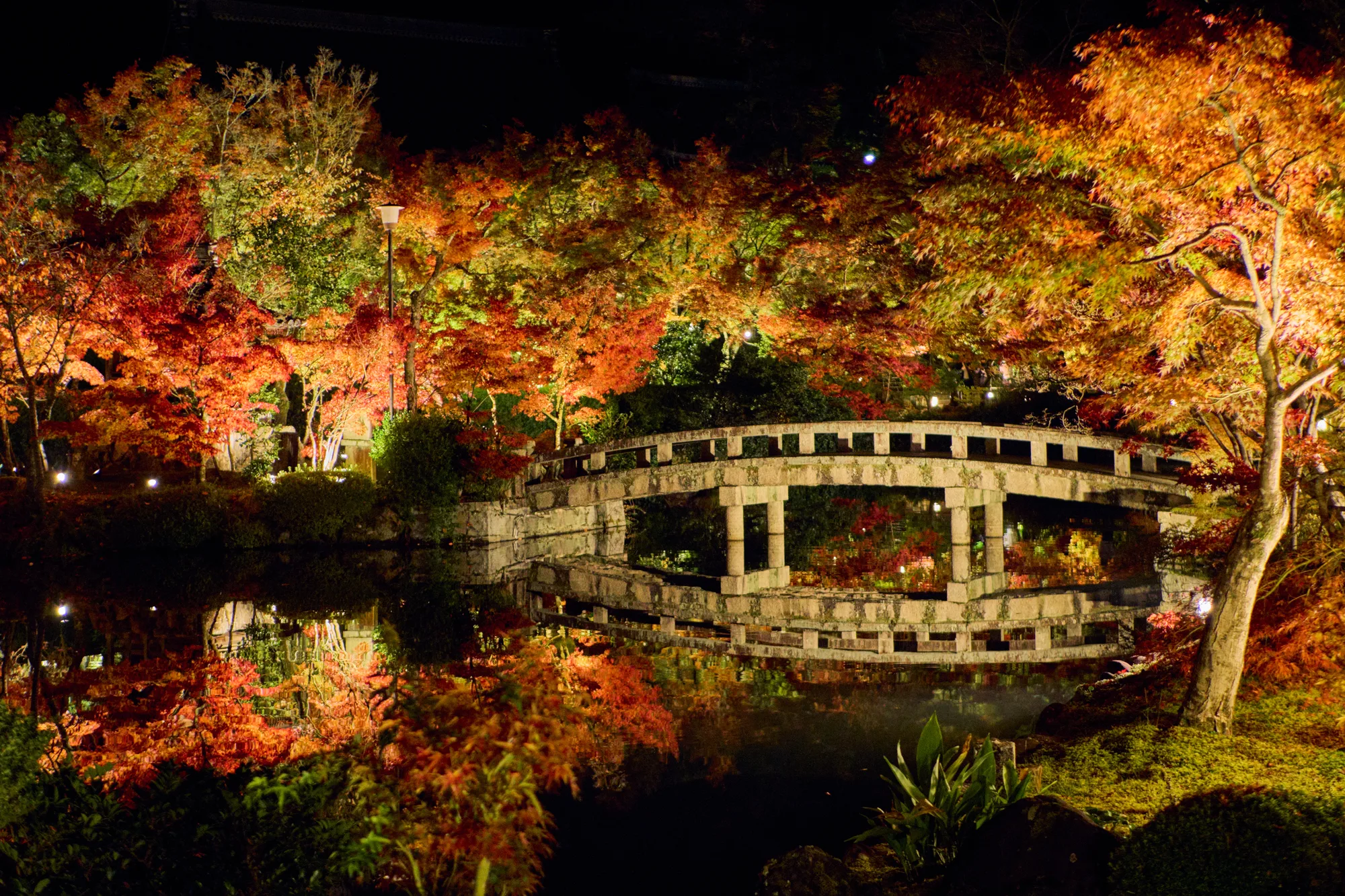
Eikan-do runs a ticketed evening illumination event throughout November. The temple garden is lit after dark; the central pond reflects the illuminated maples; the paths are quieter than daytime Kyoto at any hour. Tickets sell out during peak weeks and must be booked in advance through Lawson ticket counters or the temple's official website. The evening event uses a separate ticket from daytime entry, so a visit can combine both: afternoon in daylight, then return after 17:30 for the illumination.
Pure Land temple
Kiyomizudera: rewarding, but not for the foliage
Kiyomizudera has a famous autumn view from its wooden stage, looking out over the hillside. The maples surrounding the stage do colour well in late November. However, this is Kyoto's most-visited temple all year, and November crowds operate at a different scale. The view is worth seeing: visit at 4pm for golden-hour light rather than treating it as a foliage destination, accept that the terrace will be busy, and move through efficiently.
Buddhist temple
Two spots to skip in November
Kinkaku-ji (the golden pavilion) is best visited in January, when the light is low, the crowds are thin, and the reflection in the pond is cleaner. It has no dedicated foliage garden, draws the city's largest queues in November, and the experience is a moving crowd rather than a contemplative visit. Nothing about the temple itself changes in autumn: the gold exterior is remarkable year-round.
Fushimi Inari's vermillion torii gates do not change with the seasons. The mountain trail is pleasant in autumn, but it is not a koyo destination. The lower section is extremely crowded in November; the upper trail above the second rest stop is nearly empty all year and does not require November specifically.
How to plan your Kyoto autumn trip
Choose your target window
Early November for Arashiyama; mid-November for Tofuku-ji, Eikan-do, and Ginkaku-ji. The Japan Meteorological Corporation publishes a koyo forecast from late October with district-level timing. Check it the week before your trip rather than booking fixed dates months out.
Book accommodation three to four months in advance
Kyoto in November is the city's most booked period. Central Kyoto hotels fill by August for mid-November dates. Staying in Osaka and taking the 15-minute express to Kyoto is a practical alternative that costs substantially less and keeps your options open.
Arrive at each temple before 9am
Tofuku-ji and Eikan-do both see queues form at the gate by 9am during peak week. A 7:30am arrival gives one to two hours before the main crowds arrive and better morning light. For Eikan-do's night illumination, book tickets before you travel.
Walk or cycle between districts
City buses become severely congested during koyo season. Tofuku-ji is two stops from Kyoto Station on the Kintetsu Kyoto Line (Tofukuji Station). Ginkaku-ji and the Philosopher's Path are a 40-minute walk from Nanzenji. Renting a bicycle covers the temple circuit faster than any bus.
Build in Ohara as a fallback
If your timing is slightly off for central Kyoto, the village of Ohara (40 minutes north by bus) peaks in late November at Sanzen-in's famous moss garden. Far fewer visitors and a distinctly different atmosphere from the city temples.
Tips and common mistakes
- Do not visit Kinkaku-ji in November. Go in January instead. The temple is more beautiful with fewer people and the light is better in the low winter sun.
- Check the forecast, not calendar dates. Peak week moves by up to two weeks year to year. Japan's official koyo forecast, updated daily from late October, is the reliable source.
- Layers matter. Daytime temperatures during peak season are typically 10–18°C; evenings drop to 5–8°C. A midweight jacket and a warm layer for evenings cover both.
- Skip the city buses. Use the train to reach Tofuku-ji (Tofukuji Station, two stops from Kyoto Station on the Kintetsu Kyoto Line). Buses in central Kyoto during koyo season run late and stand-room only.
- Book Eikan-do evening tickets before you leave home. During peak week they sell out days in advance. Lawson ticket counters accept international cards; the temple website sells online.
- Extend late: Ohara holds colour into late November. Sanzen-in temple garden in Ohara is 40 minutes north of the city by bus and peaks one to two weeks after central Kyoto. Worth planning as the closing move of a multi-day trip.
FAQ
When is the best time to visit Kyoto for autumn leaves?
Mid-November is the most reliable target window for peak colour at most central Kyoto temples. Arashiyama turns earlier, around early November; Ohara and northern Kyoto peak in late November. Check a live forecast in the week before your trip rather than booking for a fixed date months in advance.
Which Kyoto temple has the best autumn leaves?
Tofuku-ji. The Tsutenkyo bridge viewpoint, with its ravine of roughly 2,000 maples visible from directly above, is the most striking koyo view in the city. Eikan-do's ticketed night illumination is the best evening experience of the season.
Is Kyoto too crowded in November?
Yes, for most of the day at popular spots. The solution is not to avoid November but to visit early (before 9am) or late (after 4pm), walk or cycle instead of using buses, and skip the spots that are crowded without being worth it in this season, especially Kinkaku-ji and the lower section of Fushimi Inari.
How much does it cost to visit Kyoto temples in autumn?
Most Kyoto temples charge ¥500–¥600 for daytime entry (roughly £2.50–£3 / $3–$4). Tofuku-ji charges up to ¥1,000 during the koyo period for access to the Tsutenkyo bridge viewpoint. Eikan-do's night illumination ticket costs around ¥1,000, separate from the daytime entry fee. Budget ¥3,000–¥4,000 for a day covering two to three temples.
Can I base myself in Osaka for a Kyoto day trip in autumn?
Yes, and it is a practical strategy. Kyoto is 15 minutes from Shin-Osaka by shinkansen or 28–42 minutes by limited express on the Hankyu or Keihan lines. Staying in Osaka avoids Kyoto's inflated November hotel prices. The trade-off is the travel time at each end of the day, which matters when you need to arrive at temples before 9am.
Does the JR Pass cover transport to the autumn temples?
Partly. The JR Pass covers the shinkansen from Tokyo or Osaka to Kyoto Station, and the JR Nara Line for a day trip to Nara. It does not cover the Kintetsu line to Tofukuji Station, the Keihan or Hankyu lines, or the city buses. For getting around within Kyoto during koyo season, the JR Pass adds no value.
What should I wear in Kyoto in November?
Daytime temperatures range from 10–18°C; evenings drop to 5–8°C. A midweight jacket, comfortable walking shoes, and a warm layer for evenings cover the full range. Comfortable shoes matter more than usual because the main Higashiyama temples involve significant walking on stone paths, steep stairs, and uneven terrain.