
A Hakone day trip from Tokyo is the city's classic escape: hot springs, open-air art, a volcanic valley, and Mount Fuji across a lake, all about 80 minutes from Shinjuku. The catch is timing: most visitors ride the sightseeing loop in the same direction at the same hour and queue all day. Run it backwards and you stay one step ahead.
What to Expect
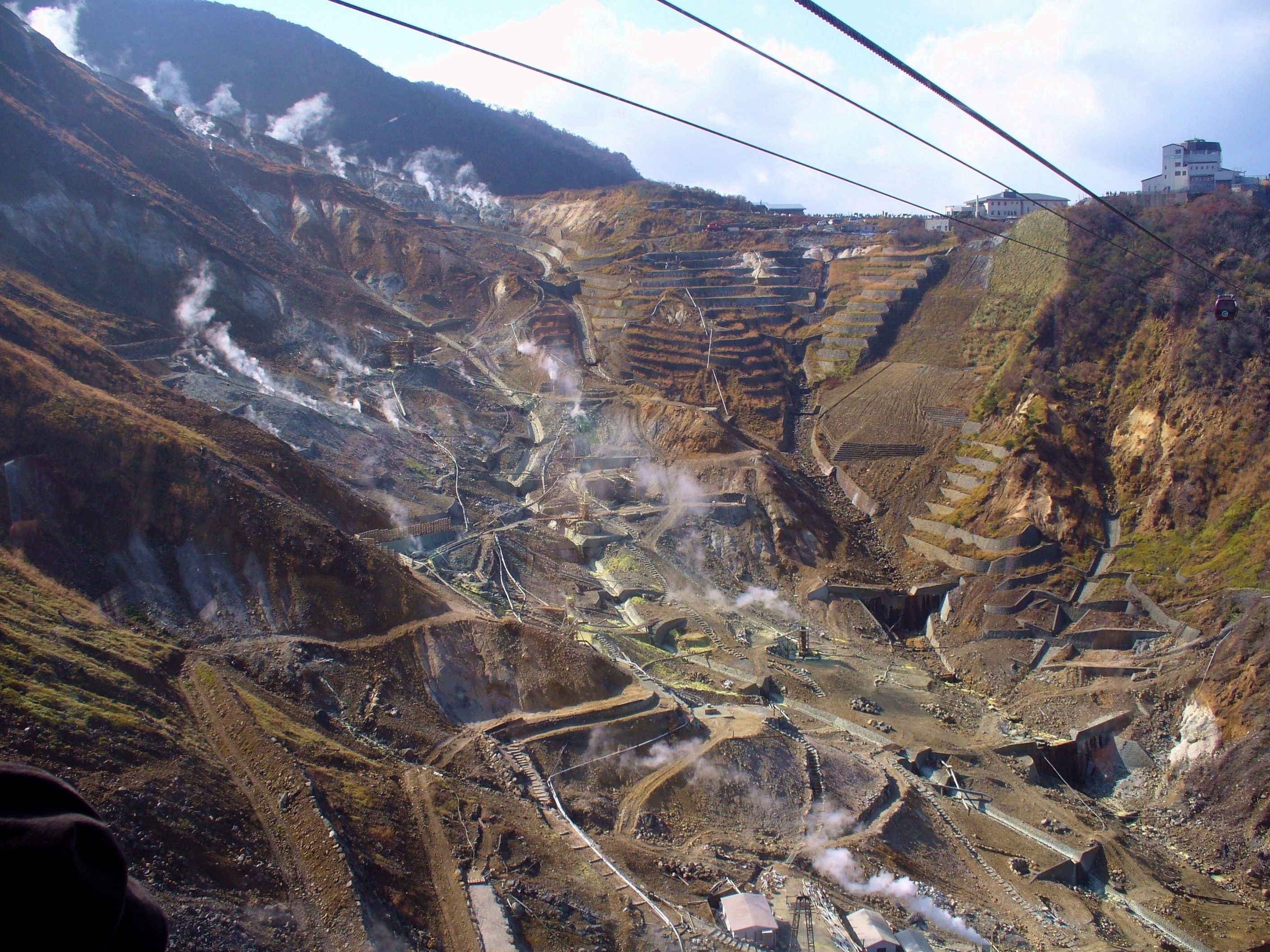
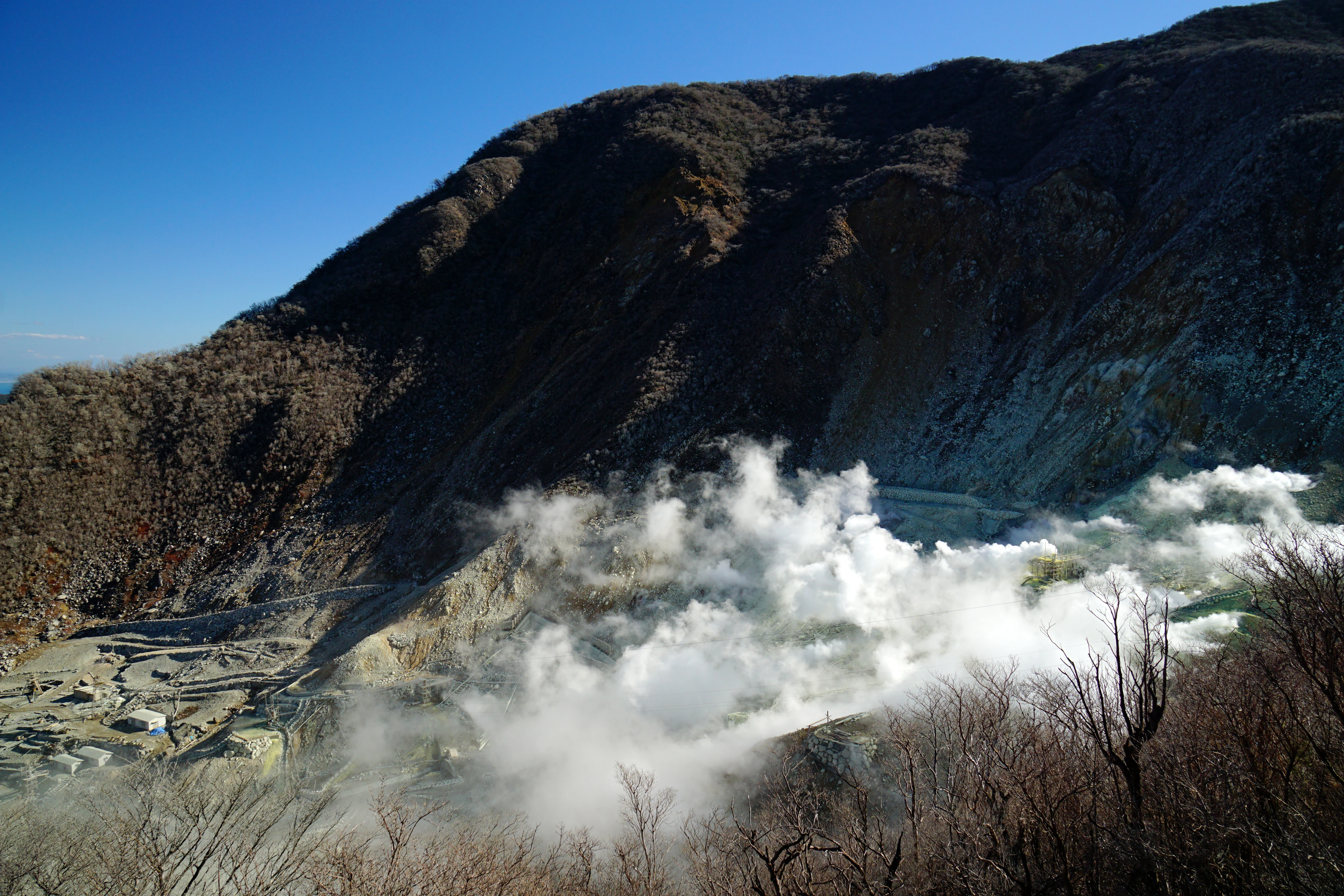
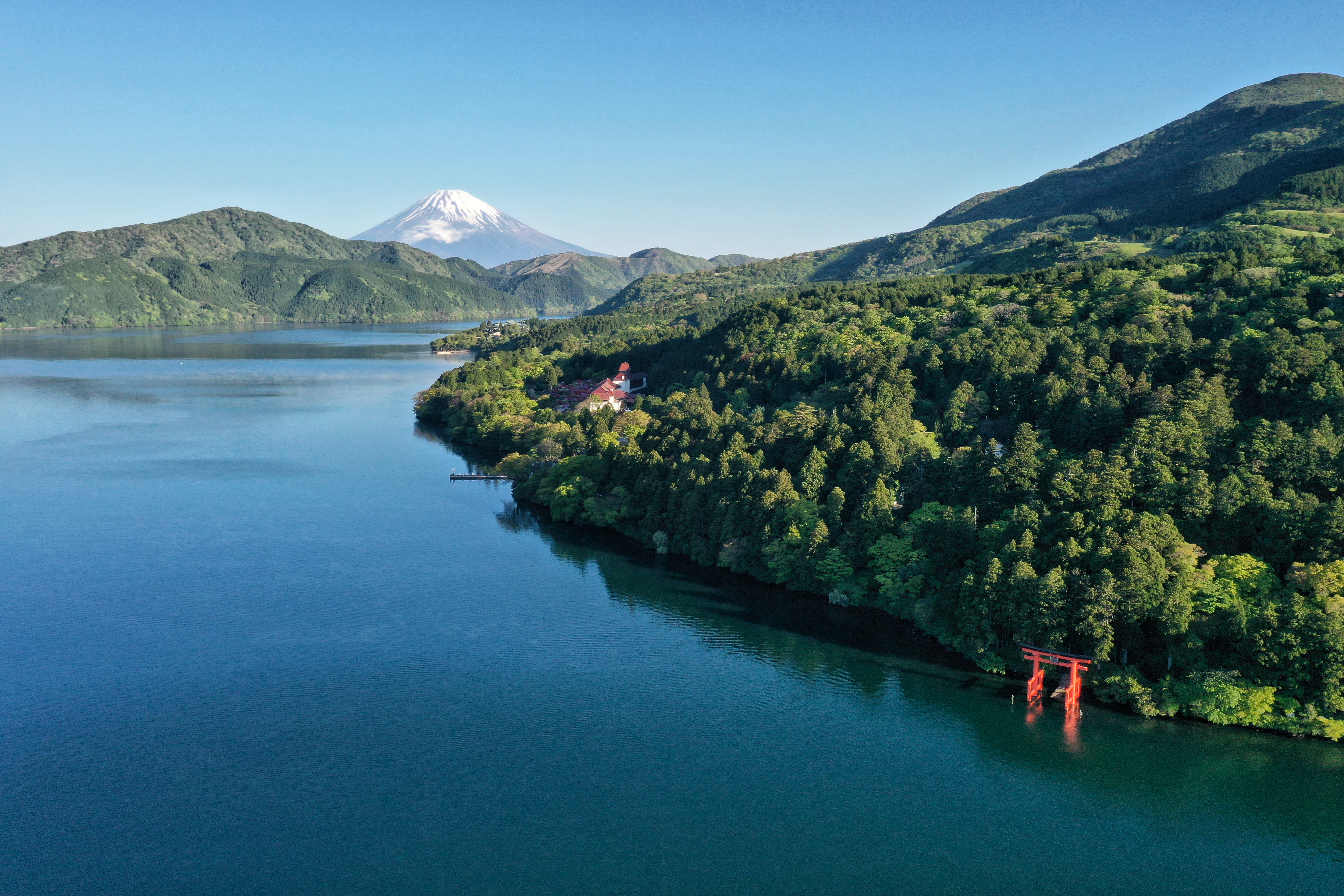
Hakone isn't one sight but a circuit. A narrow mountain railway switchbacks up to Gora, a cablecar climbs higher to a ridge, and a ropeway floats over Owakudani, a sulphur-steaming volcanic valley where vendors sell eggs blackened in the hot springs. The ropeway drops to Lake Ashi, where sightseeing boats cross to a famous red torii standing in the water. It is scenic, well-organised, and on a clear winter morning, Mount Fuji sits squarely on the horizon.
The reverse loop
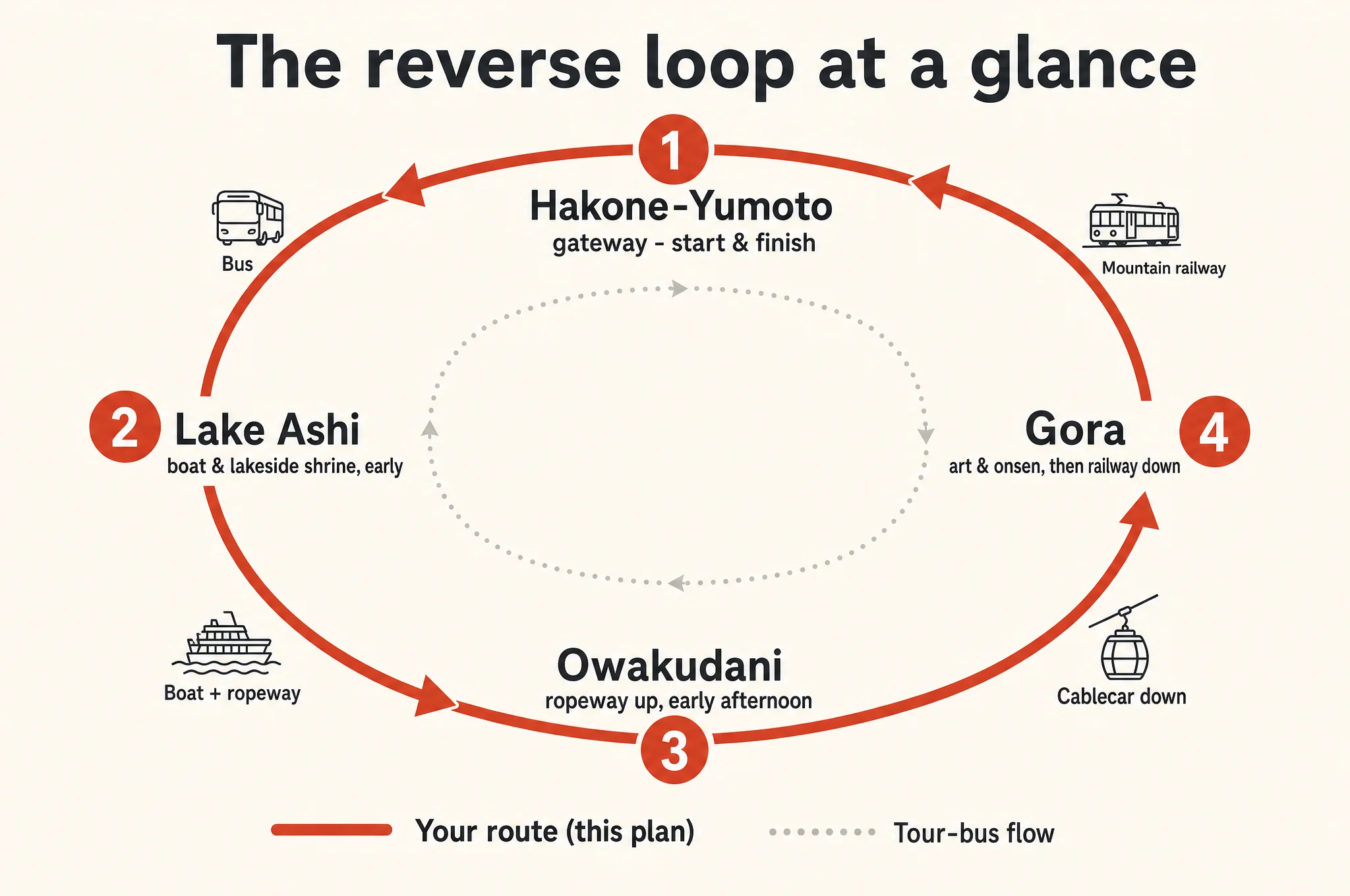
The default route sends everyone clockwise from the gateway up to Owakudani, arriving at the ropeway between roughly 10:30 and 13:00, exactly when the Tokyo coach tours land. Run the circuit the other way instead: bus to Lake Ashi first, take the boat and see the lakeside shrine early, then ride up to Owakudani during the early afternoon as the groups drain out, finishing with art and an onsen. Same pass, same trains, half the queueing.
The loop, hour by hour
Same pass, same trains; the direction decides how much of the day you spend in a queue.
Art and a soak
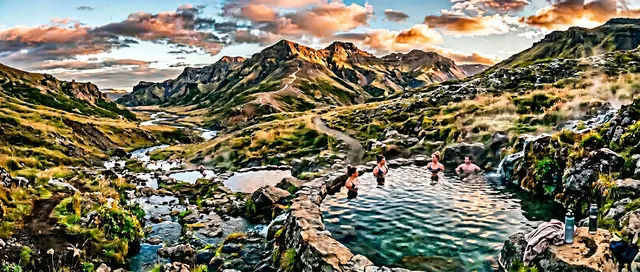
The Hakone Open-Air Museum sets sculpture against the mountains and holds a dedicated Picasso Pavilion; allow 90 minutes. With clear skies to spare, the Jukkoku Pass Observation Deck gives a wide view over the lake and the mountains. Lunch fits well at Gora Brewery Public House, and a day-use bath at Hakone Kowakudani Onsen Mizunooto is the right way to end before the train back.
How to Get There
Getting There
From Shinjuku Station, Tokyo
- 1Take the Odakyu Limited Express Romancecar (all seats reserved) → Hakone-Yumoto
- 2Switch to the Hakone Tozan train, cablecar, ropeway and Lake Ashi boat, all covered by the Hakone Freepass → Around the loop
Tips
- Run the loop counter-clockwise. Get to Lake Ashi early and reach Owakudani after lunch to stay ahead of the coach crowd all day.
- The Freepass almost always pays off. One full loop of trains, cablecar, ropeway and boat costs more à la carte than the pass, and the pass includes the round trip from Shinjuku.
- Reserve the Romancecar. Seats are all reserved and sell out at peak times; book the outbound and return before you travel.
- Go on a clear winter morning for Fuji. The mountain hides behind cloud far more often than photos suggest; December to February offers the best odds.
- One day works, but the ryokan are the real Hakone. If you can spare a night, a riverside onsen ryokan with a private open-air bath is the reason to stay over rather than rush back.
Nearby
Pair the day with the wider area, or trade up to a night.
FAQ
Is Hakone worth a day trip from Tokyo?
Yes. In a single day you can ride the mountain railway and ropeway, cross Lake Ashi by boat, see open-air art, soak in an onsen, and (on a clear day) look straight at Mount Fuji. Running the loop counter-clockwise keeps the queues manageable.
How long is the trip from Tokyo to Hakone?
About 80 minutes on the reserved-seat Romancecar from Shinjuku to the Hakone-Yumoto gateway, for roughly ¥2,470 one way. The regular Odakyu trains are slightly cheaper and slower.
Is the Hakone pass worth it for one day?
For a full loop, yes. A single circuit of the railway, cablecar, ropeway and boat usually costs more bought separately than the 2-day Freepass, which is ¥7,100 from Shinjuku and includes the round-trip rail fare.
Can you see Mount Fuji from Hakone?
On clear days, yes. Most famously from Lake Ashi, with the lakeside torii in the foreground. Cloud cover is common, so a crisp winter morning gives the best chance.
What's the best order to do the Hakone loop?
Counter-clockwise. Start at Lake Ashi early, take the boat and see the shrine before the tour buses arrive, ride up to Owakudani during the early afternoon, then finish with the open-air museum and an onsen near the gateway.