

Most people in Fukuoka are told that Dazaifu is worth a half-day. The advice is sound. Dazaifu Tenmangu Shrine commemorates a real historical figure rather than an abstract deity, which gives it a different weight from most shrine visits. Five minutes away by covered escalator through forested hillside, the Kyushu National Museum is one of Japan's four national museums and typically has a fraction of the shrine's visitor numbers. Time it right and the whole morning belongs to you.
When to go, and when to avoid it
Dazaifu rewards an early arrival more than almost any day trip from Fukuoka. The shrine is calm before the school groups, then fills fast and stays full until mid-afternoon.
8–9am
CrowdsQuiet
Shrine grounds nearly to yourself9:30am
CrowdsModerate
School groups start arriving11am–3pm
CrowdsPeak
Approach path packed, weekends worstafter 3pm
CrowdsModerate
Crowds ease; the museum is calm any time
What to expect
The history: why this shrine is different
Sugawara no Michizane was a ninth-century scholar, poet, and court official, one of the most educated men of the Heian era. He rose to senior government rank, made powerful enemies, and in 901 CE was falsely accused and stripped of his position. The imperial court exiled him to Dazaifu, the administrative outpost at the western edge of the empire, where he died two years later in 903 CE.
What followed was read as his angry spirit: floods struck Kyoto, the crown prince died, fires broke out, and several of his principal accusers died in quick succession. The court was alarmed. Michizane was posthumously rehabilitated, elevated to the highest court rank he had been denied in life, and eventually enshrined as Tenjin, the god of scholarship and learning. The shrine built over his grave at Dazaifu became the head of more than 12,000 Tenmangu shrines across Japan. Every one of them exists because of one exiled man. Understanding that history changes how you see the place.
The shrine itself
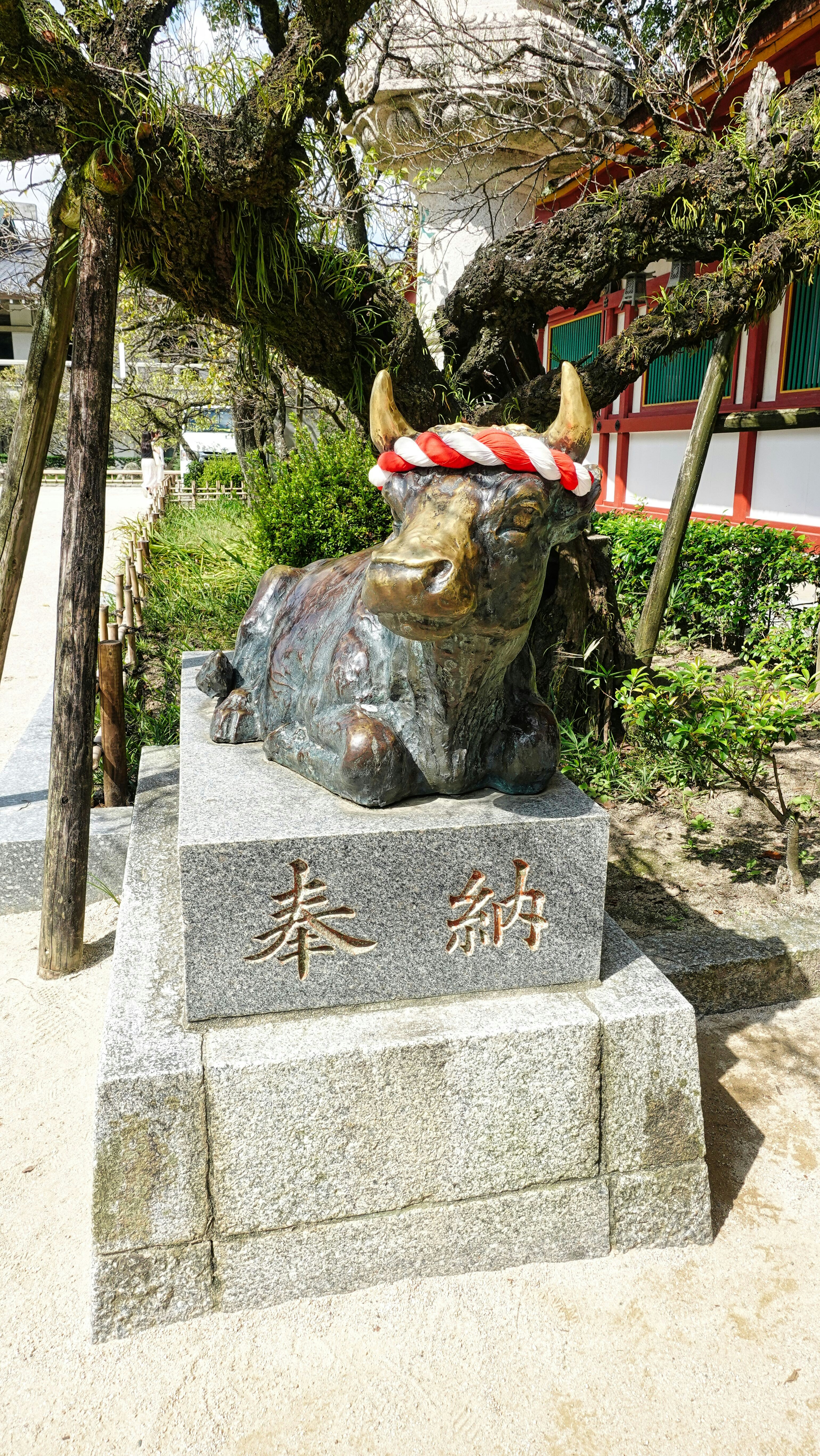
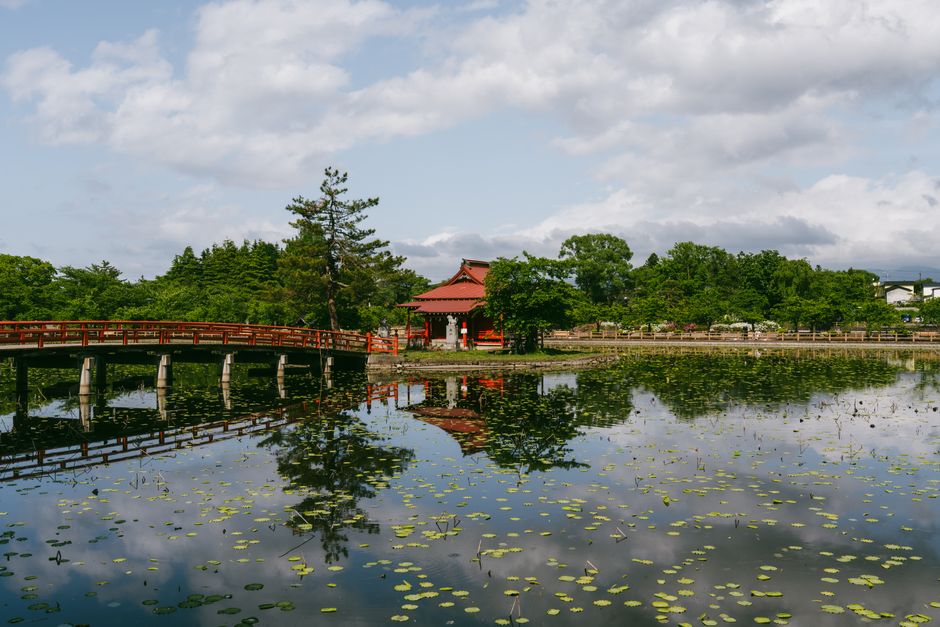
The main hall (honden), rebuilt in 1591, stands at the end of the approach path across a pond crossed by three arched stone bridges. The bridge design is traditionally explained as a passage through past, present, and future. Bronze ox statues are placed throughout the grounds: Michizane was born in 845, the Year of the Ox, which is why the ox became his symbol, and touching the head of one is said to bring good fortune in study. The inner precinct behind the main hall is noticeably quieter than the entrance area even on crowded days; the sound shifts quickly once you move away from the approach.
Plum trees throughout the grounds are tied to Michizane's legend. His favorite plum tree in Kyoto is said to have flown to Dazaifu of its own accord to be near him after his exile. This is myth, stated as such on the shrine grounds themselves. The plums blossom in February and March and draw significant visitors; outside that window, they are simply part of the scenery.
The approach path
The 300m sando from the station to the shrine is lined with vendors selling ume-mochi, sticky rice cakes filled with sweet plum paste, the signature food of the area. From mid-morning onward the path is crowded, and the stalls sell largely the same product. If you want to try ume-mochi, buy one from a stall making them fresh in front of you rather than from pre-made stock. Then walk the rest of the path without lingering; the time is better spent inside the shrine grounds and at the museum.
Kyushu National Museum
Kyushu National Museum sits five minutes from the shrine via a covered escalator that winds uphill through a forested slope, a genuinely unusual transition that most visitors find worth the walk for the setting alone. The museum is one of Japan's four national museums (alongside Tokyo, Kyoto, and Nara) and opened in 2005 as the only one outside the Kanto-Kansai corridor. Its focus is Japan's cultural exchange with Asia: the goods, ideas, and aesthetic influences that arrived through Kyushu's ports from China, Korea, and southeast Asia.
The fourth-floor permanent collection runs from Jomon-era artifacts through to Meiji, with particular strength in objects that traveled between Japan and continental Asia. Admission is ¥700 for adults; free for visitors under 18 and over 70. The museum is closed on Mondays. On a weekday morning, it is not unusual to have whole rooms of the permanent collection largely to yourself, a striking contrast with the approach path below.
How to get there
Getting There
From Fukuoka Tenjin
- 1Take Nishitetsu toward Futsukaichi, transfer here → Futsukaichi
- 2Continue on the Dazaifu branch line → Dazaifu
- 3Walk along the sando approach path → the shrine
Tips
- Best timing: Arrive at the station by 8:45am on a Tuesday, Wednesday, or Thursday. The shrine grounds are quiet before 10am; school groups begin arriving around 9:30am and the approach is packed from 11am.
- Best months: May–June (post-exam season, plum trees in leaf, light crowds) and October (mild temperatures, moderate visitor numbers).
- Months to avoid: January and February bring the largest crowds of the year, as students from across Kyushu make pilgrimage before university entrance exams. November weekends draw autumn-leaf visitors from across Fukuoka. School trips peak on weekday mornings in May and October from 10am to 3pm.
- Rail pass coverage: Nishitetsu is a private railway. No JR Pass, no Suica, no standard IC tourist pass covers the fare automatically. Buy a standard ticket (¥480 each way as of 2026) or check Nishitetsu's own Dazaifu day-pass options at the Tenjin station ticket counter. IC cards issued in Japan are accepted for the fare.
- If arriving at 11am: Accept the crowds at the shrine, spend 45 minutes there, then head straight to the museum where it will be calmer regardless of time.
Itinerary · 1 day
8:45amArrive Dazaifu station
9:00amShrine grounds: walk the approach and honden
9:15amInner precinct, quiet before the groups
10:00amCovered escalator up to Kyushu National Museum
until noonPermanent collection, 4th floor
noonReturn to Fukuoka for lunch
Quieter alternative
Total ¥1,660 (¥960 return train + ¥700 museum), excluding food. Tuesday–Thursday gives the lightest crowds.
Nearby
Dazaifu works best as a morning addition to a Fukuoka stay rather than a standalone destination.
FAQ
Is Dazaifu worth a half-day from Fukuoka?
Yes, particularly if you have any interest in Japanese history or art. The shrine takes 45–60 minutes to see properly; the museum adds another 90 minutes. The total round trip from Fukuoka Tenjin fits comfortably into a morning. If you have no particular interest in either history or museums, Dazaifu is pleasant but brief: a single hour covers the essential ground.
How do I get to Dazaifu from Fukuoka?
Take the Nishitetsu line from Tenjin, transfer at Futsukaichi, then continue to Dazaifu. Total journey is around 25–30 minutes. The one-way fare is ¥480 as of April 2026. IC cards are accepted. There is no JR Pass coverage, as Nishitetsu is a private line.
Is the shrine free to enter?
The shrine grounds are free. The inner treasure house (hōmotsuden) charges a separate admission fee. The museum next door costs ¥700 for adults; free for visitors under 18 and over 70.
When is the best time to visit Dazaifu?
Weekday mornings before 10am, ideally Tuesday to Thursday. The busiest periods are 11am to 3pm on any day, and January to February is the annual peak due to student exam pilgrimages. May, June, and October offer the most comfortable conditions for a low-crowd visit.
What is Dazaifu known for?
It is the principal shrine dedicated to Sugawara no Michizane, a Heian-era scholar exiled to Dazaifu and posthumously enshrined as the patron of learning. The shrine stands at the head of more than 12,000 Tenmangu shrines across Japan. Students visit in large numbers in January and February to pray for success in entrance exams. Plum blossoms in February–March bring additional visitors; the grounds contain trees tied directly to Michizane's personal history.