

How-to
How much does a Japan trip cost in 2026
Two weeks for two people: €4,500 – €9,500
For a couple, the honest 2-week budget range is roughly €4,500 (lean: hostels, konbini lunches, JR Pass, regional Shinkansen only) to €9,500 (comfortable: 4-star hotels, restaurant dinners, one Michelin lunch, two ryokan nights, JR Pass + private taxi for one transfer). The mid-point of €6,200–€7,200 is what most first-timers actually spend without trying, and it's the right reference number to plan around. All conversions below use the March 2026 EUR/JPY rate of ~¥184 per €1; a weaker yen tightens budgets, a stronger yen loosens them.
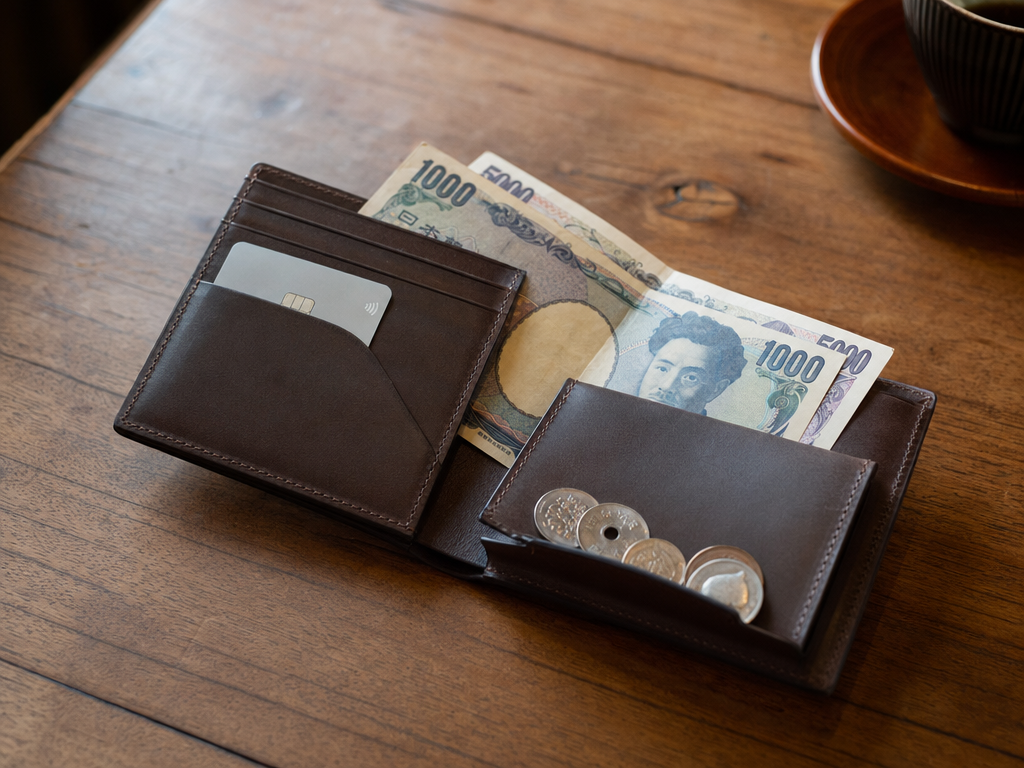
Two-week budget for two people, all categories, return flights from Europe excluded. Tip: Single travellers don't halve this; they pay 60–65% of the couple budget. Hotels, taxis, and ryokan kaiseki are all priced per person; only the train pass and the hotel room scale down with two-person occupancy.
Flights: €700–€1,100 from EU return
Direct EU-Japan return flights (KLM, Lufthansa, ANA, JAL) run €700–€1,100 economy depending on season. The cheapest window is mid-January to mid-March and mid-October to early December (avoiding sakura week and Golden Week). The most expensive: late March to early May (sakura), Obon week (mid-August), and late December (New Year). One-stop flights via Doha or Istanbul are €500–€750 if time matters less than money. From the US, expect $700–$1,200 round-trip from the West Coast (LAX/SFO/SEA), $900–$1,500 from the East Coast (NYC/EWR/BOS).
Tip: Book the inbound and outbound on different airports if it's cheaper. KLM flies into Tokyo, Osaka and Nagoya direct. Japan internal travel between cities is cheap with the JR Pass, so an "in via Tokyo, out via Osaka" arrangement saves a Shinkansen ride.
JR Pass: ¥50,000 for 7 days, ¥80,000 for 14
JR Pass prices (Ordinary tier): 7-day ¥50,000, 14-day ¥80,000, 21-day ¥100,000. Roughly €275 / €440 / €545 at the March 2026 ~¥184 / €1 rate. Worth it for any itinerary with more than two long Shinkansen legs. A 14-day Pass pays itself off with Tokyo→Kyoto + Kyoto→Hiroshima daytrip + Osaka→Tokyo alone. For a 2-week trip with only one long-distance return, point-to-point tickets are usually cheaper. Note: a further ~6% Pass price increase is scheduled for 1 October 2026 through travel-agency channels; locking in by then saves money.
JR Pass deep guideHotels: ¥7,000–¥45,000 per night
Budget capsule or hostel: ¥4,000–¥7,000 per person. Standard business hotel (APA, Toyoko Inn, Comfort): ¥9,000–¥15,000 per night for a small double. 4-star Western-style hotel: ¥18,000–¥30,000 per double room. 5-star boutique: ¥35,000–¥60,000 (e.g. Hotel Niwa Tokyo, Cross Hotel Osaka). 5-star flagship (Four Seasons, Mandarin, Peninsula, Aman, Ritz-Carlton): ¥100,000+ per room. Ryokan with kaiseki dinner: ¥18,000–¥45,000 per person, room rate includes both dinner and breakfast. Tokyo and Kyoto cost 20–30% more than Osaka, Fukuoka or any regional city. Book sakura week 6+ months ahead.
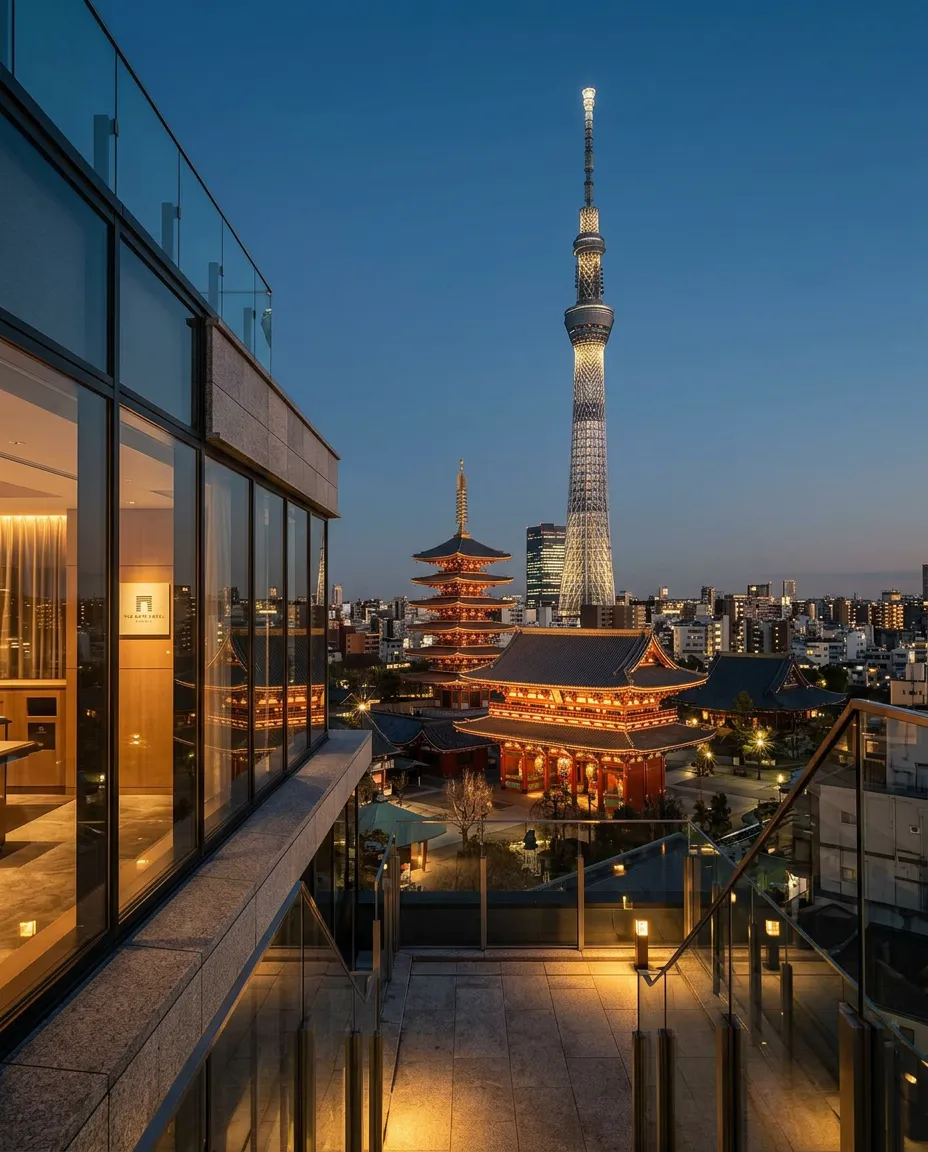
Tip: For a 14-day trip, average ¥15,000–¥20,000 per night for a couple in 3-4-star business hotels is the realistic mid-point. That's ¥210,000–¥280,000 (~€1,140–€1,520) for the full trip's accommodation.
Food: ¥3,000–¥7,000 per person per day
A standard daily food spend per person, mixing all meals: ¥1,000 konbini or stand breakfast, ¥1,200 ramen / set-menu lunch, ¥3,500–¥5,000 izakaya or counter-restaurant dinner with one beer. Total ¥5,500–¥7,000. The lean version drops the dinner spend to ¥2,000 (counter ramen + a beer) for a daily ¥3,500 total. The high end: one Michelin / kaiseki dinner is ¥15,000–¥30,000 per person; one per week is enough. Tap water everywhere, the JR Pass lets you bring your own ekiben.
Tip: Skip the chains except for breakfast. Sushi-chain Sushiro and rice-bowl Yoshinoya are great if you're tired, but the local independents (every neighborhood has them) are why you came.
Activities + temples: ¥500–¥2,000 per stop
Temple and shrine entry fees range from free (most shrines) to ¥500 (most temples including Kinkaku-ji and Kiyomizu-dera) to ¥1,000+ (Tōdai-ji combined ticket, the bigger ticketed castles). Museums: ¥500–¥1,500. Castles: ¥600–¥1,300 (Matsumoto raised to ¥1,200 in 2024). Observation decks: ¥2,000–¥3,400 (Shibuya Sky sunset slot is ¥3,400). Budget ¥3,000–¥5,000 per person per day for entrance fees if your trip is sightseeing-heavy. Most temples and parks are free; the spend concentrates on the famous "ticketed" ones.
Kiyomizu-dera at the 06:30 opening: ¥500 entry, the rest of the morning is free. A realistic 14-day budget summary
Per person for 14 days, mid-tier comfortable spend, return flight to Europe excluded: Flights ~€900 · JR Pass €440 · Hotels (shared double) €820 · Food ¥84,000 (~€460) · Activities ¥35,000 (~€190) · Local transit ¥10,000 (~€55) · Buffer ¥30,000 (~€165). Total per person ≈ €3,030. Doubled for two: €6,060. Add €1,800 if you swap two nights for ryokan kaiseki, or €1,300 to upgrade to 4-star hotels throughout. The lean version (hostels + konbini) drops to €2,200 per person; the luxury version (5-star flagship + multiple kaiseki) climbs to €5,500+ per person. All EUR figures assume March 2026's ~¥184 / €1 rate.
Tip: Set a daily contingency of ¥3,000 per person for unplanned spend (a coffee detour, a souvenir, an extra museum). Over 14 days that's ¥42,000 (~€230) buffer that you'll absolutely use.