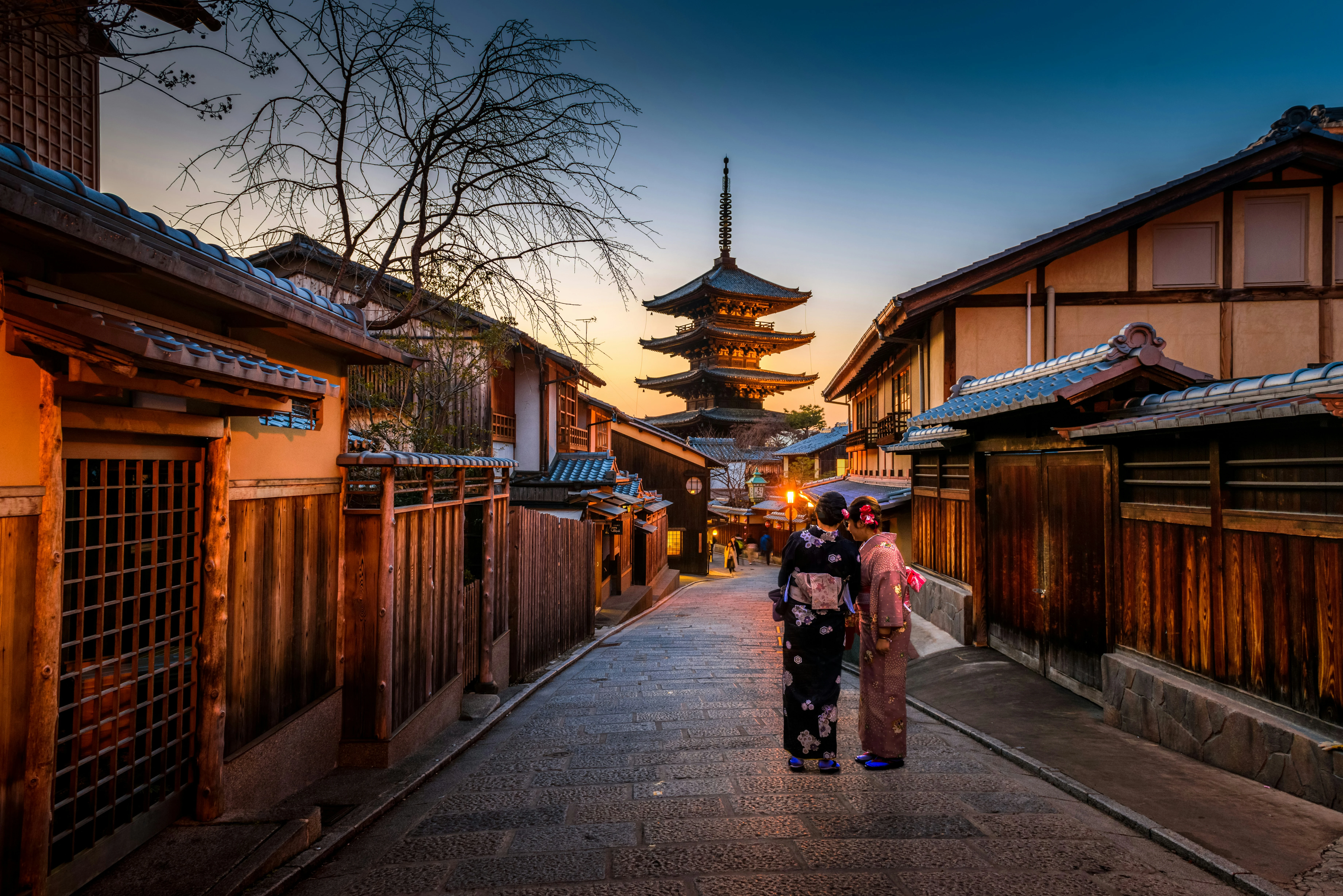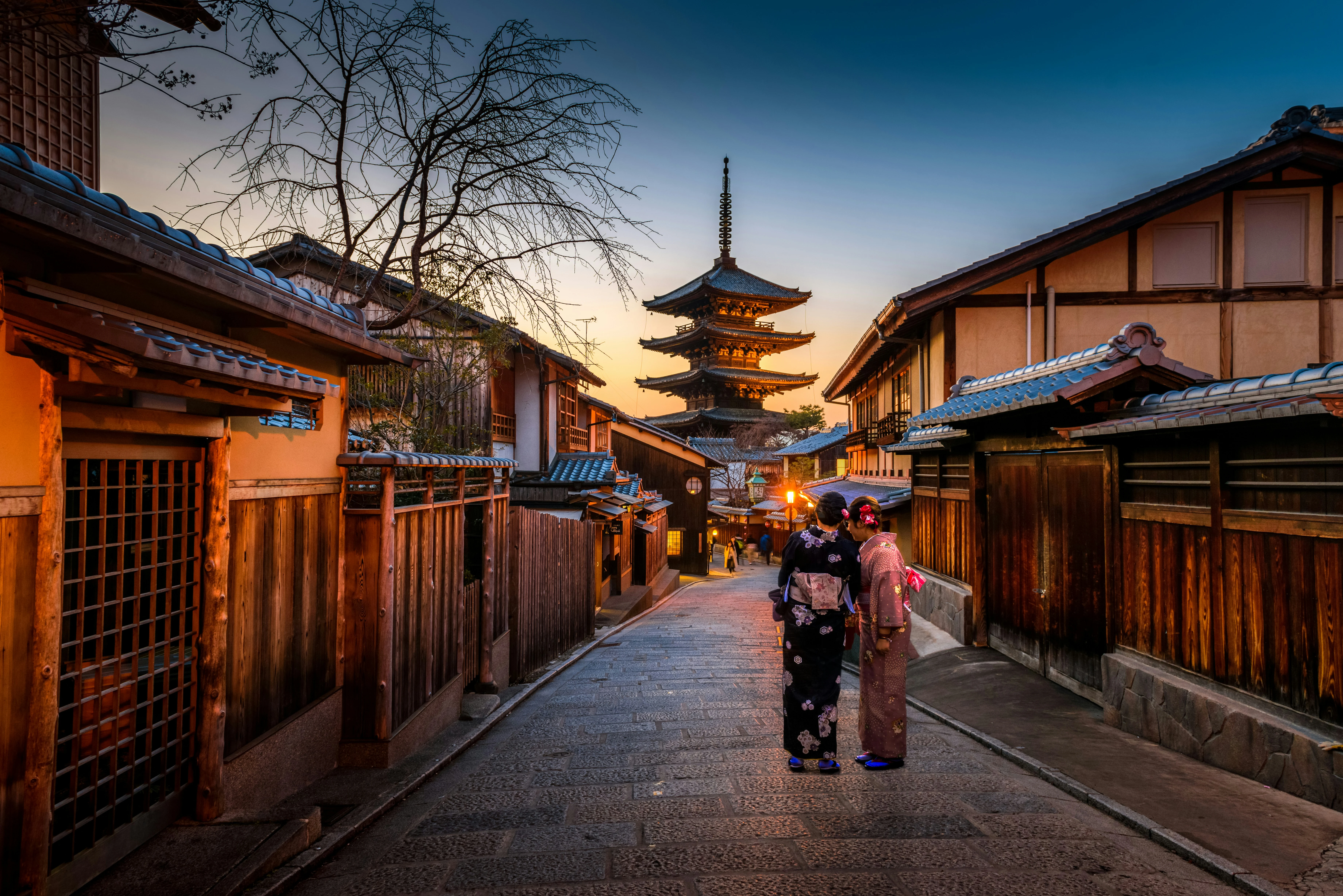
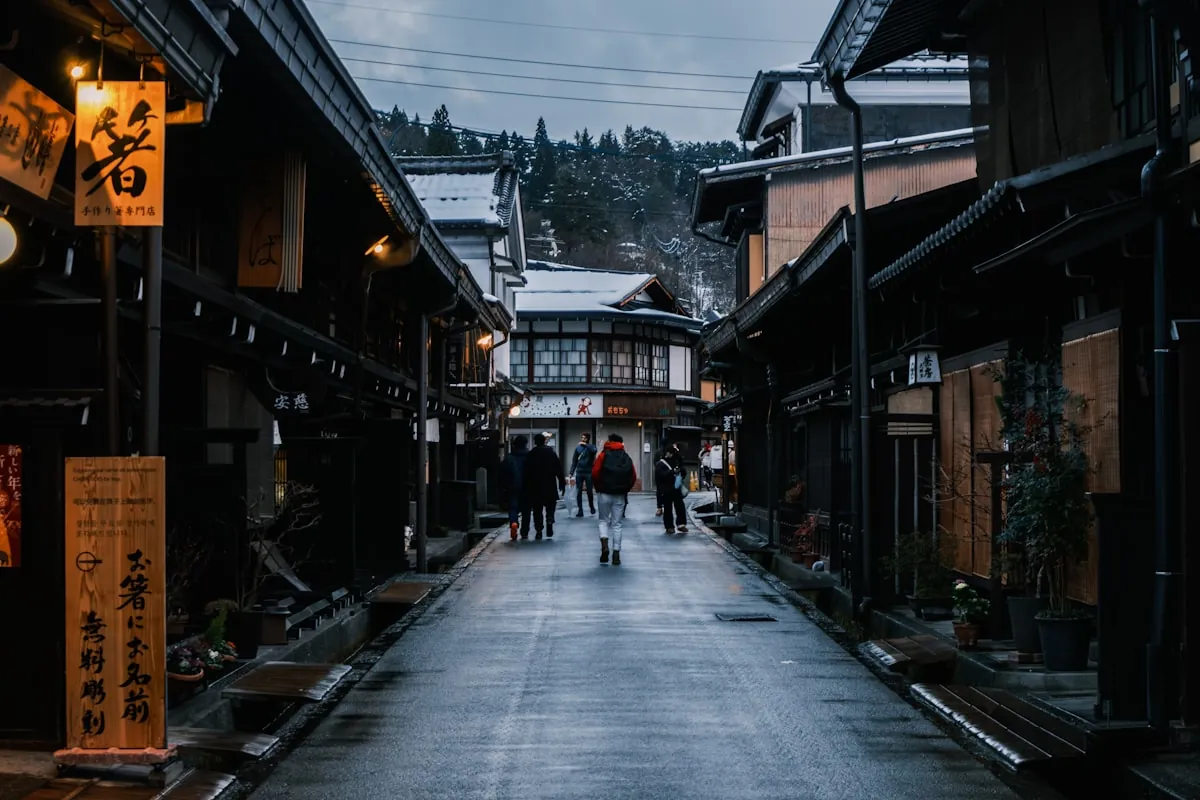

Gion is Kyoto’s most-photographed historic district: five blocks of preserved Edo-era teahouses (ochaya) and merchant townhouses on the east bank of the Kamogawa, anchored by Yasaka Shrine to the east and Hanami-kōji running south through the heart. Founded as a teahouse cluster outside Yasaka in the 17th century, it remains an active geisha (geiko/maiko) district; about 60 women still work and study here.
Character of the District
The district splits into three zones. Hanami-kōji runs south of Shijō-dōri, the photogenic 250m teahouse stretch ending at the Kennin-ji temple gate. Shirakawa, one block north, is a small canal lined with willows and Edo-era warehouses, considered Gion’s most atmospheric corner and frequently used for film. Gion-Higashi (the eastern half) holds the active okiya houses where geiko and maiko live and train. Note: photographing geiko on the street is illegal as of 2019, and the city issues ¥10,000 fines.
What to See in Gion
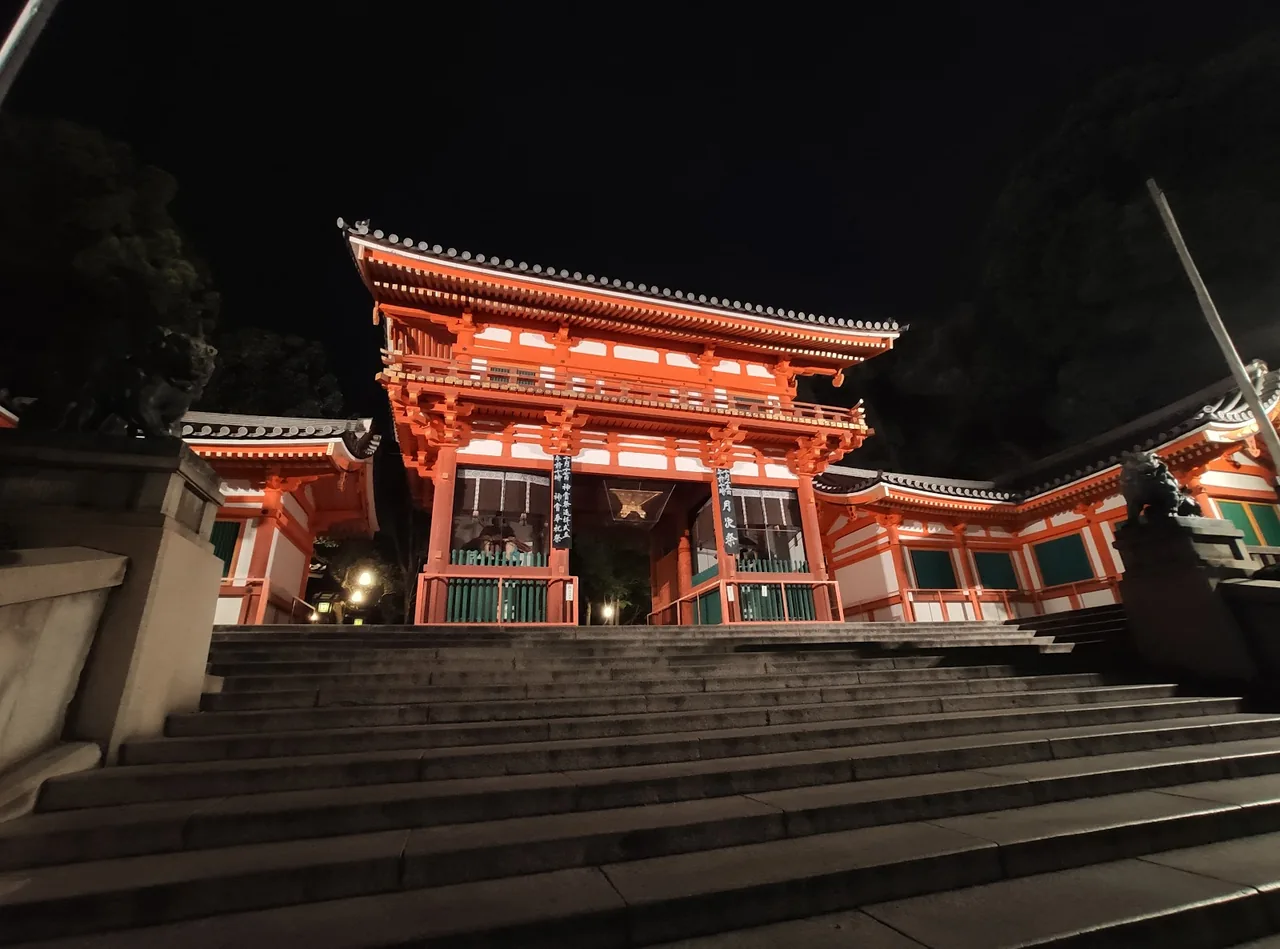
The Gion walk strings together Yasaka Shrine’s lantern-lit gate at the east end, the Hanami-kōji teahouse stretch running south, and the Shirakawa willow-lined canal one block north. Pontochō alley across the river is the after-dinner extension.
How to Get There
Getting There
- 1Bus 100 or 206 → Gion
- 1Walk east on Shijō-dōri across the river → Gion-Shijō
Tips
- Photograph geiko at your own legal risk. Since 2019, photographing geiko or maiko on Hanami-kōji private alleys is fineable (¥10,000). Public streets are technically allowed but blocking the path is harassment. Wait for a posed photo with a costumed actor instead.
- Sunrise (06:30) and 18:30–20:00 are the photo windows. Daytime Hanami-kōji is shoulder-to-shoulder; full dark loses the lantern-glow magic. Aim for the 30-min blue hour after sunset.
- Minamiza Kabuki theatre. ¥4,000–25,000 depending on programme. Single-act tickets (~¥1,500) sold same-day at the box office let you sample 60 min of kabuki without committing to a full 4-hour show.
- Avoid geiko-tour photo packages. Several services offer paid ‘geisha walking tours’ advertising real geiko encounters; nearly all use costumed tourists. The genuine evening procession at 17:30–18:30 (geiko walking to appointments) costs nothing to observe respectfully.
Consider Furumachi Geigi District Instead
Furumachi in central Niigata City has sustained a living geisha culture for roughly 200 years, rooted in the city's Edo-period prosperity as a Sea of Japan port. Unlike Gion, where access to geiko culture is largely restricted to established patrons, Furumachi's ryotei openly welcome first-time visitors to evenings of geigi performance paired with local sake and seasonal cuisine — making the experience more accessible, not less authentic. The district sits in Niigata rather than Kansai, so it suits travelers combining a Furumachi evening with the region's rice-country and sake-brewery circuit rather than a Kyoto itinerary.
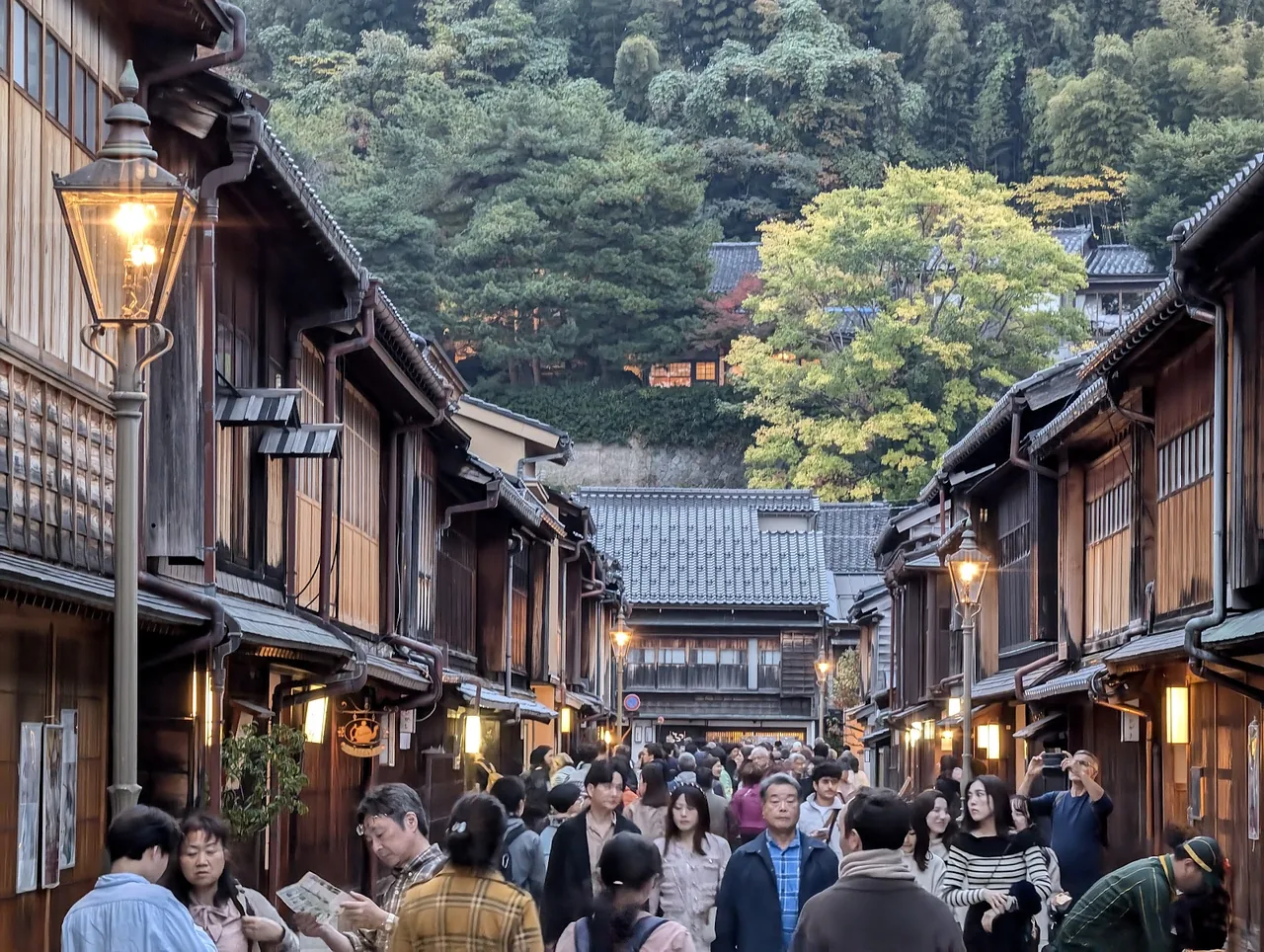
- Where
- Higashiyama, Kanazawa, Ishikawa 920-0831
- Hours
- Monday: Open 24 hours / Tuesday: Open 24 hours / Wednesday: Open 24 hours / Thursday: Open 24 hours / Friday: Open 24 hours / Saturday: Open 24 hours / Sunday: Open 24 hours
- Map
- Open in Google Maps →
Visitors drawn to Gion are seeking a preserved Edo-period entertainment district where traditional wooden machiya line the streets and geisha culture remains a living practice rather than a museum exhibit. Higashi Chayagai in Kanazawa delivers exactly that: the largest of the city's three intact chaya districts retains its original two-story latticed teahouses, and geisha continue to entertain clients in working establishments such as Kaikaro, which also admits daytime visitors. The Shima teahouse operates as a period-furnished museum, and the district sees a fraction of Gion's foot traffic — Kanazawa is roughly 190 km from Kyoto and best treated as a separate destination, but travelers already in the Hokuriku region will find it a fully satisfying answer to the same need.

- Where
- Kazuemachi, Kanazawa, Ishikawa 920-0908
- Map
- Open in Google Maps →
Kazue-machi satisfies the same need as Gion — walking through a living, preserved geisha district of latticed wooden teahouses where the culture remains genuinely active — at a fraction of the foot traffic. The riverside strip along the Asanogawa, designated an Important Preservation District for Groups of Traditional Buildings, offers the same atmospheric combination of Edo-period machiya facades, stone-paved lanes, and the occasional sound of shamisen at dusk that draws visitors to Hanamikoji Street. Kanazawa is roughly three hours from Kyoto by limited express, making Kazue-machi a natural anchor for a Hokuriku itinerary rather than a Kansai one, but the district stands fully on its own merits as one of Japan's most intact and least-visited geisha quarters.
Adjacent Neighborhoods
Districts on Gion’s edge:
FAQ
Are real geisha still here?
Yes, about 60 active geiko and maiko, mostly in the Gion-Higashi sub-quarter. Genuine geiko in evening kimono walking briskly to appointments are visible 17:30–18:30 daily. The slow-walking, posing ‘geisha’ in daytime are almost always tourists in rented kimono.
Can I dine in a real teahouse?
Most ochaya (traditional teahouses) operate ichigensan-okotowari (no first-time visitors); you must be introduced by an existing customer. Cultural shows at Gion Corner (¥3,150) offer the closest accessible alternative.
Best Gion festival time?
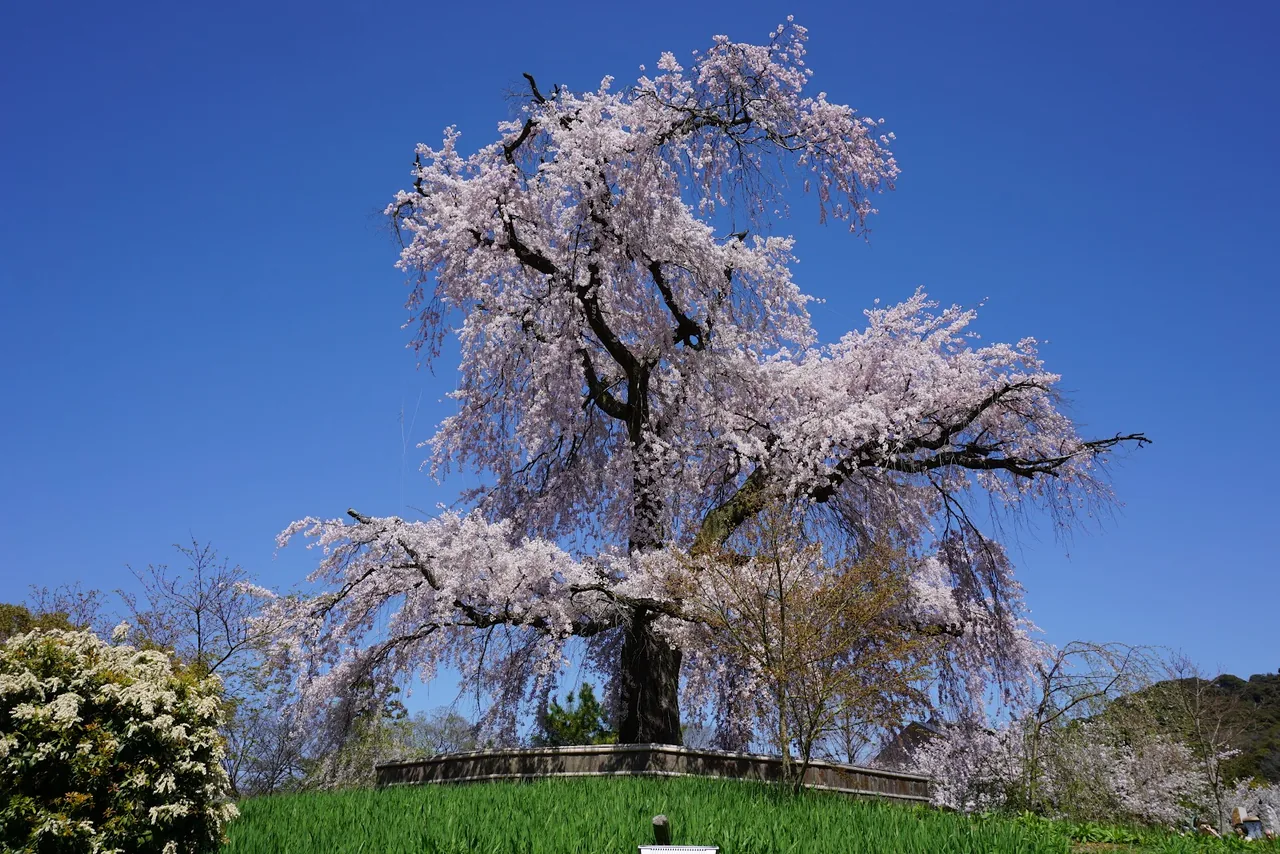
Gion Matsuri runs the entire month of July. The grand Yamaboko-junkō float procession on July 17th and 24th draws hundreds of thousands; reserve hotels six months ahead. Off-festival, sakura at Maruyama Park (early April) is the secondary peak.
Where to bathe in Kyoto
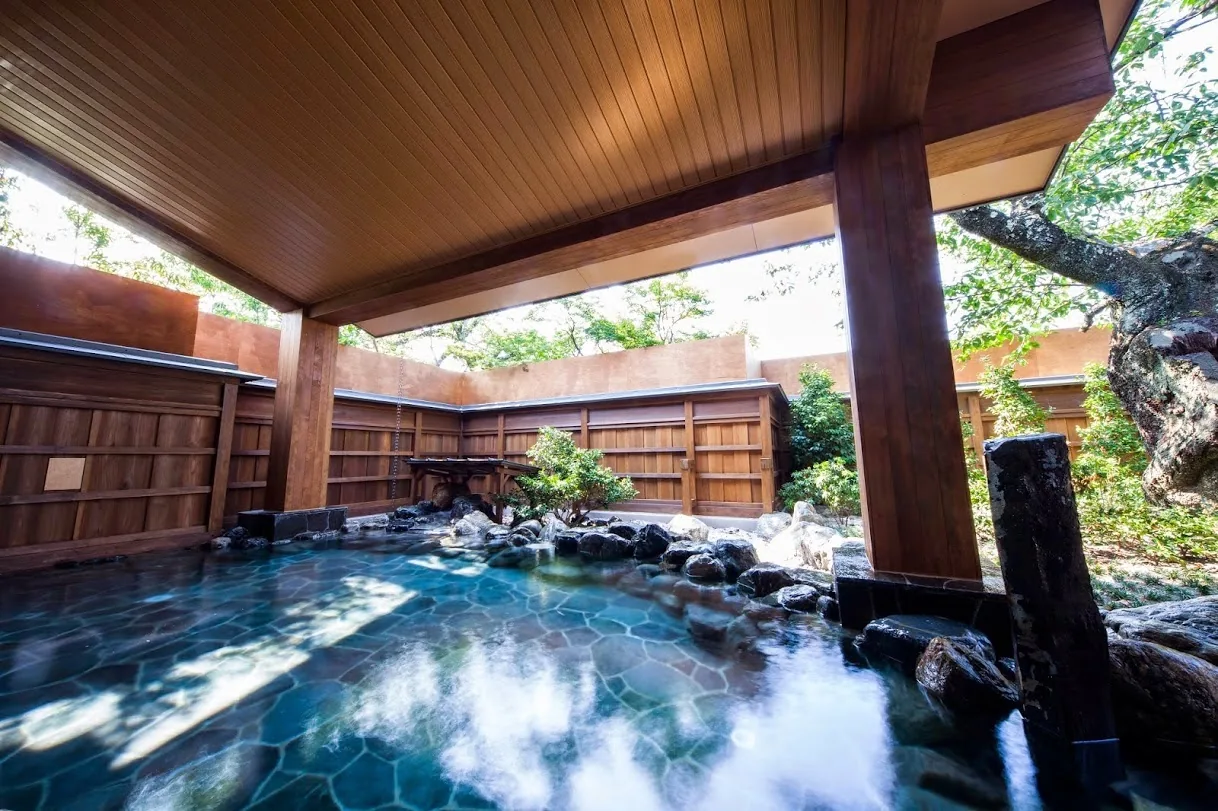
Onsen
Fu Fu No Yu Onsen
public4.11.8k
Klook-bookable; iconic experience
Day-use onsen in Kyoto: 1,816 Google reviews, 4.1★ average.
Hours, address
- Hours
- Monday: 12:00 – 10:00 PM / Tuesday: 12:00 – 10:00 PM / Wednesday: 12:00 – 10:00 PM / Thursday: 12:00 – 10:00 PM / Friday: 12:00 – 10:00 PM / Saturday: 12:00 – 10:00 PM / Sunday: 12:00 – 10:00 PM
- Address
- 1 Arashiyama Kamikawaracho, Nishikyo Ward, Kyoto, 616-0001, Japan