

Koyasan is not a single attraction you tick off a list. It is a living Buddhist monastic settlement perched at 800 metres in the mountains of Wakayama prefecture, home to 117 functioning temples and roughly 3,000 permanent residents. Around 90 percent of visitors come and go in a day. The remaining ten percent (the ones who check into a shukubo temple lodge, attend a fire ceremony at 6am, and walk the lantern-lit cemetery after the tour buses have gone) experience something categorically different. Here is what that looks like.
One night on a sacred mountain
The journey up
The approach from Osaka Namba takes around 90 minutes on the Nankai-Koya line, changing at Hashimoto for the slower mountain trains that climb toward Gokurakubashi. The final leg, a five-minute funicular up the sheer forested hillside, deposits you at 800 metres. A short bus ride brings you into the town centre.
In the late afternoon, when day-trippers are already streaming back toward Osaka, you notice the shift immediately. The air is cooler, genuinely cool even in August, and smells of damp cedar and incense. The roads are quiet. This is by design: the Koyasan world heritage ticket (¥2,860 from Osaka, roughly £15 / US$19) covers the return train, cable car, and unlimited bus travel on the mountain. It is calibrated for a clean in-and-out by 4pm. What happens after 4pm is the point.
Inside the shukubo: what to expect
Eko-in Temple is one of the more accessible shukubo on the mountain: English booking is available on its own site, rooms range from plain tatami quarters to suites with private open-air baths, and the evening schedule is laid out clearly when you arrive. You will be given a yukata, directed to communal baths fed by mountain spring water (similar in atmosphere to onsen bathing), and handed a printed sheet with the following day's ceremony times.
What you cannot do in a shukubo: drink alcohol, bring in outside food, check in late without calling ahead, or expect anything resembling hotel flexibility. What you get instead is genuine temple hospitality: quiet corridors, sliding paper screens, futons laid on tatami by staff who have been doing this for generations.
"A shukubo is not a quirky hotel. It is a functioning temple that takes guests in. The distinction becomes clear the moment you arrive."
Shojin ryori: dinner in silence
Shojin ryori, the vegetarian Buddhist cuisine served at most shukubo, is one of Koyasan's defining experiences, but it helps to calibrate expectations. The meal is not designed for pleasure. It was developed over centuries to honour the body without indulging it. Courses arrive in small lacquered bowls: sesame tofu (goma dofu) with a silky, firm texture unlike anything in Western cooking; mountain vegetables simmered in kombu dashi; pickled burdock root; plain white rice; and a clear miso. Portions are deliberate. Flavours are subtle.
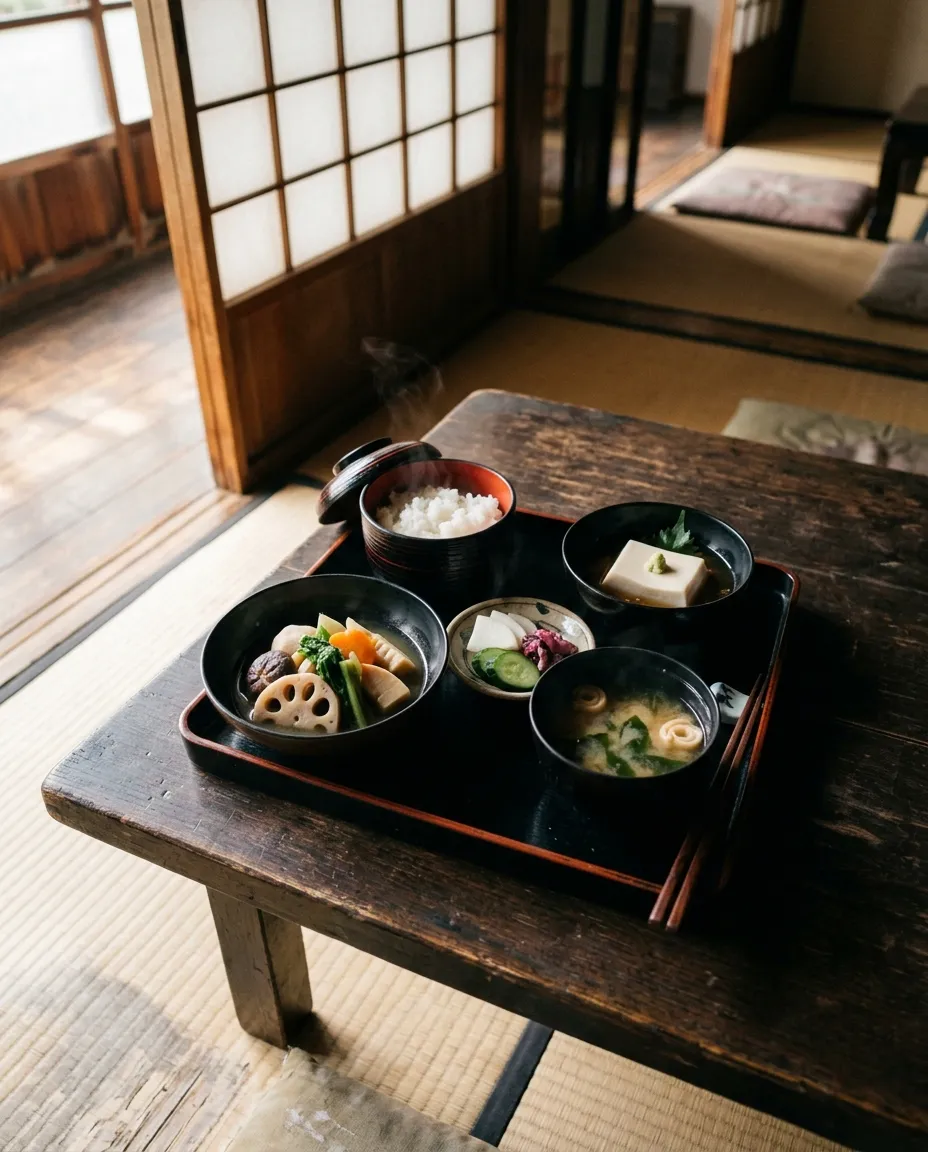
What makes it genuinely interesting is the attention to texture and temperature, with each small dish calibrated to be different from the last. The goma dofu alone is worth trying. The act of eating in near-silence, surrounded by a garden visible through wooden screens, lands differently from any meal you will have in a city.
Okunoin cemetery: go at dusk
The two-kilometre approach to Kongobu-ji Okuno-in, Japan's largest cemetery with more than 200,000 tombstones spreading under a canopy of ancient cedar, is one of those places that genuinely lives up to its reputation, but only at the right hour. During the day, it is beautiful. At dusk, with the automated path lighting beginning to activate and the last day-trippers gone, it becomes something else.
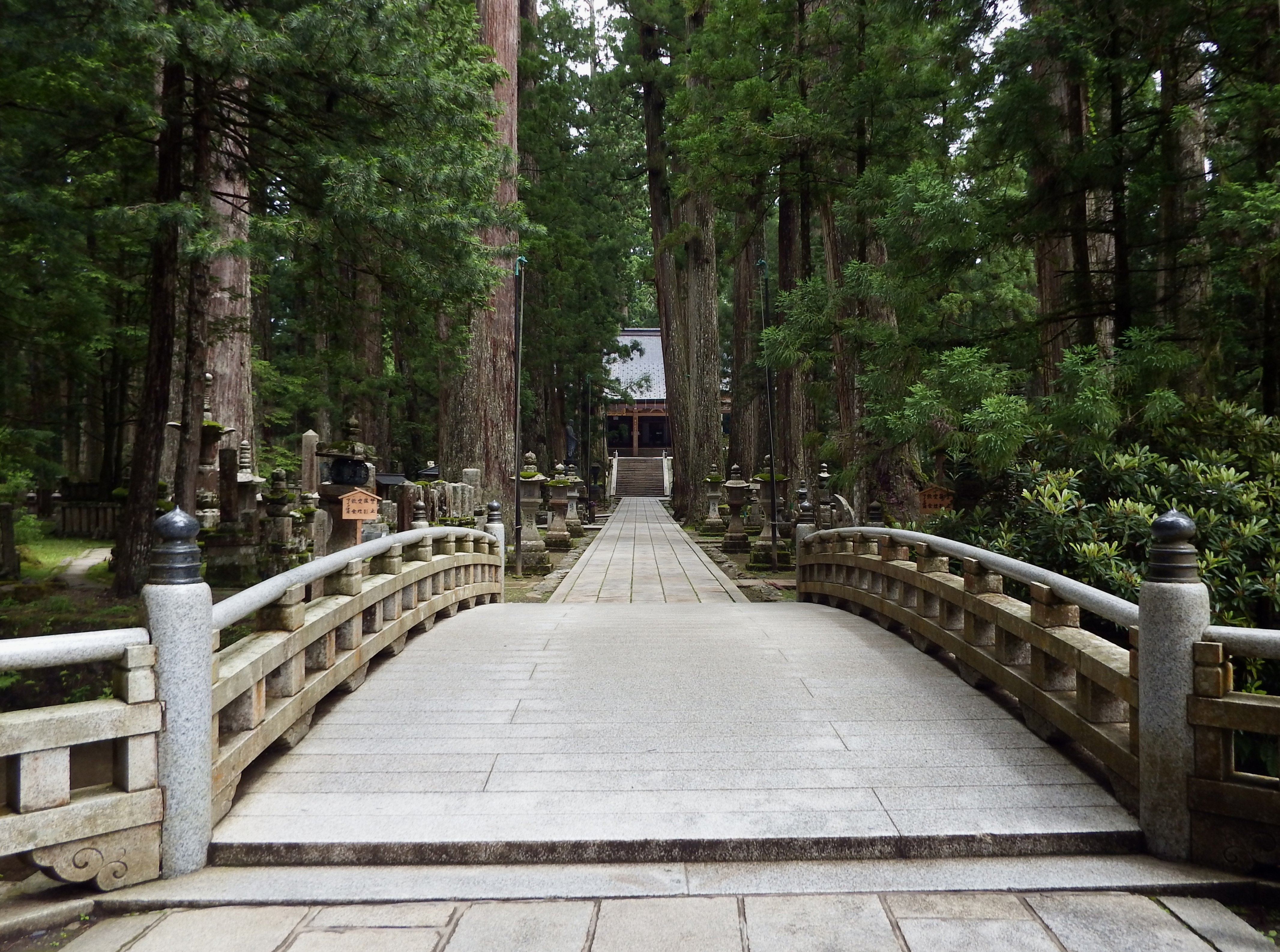
The tombs span twelve centuries: feudal warlords, medieval pilgrims, modern corporations. Moss-covered stones half-swallowed by cedar roots. Incense smoke curling from small holders in front of the newest graves. At the inner sanctuary, the Torodo (Hall of Lanterns), more than 10,000 flames burn perpetually before the mausoleum of the sect's founder, who is believed to rest there in eternal meditation rather than death. The effect in near-darkness, with no tour leader's microphone and every footstep audible on the stone path, is not available on a day trip schedule.
Okunoin is open 24 hours. The optimal window is roughly 5pm to 7:30pm: light enough to see the path, dark enough for the lanterns to do their work.
"More than 10,000 flames burning before the mausoleum. The hall is never dark, never quiet, never merely a tourist attraction."
The goma fire ceremony at dawn
Morning service at Eko-in begins at around 6:00am. The goma ritual, a ceremony in which cedar sticks carrying written prayers are burned in a controlled fire, takes place in a small hall lit only by the fire itself. The officiating monk chants sutras in a register that resonates physically rather than aurally. Smoke is heavy with incense. The ceremony lasts roughly 30 minutes.
Attendance is open to guests regardless of faith. Photography is not permitted during the ceremony itself. What is expected is quiet observation: sitting still, watching, not speaking. For most first-time visitors to Japan, it is genuinely unlike anything they will encounter in a conventional tourist itinerary: participatory without requiring participation, intimate without being exclusive.
The ceremonial heart of Koyasan, before the buses arrive
After the ceremony, the main temple compound deserves at least an hour before the tour groups arrive. These halls and sacred spaces were first established in 819. At 7am, monks cross the gravel paths between buildings and small groups of white-clad pilgrims sit on the steps of the Kondo main hall.
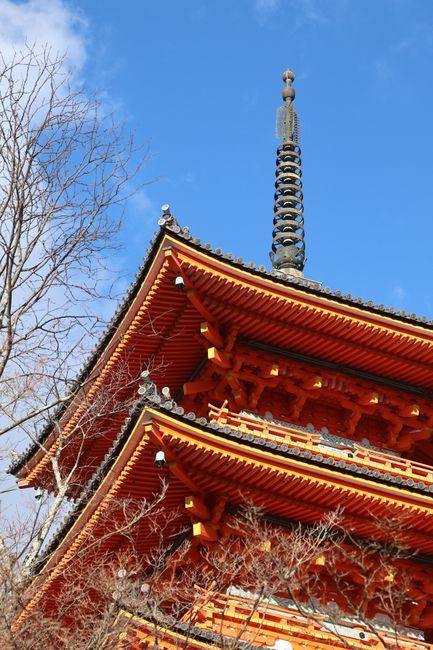
At the centre stands the Kongobu-ji Kompon Daito, the 45-metre vermilion two-tiered pagoda that has become the visual symbol of Koyasan. The paid interior, open from 8:30am, reveals a three-dimensional mandala: a statue of the cosmic Buddha surrounded by further statues and painted pillars that map an entire symbolic universe. It is worth the small admission.
The entire Kongobu-ji Danjo Garan complex (8:30am–5pm) rewards unhurried time. The eastern and western pagodas, the Miedo founder's hall, the Kondo: each building earns its attention.
The main hall of Kongobu-ji itself (8:30am–5pm, ¥1,000) contains the Banryutei, billed as Japan's largest rock garden: 140 granite stones arranged to represent two dragons emerging from cloud, best appreciated in the morning light before the viewing corridor fills.
The sites fewer visitors reach
Two places merit the extra time for anyone with a full day on the mountain. Niutsuhime Shrine, the female guardian deity of Koyasan and included in the same UNESCO world heritage designation, sits roughly 20 minutes by bus from the town centre. Most temple itineraries skip it entirely. The forest walk and the atmosphere of a fully functioning Shinto shrine make it worth the detour.
Equally overlooked is Jison-in Temple, in the valley town of Kudoyama at the base of the mountain: the traditional starting point of the Choishimichi pilgrimage trail leading up to Koyasan, and for centuries the place where female pilgrims had to stop, since women were barred from the mountain itself until 1872. The grounds are studded with breast-shaped votive offerings petitioning for women's health, an extraordinary piece of living history that completes the story of what Koyasan is and how it came to exist.
Practical tips
- Getting there: Nankai-Koya line from Osaka Namba (Nankai station, not JR) to Gokurakubashi, then the funicular and bus to the centre. Around 90 minutes total. The Koyasan world heritage ticket (¥2,860) covers all legs including unlimited bus travel on the mountain.
- Book the shukubo early: At least 2–3 months ahead for autumn weekends. Eko-in takes direct English bookings at ekoin.jp. Rates typically run ¥15,000–¥25,000 per person, including dinner (shojin ryori) and breakfast.
- Best time to visit: Late October for autumn foliage, weekdays only, as the mountain is very busy on autumn weekends. Avoid Golden Week (late April–early May) and Obon (mid-August). The quietest months are November through March.
- Pack layers: Koyasan sits 800 metres up and runs 5–8°C cooler than Osaka year-round. In summer, evenings still require a jacket. Comfortable shoes matter for Okunoin's 2km gravel path.
- Connectivity: Most shukubo have wifi, but it is inconsistent. Download offline maps and onward train tickets before you arrive.
- Etiquette: Do not treat the morning ceremony as a photography opportunity. Do follow the instructions posted at the entrance. Do not check in after the stated cut-off without calling ahead; shukubo are temples first.
Day trip or overnight: the honest comparison
Day-trippers and overnight guests walk the same sites, but at completely different hours. Everything up to mid-afternoon is shared. Everything after is the case for staying the night.
A hard-charging day trip from Osaka (cable car before 9am, Okunoin walked by 10am, Danjo Garan and Kongobu-ji by noon, back down by 3pm) captures roughly 70 percent of what Koyasan offers. The main sites are extraordinary at any time of day. If you are in Japan primarily for cities and you have only so many days, the day trip is the right call.
What the overnight adds cannot be replicated on a day schedule: Okunoin in near-darkness, the peculiar hush of a mountain with no nightlife, incense and cedar at 6am, shojin ryori eaten in near-silence. The overnight fits naturally at the midpoint of a Kansai circuit, between Kyoto and the onward journey south.
"The case for staying overnight is not the sights. It is the hours between them: Okunoin after dark, shojin ryori in silence, a fire ceremony before the day begins."
Who should skip the overnight: travelers who need a comfortable hotel bed, a varied dinner menu, or easy city access at the end of an evening. The shukubo trades those things for something that cannot be bought as an add-on or replicated in a day visit. If that trade-off sounds right, the mountain will deliver. If it sounds unappealing, Koyasan is still worth the early morning train from Wakayama.
FAQ
How do I book a shukubo on Koyasan?
Most shukubo accept direct bookings through their own websites. Eko-in (ekoin.jp) has an English booking interface. For a broader choice, the official booking portal at koyasan.or.jp lists all participating shukubo with English options. Book at least 2–3 months ahead for autumn weekends; a week or two ahead is usually sufficient for winter and spring.
Is Koyasan worth visiting as a day trip?
Yes. A day trip from Osaka, arriving by cable car before 9am and leaving by 3pm, covers Okunoin, the main ceremonial compound, and Kongobu-ji before the tour bus crowds arrive at noon. You miss the evening and dawn atmosphere, but the sites themselves are among the most remarkable in Japan regardless of the hour.
Do I need to be Buddhist to attend the morning ceremony?
No. The goma fire ceremony is open to all shukubo guests regardless of religious background. Quiet observation is the only expectation. Photography is generally not permitted during the ceremony itself. The monks are accustomed to international visitors.
What is shojin ryori and will I enjoy it?
Shojin ryori is the vegetarian Buddhist cuisine served at temple lodgings: no meat, fish, eggs, onions, or garlic. Courses are small, subtle, and varied: sesame tofu, simmered mountain vegetables, pickles, rice, miso. It is not designed to be filling in the Western sense. Most guests find it genuinely interesting rather than satisfying, which is probably the correct response to a meal built around restraint.
What is the Koyasan world heritage ticket?
A combined rail-and-bus pass covering the Nankai-Koya line from Osaka Namba, the Gokurakubashi funicular, and unlimited bus travel on the mountain. Available at Osaka Namba station for ¥2,860 (approximately £15 / US$19). Saves a noticeable amount versus purchasing each leg separately and is the simplest way to plan the journey.