
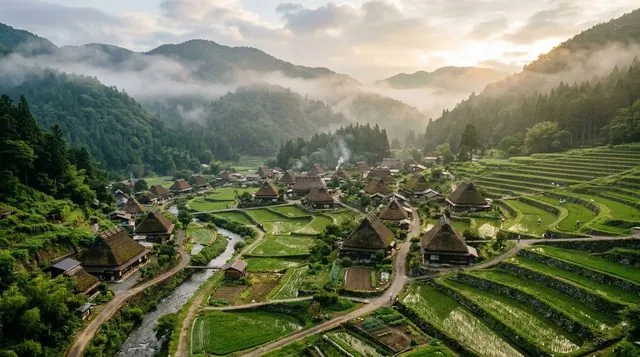
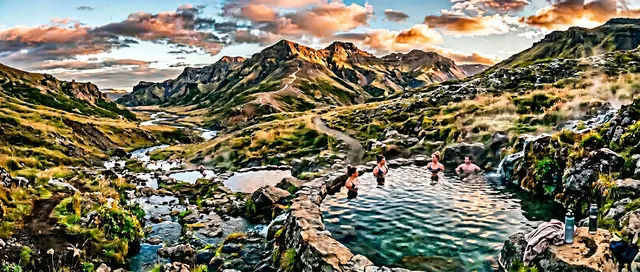
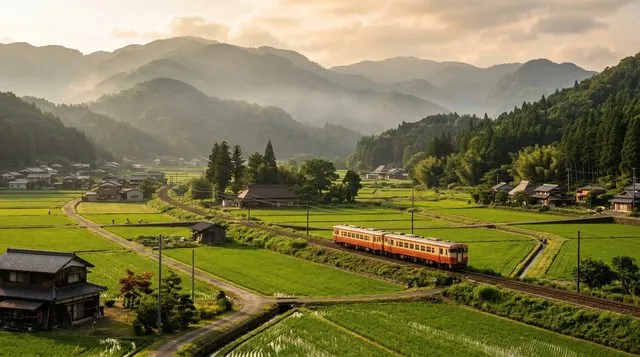
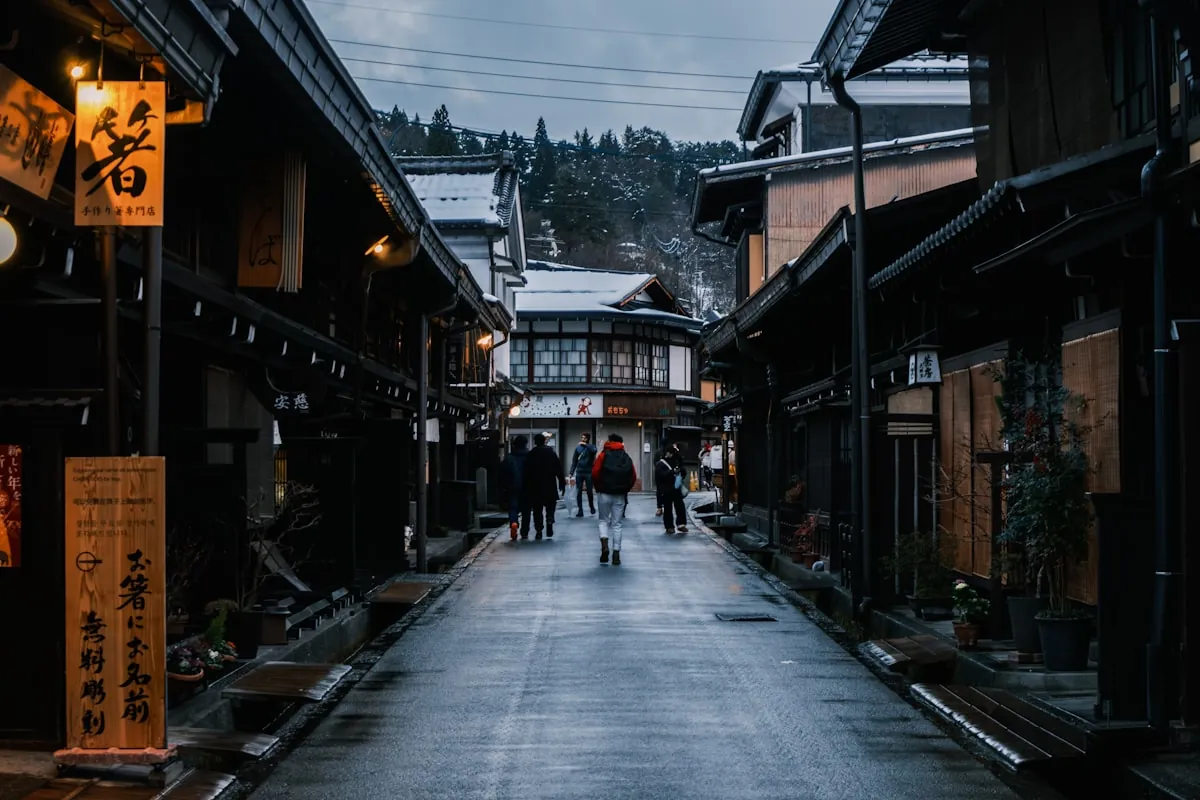


Yes — Tsushima Island is real. It's a remote Nagasaki archipelago in the strait between Kyushu and the Korean Peninsula, closer to Busan than to Fukuoka, and reachable on a two-hour Jetfoil from Hakata Port. Two main islands, roughly 700 square kilometres of mountain and coastline, around 30,000 residents, and almost no foreign tourists outside the gaming-curious. This guide covers the ferry and flight routes, what's actually on the island once you arrive, and why the historical layer is the part most write-ups skip.
What to Expect
The Strait Where Two Countries Meet
From the northern town of Kamiagata, on a clear day, you can see the lights of Busan. The Tsushima Strait is 50 kilometres wide at its narrowest point — closer than London to Calais — and the island has spent 1,500 years as the place where Japan and the Korean Peninsula brushed against each other. Diplomatic missions, trade convoys, two failed Mongol invasions, and a slow modern reorientation toward South Korean ferry tourism. The borderland framing isn't a marketing line; it's the actual identity.
Watatsumi Shrine and the Sea-Torii
On the western coast, Watatsumi Shrine has five vermilion torii gates marching from the shrine grounds out into the sea. At high tide three are partially submerged; at low tide you can walk to the furthest gate on stone steps. The shrine is dedicated to Toyotama-hime, a sea-deity from the founding myths of imperial Japan. It's a 50-minute drive from Izuhara on the southern island. Without a rental car, you're looking at infrequent local buses — plan ahead.
Mongol-Invasion Beaches and Stone Forts
In 1274 a Mongol fleet of 900 ships landed at Komodahama Beach on Tsushima's southwestern coast. The local garrison of 80 samurai was wiped out in a day. The actual beach is unmarked except for a small memorial stone, and that absence of curation is precisely the point — you walk a wide, quiet bay and the history is in the geography itself, not in plaques. Kaneda Castle, the 7th-century stone-walled fortress on Mount Joyama, was rebuilt by the Yamato court specifically because of Tsushima's exposure to mainland forces. Both sites take about half a day combined.
How to Get There
Getting There
- 1Subway or taxi to Hakata Port International Terminal → Hakata Port
- 2Kyushu Yusen Jetfoil to Izuhara → Izuhara Port, Tsushima
- 1Subway to Fukuoka Airport (domestic terminal) → Fukuoka Airport
- 2ANA flight to Tsushima Yamaneko Airport → Tsushima Yamaneko Airport
The JR Pass does not cover the Jetfoil or the ANA flight. Book at least two weeks ahead during summer and Japanese holiday weeks. For more on island-hopping Kyushu, see our Kyushu region guide.
Tips
- Rent a car. The bus network is thin and the main sights are spread across two islands connected by a single bridge. A small rental from Toyota Rent-a-Car at Izuhara Port runs around ¥6,000–¥8,000 per day — verify current pricing. International driving permit required.
- Book the ferry both ways before you fly to Fukuoka. Summer Jetfoils sell out and the slower car ferry (5 hours) is a long backup. Jetfoil tickets via Kkday avoid the Japanese-language booking flow.
- Typhoon season is real. July through September the Jetfoil cancels regularly — sometimes for two or three days in a row. If you must travel then, build in a buffer day on either side.
- Mobile reception thins out north of Mitsushima. Download offline maps before you leave Izuhara. Convenience stores are sparse outside the main town — bring snacks and cash for the all-day driving loop.
- Stay two nights minimum. One night gives you Watatsumi and Izuhara; two nights gets you the northern Kamiagata view and the Komodahama beach. Tsushima Grand Hotel in Izuhara is the easiest mid-range base.
Nearby
Three onward routes from Tsushima that build a full Kyushu loop:
FAQ
Is Tsushima Island a real place?
Yes. Tsushima Island is a real Japanese island in Nagasaki Prefecture, about 50 kilometres off the Korean coast. The Wikipedia entry is the easiest sanity-check. Around 30,000 people live there, mostly in the southern port town of Izuhara, and the island has been part of Japan since at least the 7th century.
Where is Tsushima Island located?
Tsushima is in the Korea Strait between Japan and the Korean Peninsula, administratively part of Nagasaki Prefecture in northern Kyushu. From Fukuoka it's a two-hour Jetfoil ride; from Busan in South Korea it's a one-hour-ten-minute ferry — Tsushima is actually closer to Busan than to Fukuoka. The island has two main bodies (Kamiagata and Shimoagata) linked by a single bridge.
How do I get to Tsushima Island from mainland Japan?
From Fukuoka (Hakata Port) the Kyushu Yusen Jetfoil reaches Izuhara in around 2 hours 15 minutes for roughly ¥9,000 one way — verify current schedules. ANA also flies from Fukuoka Airport to Tsushima Yamaneko Airport in 35 minutes (~¥18,000 one way), but typhoon-season cancellations are common July–September. Neither the ferry nor the flight is covered by the JR Pass.
Did the Mongols actually invade Tsushima?
Yes, twice. In November 1274 a Mongol expeditionary fleet of about 900 ships landed at Komodahama Beach on the southwestern coast and overwhelmed the local samurai garrison of 80 led by Sō Sukekuni. A second invasion in 1281 hit the island again before being repulsed in Hakata Bay by the famous kamikaze typhoon. The beach is unmarked today except for a small memorial stone.
Is Tsushima Island worth visiting in 2026?
Worth a 2-night trip if you want the quiet edge of Japan — sea-torii shrines, untouched coastline, and a historical layer you won't find on the mainland. Less worth it for a weekend stop tacked onto a Fukuoka itinerary; the ferry and the lack of public transport eat too many hours. Spring (April–June) and autumn (October–November) are the safest weather windows.