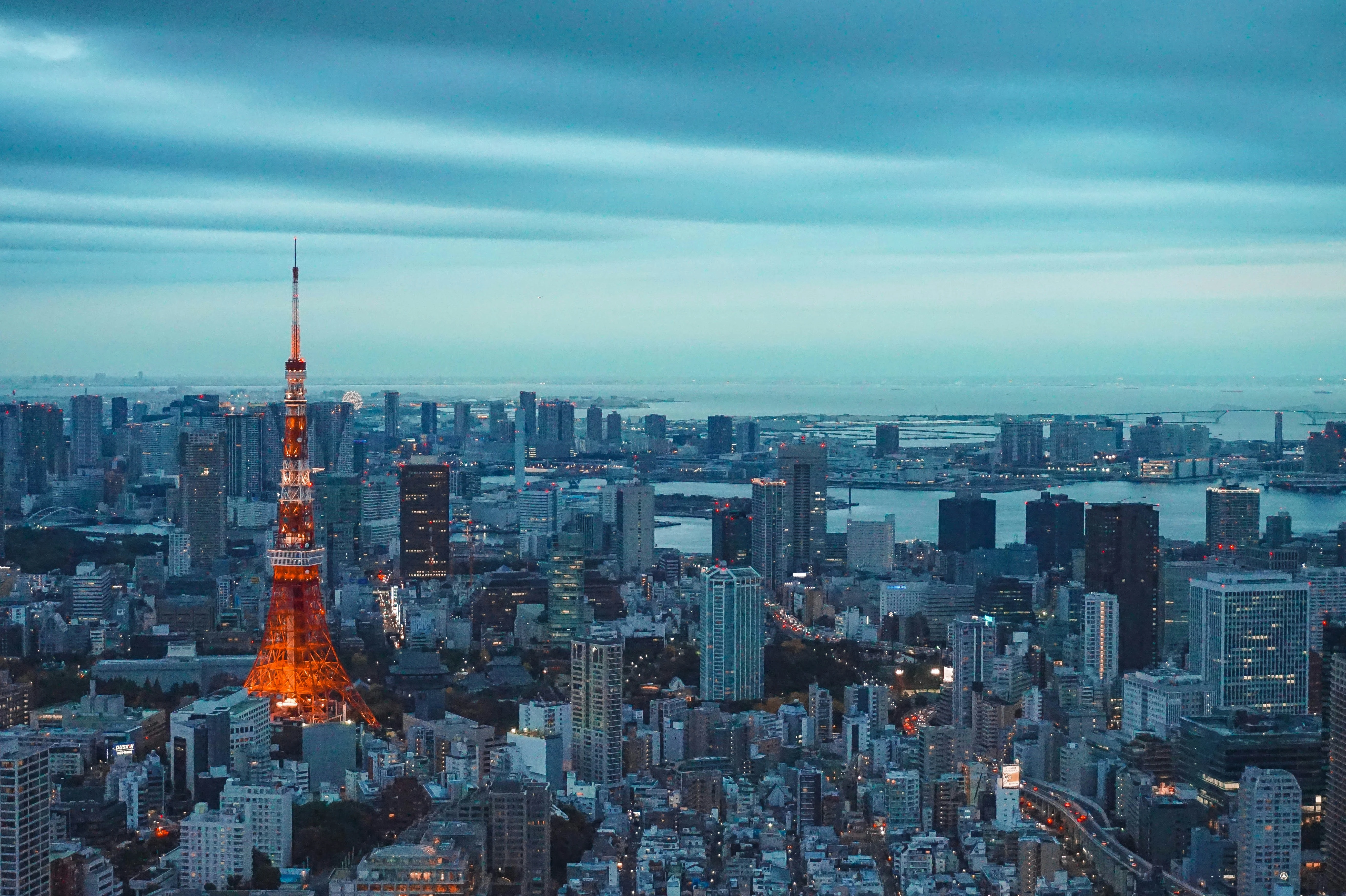

Tokyo Tower eröffnete 1958 als Sendeturm der Stadt: ein 333m hohes geschmiedeter-Stahl-Echo des Eiffelturms, absichtlich höher. Die Kommunikationsrolle ging 2012 an Skytree, aber die rot-weiße Silhouette ist immer noch Tokyos erkennbarste Struktur. Die meisten Besucher fotografieren es von außen; das Innenerlebnis ist jetzt vor allem historisch und familienorientiert.
Was dich erwartet
Zwei kostenpflichtige Decks: Hauptdeck auf 150m (¥1.200, Walk-in) und Topdeck auf 250m (¥3.000 Kombi, nur Reservierung). Das Hauptdeck hat einen Glasboden und historische Ausstellungen; das Topdeck fügt einen 360°-Panoramaweg hinzu. Aussicht süd-östlich Richtung Tokyo Bay; an klaren Wintertagen Fuji 100km westlich sichtbar.
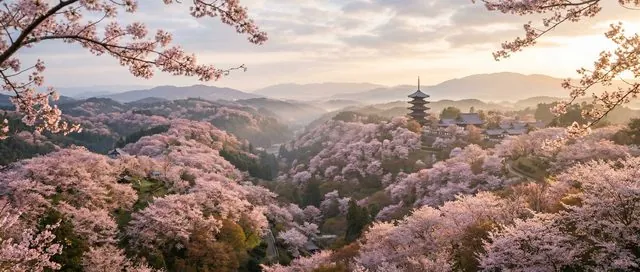
Die meisten Fotografen schießen Tokyo Tower tatsächlich vom Zojoji-Tempel nebenan (die Kirschblüte + Turm-Kombination ist das ikonische Foto) oder vom Roppongi Hills Sky Deck 2km nördlich (blickt auf den Turm). Innen ist okay, außen ist berühmt.
Stattdessen erwägen
Für die tatsächlich beste Tokyo-Skyline-Sicht (höher, neuer, weniger Andrang innen) geh zum Tokyo Skytree in Oshiage: 350m vs Tokyo Tower 250m. Für das beste Foto VOM Tokyo Tower blickt das Mori Tower Sky Deck von Roppongi auf ihn herab.
Wie man hinkommt
Anreise
- 1Tokyo Metro Marunouchi-Linie nehmen → Kasumigaseki
- 2Auf Hibiya-Linie umsteigen → Kamiyacho Station
- 3Zum Turm gehen → Tokyo Tower-Eingang
- 1Süd durch Shiba Park laufen → Tokyo Tower
Tipps
- Foto vom Zojoji-Tempel ist das ikonische Bild. Kostenlos; Kirschblüte + Turm (Anfang April).
- Topdeck nur Reservierung. Online buchen; Sonnenuntergangs-Slots 2 Wochen vorher ausverkauft.
- Innen überspringen, wenn Skytree gebucht. Gleiche Aussichtskategorie, Skytree ist höher und neuer.
- Lauf durch Shiba Park. 10 Min Spaziergang durch Edo-Grün statt Metro-Umstieg.
Consider Yokohama Marine Tower Instead

- Where
- 14-1 Yamashita-cho, Naka-ku, Yokohama, Kanagawa 231-0023
- Hours
- 10:00 – 22:00
- Price
- ¥¥
- Map
- Open in Google Maps →
Both are tall observation decks offering panoramic city and bay views from a mid-20th-century landmark structure. Yokohama Marine Tower delivers the same experience—elevated vantage point, urban sprawl perspective, night-view potential—at a fraction of Tokyo Tower's visitor volume, though it sits in a different city 25 km away. The trade-off is scale and iconic status rather than core experience.
- Where
- Carrot Tower 26F, 4-1-1 Taishido, Setagaya, Tokyo
- Hours
- 9:30 – 22:00, closed 2nd Wed & Dec 29 – Jan 1
- Map
- Open in Google Maps →
Travelers drawn to Tokyo Tower typically want an elevated panoramic view over the city, ideally with a recognizable skyline or landmark on the horizon — and the free observation lobby on the 26th floor of Carrot Tower in Sangenjaya delivers exactly that kind of experience with almost no crowds. Certified as a Japan Night View Heritage site in 2018, its southwest-facing windows frame Mt. Fuji and the Tanzawa Mountains above the low Setagaya roofscape, while a turn to the east puts Shibuya and the central Tokyo tower cluster in view. The trade-off is scale: at 26 floors it sits well below Tokyo Tower's main deck, and the surrounding neighborhood is residential rather than monumental, so the sense of height and drama is more intimate than commanding.
- Where
- 5-5 Hatoba-cho, Chuo-ku, Kobe, Hyogo 650-0042
- Hours
- 9:00 – 23:00 (last entry 22:30)
- Price
- ¥¥
- Map
- Open in Google Maps →
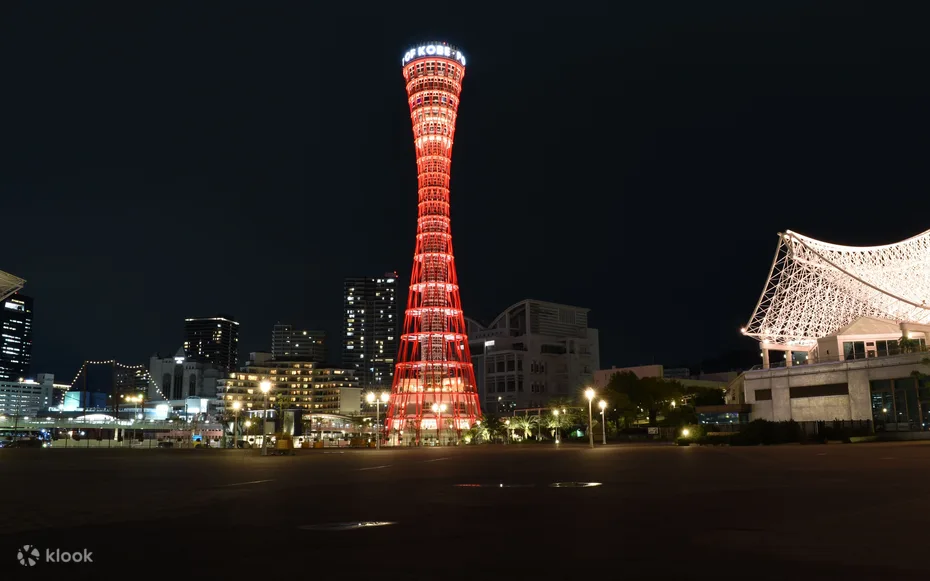
Kobe Port Tower offers a dedicated observation deck experience with sweeping views over a working harbor and the Rokko mountains beyond, delivering the same core appeal as Tokyo Tower — a city panorama from an iconic postwar-era tower — at a fraction of the visitor volume. The tower's distinctive red lattice silhouette and waterfront setting give it genuine landmark character rather than mere utility, and the surrounding Meriken Park makes the visit easy to extend on foot. Travelers based in Kansai will find it a natural fit; those coming from Tokyo should factor in the intercity journey.
FAQ
Tokyo Tower oder Tokyo Skytree?
Skytree für die Aussicht (höher, neuer, bessere Fuji-Sicht). Tokyo Tower für das Ikonenfoto von außen. Die meisten Reisenden besuchen Tokyo Tower von außen (kostenlos, 30 Min) und buchen Skytree für die eigentliche Deck-Erfahrung.
Lohnt das Topdeck +¥1.800?
An klaren Tagen mit Fuji-Sicht, ja; das 250m-Niveau erreicht die Spitze des orangefarbenen Abschnitts. Sonst zeigt das Hauptdeck denselben Horizont.
Beste Zeit für das ikonische Zojoji-Foto?
Erste Aprilwoche für Kirschblüte + Turm; ganzjährig bei Sonnenuntergang für die Blue-Hour-Silhouette.