






At a glance
- Cost
- ¥2,000 – 3,500
- Arrives
- Next day · before 18:00
- Drop
- Hotel desk or konbini
Watch the Tokyo-to-Kyoto shinkansen on a Saturday morning. The Japanese passengers carry a small backpack. The foreign passengers carry one of those backpacks plus an upright 28-inch suitcase that they wedge into the tiny luggage rack between cars while the conductor visibly suffers. The Japanese passengers know about Yamato. The foreigners do not.
Yamato Transport (the company with the cat-and-kitten badge) runs the best parcel network in the world for under ¥3,000 a suitcase, and the front desk of your hotel speaks fluent Yamato by default. Here is how to actually use it.
How-to
From hotel to hotel in five steps
Drop off at the hotel desk: the easy way
Almost every business hotel and ryokan in Japan accepts Yamato Takkyubin at the front desk. Tell reception “takkyubin onegaishimasu”, name the hotel and city you are going to next, hand over the suitcase. They print the slip, you sign, you pay cash. The case leaves before lunch and arrives at the next hotel before 18:00 the next day. No app, no booking, no English needed beyond the word itself.
Tip: For ryokan, mention you are sending forward at check-in too. Some smaller ryokan accept incoming Yamato deliveries only by pre-arrangement.
Or hand it to the konbini cat-counter
Every 7-Eleven, FamilyMart, and Lawson has a Yamato counter; look for the matte-black cat-and-kitten badge near the till. Carry the suitcase in, the clerk weighs it, fills the slip, you pay at the register with cash or IC card. Convenience-store drop-off is ¥100 cheaper than hotel pickup and runs 24/7. Useful when you are checking out of a guesthouse that will not handle the paperwork.
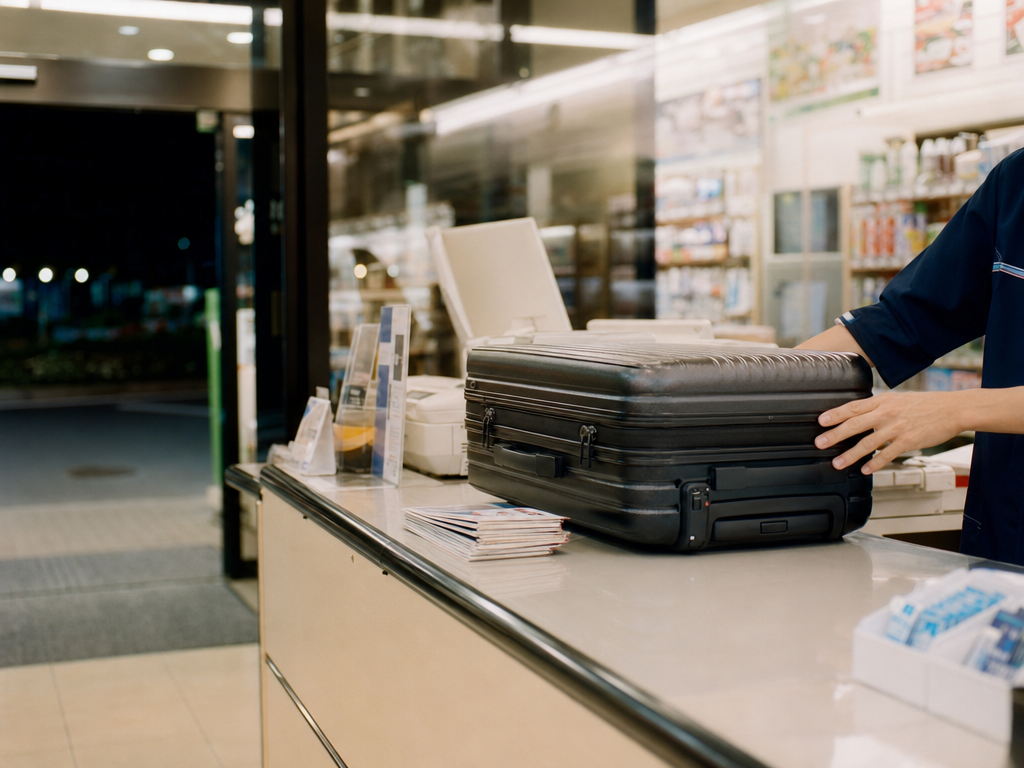
The cat-and-kitten badge near the till is your visual cue. Any clerk can run the form. Fill the slip: what they actually need
The form is identical at hotel desks and konbini. Six fields matter: your name, pickup address (the hotel you are leaving), destination hotel (full Japanese name + address; let the staff write it), your phone number (any number that rings, including a foreign number is fine), arrival date (next day if dropped before 17:00, day-after if later), and arrival time slot (pick “before 18:00”). Everything else is for the staff.
TA-Q-BINTracking4821-9173-2660FROM · senderNameN. van der BlomPickupHotel Andaz TokyoPhone080-xxxx-xx12TO · recipientNameSame · selfHotelTawaraya Ryokan, KyotoArriveWed 18 Mar · before 18:00FEE¥2,180Cash at desk · IC at konbiniMocked Yamato Takkyubin shipping slip with hotel-to-hotel routing filled in, fee ¥2,180 Pay: the price barely changes
Tokyo to Kyoto for a 25 kg case runs ¥2,000–2,500. Tokyo to Sapporo or Naha (Okinawa) is closer to ¥3,500. Two cases at the same time? Often a small bundle discount. Hotel desks take cash; konbini take cash, IC card (Suica/PASMO), or credit. You get a small carbon-copy receipt with a tracking number. Keep it until the case arrives.
Yamato: English tracking page(opens in new tab)Pick up at the next hotel, done
By the time you finish the morning shinkansen and check in at the next hotel, your case is sitting behind the desk waiting. Show ID, sign the receipt, the bell-hop wheels it to the room. The first time you do this you spend the whole day-trip wondering if it is a scam. It is not. Yamato runs 1.8 billion parcels a year. Your suitcase is parcel 4 of 6 on the truck.
Tip: Going somewhere very rural (a hot-spring inn deep in the mountains)? Add an extra day to the arrival window. Yamato gets there, but the last-mile contractor only runs the route once a day.
A few things worth knowing
- Airport-to-hotel works the same way. Both Narita and Haneda have Yamato counters in the arrival hall. Drop off your case at 11:00, take a comfortable train to the city, suitcase arrives at the hotel by 18:00. ¥2,500–3,000 from the airport, the same money as a luggage-friendly Skyliner upgrade.
- Hotel-to-airport for the flight home. Reverse direction works too. Hand the case to the hotel desk on departure day morning, fly out at noon with carry-on only, collect at the Yamato counter on arrival back home... wait, no, only inside Japan. Domestic only.
- Same-day exists, but different name. Same-day delivery is “Bicycle Messenger” (バイク便) and only works inside major cities: different service, different price (¥4,000+). Yamato Takkyubin is overnight by design.
- Skis, golf clubs, surfboards. Yamato has dedicated rates for sports gear. Drop at any counter, picked up by the same cat truck. Cheaper than airline excess-baggage fees, and the gear arrives clean and dry, not dripping on a carousel.
- Tracking is in English. The Kuronekoyamato site has an English tracking page; type the 12-digit number from your receipt. Updates every 90 minutes, which is useful when you are wondering whether to wait at the hotel or go to dinner.
- Sagawa is the alternative. Sagawa Express is Yamato’s biggest rival; works almost identically and a touch cheaper, but konbini pickup is rare. If your hotel uses Sagawa by default, fine. Same service.
Two days, one suitcase, no aisle-rage
The first time you ship a case forward and walk into the next hotel empty-handed, you wonder why nobody told you. The answer is that Japanese travellers consider it as boring as posting a letter, and foreign guidebooks consider it too logistical to write about. It is. Skip the article and just do it once.