Foreign visitors arrive in Japan with a quiet conviction that taxis are a luxury. Tokyo is famously expensive, the metro is famously perfect, why would anyone ride a cab? And so they spend the trip dragging two suitcases up Shinjuku Station’s 47 staircases at 23:00 because the last Yamanote already left.
The actual locals use taxis pragmatically: late nights, rain, kids, luggage, three people splitting the fare, the run to a restaurant in a back-alley nowhere near a station. Here is the playbook, including the one app you should install before you fly.
How-to
From the kerb to the door in five steps
Auto-opening rear doorsGO app · EnglishNo tipping
1
Step one: do not touch the door
Japanese taxi rear doors open and close themselves. The driver controls them from a lever next to the steering column. If you grab the handle and yank, you will fight the mechanism and look obvious. Stand a step back from the door, wait two seconds, the door swings open. Same on exit: slide out, take a step back, the door closes. Front passenger door is manual; nobody uses it.
2
Hail at a rank, or open the GO app
Outside major train stations and hotels there is always a taxi rank: orderly queue, lead car at the front, no waving needed. Curb-hailing also works in Tokyo, Osaka, Kyoto: an empty cab shows a red kūsha light in the windshield (赤 = red = vacant, oddly the inverse of Western convention). For everywhere else and for late nights, the GO app is what locals use. Set it to English, link a card, summon a cab to your pin in 3 minutes.
In the GO app the cab appears on the map within seconds of confirming. The driver gets your pin and your destination: no address spelling, no kanji, no Google Translate. They do not chat. They do not need a tip. They will not take a tip. Just sit, watch the meter tick (¥500 base, +¥100 per ~250 m), and arrive.
9:41
9:41●●●● 5G
‹GOEN
🚖
🧑✈️
Tanaka · Toyota Crown品川 · 500 · あ · 12-34
ETA2 min
StatusOn the way · do not open the door
Fare¥1,800 est. · card on file
Mocked GO app confirmation screen: driver assigned, ETA 2 minutes, fare estimate, status reads “On the way · do not open the door”
4
Pay: card on file, no cash needed
If you booked through GO, the fare comes off the card on file the second you arrive, with a receipt by email. Hailed off the street? Most cabs take cash, IC card (Suica/PASMO), and credit. The driver will tap a small reader near the back of the front seat. ¥1,800 ride pays out as ¥1,800; no tipping, no rounding, no “keep the change”. That is rude here, not generous.
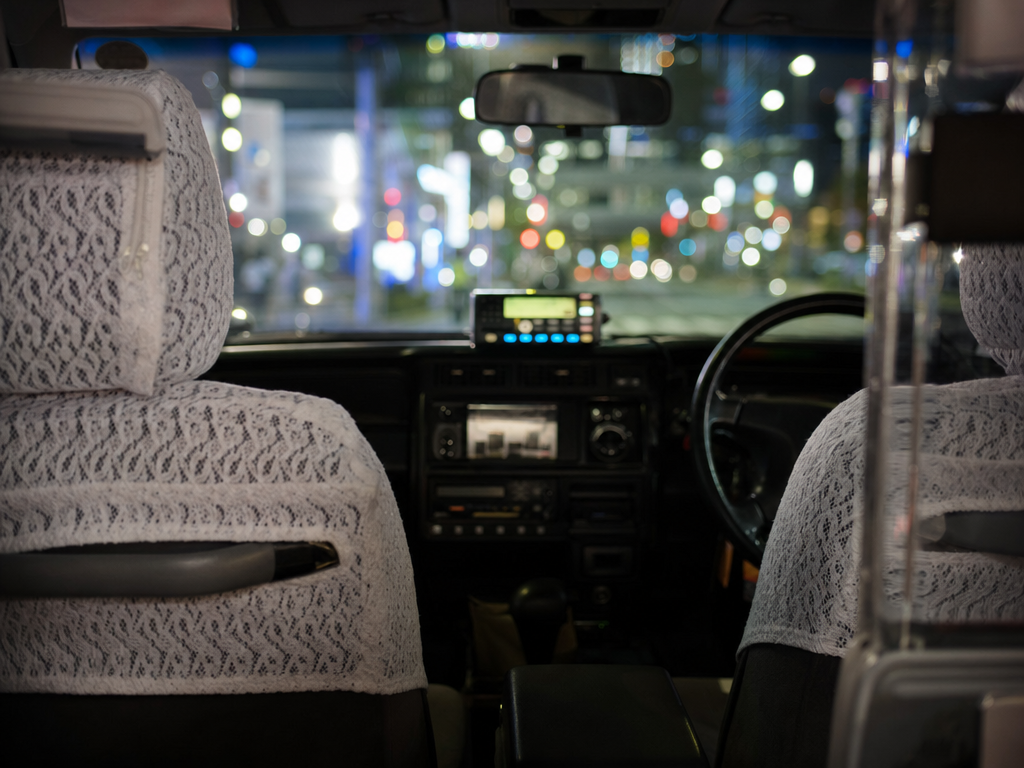
The back seat will be cleaner than your hotel room. Lace covers, not fake leather. Take your shoes off in a ryokan, not in a cab.
5
When taxis actually beat the metro
For three guests with luggage at 22:00 from Shinjuku to Roppongi, a taxi is ¥3,500 and 18 minutes door-to-door, versus ¥210 each plus a 14-minute train plus a 10-minute walk plus dragging suitcases up two flights of station stairs. Same logic with rain, with a sleeping kid, with the last train already gone. Taxis are not lavish in Japan; they are a tool.
Tip: Haneda → central Tokyo at any hour is a flat ¥6,400 (or ~¥7,500 with night surcharge). Three people split it, you have your luggage, and you skip the airport-train hunt entirely. Narita is too far for flat-rate; take the train.
A few things worth knowing
Drivers may not speak English. The GO app sidesteps this entirely, because the destination is sent as a pin. If you hail off the street, show the destination on Google Maps in Japanese (tap the address card, hit the share icon, hand the phone). Do not try to pronounce it.
Night surcharge starts at 22:00. Roughly +20% on the meter from 22:00 to 05:00. It is built into the GO estimate, so no surprise. The flat-rate Haneda fare bumps from ¥6,400 to ~¥7,500 in the same window.
Hotels can summon a taxi for free. No commission, no booking fee. The bell desk picks up the phone, a cab arrives in 5 minutes. Useful when the GO app cannot find a car (rural areas, festival nights).
JapanTaxi merged into GO. The old DiDi-Japan and JapanTaxi apps no longer exist as separate brands. GO covers 13 of Japan’s biggest cities and most prefectures. Uber works in Tokyo and a few resort towns; it is more expensive and the same drivers.
Receipts are auto-generated. If paying cash, ask “ryōshūsho” (領収書, receipt). The driver hits a button and the meter prints one. Useful for expense claims; fully itemised in Japanese.
Toll roads are extra. Long airport runs and inter-prefecture rides include expressway tolls; the meter shows the toll separately at the end. Usually ¥1,500–3,000 for a Tokyo airport run; on top of the fare.
Use the cab when the cab is the right tool
Tokyo’s metro is the best in the world. It also closes at midnight, ignores half of Roppongi’s back-streets, and has zero patience for two suitcases. The taxi exists to fill those gaps. Install GO before you fly, link a card, and treat it the way the locals do: sparingly, but without guilt.