Most first-time Shinkansen guides spend three paragraphs on the JR Pass before they get to the train. That's the wrong end of the question. The JR Pass is a discount card, not the trip; and at 2026 prices, half of the people I see clutching one would have come out cheaper buying singles on Smart-EX.
Forget the Pass for ten minutes. Riding a Shinkansen is one of the simplest premium experiences in modern Japan. Book the ticket, walk to the platform, eat a bento, look out the window. Tokyo to Kyoto in 2h18 with no airport security, no luggage drop, no boarding zones. Here's how to do it cleanly the first time.
How-to
From booking to seat to ekiben
~ 5 minutes to bookSmart-EX app or stationReserved seat strongly advised
1
Pick the right train: Nozomi, Hikari, or Kodama
On the Tokaido line (Tokyo–Osaka), three Shinkansen types share the track. Nozomi is the express (Tokyo to Kyoto in 2h18) and the one to take if you're paying for tickets out of pocket. Hikari stops twice as often, takes 2h45, and is what JR Pass holders are stuck with (Nozomi isn't included). Kodama stops everywhere, takes nearly 4h, and exists for a reason but probably not yours.
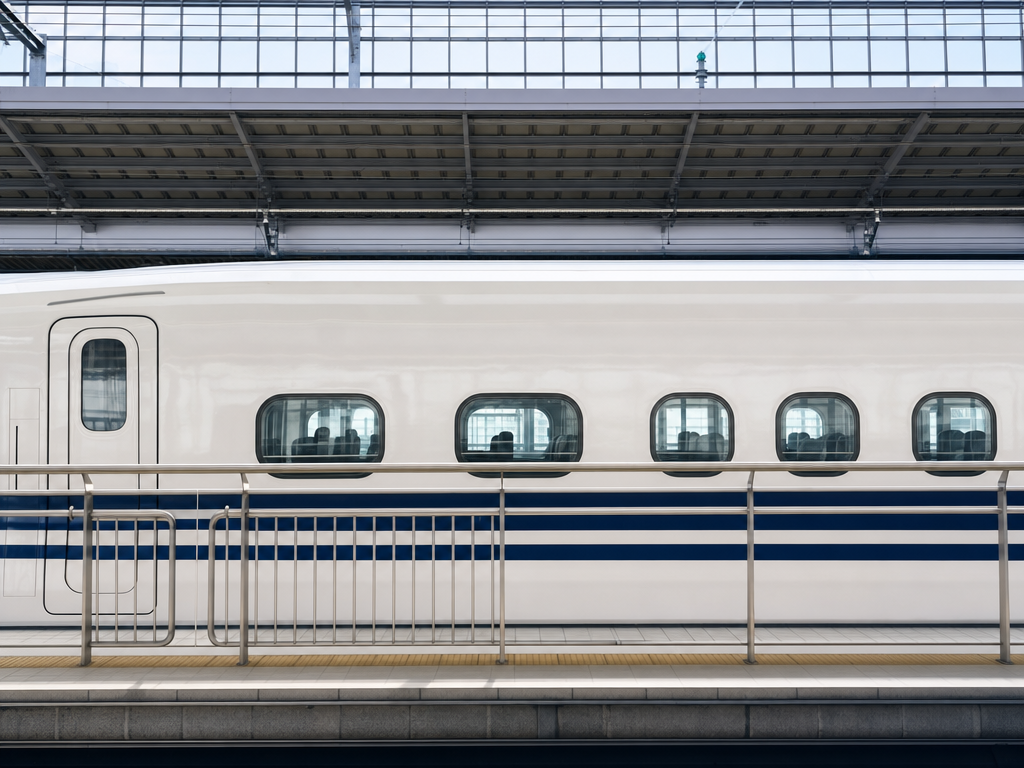
N700 series at Tokyo Station. The pointy nose is the giveaway: this is the train you want.
Tip: If you're a JR Pass holder, the difference between Hikari and Nozomi is a 27-minute time penalty for not paying. Most Pass-bound itineraries don't notice. If you're booking single tickets, Nozomi is almost always the right pick.
2
Book on Smart-EX, not at the station
JR Central's Smart-EX app is the cleanest way to buy Shinkansen tickets without queuing at a Midori-no-Madoguchi counter. Register a foreign credit card (Visa/MC, no JCB needed), pick the route, time, and seat type, and you are done in three minutes. The ticket arrives as a QR-style entry that you tap straight at the gate.
9:41
‹Smart-EXStep 2 / 4
Tokyo━━ Tokaido Shinkansen ━━▶Kyoto
Tue, 17 Mar 2026 · 1 adult
Choose a train
09:30→11:48
Nozomi 213Available
09:33→12:28
Hikari 469Available
09:42→12:00
Nozomi 215Few left
09:56→13:54
Kodama 643Available
From¥13,320
Smart-EX app showing Tokyo to Kyoto train picker with Nozomi 213 highlighted as the recommended option
3
Choose reserved or non-reserved, and just take reserved
Reserved seats add ~¥850 to the fare. Non-reserved means first-come-first-served in cars 1–3, which on a peak-hour Nozomi means standing for two hours. The math is simple: ¥850 versus a guaranteed seat with a window and a place to put your bag. Take reserved unless you're cheap and the train is empty.
9:41
‹Smart-EXStep 2 / 4
Tokyo━━ Tokaido Shinkansen ━━▶Kyoto
Tue, 17 Mar 2026 · 1 adult
Seat type
Total¥14,170
Smart-EX seat type selection screen with Reserved highlighted at ¥14,170
Tip: On a clear morning, request seat D or E on the right side on a Tokyo→Kyoto Nozomi. Mt. Fuji shows up between Mishima and Shin-Fuji, around 40 minutes after departure. Sit on the wrong side, you stare at warehouses.
4
Find your platform and car number
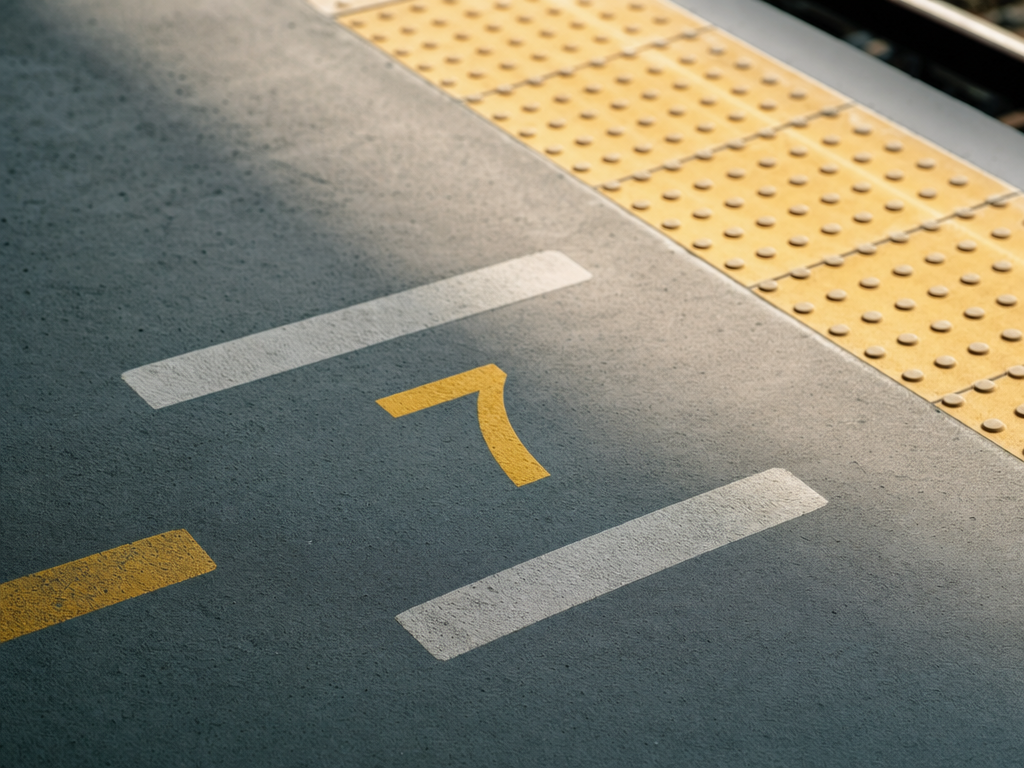
Shinkansen platforms are usually on the highest floor of the station, signposted with a 新幹線 logo (the bullet-train pictogram). Once on the platform, look at the floor: numbered car positions are painted on the concrete, with car 1 at one end and car 16 at the other. Stand at the number that matches your reservation. The train rolls in, the doors line up exactly. No running.
The number painted on the platform tells you exactly where to stand. The doors will open here.
Tip: Heavy luggage over 160cm (combined L+W+H) requires a free Oversized Baggage Area reservation, made on Smart-EX. Most carry-ons and standard 28-inch suitcases are fine without it. Skis, snowboards, and a giant trolley = reserve.
5
Eat an ekiben, mind the etiquette
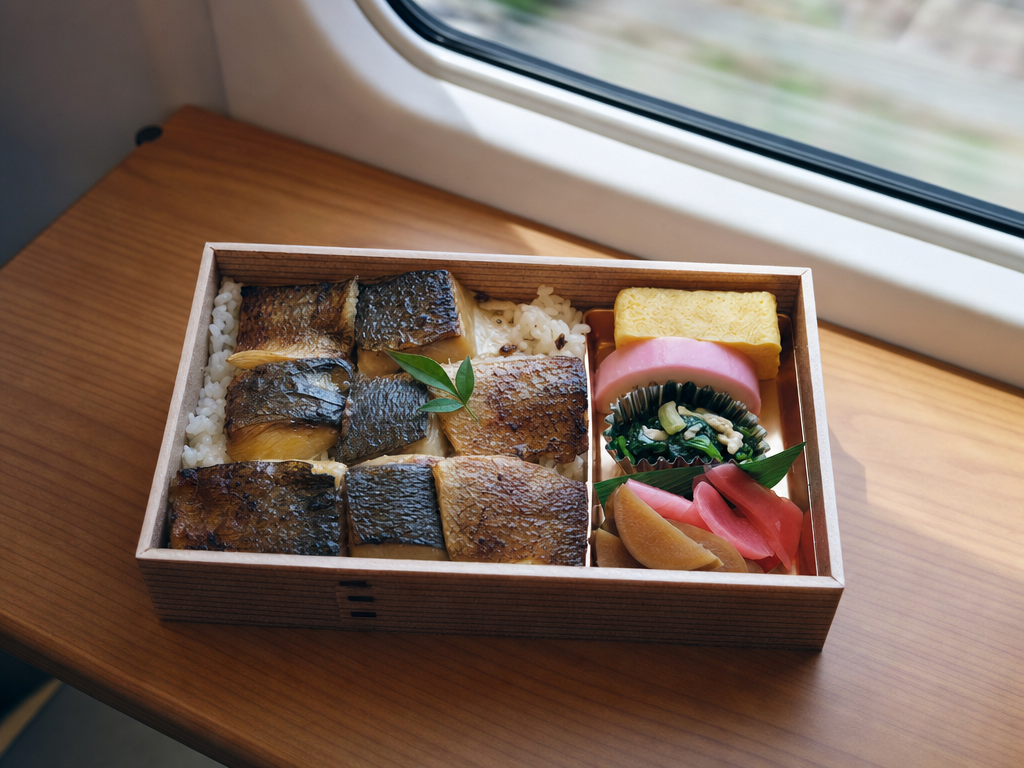
Buy an ekiben (station bento) at the platform kiosk before boarding. They're cold by design (steamed rice doesn't suffer), priced ¥1,000–1,500, and a major part of the cultural experience. Onboard etiquette: keep voice low, don't take phone calls (use the deck between cars), and the recline button works on every seat, but a quick "sumimasen" to the person behind is polite.
Tokyo Station's Ekibenya Matsuri has 200+ ekiben from across Japan. Pick one named after a region you're skipping; that's how I ate Hokkaido on a Tokyo–Kyoto run.JR Central Smart-EX official site(opens in new tab)
A few things worth knowing
The "last drink" is a thing. The on-board cart sells beer, sake, coffee, and snacks until about 30 minutes before the terminus. Buy when the cart passes; there's no second pass. Pricing matches a Tokyo konbini, not airport rates.
Tap your IC card to leave the station. Even if you bought a Shinkansen ticket separately, you may need to tap a Suica/PASMO at the local-line gate at your destination if you transfer onwards. Smart-EX handles this transparently if you linked an IC card.
The Green Car is rarely worth ¥4,820 extra. Slightly more legroom, 2+2 seating instead of 2+3. On a 2-hour ride it's fine. On a 4-hour Tokyo–Hiroshima you'd notice, but most travellers don't take rides that long. Skip it.
Reservations open 30 days ahead. Smart-EX lets you book exactly 30 days before departure, with a discount of 200–4,000 yen on advance fares. Worth it for peak periods (Golden Week, Obon, New Year). For random Tuesdays, day-of bookings rarely sell out.
Don't skip the platform clock. Shinkansen leave to the second. The display board at the platform tells you departure time, car number, and the destination. Match those three before you board, and you literally cannot end up on the wrong train.
The simplest premium ride in Japan
The first time I rode the Shinkansen, in 2017, I overthought every step: printed the ticket twice, arrived 40 minutes early, panicked when the platform sign wasn't in English (it was). Now I show up six minutes before departure, tap the QR on Smart-EX, walk to car 7, sit, eat the bento, watch Mt. Fuji slide past on the right side. The train is the easy part. The advice industry has just made it sound complicated.