





At a glance
- Public bins
- Almost none
- Use
- Konbini + stations
- Sort
- 4 categories
Every guidebook for Japan has a sentence somewhere along the lines of "there are no public bins, you must carry your trash." It is true, vaguely useful, and stops just short of explaining what to actually do about it. Foreign visitors end up with sticky onigiri wrappers in their pockets at 18:00 because nobody told them where the bins are.
They are everywhere: inside konbinis, on station platforms, in hotel rooms, beside vending machines. Once you map the system, the country goes back to being clean and easy. Here is the map.
How-to
Five rules for trash in Japan
Where the bins went, and why
After the 1995 Tokyo subway sarin attack, public bins were removed from train stations and most streets nationwide as a security measure. Three decades later, the policy stuck, and Japan stays famously clean by routing waste through retail and station systems instead. The streets have almost no bins. The system has plenty. You just need to know where to look.
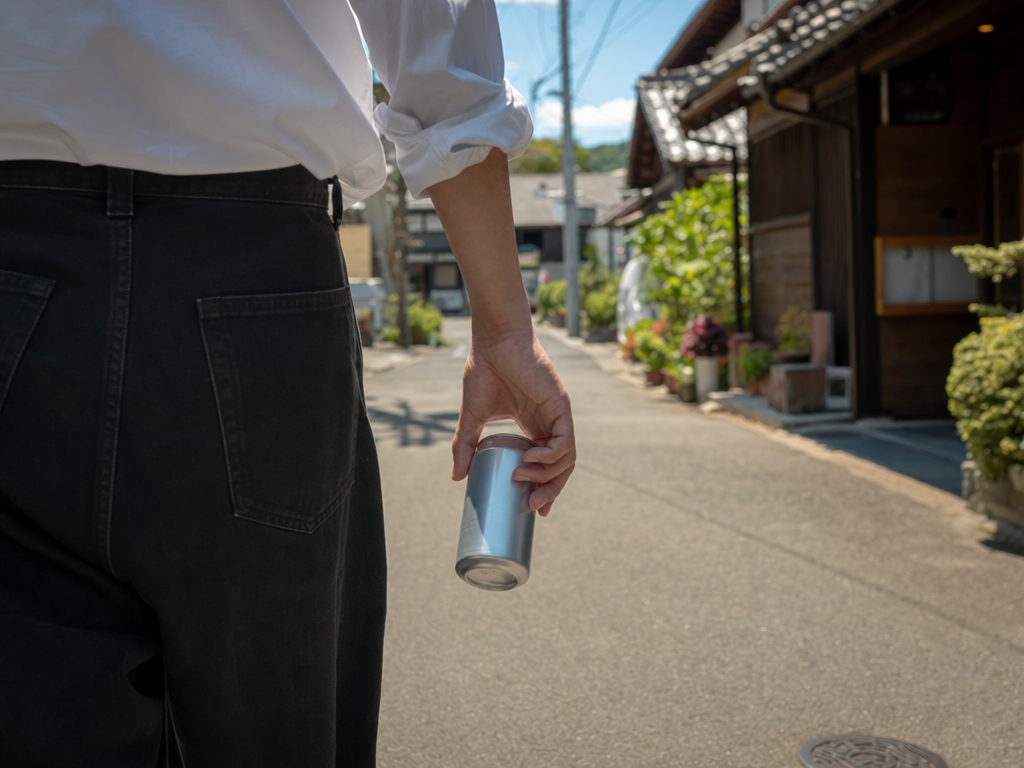
The default move: carry it with you until the next konbini or train station. The country is built on this small inconvenience. Konbini bins are your everywhere
The bins inside or just outside any 7-Eleven, FamilyMart, or Lawson are the most reliable disposal point on the street. Usually four colour-coded slots: burnable (general rubbish), plastic bottles (PET), cans, and glass. Pictograms above each slot are universal. The unspoken rule: you should be a customer, not just a passer-by. Buy a small water, drop the previous bottle.
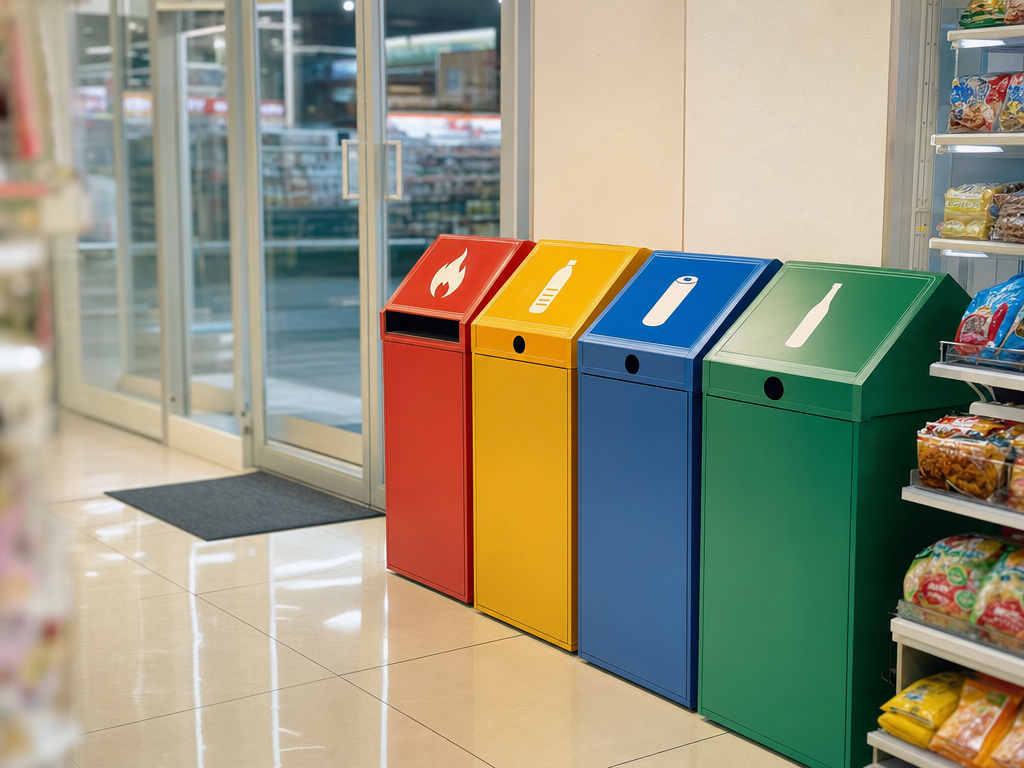
Standard konbini layout: burnable, PET, can, glass. The pictograms tell you everything; the kanji is decorative. Tip: PET bottles get a quick rinse and the cap-and-label removed before they go in the PET slot. Most konbinis have a tiny bin specifically for caps and labels.
Stations have platform bins. Use them.
JR and metro platforms have small stainless-steel bin pairs near the columns, usually one for "burnable / general" and one for PET. They get emptied frequently. If you are about to board a Shinkansen with a coffee cup, finish the coffee, put the cup in the platform bin, board with empty hands. The Shinkansen has a tray bin per car too, but onboard bins fill fast on long routes.
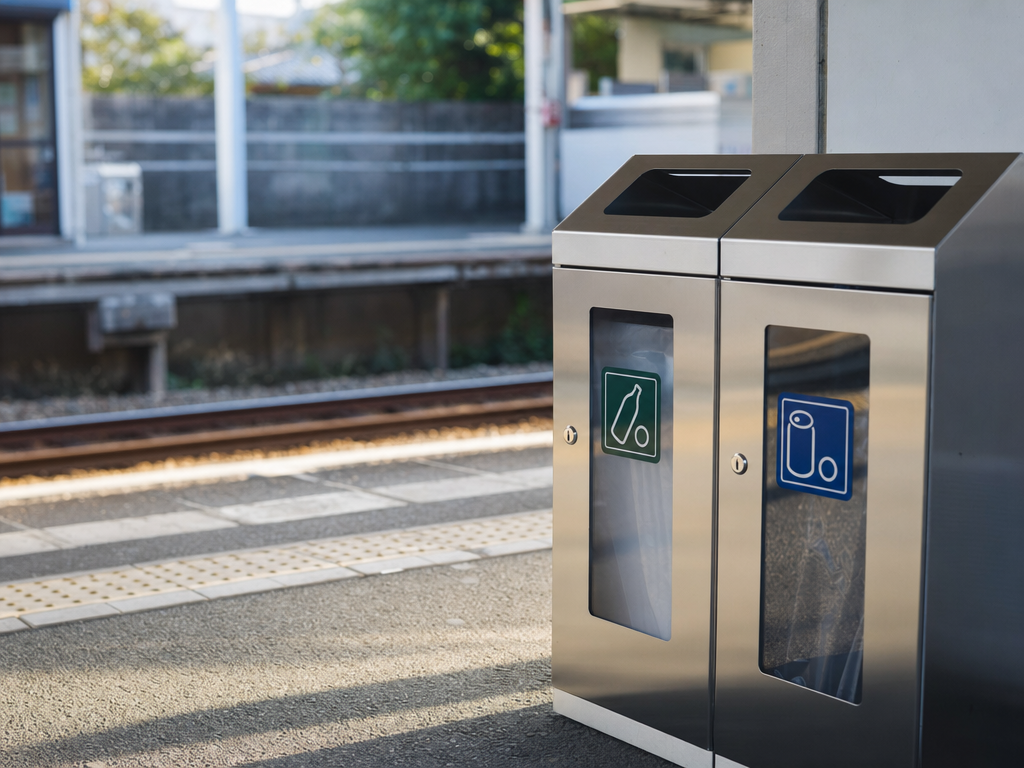
Slim platform bins. Look near the columns and the staircases, never on the centre of the platform. Hotels: in the room, no exception
Every hotel and ryokan room in Japan has a small bin (sometimes two: one general, one PET). Anything you accumulate during the day (receipts, snack wrappers, conbini packaging) comes back with you and goes in the room bin. Housekeeping handles the rest. This single habit eliminates 80% of the "where do I put this" friction across a whole trip.
What NOT to do
Three small things matter: don't fill konbini bins with street rubbish (specifically the burnable bin with non-konbini waste; staff watch). Don't leave wrappers on park benches: even with no bin nearby, that's a real social violation. Don't flush wet wipes. Japanese plumbing is excellent but the wipes-friendly ones we use in Europe still gum up older lines. Toilet paper only.
The Japanese konbini guide
A few things worth knowing
- Vending machines often have a recycle box beside them. Drink the canned coffee, drop the can in the box right next to the machine. The box only takes the same kind of container the machine sells, so don't try to use it for general rubbish.
- Burnable vs non-burnable matters because Japan incinerates most household waste. Plastic film, paper, food scraps, and unrinsed packaging all go in burnable. Cans, glass, and PET are recycled separately. The four-category sort is the entire system.
- Cigarette etiquette runs separate. Smoking on the street is illegal in much of central Tokyo, Kyoto and Osaka. Designated smoking areas have ashtray bins; they are not general waste bins. Don't put butts in the konbini burnable.
- Department-store and museum lobbies have bins. If you have been carrying a wrapper for an hour, walk into any department store, food hall, or museum lobby; there is almost always a bin near the bathrooms or the exit.
- The plastic bag from the konbini is your trash bag. The thin bag your purchases come in is what you stash wrappers and bottle caps in until the next disposal point. Free, lightweight, sized for exactly this purpose.
The system works once you see it
Japan's public-bin scarcity is not chaos. It is a system that runs through retail and stations rather than the street. Once you internalise the konbini-to-station-to-hotel-room loop, you stop noticing it, and you start noticing how little litter there is anywhere. That is the whole point.